Key Takeaways
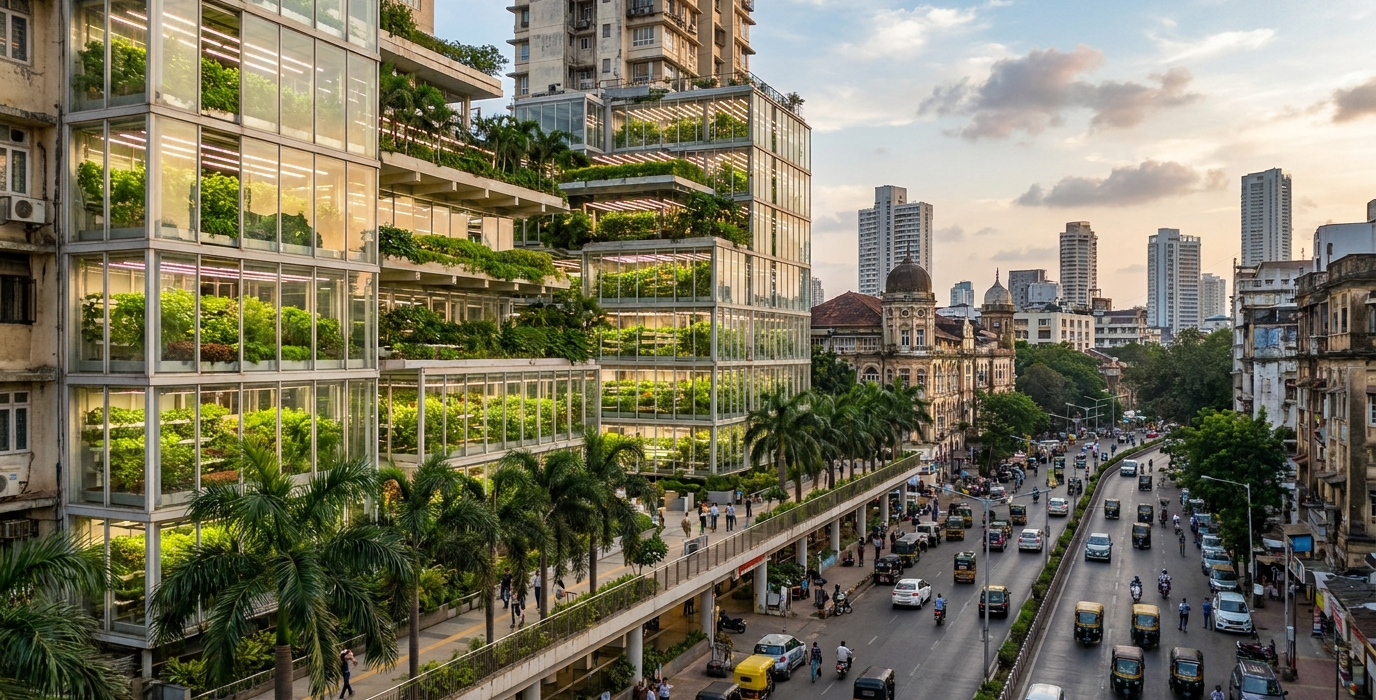
- Mumbai’s skyline is diversifying beyond concrete, with vertical farms rapidly expanding across the city in 2026.
- These high-tech farms offer hyper-local, fresh produce year-round, significantly reducing supply chain issues and carbon footprints.
- Consumers can expect access to a wider variety of greens and herbs, often harvested just hours before reaching their kitchens, boosting nutritional value.
- The integration of vertical farming into the city’s fabric presents new economic opportunities and a more resilient food system for Mumbai.
The Concrete Jungle Gets a Green Makeover
Mumbai, a city synonymous with soaring skyscrapers and relentless urban sprawl, is experiencing a quiet revolution. This year, in 2026, the familiar grey canvas is increasingly punctuated by vibrant hues of green, thanks to the explosive growth of vertical farms. These innovative agricultural systems are no longer niche experiments but are becoming integral to the city’s food security and culinary landscape. Imagine stepping into a bustling market in Bandra and finding basil harvested that morning, grown just a few kilometres away in a climate-controlled tower. This is the reality emerging across Mumbai, a testament to human ingenuity in the face of urban challenges.
The sheer density of Mumbai’s population has always presented a logistical nightmare for food distribution. Long supply chains mean produce often travels hundreds, if not thousands, of kilometres, losing vital nutrients and contributing to significant carbon emissions. Vertical farms are directly addressing this by bringing food production back to the heart of consumption. They are transforming underutilised urban spaces, from old warehouses in Byculla to purpose-built structures in Navi Mumbai, into highly efficient food-growing hubs. This shift is not just about novelty; it’s about building a more sustainable and resilient future for how Mumbaikars eat.
Beyond the Farm Gate: Hyper-Local Freshness Arrives
The most immediate benefit for Mumbaikars is the unparalleled freshness and quality of the produce. Gone are the days of wondering how long that leafy green has been on a truck or in a cold storage. Vertical farms operate on a “harvest-to-table” model, often delivering produce within hours of being picked. This means you are getting vegetables and herbs at their peak nutritional value, bursting with flavour that’s often lost in traditional long-distance transit. Think vibrant methi, crisp spinach, and aromatic coriander, all grown within the city limits.
These farms utilise controlled environment agriculture (CEA) techniques. This means precise management of light, temperature, humidity, and nutrient delivery. This level of control allows for year-round production, unaffected by the monsoon downpours or the summer heatwaves that can wreak havoc on traditional agriculture. For consumers, this translates to consistent availability of a wider variety of produce, including exotic herbs and specialty greens that were previously expensive imports or seasonal rarities. You can now find dill and kale readily available, not just during specific months, but whenever you crave them.
The Tech Behind the Green Revolution
At the heart of Mumbai’s vertical farming boom are sophisticated technologies. Hydroponics and aeroponics are the dominant growing methods, eliminating the need for soil. In hydroponic systems, plants are grown in nutrient-rich water solutions. Aeroponics takes this a step further, misting plant roots with nutrient-laden water, which can lead to faster growth and reduced water usage. These systems are often housed in multi-storey buildings, maximising vertical space and producing exponentially more food per square metre than conventional farms.
Lighting is another crucial component. Instead of relying on sunlight, vertical farms use energy-efficient LED grow lights. These lights are spectrum-tuned to provide the optimal wavelengths of light for plant growth, mimicking natural sunlight but with greater control and efficiency. Advanced sensors and automation systems constantly monitor and adjust environmental conditions, ensuring optimal growth for each crop. This technological integration minimises human error and maximises yield, making these farms highly productive and predictable. A surprising fact is that some of these advanced systems use up to 95% less water than traditional farming methods, a critical advantage in water-scarce urban environments.
Economic Ripples: Jobs and Investment in Urban Agriculture
The rise of vertical farming in Mumbai is not just a story of food; it’s also a story of economic opportunity. These farms require a skilled workforce, creating new job roles in areas like plant science, horticulture, technology management, and logistics. From data analysts monitoring crop performance to technicians maintaining the complex systems, the sector is generating employment that complements the city’s existing industrial base. This diversification of the job market is a welcome development in a city constantly seeking innovative avenues for growth.
Furthermore, the sector is attracting significant investment. Both local entrepreneurs and international agritech companies are pouring capital into establishing and expanding vertical farming operations across Mumbai. This influx of investment fuels further innovation, drives down production costs, and makes the produce more accessible to a wider segment of the population. We are seeing a virtuous cycle where innovation leads to investment, which in turn leads to more efficient and affordable food production, benefiting consumers and the economy alike. This is a model that other megacities worldwide are eager to emulate.
Navigating the Supply Chain of Tomorrow
The impact of vertical farms on Mumbai’s existing supply chain is profound. By localising production, these farms drastically reduce the need for long-haul transportation. This means fewer trucks on already congested roads, leading to reduced traffic, lower fuel consumption, and a smaller carbon footprint for the city’s food system. The produce also travels shorter distances to reach retail points, restaurants, and direct consumers, minimising spoilage and waste.
The logistical challenges are being met with innovative distribution models. Many vertical farms are partnering directly with local restaurants, hotels, and grocery stores, establishing dedicated delivery routes. Some are also investing in direct-to-consumer (D2C) platforms, offering subscription boxes and online ordering systems. This direct engagement bypasses traditional middlemen, allowing for greater transparency and traceability of food from farm to fork. You can often scan a QR code on your greens and learn exactly when and where they were grown.
The Future of Food on Your Plate
Looking ahead, the trajectory for vertical farming in Mumbai is one of continued expansion and integration. As the technology matures and economies of scale are achieved, we can expect to see even more diverse crops grown vertically, potentially including fruits and even some staple crops. The current focus is largely on leafy greens, herbs, and microgreens, but research and development are pushing the boundaries constantly. The goal is to create a truly comprehensive urban food system that can significantly reduce reliance on external agricultural inputs.
The integration of these farms also extends to urban planning and community engagement. We’re seeing discussions about incorporating vertical farming modules into new building designs, creating community-supported agriculture (CSA) programs within residential complexes, and educational initiatives to teach Mumbaikars about modern food production. This isn’t just about feeding the city; it’s about reimagining our relationship with food and fostering a more sustainable and engaged urban environment. The surprising fact here is that by optimising growing conditions, vertical farms can achieve yields up to 300 times greater per acre than traditional farms, a staggering figure that highlights their potential to feed growing urban populations.
Frequently Asked Questions
What types of produce are commonly grown in Mumbai’s vertical farms?
Currently, the most common crops include a wide variety of leafy greens like spinach, kale, and lettuce, as well as herbs such as basil, mint, and coriander, and microgreens. Research is ongoing to expand this to include more fruits and vegetables.
How does vertical farming impact water usage compared to traditional farms?
Vertical farms are incredibly water-efficient. Using hydroponic and aeroponic systems, they can use up to 95% less water than conventional farming methods because water is recirculated and reused, minimising evaporation and runoff.
Are vertical farms in Mumbai expensive for consumers?
While initial setup costs are high, the efficiency and reduced transportation costs are starting to make vertical farm produce competitive. As production scales up and technology improves, prices are expected to become even more accessible.
What are the environmental benefits of vertical farming in a city like Mumbai?
The benefits include significantly reduced food miles (cutting down on transportation emissions), less land and water usage, reduced pesticide use due to controlled environments, and the potential to repurpose underutilised urban spaces.