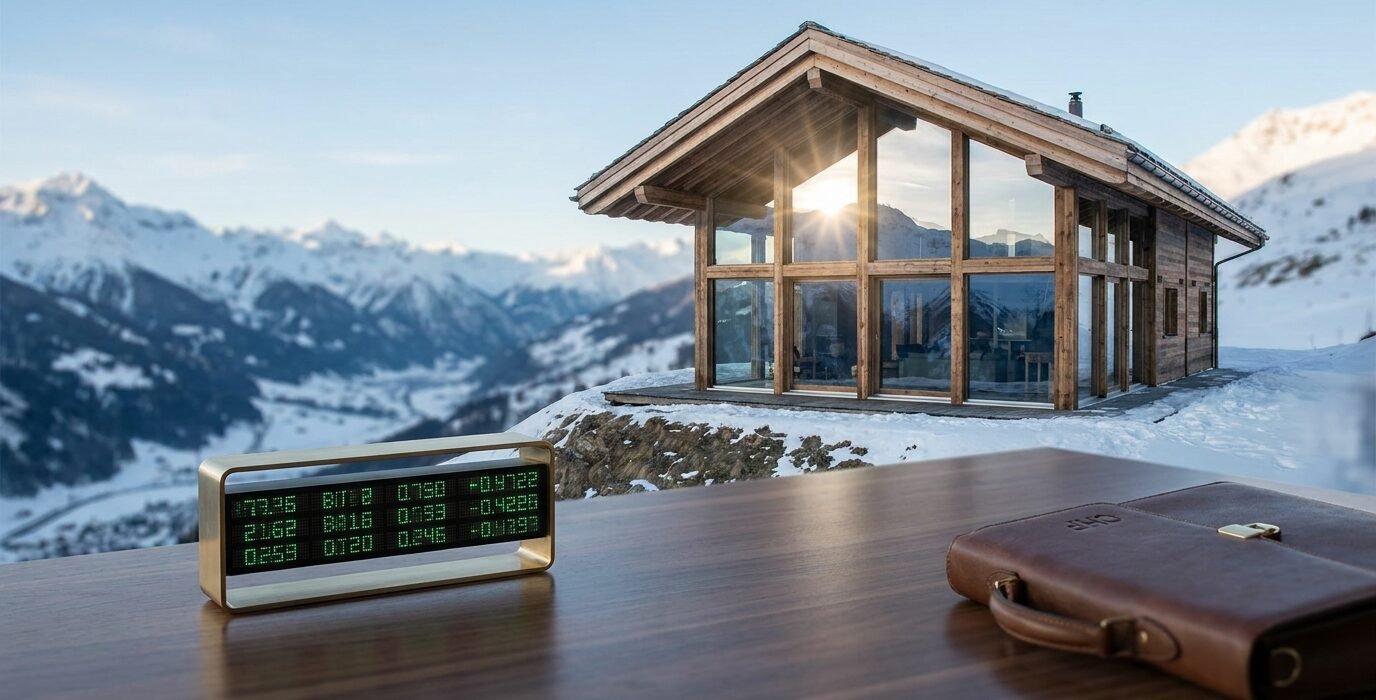
Switzerland. The name itself conjures images of crisp, snow-capped Alps, trains that run with clockwork precision, and a currency that’s the envy of the world. But beneath this idyllic facade lies a real estate market that has long been a magnet for discerning investors. For those outside the country, the idea of buying property here might seem like navigating a labyrinth. Regulations. High entry costs. It can feel daunting. Yet, for many, it represents an unparalleled opportunity. A chance to secure assets in one of the most stable economies on the planet.
Key Takeaways:
- Understand the specific legal restrictions for foreign ownership of Swiss real estate.
- Explore the diverse investment opportunities, from prime city apartments to scenic alpine chalets.
- Learn about the tax implications and ongoing costs associated with owning property in Switzerland.
- Discover strategies to navigate the market and maximize your investment returns.
- Appreciate the unique appeal of Swiss property as a stable, long-term asset.
The Allure of Stability: Why Switzerland Captures Investor Attention
Imagine standing on a balcony in Lucerne. The shimmering lake stretches before you, the majestic Pilatus mountain range a breathtaking backdrop. This isn’t just a postcard view; for a growing number of international investors, it’s a tangible asset. Switzerland’s reputation is built on more than just scenery. Political neutrality. Economic resilience. A robust legal framework. These factors make its property market exceptionally attractive.
Unlike many other global destinations, Swiss real estate has historically shown remarkable stability. Even during periods of international economic turmoil, it has held its ground. This inherent safety net provides a powerful draw. It appeals to individuals looking to preserve and grow their wealth. The Swiss franc, consistently one of the world’s strongest currencies, further bolsters this appeal. It offers a hedge against inflation and currency depreciation. These are issues that can plague investments elsewhere.
The country’s commitment to maintaining a high quality of life is undeniable. Coupled with excellent infrastructure and a highly skilled workforce, this contributes to sustained demand for property. Whether it’s a bustling apartment in Zurich, a tranquil lakeside villa in Montreux, or a charming farmhouse in the Bernese Oberland, each location offers a unique lifestyle. Each offers a distinct investment proposition. The Swiss banking system, renowned for its discretion and security, also plays a role. It facilitates complex transactions with a high degree of professionalism.
However, this stability and desirability come with a price tag. The Swiss property market is famously expensive. It’s often ranked among the priciest in Europe and the world. This means that entry points can be significant. Substantial capital is required. Yet, for many, the long-term security and potential for steady appreciation outweigh the initial cost. The meticulous planning and sustainable development practices seen across Switzerland also contribute to preserving property values. This ensures that your investment remains sound for years to come. A recent report by Savills highlighted that prime Swiss residential property values have seen a consistent, albeit modest, annual growth of around 3-5% over the past decade. This is a testament to the market’s resilience.
Unpacking the Lex Koller: Navigating Foreign Ownership Laws
One of the most significant hurdles for prospective foreign investors in Swiss real estate is understanding and complying with the lex Koller. This is also known as the Federal Act on the Acquisition of Real Estate by Persons Abroad. This legislation, enacted in 1983 and periodically updated, aims to regulate the purchase of property by non-Swiss citizens. It’s crucial to grasp that Switzerland is not a free-for-all market for foreigners. There are specific categories of property and residency statuses that dictate who can buy what, and where.
For instance, individuals who are not residents of Switzerland and do not hold a Swiss work permit are generally restricted. They can typically purchase properties in designated tourist areas. They can also buy as part of a second-home development, often referred to as “secondary residences.” These properties typically come with quotas and specific regulations. These are managed at the cantonal level. The intention behind the lex Koller is clear. It aims to prevent the wholesale takeover of Swiss residential areas by foreign buyers. This preserves local communities and housing availability for Swiss citizens and residents.
This means that buying a standard residential property in a non-touristic zone as an investment without establishing residency can be challenging. There are, however, exceptions. If you obtain a Swiss residency permit (such as for employment or self-employment), you are generally treated more like a local. You can purchase property more freely, subject to cantonal regulations. Another avenue is acquiring a commercial property. An office building or a retail space, for example, usually falls outside the scope of the lex Koller restrictions. Many savvy investors focus on these commercial opportunities. They also target properties within approved holiday resort developments.
Understanding these nuances is paramount. It’s not just about having the funds; it’s about navigating a legal framework. This framework is designed with specific national interests in mind. Consulting with a Swiss real estate lawyer or a specialized advisor is not just recommended; it’s essential. This will help you avoid costly mistakes and ensure your investment is legally sound. For example, cantons like Valais, popular for its ski resorts, have specific regulations on the number of secondary residences foreigners can acquire. These regulations are designed to maintain local character and housing access.
Beyond the Alps: Diverse Investment Opportunities
Switzerland’s real estate landscape is far richer and more varied than the picturesque mountain chalets might suggest. While alpine properties are undeniably iconic, the investment potential extends much further. It reaches vibrant urban centres, tranquil lakeside towns, and strategically located commercial hubs. Consider Zurich, Switzerland’s largest city and a global financial powerhouse. Investing in a modern apartment in districts like Seefeld or Enge can yield attractive rental yields. This is driven by a high demand from expatriates and professionals. These individuals work in the city’s booming finance and tech sectors. The city’s excellent public transport, world-class amenities, and strong job market create a consistently robust rental market. This urban investment offers a different kind of stability – one driven by constant economic activity and a young, affluent population.
Then there are cities like Geneva, renowned for its international organizations and luxury services. Properties here, particularly those with lake views or in prestigious neighbourhoods such as Cologny, are highly sought after. They are desired by diplomats, executives, and high-net-worth individuals. The rental demand is consistently high. While purchase prices are steep, the potential for capital appreciation and secure rental income is significant. Moving away from the major metropolises, consider the charm of towns like Lausanne on the shores of Lake Geneva, or Lugano in the Italian-speaking Ticino region. These locations offer a more relaxed pace of life. They boast stunning natural beauty and a growing appeal for those seeking a lifestyle investment.
Properties here can range from stylish apartments to expansive villas, often with significant lifestyle benefits. For the truly adventurous investor, exploring opportunities in developing regions or focusing on niche markets, such as senior living facilities or student accommodation in university towns like Basel or Bern, can unlock unique value propositions. The key is to look beyond the obvious. Understand the specific economic drivers and demographic trends shaping each regional market. For instance, the growth of the biotech industry in Basel has led to increased demand for both residential and commercial properties in its vicinity. This demonstrates how specialized economic activity can drive localized real estate booms.
The Numbers Game: Understanding Costs, Taxes, and Returns
Investing in Swiss real estate isn’t just about the purchase price; it involves a complex web of ongoing costs, taxes, and specific return profiles. One of the most immediate considerations is the high purchase price, which, as mentioned, is a hallmark of the Swiss market. But understanding the transaction costs is equally vital. These can include notary fees, land registry fees, and property transfer taxes. These vary significantly by canton. For example, in Geneva, property transfer tax can be as high as 3.3% of the property’s value. In Zurich, it might be significantly lower.
Beyond the initial outlay, there are substantial annual costs. Property taxes are levied by cantons and municipalities. These can range from a modest percentage to a more substantial figure, depending on the location and the property’s value. Then there are the maintenance and insurance costs. These are often higher in Switzerland due to stringent building standards. The harsh winter climate in many regions also contributes. If you plan to rent out your property, you’ll need to factor in potential vacancy periods. You’ll also need to account for the costs associated with property management, especially if you are not a resident yourself.
When it comes to returns, the Swiss market is known for its stability rather than explosive growth. Rental yields, while generally lower than in some other European countries, are often steadier and more predictable. Investors can typically expect gross rental yields of around 2-4% for residential properties in prime urban areas. Capital appreciation has historically been modest but consistent. It averages around 3-5% annually for prime properties. It’s crucial to remember that these are averages. Specific locations and property types will perform differently.
Taxation is another critical area. If you are a foreign owner, you will likely be subject to Swiss income tax on rental income generated from your property. Capital gains tax also applies when you sell the property. Rates and rules vary by canton and the duration of ownership. If you are a tax resident of another country, you will also need to consider how your Swiss property income and capital gains are taxed in your home country. This is due to double taxation treaties. A surprising fact for many is that in some cantons, like Bern, there are rules around the maximum percentage of a property that can be owned by foreigners in certain areas. This further complicates direct ownership for non-residents. It’s not just about paying taxes; it’s about understanding the entire financial ecosystem of owning property here.
Expert Insights: Strategies for Smart Investment
Navigating the Swiss real estate market as a foreigner requires more than just capital; it demands a strategic approach. This approach must be informed by local knowledge and a clear understanding of your investment goals. Engaging with professionals is paramount. This begins with selecting a reputable Swiss real estate agent. They should specialize in working with international clients. They can provide invaluable insights into specific cantonal regulations, current market conditions, and properties that align with the lex Koller restrictions. Beyond agents, a Swiss-based lawyer or a notary is indispensable. They will guide you through the legal complexities of the purchase agreement. They will ensure all documentation is compliant and represent your interests throughout the transaction.
For those looking to generate rental income, understanding the demand drivers in your chosen location is key. Are you targeting expatriates in Zurich, seasonal tourists in Zermatt, or retirees in Ticino? Each demographic has different needs and expectations. This influences rental rates and occupancy. Consider the long-term potential for capital appreciation. While Swiss property is not known for rapid price surges, consistent, stable growth is the norm. Factors like proximity to transport links, amenities, and areas undergoing regeneration can contribute to future value increases.
For investors seeking income without the complexities of direct management, exploring real estate investment funds or REITs (Real Estate Investment Trusts) that focus on Swiss properties can be a viable alternative. These vehicles allow you to invest in a diversified portfolio of Swiss real estate without the direct ownership responsibilities. A counter-intuitive strategy often employed by discerning investors is to look at smaller, less-hyped towns or emerging urban areas. While Zurich and Geneva command premium prices, towns experiencing economic revitalization or benefiting from improved infrastructure might offer better entry points. They might also offer higher potential for future growth. For instance, the expansion of high-speed rail networks connecting smaller cities to major hubs can unlock new investment opportunities. Furthermore, don’t underestimate the value of lifestyle considerations. Many who invest in Swiss property are also seeking a personal connection – a holiday home, a place to retire, or a base for exploring Europe. Aligning your investment with these personal goals can lead to a more fulfilling and ultimately more successful investment experience. A senior wealth advisor at UBS once shared that many of their most successful foreign clients viewed their Swiss property not just as an asset, but as an integral part of their broader European lifestyle.
The Enduring Appeal: More Than Just Bricks and Mortar
The decision to invest in Swiss real estate transcends purely financial calculations; it’s an investment in a lifestyle. It’s an investment in a sense of security. It’s a tangible piece of a nation synonymous with quality and stability. Imagine the peace of mind that comes with owning an asset in a country with a consistently AAA credit rating. A stable political environment. A strong, diversified economy. This inherent security is a powerful differentiator in a world often characterized by economic volatility and geopolitical uncertainty.
The value of owning property in Switzerland extends beyond its market price; it’s about belonging to a community. A community that prioritizes sustainability, environmental protection, and a high standard of living. The meticulous craftsmanship and durability of Swiss construction, coupled with strict building regulations, mean that properties tend to age gracefully. They retain their value over time. This contrasts sharply with markets where properties can depreciate rapidly due to poor construction or rapid obsolescence. For many, a Swiss property represents not just a financial asset but a legacy. It’s a place to create memories, pass down through generations, and enjoy for years to come. It’s a tangible connection to a country that values precision, quality, and long-term thinking. The very act of owning a piece of Switzerland can be a statement of intent. It signals a commitment to stability and enduring value. This emotional resonance, combined with the rational financial benefits, forms the bedrock of Switzerland’s enduring appeal to international property investors. The dream of a Swiss chalet, or a chic apartment overlooking a pristine lake, is not just about a holiday escape; it’s about investing in a future of security, quality, and unparalleled lifestyle.