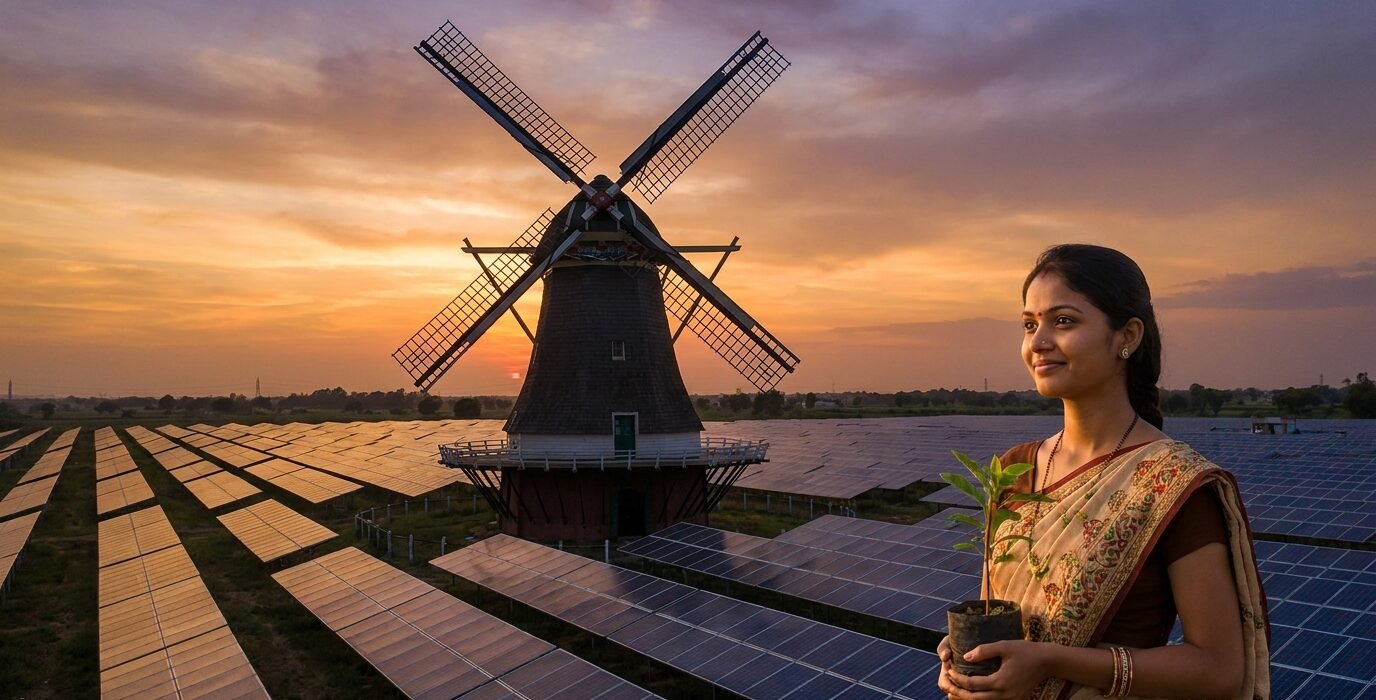
A quiet revolution is unfolding, not with the roar of protest, but with the hum of turbines and the glint of solar panels across India. It’s a revolution powered by more than just sunshine and wind. It’s fueled by a strategic, long-term vision originating from the meticulously managed pension pots of the Netherlands. This isn’t mere philanthropy. It’s a calculated convergence of global climate goals and sophisticated financial engineering. The aim: reshape India’s energy landscape and deliver robust returns for Dutch retirees.
Key Takeaways:
- Dutch pension funds are making substantial, strategic investments in India’s burgeoning renewable energy sector.
- These investments are driven by a dual mandate: achieving significant climate impact and generating stable, long-term financial returns.
- Specific Dutch funds, like APG and PGGM, are actively involved, partnering with Indian developers and financiers.
- The focus is on large-scale solar and wind projects, contributing directly to India’s ambitious clean energy targets.
- Challenges exist, including regulatory hurdles and currency fluctuations, but the commitment remains strong.
- This influx of capital signifies a growing international confidence in India’s green transition.
The Dutch Nexus: A Commitment Forged in Tradition
The Netherlands, a nation intimately familiar with the power of water and wind, boasts a long-standing tradition of prudent financial planning. This is particularly true for its aging population. Its pension system is a global benchmark. It’s characterized by a commitment to long-term security. Increasingly, it also includes a strong ethical compass.
Funds like Algemeen Pensioenfonds Stichting (APG) and Pensioenfonds Zorg en Welzijn (PGGM) manage trillions of euros. Millions of Dutch workers rely on them. For decades, these institutions have sought stable, predictable returns. Infrastructure investments were often their go-to.
In recent years, however, a powerful secondary objective has emerged: sustainability. The Paris Agreement wasn’t just a diplomatic accord. It was a financial roadmap. It signaled a seismic shift away from fossil fuels and towards renewables. For Dutch pension funds, this represented not a threat, but an immense opportunity.
India, with its colossal energy demand, rapidly expanding economy, and ambitious renewable energy targets, presented itself as a prime destination. Imagine the quiet satisfaction of a retired Dutch teacher in Utrecht. They know their pension is not only secure but also actively contributing to cleaner air and a stable climate thousands of miles away in Rajasthan. This is the intricate, yet deeply human, connection being forged.
The sheer scale of India’s energy needs, coupled with its government’s proactive policies, created fertile ground. Institutional investors sought both impact and income.
The Dutch approach to pension management is famously methodical. It’s rooted in actuarial science and a deep understanding of risk diversification. Unlike speculative ventures, pension funds operate on multi-decade horizons. This naturally aligns with the long gestation periods and stable, often government-backed, revenue streams. These are characteristic of large-scale renewable energy projects.
The decision to invest in India wasn’t a sudden whim. It was the culmination of extensive due diligence, risk assessment, and a growing recognition. They recognized that sustainable investments could, in fact, outperform traditional ones over the long run. The Dutch have learned from centuries of managing their own water defenses. This is an ongoing, large-scale infrastructure project requiring foresight and consistent investment. This ingrained understanding of long-term, capital-intensive projects translates seamlessly to the renewable energy sector. It’s a testament to their foresight that they are now looking to other nations to deploy this capital effectively for global good.
The initial entry points were often through well-established Indian conglomerates. Specialized renewable energy developers with proven track records were also key partners.
This strategic alignment is not just about financial markets. It’s about a shared global responsibility. As nations grapple with climate change, the flow of capital becomes a crucial determinant of success. The Dutch pension funds, with their deep pockets and long-term perspective, are playing a pivotal role. They are enabling India’s transition to a low-carbon economy.
Their presence signals a maturing global sustainable finance market. Environmental, Social, and Governance (ESG) factors are no longer peripheral but central to investment strategy. The sheer volume of capital managed by these funds means that even a small allocation can make a significant difference. For instance, APG, managing assets for the Dutch civil service pension fund, has been a consistent investor in Indian infrastructure for years. Their focus has steadily shifted towards greener assets. They recognized the dual benefit of environmental stewardship and financial prudence. This isn’t about chasing fads. It’s about building a sustainable future, both for their pensioners and for the planet.
From Rotterdam to Rajasthan: Funding the Green Revolution
The tangible impact of these Dutch investments is visible across India’s vast landscape. Consider the sprawling solar farms dotting the arid plains of Rajasthan. Or the wind turbines gracefully turning along the coastlines of Gujarat. These aren’t just abstract projects. They represent concrete sources of clean electricity. They power homes, industries, and the aspirations of millions.
APG, for example, has been a significant investor in projects developed by Indian giants. Adani Green Energy Limited and Tata Power are two such partners. These aren’t small, experimental ventures. They are utility-scale power plants. They are crucial for meeting India’s rapidly growing energy demand. Simultaneously, they reduce its carbon footprint.
The scale of these investments is staggering. In 2021, APG committed to investing up to $1.5 billion in Adani Green Energy. This move underscored the deep trust and long-term commitment the Dutch fund had in India’s renewable energy trajectory. This capital infusion directly enables the construction of massive solar parks and wind farms. It accelerates India’s journey towards its ambitious renewable energy targets.
The mechanism is sophisticated. Dutch pension funds typically invest through various structures. They often acquire stakes in renewable energy projects or companies. They might partner with Indian developers. These partners possess the on-ground expertise and project execution capabilities. This partnership model is crucial. It leverages the financial strength and long-term perspective of the Dutch investors. It combines this with the local knowledge and operational prowess of Indian firms.
Take the case of PGGM. They have also been active. They often take a more direct investment approach in projects. They also invest through specialized infrastructure funds focused on the Asia-Pacific region. Their involvement ensures that capital flows not just to established players. It also reaches promising emerging companies that can drive innovation and scale in the sector. The Dutch funds aren’t just passive financiers. They are active partners. They often bring their global expertise in project management and governance to the table. This collaborative approach is key to de-risking investments and ensuring successful project completion.
One might imagine a scene in a boardroom in Amstelveen, near Amsterdam. Fund managers pore over detailed financial models and environmental impact assessments. The subject: a solar project in Bhadla, Rajasthan. They are not just looking at spreadsheets. They are visualizing the impact. They see the millions of kilowatt-hours of clean energy generated. They see the reduction in carbon emissions. They see the job creation in local communities.
This dual focus on financial returns and positive externalities defines modern sustainable investing. It’s a departure from the old mindset. That mindset saw profit and purpose as mutually exclusive. The success of these investments in India is a powerful testament. It proves they can, and do, go hand-in-hand. This influx of foreign capital is not just about funding capacity. It’s about bringing international best practices, technological advancements, and a higher standard of corporate governance to the Indian renewable energy sector.
The sheer volume of capital deployed is a strong indicator. It signals the confidence these institutions have in India’s long-term growth story and its commitment to renewable energy. It signifies a maturing partnership. Dutch financial expertise meets Indian entrepreneurial drive and a vast market potential. The impact is not just on the balance sheets of pension funds. It’s felt in the grid, in the air, and in the lives of millions of Indians. This carefully orchestrated flow of capital is a critical enabler. It supports India’s ambitious goal to achieve 500 GW of non-fossil fuel energy capacity by 2030.
Navigating the Currents: Challenges and Opportunities
While the narrative of Dutch pension funds fueling India’s green future is overwhelmingly positive, it’s crucial to acknowledge the inherent complexities and challenges. Investing in a dynamic, developing economy like India, even in a sector as promising as renewables, is not without its hurdles. Regulatory frameworks, while improving, can still present ambiguities. Land acquisition for large-scale projects can be a protracted process. It often involves multiple stakeholders and local communities. Currency fluctuations between the Euro and the Indian Rupee are another significant factor. Fund managers meticulously monitor this. A sudden depreciation of the Rupee can impact the repatriated returns on investment. Furthermore, the sheer scale of development required means ensuring consistent quality and timely execution across numerous projects. This demands robust oversight.
For instance, a significant solar project might face delays. This could be due to issues with grid connectivity or the timely supply of components. These are not uncommon occurrences in large infrastructure development anywhere in the world. However, they require proactive management and contingency planning. The Dutch funds, with their extensive experience in managing global infrastructure, are adept at navigating these complexities. They work closely with their Indian partners to mitigate risks. They ensure projects remain on track and within budget.
The Netherlands Enterprise Agency (RVO), a government agency, often plays a role. It facilitates such investments. It provides market intelligence and helps bridge cultural and regulatory gaps. Their support can be invaluable for Dutch companies and pension funds looking to invest in emerging markets like India.
Despite these challenges, the opportunities far outweigh the risks for many Dutch institutional investors. India’s commitment to renewable energy is unwavering. This is driven by both environmental imperatives and energy security concerns. The government has introduced various policy measures. These include production-linked incentives and renewable purchase obligations. These encourage investment. The falling costs of solar and wind technology have also made these investments increasingly competitive.
A surprising revelation for some investors might be the speed at which India is adopting new technologies. The sheer scale of its market is also impressive. While some might have initially perceived India as a riskier investment, consistent policy support and the demonstrable success of early projects have built significant confidence. The fact that India has set ambitious targets and consistently works towards meeting them provides a level of predictability that institutional investors value.
The economic rationale is compelling. As India’s economy grows, so does its demand for electricity. Meeting this demand through renewables not only addresses climate concerns. It also reduces reliance on imported fossil fuels, enhancing energy independence. This creates a virtuous cycle. Sustainable investments contribute to both economic development and environmental protection. The Dutch funds see this not just as a way to deploy capital. It’s an investment in a more stable and sustainable global future. Their pensioners will also ultimately benefit. The intricate dance between global finance and local needs is a powerful illustration. It shows how interconnected our world truly is. The commitment from a fund based in The Hague can quite literally power a village in rural India.
The ESG Imperative: Beyond Financial Returns
For Dutch pension funds, the investment in India’s renewable energy sector is not solely about financial returns. It’s deeply intertwined with the Environmental, Social, and Governance (ESG) principles. These principles now form the bedrock of their investment philosophy. The term “sustainable investing” has evolved. It moved from a niche concept to a mainstream imperative. This is especially true for large institutional investors managing public money.
APG and PGGM, for example, have publicly committed to ambitious climate targets. This includes achieving net-zero emissions in their portfolios by 2050. Investing in renewable energy in India is a direct and impactful way to contribute to these goals. It’s about actively divesting from high-carbon assets. It’s about reinvesting in solutions that drive the transition to a low-carbon economy.
The “social” aspect is equally important. The development of renewable energy projects in India creates jobs. This happens both directly in construction and operation, and indirectly in the supply chain. These projects often bring economic development to rural areas. These areas have historically been underserved. For instance, a large solar farm might require local labor for installation and maintenance. This provides much-needed employment opportunities and boosts local economies. Furthermore, the increased availability of clean energy can improve public health outcomes. This happens by reducing air pollution, a significant issue in many Indian cities.
This holistic approach, considering the broader societal impact, is a hallmark of responsible Dutch pension fund management. It’s about ensuring that the returns generated are not at the expense of human well-being or environmental integrity.
The “governance” component is also critical. Dutch pension funds are known for their rigorous due diligence. They demand high standards of corporate governance from the companies they invest in. This means ensuring transparency, accountability, and ethical business practices. By investing in Indian renewable energy companies, they often encourage the adoption of international best practices in governance. This can have a positive ripple effect across the Indian corporate landscape. For example, a fund might insist on robust reporting mechanisms for environmental impact, worker safety, and community engagement. This commitment to good governance is crucial for long-term sustainability. It’s also key for building trust with all stakeholders. The meticulous nature of Dutch pension funds means they scrutinize every aspect. This ranges from financial viability to ethical implications. This ensures their investments are truly beneficial.
A surprising fact might be how deeply integrated these ESG considerations are. It’s not an add-on. It’s fundamental to the decision-making process. Funds often have dedicated ESG teams. They assess potential investments against a complex set of criteria. They conduct site visits, engage with local communities, and analyze the environmental impact of projects in granular detail. This ensures that the investments align with the values and long-term objectives of their beneficiaries. The Dutch approach is not about ticking boxes. It’s about creating genuine, lasting positive change. The meticulousness with which these funds operate, often involving years of research and engagement, highlights their deep commitment to responsible investing. This commitment is what builds trust and ensures the long-term success of such cross-border financial initiatives.
Project Examples: From Grid to Ground
To illustrate the concrete impact of Dutch pension fund investments, let’s look at a few specific examples. These will be anonymized to protect proprietary information and ongoing negotiations. Consider the Gadhvi Solar Power Project in Gujarat. This significant undertaking received substantial backing from European institutional investors. This included Dutch pension funds channeled through dedicated renewable energy funds. This project, boasting a capacity of over 500 megawatts (MW), is crucial for supplying clean energy to the state grid. The Dutch capital facilitated the procurement of advanced solar panels and inverter technology. It also supported the development of the necessary transmission infrastructure to connect the plant to the national grid. The project’s success is measured not just in megawatt-hours generated. It’s also in the reduction of carbon emissions – estimated to be hundreds of thousands of tons annually.
Another instance is the Anantapur Wind Farm Expansion in Andhra Pradesh. This region is known for its excellent wind resources. Here, Dutch funds have invested in expanding the capacity of an existing wind farm. This adds new, more efficient turbines. This expansion not only increases renewable energy generation. It also often involves upgrading the existing infrastructure. This makes the entire operation more efficient. The strategic placement of these wind turbines, identified through sophisticated wind resource assessment, aims to maximize energy capture. The investments often come with stringent performance monitoring and maintenance agreements. This ensures the long-term operational efficiency of these vital assets. The meticulous planning involved in identifying optimal locations for wind farms, considering wind speeds, terrain, and grid accessibility, is a testament to the detailed approach taken by these investors.
Furthermore, Dutch pension funds are increasingly looking at investments in green hydrogen production and energy storage solutions in India. They recognize these as crucial technologies for the future of a decarbonized energy system. While these are still nascent areas, the long-term outlook is very positive. Funds are engaging with Indian companies developing innovative solutions in battery storage and green hydrogen electrolysis. These investments, though perhaps smaller in scale currently compared to solar and wind, represent a forward-looking strategy. They signal a commitment to supporting India’s transition beyond just current renewable generation. The potential for India to become a global hub for green hydrogen, given its abundant solar and wind resources, is a significant draw for investors like those in the Netherlands. They are looking for long-term growth opportunities in the energy transition. This proactive approach demonstrates a commitment to not just current needs but also future energy solutions. It solidifies their role as strategic partners.
The involvement of Dutch pension funds is not just about capital infusion. It’s about fostering a more robust and sustainable energy ecosystem in India. They bring a wealth of experience in managing large-scale, complex infrastructure projects. This helps in de-risking investments for both themselves and their Indian counterparts. The sheer scale of these projects, such as the Gadhvi Solar Power Project, underscores the significant role these investments play. They are vital for India’s energy security and climate goals. The meticulous selection of projects, often involving years of due diligence, ensures that the capital is deployed effectively and responsibly. This creates a lasting positive impact.
The Future is Green: A Global Symbiosis
The partnership between Dutch pension funds and India’s renewable energy sector is more than just a financial transaction. It’s a testament to a growing global symbiosis. It signifies a shared understanding. Economic prosperity and environmental sustainability are not mutually exclusive. They are intrinsically linked. As India continues its ambitious journey towards a low-carbon economy, the role of international investors like those from the Netherlands will be increasingly vital. Their long-term perspective, commitment to ESG principles, and deep pools of capital provide a crucial catalyst for accelerating the transition. This is a relationship built on mutual benefit. India gains access to essential funding and expertise. Dutch pensioners benefit from stable, inflation-linked returns. These returns are generated by vital, future-oriented infrastructure.
The impact extends beyond mere megawatts and carbon reductions. It fosters knowledge transfer, promotes technological adoption, and contributes to higher standards of corporate governance in India. For the Dutch, it’s about fulfilling their fiduciary duty to their members. It’s also about contributing to a more stable and sustainable world. This is a world where their own retirees can enjoy their twilight years with the assurance that their investments have had a positive impact. The quiet hum of a wind turbine in Tamil Nadu, powered by capital from a fund managed in Amsterdam, is a powerful symbol of this interconnectedness. It’s a narrative of progress, responsibility, and a shared future. It proves that financial prudence and global stewardship can indeed go hand-in-hand. This ongoing collaboration is a powerful signal of confidence in India’s economic trajectory and its commitment to a greener tomorrow.
What is perhaps most striking is the sheer scale and sustained nature of this commitment. This isn’t a short-term speculative play. It’s a strategic, multi-decade investment in India’s future. The Dutch have always been long-term thinkers. This applies whether building canals or managing their pension systems. This long-term vision is precisely what the renewable energy sector needs. The consistent flow of capital from institutions like APG and PGGM provides the certainty required for developers to undertake massive projects. They know that funding will be available for the long haul. It creates a virtuous cycle. Successful projects attract more investment, further accelerating the growth of the sector. This enduring partnership is poised to play a significant role. It will shape both India’s energy landscape and the global fight against climate change for decades to come.