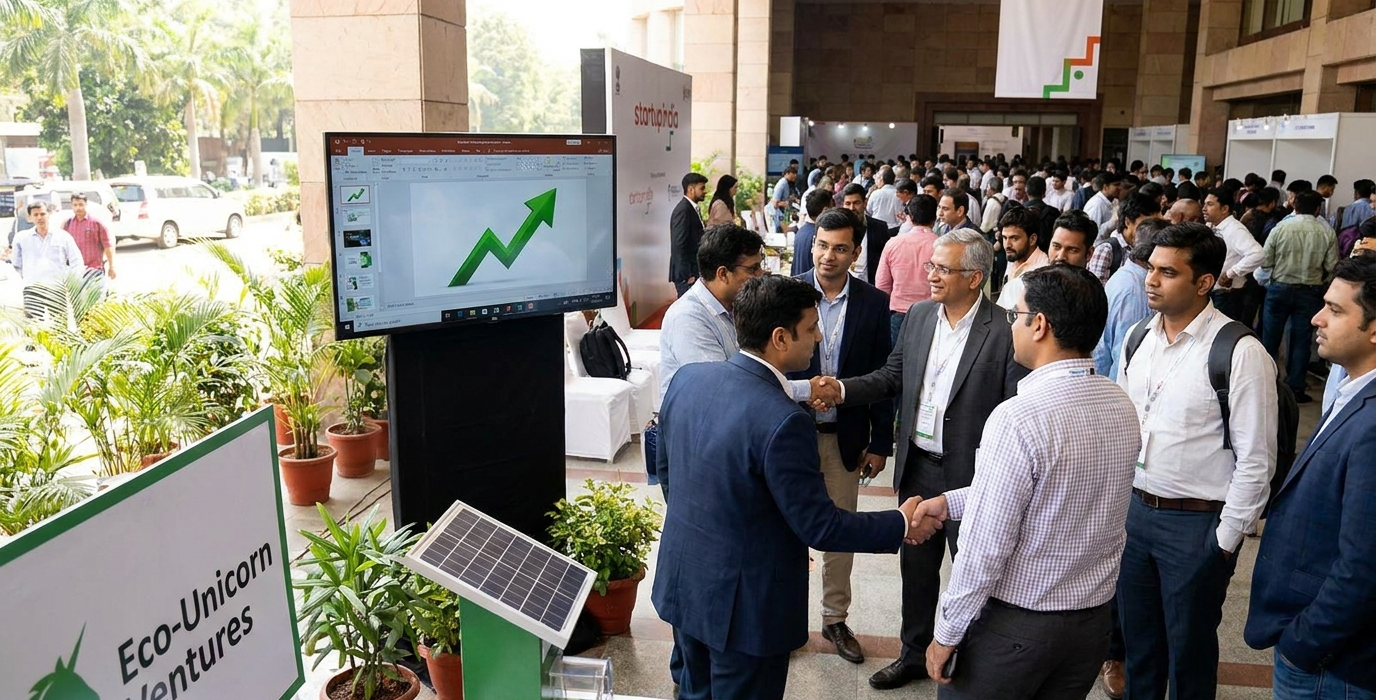
The Green Surge: Why Indian Investors Are Betting Big on Sustainability
India, a nation grappling with the dual challenges of rapid economic growth and environmental stewardship, is witnessing a profound shift in its startup landscape. Once dominated by fintech and e-commerce, the spotlight is now increasingly turning towards businesses that prioritize sustainability. This isn’t just a fleeting trend; it’s a calculated pivot by investors who recognize the immense potential and urgent necessity of eco-friendly innovation.
We’re seeing a significant influx of capital into startups that offer solutions to India’s most pressing environmental issues, from waste management and renewable energy to sustainable agriculture and circular economy models. This surge is fueled by a confluence of factors: growing consumer awareness, supportive government policies, and the undeniable economic advantages of sustainable practices. For entrepreneurs, this presents an unprecedented opportunity to build businesses that are not only profitable but also contribute positively to society and the planet.
This transformation is more than just a financial transaction; it’s a fundamental re-evaluation of what constitutes a successful and responsible business. Investors are no longer just looking at the bottom line; they’re scrutinizing the environmental, social, and governance (ESG) impact of their investments. This holistic approach is paving the way for a new breed of “green unicorns” – startups poised to achieve billion-dollar valuations by solving critical sustainability challenges.
The sheer scale of India’s population and its diverse geographical and climatic conditions present a unique testing ground for these green solutions. What works in the arid regions of Rajasthan might be entirely different from what’s needed in the flood-prone deltas of the Ganges. This inherent complexity, however, also breeds incredible innovation. We are seeing homegrown technologies and business models emerge that are not only relevant to India but have the potential to be scaled globally.
Furthermore, the narrative around sustainability is no longer solely about sacrifice. It’s about smart business, efficiency, and long-term resilience. Companies that embrace sustainable practices often find themselves more agile, less exposed to regulatory risks, and better positioned to attract top talent. This makes them inherently more attractive to discerning investors.
Beyond the Buzzwords: Defining India’s Green Startup Ecosystem
When we talk about “green startups,” what exactly are we referring to? It’s a broad umbrella, encompassing a diverse range of ventures. At its core, it’s about businesses designed to minimize environmental impact and promote ecological balance, often by offering alternatives to traditional, resource-intensive practices. This could mean anything from developing biodegradable packaging to creating advanced solar energy storage solutions.
One significant area of growth is waste management and circular economy. India generates an enormous amount of waste daily, presenting both a monumental challenge and a massive opportunity. Startups are emerging that are turning this waste into valuable resources, whether it’s through advanced recycling technologies, upcycling initiatives, or developing platforms for waste segregation and processing. Think of companies turning plastic waste into construction materials or organic waste into biogas and fertilizers.
Renewable energy, particularly solar and wind power, continues to be a bedrock of India’s green economy. However, innovation is moving beyond just installation. We’re seeing startups focus on smart grids, energy efficiency solutions for homes and industries, and novel energy storage technologies that address the intermittency of renewables. The potential for decentralized energy solutions in rural India is particularly vast.
Sustainable agriculture and food tech are also experiencing a green revolution. With climate change impacting crop yields and water resources, startups are developing climate-resilient seeds, precision farming techniques using AI and IoT, organic farming inputs, and innovative platforms for reducing food waste throughout the supply chain. Imagine vertical farms in urban centers or AI-powered farm advisory services accessible via mobile phones.
Another crucial segment is clean mobility and electric vehicles (EVs). While the focus has been on passenger cars, startups are innovating in electric two-wheelers, three-wheelers, commercial vehicles, and charging infrastructure, crucial for India’s transportation needs. We’re also seeing a rise in sustainable logistics and supply chain solutions.
Finally, there’s a growing emphasis on green building materials and sustainable construction. As India urbanizes, the environmental footprint of its infrastructure becomes paramount. Startups are exploring low-carbon concrete, recycled materials, and energy-efficient building designs that can significantly reduce the sector’s impact.
The Investor’s Lens: What Makes a Green Startup Attractive?
For venture capitalists and impact investors in India, backing a green startup is no longer a niche play; it’s a strategic imperative. But what are they looking for beyond a compelling environmental mission? The criteria are multifaceted, blending financial viability with tangible sustainability outcomes.
Firstly, scalability and market potential are paramount. Investors want to see a clear path to significant growth and a large addressable market. A brilliant idea that can only serve a handful of clients won’t attract substantial funding. They are looking for solutions that can address widespread problems, from pollution in Mumbai’s industrial belts to water scarcity in Tamil Nadu’s farmlands.
Secondly, demonstrable impact and measurable outcomes are crucial. It’s not enough to claim to be green; startups must be able to quantify their positive environmental impact. This could be measured in tonnes of CO2 emissions reduced, litres of water saved, kilograms of waste diverted from landfills, or the number of farmers adopting sustainable practices. Investors are increasingly demanding robust impact reporting.
Thirdly, strong founding teams with domain expertise are non-negotiable. Investors are backing people as much as ideas. A team that understands the technical intricacies of renewable energy, the complexities of waste management logistics, or the nuances of sustainable agriculture is far more likely to succeed. They need to show resilience, adaptability, and a deep commitment to their mission.
Fourthly, a clear and defensible business model is essential. How will the startup generate revenue? What are its competitive advantages? Investors want to see a sustainable path to profitability that doesn’t rely on perpetual subsidies or grants. This often involves innovative pricing strategies, strategic partnerships, or proprietary technology.
A surprising factor that is gaining traction is the ability to leverage existing infrastructure and local supply chains. Startups that can integrate with India’s existing industrial base or tap into local artisanal skills often find it easier to scale and reduce their operational costs. For instance, a company using traditional weaving techniques to create sustainable textiles for the export market.
Finally, regulatory understanding and advocacy can be a significant advantage. Navigating India’s complex regulatory landscape can be challenging. Startups that understand environmental regulations, policy incentives, and are proactive in engaging with policymakers are often viewed more favorably by investors.
Real-World Impact: Success Stories from India’s Green Frontier
The narrative of India’s green startup revolution isn’t just about potential; it’s already marked by tangible successes. These ventures are proving that profitability and sustainability can, and must, go hand-in-hand. Let’s look at a few sectors where innovation is truly taking root.
In the realm of waste management, companies like Saahas Zero Waste, based in Bengaluru, have been instrumental in helping large institutions and corporations manage their waste responsibly. They focus on segregation at source, composting, and recycling, diverting significant amounts of waste from landfills. Their model demonstrates how efficient waste management can be a revenue-generating service.
The renewable energy sector has seen numerous breakthroughs. While large-scale solar parks are prominent, startups are making waves in decentralized energy. Consider companies developing affordable solar-powered irrigation systems for smallholder farmers in regions like Uttar Pradesh, significantly reducing their reliance on expensive diesel pumps and lowering their carbon footprint.
Sustainable agriculture is another area brimming with innovation. One such example could be a startup that has developed a proprietary bio-fertilizer using indigenous microbial strains, offering farmers in Maharashtra a cost-effective and environmentally friendly alternative to chemical fertilizers. This not only boosts soil health but also reduces chemical runoff into water bodies.
In clean mobility, Bengaluru-based Ather Energy has emerged as a leader in the electric scooter segment, offering high-performance, technologically advanced EVs that are challenging traditional petrol-powered vehicles. Their focus on building a robust charging infrastructure and community around their products is a key part of their success.
A surprising fact that often goes unnoticed is the role of startups in promoting biodiversity conservation through eco-tourism and sustainable resource management. We’re seeing ventures in states like Uttarakhand and Kerala that work with local communities to develop low-impact tourism models, preserve natural habitats, and create sustainable livelihoods, proving that environmental protection can be economically rewarding.
These are just a few glimpses into a rapidly evolving ecosystem. The success of these companies inspires a new generation of entrepreneurs and signals to investors that the future of business in India is undeniably green.
Navigating the Challenges: Hurdles on the Path to Green Growth
While the momentum for green startups in India is undeniable, the path to widespread success is not without its significant challenges. Entrepreneurs and investors alike must navigate a complex landscape that requires resilience, adaptability, and a deep understanding of the Indian context.
One of the most persistent hurdles is access to capital, particularly for early-stage ventures. While funding is increasing, many green startups, especially those with longer gestation periods or requiring significant upfront infrastructure investment, still struggle to secure the necessary seed and growth capital. Investors can sometimes be hesitant due to perceived higher risks or longer payback periods compared to more established sectors.
Infrastructure gaps also pose a significant challenge. This can range from unreliable power supply in remote areas affecting renewable energy projects to inadequate waste collection and processing facilities hindering circular economy models. The lack of a robust pan-India supply chain for specialized green components can also drive up costs and lead times.
Regulatory complexities and policy inconsistencies can create uncertainty. While the government has shown strong support for sustainability, the implementation and enforcement of regulations can vary across states and can sometimes be slow to adapt to new technologies. Entrepreneurs need to be adept at navigating this often-intricate web of rules and approvals.
Consumer awareness and adoption, particularly in price-sensitive markets, can be another bottleneck. While there’s growing consciousness, convincing consumers to switch to sustainable alternatives often requires overcoming ingrained habits and potentially higher initial costs. Educating the market about the long-term benefits is crucial.
A surprising challenge that many green startups face is the “greenwashing” perception. With the term “sustainability” becoming a buzzword, genuine eco-friendly businesses must work harder to differentiate themselves from those making superficial claims. Building trust through transparency and verifiable impact data is paramount.
Finally, talent acquisition can be an issue. Finding skilled engineers, scientists, and business professionals with expertise in niche green technologies or sustainable business practices can be difficult, especially outside major metropolitan areas. Investing in training and development is often a necessity.
The Road Ahead: India’s Vision for a Sustainable Tomorrow
As we look towards the future, the trajectory of India’s green startup ecosystem is one of immense promise and critical importance. The convergence of technological innovation, investor appetite, and a growing societal demand for environmental responsibility is setting the stage for transformative change.
We can anticipate a continued diversification of green ventures, moving beyond the established sectors to address more complex challenges. This includes innovations in areas like carbon capture and utilization, sustainable materials science, water conservation technologies for urban and rural needs, and advanced recycling solutions for electronic waste. The potential for breakthrough technologies originating from India is immense.
The role of policy and government support will remain pivotal. We expect to see more targeted incentives, streamlined regulatory processes, and greater investment in research and development for green technologies. Initiatives like the National Green Hydrogen Mission signal a clear direction towards decarbonization and energy independence, creating fertile ground for startups in this space.
Furthermore, the integration of artificial intelligence (AI) and the Internet of Things (IoT) will become increasingly sophisticated within green startups. These technologies will enable more efficient resource management, predictive maintenance for renewable energy assets, precision agriculture, and optimized waste collection routes, driving significant improvements in efficiency and impact.
A surprising but crucial trend will be the deepening collaboration between startups, established corporations, and traditional industries. Large Indian conglomerates are increasingly recognizing the strategic necessity of embracing sustainability, leading to more partnerships, corporate venturing, and potential acquisition opportunities for innovative green startups. This synergy can provide startups with scale, market access, and the financial backing to accelerate their growth.
Ultimately, the success of India’s green startup revolution is not just about financial returns; it’s about building a more resilient, equitable, and sustainable future for billions. It’s about creating businesses that thrive not in spite of the planet’s limitations, but because they are integral to its health. We are witnessing the birth of an economy that is intrinsically linked to ecological well-being, and the journey ahead, while challenging, is profoundly hopeful.