Key Takeaways
- AI-powered tools are helping Indian farmers make data-driven decisions, boosting yields and reducing waste.
- From precision irrigation to pest detection, smart technologies are becoming accessible even to smallholder farmers.
- Early adopters are seeing significant improvements in crop quality and profitability, paving the way for wider adoption.
- Government initiatives and private sector innovation are crucial drivers for the continued growth of AI in Indian agriculture.
The Digital Dawn: AI Takes Root in Indian Fields
The scent of damp earth after a monsoon shower has long been the defining perfume of Indian agriculture. But in 2026, a new aroma is subtly mingling with it: the hum of data and the whisper of algorithms. Artificial Intelligence, once a distant dream for many of our nation’s farmers, is now a tangible reality, weaving itself into the very fabric of cultivation. We’re witnessing a profound transformation, moving from traditional, often intuition-based farming to a new era of precision, efficiency, and sustainability, driven by smart technologies. This isn’t just about fancy gadgets; it’s about empowering farmers with knowledge, helping them coax more from every seed, every drop of water, and every patch of land.
Across states as diverse as Punjab’s fertile plains and Tamil Nadu’s sun-drenched fields, farmers are embracing AI-powered solutions with a cautious optimism that is rapidly turning into confident adoption. These tools are no longer confined to large corporate farms; innovative startups and government-supported programs are making them accessible to smallholder farmers, the backbone of our agricultural economy. Imagine receiving a real-time alert on your mobile phone predicting a pest infestation a week before it becomes visible, or a system that precisely tells you when and how much water your specific crop needs. This is the promise of AI, and it’s a promise that is steadily being fulfilled.
Precision Farming: The Eyes and Brains of Smart Agriculture
Precision agriculture is where AI truly shines, offering farmers a granular view of their fields that was previously unimaginable. Think of it as giving your farm a sophisticated nervous system and a sharp, analytical brain. This isn’t about generic advice; it’s about hyper-localised insights tailored to the unique conditions of your land. AI algorithms can analyse vast datasets, including weather patterns, soil composition, satellite imagery, and historical yield data, to provide actionable recommendations.
One of the most impactful applications is in irrigation management. Instead of broad-stroke watering schedules, AI systems can monitor soil moisture levels at different depths and predict crop water requirements based on growth stage and weather forecasts. This prevents both over-watering, which can lead to root diseases and nutrient leaching, and under-watering, which stunts growth and reduces yield. Farmers are reporting significant savings in water usage, a critical consideration in many water-stressed regions of India. For instance, in arid regions of Rajasthan, farmers are now using AI-driven sensors to optimize their limited water resources, ensuring every drop counts.
Similarly, fertilizer application is becoming far more precise. Soil sensors, often integrated with AI platforms, can detect nutrient deficiencies. The AI then recommends the exact type and quantity of fertilizer needed for specific zones within a field, rather than applying a uniform blanket treatment. This not only saves costs on fertilizer but also reduces environmental pollution from excess nutrient runoff. The result is healthier soil and more efficient nutrient uptake by the plants, leading to better crop quality.
The Rise of Drones and Satellites
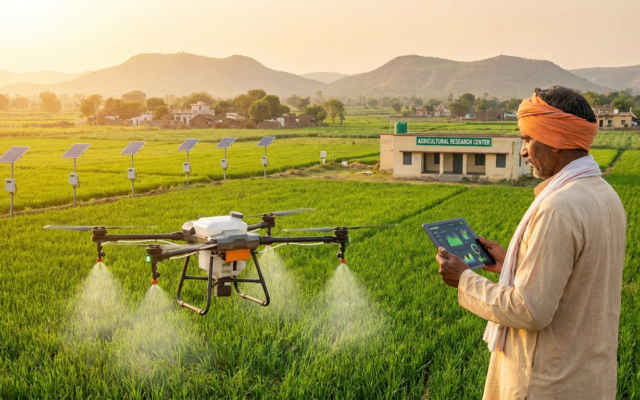
Drones equipped with multispectral cameras and AI software are becoming invaluable tools. They can fly over fields and capture images that reveal subtle variations in plant health, stress levels, and even early signs of disease or pest attacks, often before they are visible to the human eye. These images are then processed by AI to create detailed maps, highlighting areas that require immediate attention. This allows farmers to intervene proactively, targeting specific problem spots rather than treating an entire field unnecessarily.
This hyper-precision farming approach is a game-changer, moving us away from the one-size-fits-all methods of the past towards a data-driven, highly responsive agricultural system. It’s about optimising every input for maximum output, with minimal waste.
Early Warning Systems: Outsmarting Pests and Diseases
One of the most persistent challenges for farmers is the unpredictable onslaught of pests and diseases. A single outbreak can decimate an entire season’s harvest, leading to immense financial losses and food insecurity. AI is revolutionizing this aspect of farming by providing sophisticated early warning systems that can detect threats long before they become widespread.
These systems often combine data from various sources. Image recognition AI is trained on vast libraries of pest and disease symptoms. Farmers can upload photos of affected plants via their smartphones, and the AI can identify the specific threat within minutes, even providing recommendations for organic or chemical treatments. This bypasses the need for slow laboratory analysis or relying solely on the experience of local agricultural extension officers, who may be stretched thin.
Beyond manual input, AI systems can also analyse environmental data – such as humidity, temperature, and rainfall – in conjunction with drone or satellite imagery. Certain pests and diseases thrive under specific climatic conditions. By monitoring these patterns, AI can predict the likelihood of an outbreak and alert farmers to take preventative measures. For example, an AI system might detect that a particular type of fungal disease is likely to spread in the next 7-10 days based on the current weather forecast and recent crop growth stages.
A surprising fact is how rapidly these AI models are learning. Initially trained on common Indian crop pests like the Brown Planthopper in rice or the Helicoverpa armigera in pulses, these systems are now being expanded to identify rarer threats and even predict the spread of invasive species. For instance, recent trials in the Nilgiri Hills have shown promising results in using AI to identify and track the spread of invasive weeds that threaten tea plantations, a critical crop for the region.
“Before, we waited until we saw the damage. Now, we get a notification on our phone warning us about a potential problem. It’s like having a vigilant guardian for our crops, day and night.” – Ramesh Patel, farmer from Gujarat.
These proactive measures are not just about saving crops; they’re about reducing the reliance on broad-spectrum pesticides, which can harm beneficial insects, pollinators, and the environment. By targeting interventions only where and when they are needed, AI-powered pest and disease management contributes to a more sustainable and healthier agricultural ecosystem.
AI for Crop Health Monitoring and Yield Prediction
Beyond preventing disasters, AI is also providing farmers with continuous insights into the health and potential of their crops throughout the growing season. This allows for dynamic management and more accurate forecasting, which is vital for market planning and securing better prices.
Crop health monitoring goes hand-in-hand with pest and disease detection. AI algorithms can analyse subtle changes in leaf colour, texture, and growth patterns from drone or satellite imagery. These changes can indicate nutrient deficiencies, water stress, or early-stage diseases that are not yet visible to the naked eye. This allows farmers to make timely adjustments to their fertilisation or irrigation strategies, ensuring plants receive exactly what they need to thrive.
Yield prediction is another area where AI is making significant strides. By integrating data on soil type, weather patterns, historical yields, planting density, and the current health of the crop, AI models can forecast the expected harvest size with remarkable accuracy. This is invaluable for farmers in several ways. Firstly, it allows them to plan their logistics, such as storage and transportation, more effectively. Secondly, it provides them with better bargaining power when negotiating with buyers, as they have a clearer understanding of their potential supply.
Consider the turmeric farmers in Maharashtra. Previously, predicting their harvest was largely based on tradition and local knowledge. Now, AI models, fed with data from their fields and regional weather, can provide yield estimates weeks in advance. This helps them connect with bulk buyers at the right time, often securing better contracts and avoiding last-minute sales at unfavourable prices.
A surprising and increasingly important application is in predicting the quality of the harvest, not just the quantity. AI can analyse factors that influence the nutritional content or market desirability of a crop, helping farmers tailor their practices to meet specific market demands, whether it’s for premium organic produce or specific industrial applications.
Democratising Technology: AI for Smallholder Farmers
A critical aspect of AI’s integration into Indian agriculture is its increasing accessibility to smallholder farmers, who constitute the vast majority of our farming community. Historically, advanced technology was often perceived as too expensive and complex for these farmers. However, innovative business models and user-friendly interfaces are changing this narrative.
Many AI-powered agri-tech platforms are now available as mobile applications. These apps are designed with intuitive interfaces, often in local languages, making them easy to navigate even for those with limited digital literacy. Farmers can access weather forecasts, receive pest alerts, check soil health recommendations, and even get advice on market prices, all from their smartphones. This democratisation of information is perhaps the most impactful aspect of AI adoption.
Furthermore, the emergence of “farming-as-a-service” (FaaS) models is playing a crucial role. Startups are offering access to AI-powered tools and services on a pay-per-use or subscription basis. This means farmers don’t need to invest heavily in purchasing expensive equipment like drones or sensors outright. Instead, they can hire services that utilise these technologies, making advanced insights affordable and accessible. For instance, a farmer can hire a service to perform an AI-driven soil analysis or a drone-based crop inspection for a nominal fee.
We are also seeing the rise of community-based AI initiatives. In some villages, farmers pool resources to subscribe to an AI service or share access to a drone. This collective approach lowers individual costs and fosters knowledge sharing within the community. The success of these models is evident in states like Bihar, where farmer producer organisations (FPOs) are actively integrating AI-driven advisory services to improve their collective productivity and market access.
The key takeaway here is that AI is no longer a luxury; it’s becoming an essential tool for every farmer, regardless of the size of their landholding. This shift is crucial for ensuring food security, improving rural livelihoods, and promoting sustainable farming practices across the nation.
The Future is Smart: Government Support and Future Prospects
The trajectory of AI in Indian agriculture in 2026 and beyond is overwhelmingly positive, propelled by a confluence of technological advancements, growing farmer awareness, and crucial government support. Initiatives like the Digital India programme and specific agri-tech missions are creating an ecosystem where innovation can flourish.
The government is actively promoting the adoption of smart farming technologies through subsidies, grants, and awareness campaigns. Schemes like the National Mission for Digital Agriculture aim to build the digital infrastructure and capacity-building necessary for widespread AI integration. This includes training farmers in digital literacy and encouraging the development of local agri-tech solutions.
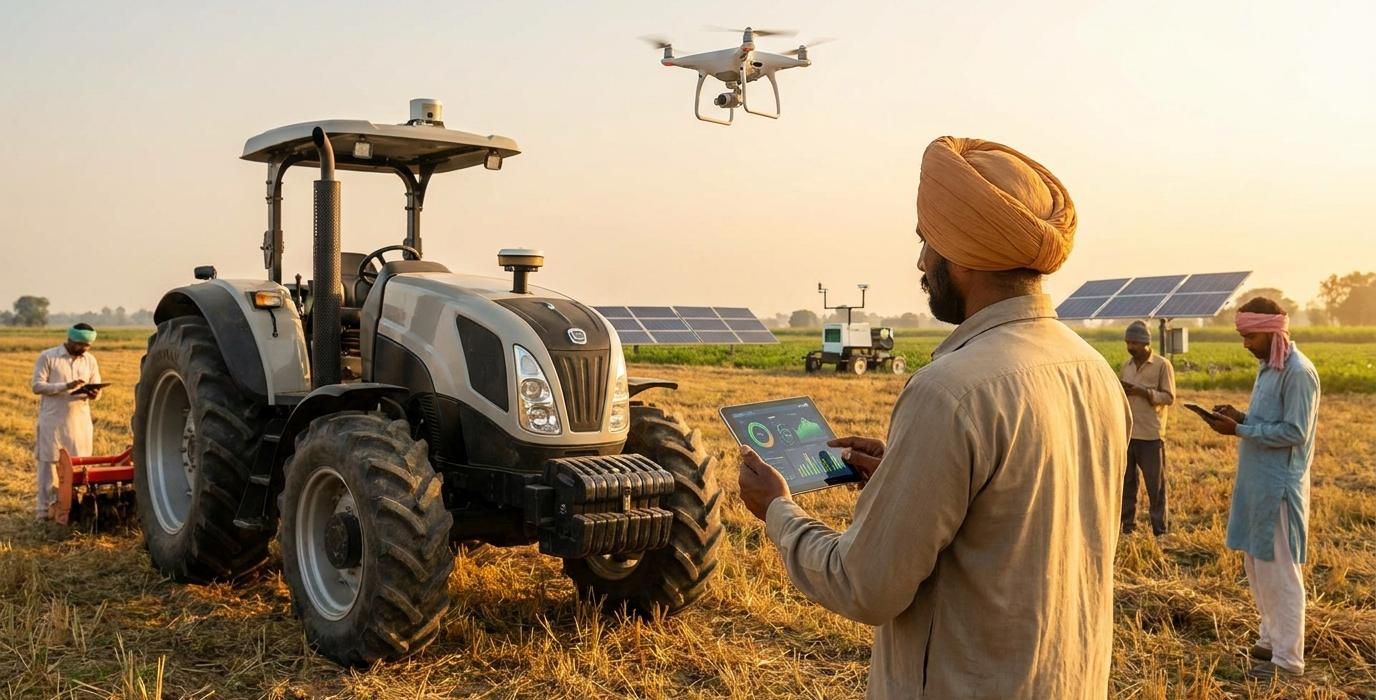
Looking ahead, the potential for AI in Indian agriculture is immense. We can expect to see further advancements in areas such as automated farm machinery driven by AI, including robotic harvesters and autonomous tractors, which will increase efficiency and address labour shortages. Predictive analytics will become even more sophisticated, not only forecasting yields but also identifying optimal times for planting and harvesting based on complex market and climate models.
There’s also significant research underway in using AI for seed development and breeding. By analysing genetic data and environmental factors, AI can help accelerate the creation of new crop varieties that are more resilient to climate change, resistant to pests, and higher in nutritional value. Imagine crops that are naturally resistant to drought or require fewer chemical inputs, all thanks to AI-driven genetic insights.
A truly surprising development on the horizon is the integration of blockchain technology with AI. This could create transparent and secure supply chains, allowing consumers to trace the origin and journey of their food from farm to fork, while also providing farmers with secure, verifiable data on their farming practices. This fusion of AI and blockchain holds the promise of building greater trust and accountability in the food system. The ongoing evolution promises a more productive, sustainable, and prosperous future for Indian agriculture, benefiting farmers and consumers alike.
Frequently Asked Questions
What are the most common AI tools farmers are using in 2026?
Currently, the most popular AI tools include mobile apps for pest and disease identification, AI-powered weather forecasting and advisory services, drone-based crop health monitoring, and precision irrigation management systems. These are often accessible via user-friendly smartphone applications.
How much does it typically cost for a smallholder farmer to adopt AI technology?
Costs vary significantly, but many solutions are moving towards affordable subscription or pay-per-use models. For smallholder farmers, services like AI-driven advisories or drone imaging can range from a few hundred to a few thousand rupees per season, making them far more accessible than outright purchase of equipment.
Are AI tools available in local Indian languages?
Yes, a significant push is being made to develop AI agri-tech platforms with interfaces and content in various regional Indian languages. Many startups and government initiatives prioritise localisation to ensure ease of use for farmers across different states.
What are the biggest challenges to wider AI adoption in Indian agriculture?
Challenges include ensuring consistent internet connectivity in rural areas, providing adequate digital literacy training for farmers, addressing initial skepticism or resistance to new technologies, and ensuring that AI solutions are truly tailored to the diverse agro-climatic zones and socio-economic conditions across India.
Will AI replace farmers?
No, the goal of AI in agriculture is not to replace farmers but to empower them. AI tools provide data-driven insights and automate repetitive tasks, allowing farmers to make better decisions, improve efficiency, and focus on higher-value aspects of farming. It augments human capabilities rather than substituting them.