Key Takeaways
- Artificial intelligence is rapidly advancing India’s healthcare, improving diagnostic accuracy and speed across major cities and rural areas.
- AI-powered tools are proving invaluable in early disease detection, particularly for conditions like diabetic retinopathy and certain cancers.
- The integration of AI is enhancing patient access to specialist consultations, even in remote locations, through telemedicine platforms.
- Data privacy and ethical considerations are paramount as AI systems become more embedded in Indian healthcare.
AI’s Dawn: Transforming Diagnostics in 2026
Imagine a world where a potential heart condition is flagged not hours, but minutes, after a scan, or where the earliest signs of a sight-threatening disease are detected with unparalleled accuracy. This isn’t science fiction; it’s the reality unfolding across India in 2026, thanks to the burgeoning integration of Artificial Intelligence (AI) into our healthcare system. From bustling metros like Mumbai and Delhi to the more remote villages of Kerala and Rajasthan, AI is quietly revolutionising how we diagnose and manage our health.
The speed at which AI algorithms can process vast amounts of medical data – be it X-rays, MRIs, or patient records – is simply astounding. This capability allows for quicker, more consistent diagnoses, often spotting subtle anomalies that might be missed by the human eye, especially under pressure. We’re seeing AI not just as a supplementary tool, but as an indispensable partner for doctors, enhancing their diagnostic prowess and ultimately leading to better patient outcomes. The focus is shifting towards proactive and predictive healthcare, a significant leap from the reactive models of the past.
Consider the sheer volume of medical imagery generated daily in India. AI models, trained on millions of such images, can analyse them with remarkable speed and precision. This not only frees up valuable clinician time but also helps reduce diagnostic errors, a persistent challenge in any healthcare system. The promise of AI is immense, offering a pathway to more accessible, affordable, and accurate healthcare for every Indian.
Early Detection: Aiding the Fight Against Disease
One of the most impactful applications of AI in Indian healthcare today is its role in early disease detection. Conditions that, if caught late, can lead to severe complications or mortality are now being identified at their nascent stages. This is particularly true for non-communicable diseases that pose a significant burden on our population.
Diabetic retinopathy, a leading cause of blindness, is a prime example. AI algorithms are being deployed in eye care centres across India, from established hospitals in Chennai to mobile screening units in rural Tamil Nadu. These systems analyse retinal images with extraordinary speed, flagging patients who require immediate attention from an ophthalmologist. Early intervention can prevent irreversible vision loss, a monumental benefit for millions.
Similarly, AI is showing great promise in the early detection of various cancers. Machine learning models are being trained to identify subtle patterns in mammograms, CT scans, and even blood tests that might indicate the presence of malignant cells. In cities like Bengaluru, AI-powered platforms are helping radiologists sift through thousands of scans, prioritising those that show suspicious anomalies. This proactive approach dramatically improves the chances of successful treatment and recovery, offering a new ray of hope for patients and their families.
A surprising fact is that some AI models are now achieving diagnostic accuracy rates comparable to, and in some specific tasks, even exceeding those of experienced human specialists. This isn’t about replacing doctors, but about augmenting their abilities, providing a powerful second opinion that is consistently available and tirelessly accurate.
Bridging the Gap: AI in Rural Healthcare Access
India’s vast geography presents a persistent challenge: ensuring equitable access to quality healthcare, especially in its remote and underserved regions. AI is emerging as a powerful enabler in bridging this critical gap. Through AI-powered telemedicine platforms, specialist consultations are no longer confined to major urban centres.
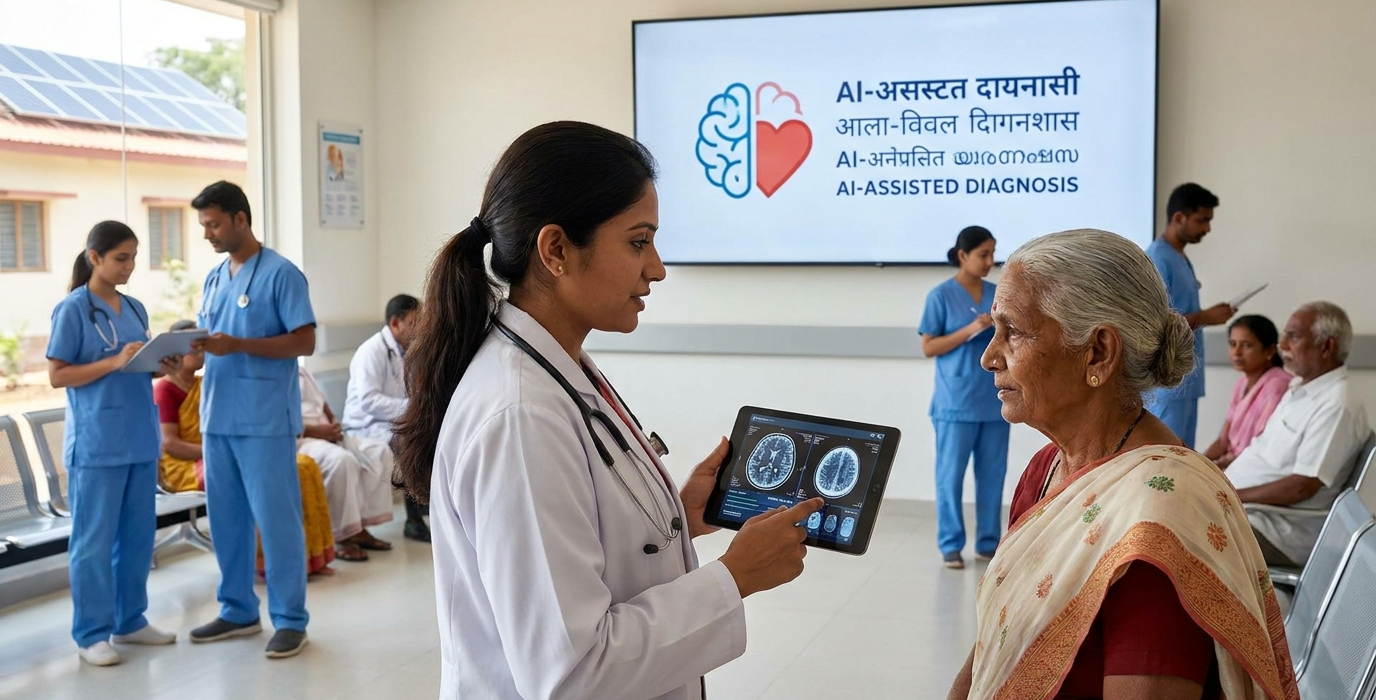
Imagine a farmer in a village near Bikaner, Rajasthan, experiencing a persistent cough. Instead of a long, arduous journey to the nearest district hospital, they can now connect with a pulmonologist via a video consultation. The AI component comes in beforehand, analysing preliminary data – perhaps a basic chest X-ray taken at the local primary health centre, or even symptom-based questionnaires – to provide the specialist with a more informed picture even before the consultation begins.
These AI-driven systems are designed to be user-friendly, often incorporating local languages and intuitive interfaces. This makes them accessible to healthcare workers in rural settings who may not have extensive technological backgrounds. The AI can assist in triaging patients, identifying those who require urgent specialist intervention and those who can be managed at the local level. This significantly reduces the burden on overburdened rural health infrastructure.
Furthermore, AI can help in analyzing population health trends in specific regions. By processing anonymized data from these remote areas, public health officials can gain insights into prevalent diseases, enabling targeted interventions and resource allocation. This data-driven approach is crucial for improving health outcomes across the entire nation, not just in its most developed areas.
The Algorithmic Advantage: Enhancing Radiologist Workflows
Radiology is an area where AI has made particularly significant strides. The sheer volume of medical images – X-rays, CT scans, MRIs – that radiologists must interpret daily can lead to fatigue and potential oversight. AI algorithms are stepping in to act as tireless assistants, enhancing efficiency and accuracy.
In leading hospitals like Apollo in Hyderabad, AI-powered software is now integrated into Picture Archiving and Communication Systems (PACS). These systems can pre-screen images, flagging potential abnormalities for the radiologist’s immediate attention. This not only speeds up the diagnostic process but also helps in prioritising critical cases. The AI acts as a vigilant first pass, ensuring that no potential red flag goes unnoticed.
Consider the challenge of detecting subtle fractures or early-stage lung nodules. AI models, trained on massive datasets of labelled images, can identify these minute details with a consistency that is hard to match. They can also quantify findings, such as the size and volume of a lesion, providing objective data for tracking disease progression or treatment response.
A surprising fact is the development of AI tools that can even predict the likelihood of a condition based on imaging patterns, moving beyond simple detection to a more predictive diagnostic approach. This doesn’t diminish the radiologist’s role; rather, it empowers them with more sophisticated tools, allowing them to focus their expertise on complex cases and patient consultations. This symbiotic relationship between human expertise and AI is the future of diagnostic imaging.
Ethical AI: Navigating Data Privacy and Bias
As AI becomes more deeply embedded in healthcare, the ethical considerations surrounding its use are paramount. India, with its diverse population and vast data landscape, faces unique challenges in ensuring that AI systems are fair, transparent, and secure.
Data privacy is a major concern. Medical records contain highly sensitive personal information, and robust security measures are essential to prevent breaches. The legal and regulatory frameworks in India are evolving to address these concerns, with a strong emphasis on anonymization and secure data handling practices. We must ensure that patient trust is maintained, and that their data is used responsibly and ethically.
Another critical aspect is algorithmic bias. If the data used to train AI models is not representative of the entire population, the AI may perform poorly for certain demographic groups. For instance, an AI trained primarily on data from one ethnic group might be less accurate when diagnosing conditions in another. This can exacerbate existing health disparities.
To combat this, there is a growing focus on developing AI models that are trained on diverse datasets that reflect India’s rich demographic tapestry. Furthermore, continuous monitoring and auditing of AI performance are crucial to identify and rectify any biases that may emerge. Transparency in how AI algorithms make decisions is also key, allowing healthcare professionals to understand and, if necessary, question the AI’s recommendations. The goal is to build AI systems that are not only effective but also equitable and trustworthy for all citizens.
The Future of AI in Indian Healthcare: Beyond Diagnosis
While AI’s impact on diagnostics is already profound, its potential in Indian healthcare extends far beyond this crucial first step. We are on the cusp of an era where AI will transform multiple facets of patient care, from treatment planning to drug discovery and even personalized medicine.
In treatment planning, AI can analyse a patient’s genetic makeup, medical history, and the specific characteristics of their disease to suggest the most effective treatment pathways. This is particularly relevant in complex fields like oncology, where personalized approaches can dramatically improve outcomes. Imagine an AI system in a hospital in Kolkata recommending a tailored chemotherapy regimen based on the patient’s unique profile.
Drug discovery is another area poised for revolution. AI can accelerate the process of identifying potential drug candidates and predicting their efficacy and side effects, significantly reducing the time and cost involved in bringing new medicines to market. This could lead to faster development of treatments for diseases that currently have limited options.
Furthermore, AI is driving the development of personalized medicine. By analysing vast amounts of individual patient data, AI can help predict disease risk, tailor preventive strategies, and optimize treatment plans for each person. This shift towards highly individualized care promises to make healthcare more effective and efficient. The ongoing research and development in this sector, supported by government initiatives and private investment, indicate a bright and transformative future for AI in Indian healthcare, benefitting millions across the country.
Frequently Asked Questions
What are the biggest benefits of AI in Indian healthcare in 2026?
The primary benefits include significantly improved diagnostic accuracy and speed, earlier detection of diseases like cancer and diabetic retinopathy, and enhanced access to specialist care, particularly in rural areas through AI-powered telemedicine. AI also helps in optimizing workflows for healthcare professionals.
How is AI addressing the challenge of healthcare access in rural India?
AI-driven telemedicine platforms are crucial. They enable remote consultations, assist local healthcare workers with initial assessments and triage, and provide specialists with pre-analysed data, effectively extending the reach of medical expertise to underserved populations without requiring them to travel long distances.
What are the main ethical concerns regarding AI in Indian healthcare?
Key concerns include ensuring patient data privacy and security, preventing algorithmic bias that could lead to disparities in care for different demographic groups, and maintaining transparency in how AI makes diagnostic or treatment recommendations. Robust regulatory frameworks and continuous auditing are vital.
Is AI replacing doctors in India?
No, AI is designed to augment, not replace, doctors. It acts as a powerful tool that enhances their diagnostic capabilities, speeds up repetitive tasks, and provides insights from vast datasets. The human touch, empathy, and critical decision-making of doctors remain indispensable.