Key Takeaways
- AI-powered precision farming is optimizing water and fertilizer use, significantly reducing costs and environmental impact for Indian farmers in 2026.
- Drones equipped with AI are providing real-time crop health monitoring and pest detection, enabling proactive interventions and saving yields.
- Predictive analytics, driven by AI, are helping farmers make informed decisions about planting, harvesting, and market timing, increasing profitability.
- AI is enhancing agricultural education and support, bringing advanced farming techniques and best practices to remote Indian villages.
Sowing the Seeds of Smartness: AI Takes Root in Indian Fields
The Indian agricultural landscape is undergoing a profound transformation, moving beyond traditional practices to embrace the power of artificial intelligence. As we navigate the 2026 harvest season, it’s clear that AI is no longer a futuristic concept but a present-day reality, fundamentally reshaping how our farmers cultivate their land. This shift is driven by the urgent need to increase yields, improve resource efficiency, and build resilience against the unpredictable challenges of climate change. From the vast plains of Punjab to the diverse terrains of Tamil Nadu, AI-powered solutions are being deployed, promising a more prosperous and sustainable future for Indian agriculture. We are witnessing a new era where data, analytics, and automation are becoming as crucial as the monsoon rains.
The benefits are tangible and far-reaching. Farmers are experiencing reduced operational costs due to optimized use of water, fertilizers, and pesticides. This not only bolsters their bottom lines but also contributes to a healthier environment. The adoption of AI is empowering even smallholder farmers with access to sophisticated tools and insights previously available only to large corporations. This democratization of technology is a critical step towards ensuring food security for India’s burgeoning population. As we delve deeper, we will explore the specific technologies and their impact across various agricultural domains.
Precision Farming: The AI-Driven Revolution in Resource Management
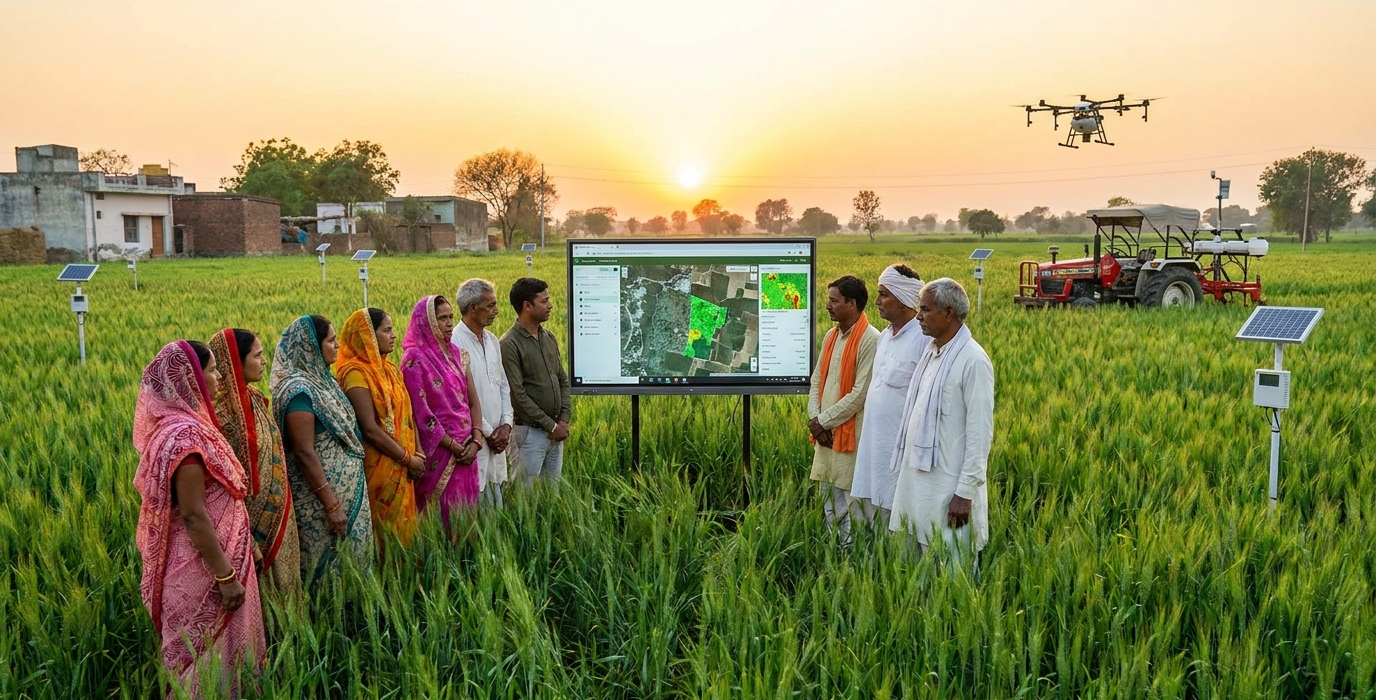
Precision farming, powered by AI, is at the forefront of this agricultural revolution. Gone are the days of blanket application of water and fertilizers. Today, AI algorithms analyze vast datasets, including soil composition, weather patterns, and crop health imagery, to deliver resources exactly where and when they are needed. This granular approach ensures that every plant receives optimal nourishment, leading to healthier growth and significantly higher yields. Imagine a farmer in Haryana using AI-guided irrigation systems that adjust water flow based on real-time soil moisture readings. This not only conserves precious water resources but also prevents waterlogging and nutrient runoff.
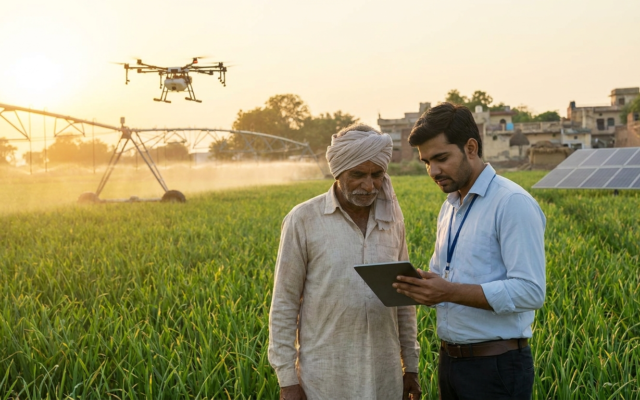
AI-powered sensors, often integrated into drones or ground-based robots, continuously monitor field conditions. These sensors collect data on soil pH, nutrient levels, and the presence of early-stage diseases or pests. Machine learning models then process this information, identifying anomalies and recommending precise interventions. For instance, a drone might detect a localized infestation of stem borers in a sugarcane field in Uttar Pradesh. Instead of spraying pesticides across the entire field, the AI system will pinpoint the affected areas, allowing for targeted application, thereby reducing chemical usage by up to 30% and minimizing environmental contamination. This efficiency translates directly into cost savings for farmers, making their operations more economically viable.
Drones and AI: The Eyes in the Sky for Crop Surveillance
The ubiquess of drones, coupled with sophisticated AI image analysis, has transformed crop surveillance into an incredibly efficient and proactive process. These aerial scouts are now indispensable tools for Indian farmers, providing an unprecedented bird’s-eye view of their fields. Equipped with high-resolution cameras and multispectral sensors, drones can capture detailed imagery that reveals subtle changes in crop health, often before they are visible to the human eye. AI algorithms then process these images, identifying patterns indicative of stress, disease, or nutrient deficiencies. This early detection is crucial for timely intervention, preventing minor issues from escalating into major crop losses.
Consider a farmer in the coffee plantations of Coorg, Karnataka. A drone survey might reveal patches of coffee plants showing early signs of leaf rust. The AI system analyzes the spectral signatures of these leaves, cross-referencing them with known disease patterns. It can then alert the farmer to the specific location and severity of the outbreak. This allows for targeted spraying of fungicides only on the affected plants, rather than a broad-spectrum application that is both costly and environmentally detrimental. This technology is particularly valuable for large estates or for farmers managing crops spread over difficult terrain.
A surprising fact is that in some regions, AI-powered drone analysis is now being used to predict yield with remarkable accuracy weeks before harvest. By analyzing plant density, growth patterns, and fruit development captured by drones, these systems can provide farmers with an estimated harvest volume. This intelligence is invaluable for market planning, enabling farmers to negotiate better prices and secure buyers well in advance, reducing post-harvest losses and market volatility. The speed and accuracy with which drones and AI can cover vast areas, providing actionable insights, are revolutionizing how farms are managed.
AI-Powered Pest and Disease Detection
The ability of AI to identify pests and diseases at their nascent stages is a game-changer. Machine learning models are trained on vast libraries of images depicting various crop ailments and pest infestations. When a drone or a ground sensor captures an image, the AI can rapidly compare it against this database, identifying the specific threat with high precision. This allows farmers to deploy the correct treatment, often a specific bio-pesticide or a targeted chemical, rather than using a generic solution that might be ineffective or harmful. This targeted approach is not only more effective but also significantly reduces the overall use of agrochemicals, aligning with India’s growing focus on sustainable agriculture.
Predictive Analytics: Forecasting the Future of the Harvest
Predictive analytics, powered by AI, is providing Indian farmers with a powerful crystal ball, enabling them to make data-driven decisions that maximize profitability and minimize risk. By analyzing historical data, current market trends, weather forecasts, and even satellite imagery, AI models can predict optimal planting times, forecast potential yields, and even suggest the most lucrative markets for specific crops. This foresight empowers farmers to move away from guesswork and towards strategic planning. For instance, an AI system might analyze a confluence of factors – favorable rainfall predictions, strong market demand for basmati rice, and favorable soil conditions in Punjab – and recommend an early planting schedule.
This predictive capability extends to market dynamics. AI can analyze global commodity prices, import-export trends, and local demand to advise farmers on which crops to cultivate for the best return on investment. Imagine a farmer in Maharashtra, typically reliant on sugarcane, receiving an AI-generated recommendation to diversify into high-value pulses for the upcoming season based on projected market shortages and favorable government incentives. This proactive market intelligence helps farmers align their production with actual demand, thereby avoiding gluts and price crashes. It also helps them plan their logistics and storage more effectively, ensuring their produce reaches the market in optimal condition.
A surprising insight from recent AI deployments is their ability to predict the impact of climate events on specific crops. In regions prone to unseasonal rains or heatwaves, AI models can now forecast the potential damage to specific crop varieties with a high degree of accuracy. This allows farmers to implement precautionary measures, such as advanced harvesting, protective coverings, or switching to more resilient crop breeds, well in advance of the predicted event. This level of foresight was unimaginable just a few years ago and is a testament to the rapid advancements in AI applications for agriculture.
AI in Agricultural Education and Extension Services
The reach of AI in Indian agriculture extends beyond the fields and into the realm of education and farmer support. Many remote villages still lack access to up-to-date agricultural knowledge and best practices. AI-powered platforms are bridging this gap by delivering personalized advice and training directly to farmers, often via their mobile phones. These intelligent systems can answer queries, diagnose crop problems, and provide tailored recommendations based on the farmer’s specific location, soil type, and the crops they are cultivating. This democratizes access to expert agricultural knowledge, empowering farmers who might not have the resources to consult with traditional extension officers.
Consider the use of AI-powered chatbots designed to interact with farmers in local languages. A farmer in West Bengal facing an issue with their paddy crop can simply type or speak their problem into the app. The AI, trained on a vast repository of agricultural information, can provide step-by-step solutions, recommend appropriate organic or chemical treatments, and even guide them on best practices for soil health and water management. These platforms can also be used to disseminate information about government schemes, new farming technologies, and market opportunities, ensuring that no farmer is left behind.
Furthermore, AI is being used to create personalized learning modules for farmers. Based on their existing knowledge, the crops they grow, and the challenges they face, AI can curate a learning path, recommending videos, articles, and interactive tutorials. This adaptive learning approach makes agricultural education more engaging and effective, leading to better adoption of modern farming techniques. The goal is to create a more informed and skilled farming community, capable of leveraging technology to enhance their livelihoods and contribute to national food security.
The Future is Now: Integrating AI for Sustainable and Profitable Farming
As we look ahead, the integration of AI into Indian agriculture is not just about improving yields; it’s about building a more sustainable, resilient, and profitable farming ecosystem. The technologies we’ve discussed – precision farming, drone surveillance, predictive analytics, and AI-driven education – are not isolated advancements. They are converging to create a holistic approach to farm management. This means that a farmer in 2026 can not only predict the weather and market demand but also precisely manage their resources, detect and combat threats proactively, and continuously learn and adapt.
The increasing adoption of these technologies is leading to a significant reduction in the environmental footprint of agriculture. By optimizing the use of water, fertilizers, and pesticides, AI contributes to cleaner water bodies and healthier soils. This aligns perfectly with India’s commitment to sustainable development goals and its ambition to become a leader in green agriculture. The economic benefits are equally compelling. Increased yields, reduced costs, and better market access translate into higher incomes for farmers, improving their quality of life and contributing to rural economic growth.
It’s crucial to acknowledge that the successful widespread adoption of AI requires continued investment in digital infrastructure, farmer training, and accessible technology platforms. However, the progress made by 2026 is undeniable. AI is no longer a distant dream for Indian agriculture; it is a powerful engine driving its present and shaping its future. The ‘smart’ farmer of today is armed with data, insights, and intelligent tools, ready to face the challenges and seize the opportunities of a changing world.
Frequently Asked Questions
How is AI helping Indian farmers save money?
AI is helping Indian farmers save money by enabling precision farming, which optimizes the use of water, fertilizers, and pesticides. This means less waste and lower input costs. Additionally, predictive analytics help farmers make smarter decisions about planting and selling, leading to better prices and reduced losses.
Can AI really help detect crop diseases early?
Yes, AI is highly effective at early disease and pest detection. Drones equipped with AI-powered cameras can identify subtle signs of crop distress or infestation that are invisible to the human eye. This allows farmers to treat problems quickly and precisely, preventing widespread damage and saving entire crops.
Is AI technology accessible to small farmers in India?
Increasingly, yes. AI-powered agricultural solutions are being developed with accessibility for smallholder farmers in mind. Mobile apps, AI-driven chatbots that work in local languages, and affordable sensor technologies are making these advanced tools available to a wider range of farmers across India.
What are the environmental benefits of AI in Indian farming?
AI contributes to environmental sustainability by significantly reducing the overuse of water and agrochemicals. Precision application of resources minimizes pollution and soil degradation. This makes farming practices more eco-friendly and supports India’s goals for greener agriculture.