Key Takeaways
- AI-powered tools are dramatically improving crop yields and reducing resource waste in Indian agriculture, offering a lifeline to millions of farmers.
- From precision irrigation to pest detection, these technologies are making farming more efficient, sustainable, and profitable.
- Early adoption can lead to significant cost savings and enhanced market competitiveness for Indian farmers.
- Understanding the available AI solutions and how to integrate them is crucial for navigating the future of Indian agriculture.
The Dawn of the Algorithmic Agrarian: AI Takes Root in India
The monsoon rains have always dictated the rhythm of Indian agriculture. For centuries, farmers have relied on nature’s timing, their wisdom passed down through generations. But today, a new force is reshaping this ancient landscape: Artificial Intelligence. AI is no longer a futuristic concept confined to tech hubs; it’s actively being deployed in fields across India, from the fertile plains of Punjab to the spice-laden hills of Kerala. This isn’t about replacing the farmer’s touch, but about augmenting it with data-driven insights, leading to unprecedented improvements in efficiency, sustainability, and profitability. We’re witnessing a paradigm shift, where algorithms and analytics are becoming as vital as the soil and sunlight.
The impact is profound and far-reaching. Farmers are gaining the ability to make more informed decisions, predict outcomes with greater accuracy, and optimize their resource allocation like never before. This technological revolution promises to address some of the most pressing challenges facing Indian agriculture, including climate change, water scarcity, and the need to feed a growing population. The integration of AI is not just an upgrade; it’s a transformation that could redefine rural economies and ensure food security for generations to come.
Precision Farming: The Power of Knowing Exactly What Your Crops Need
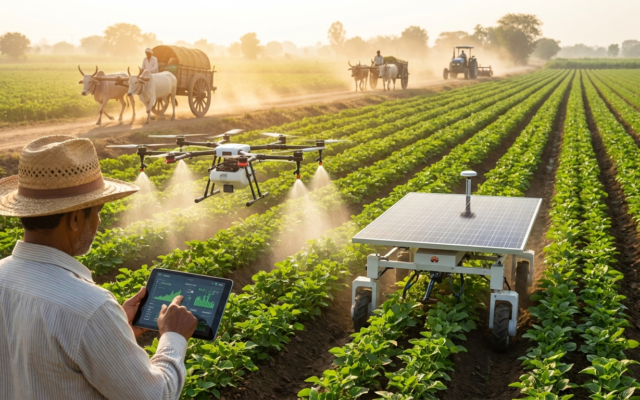
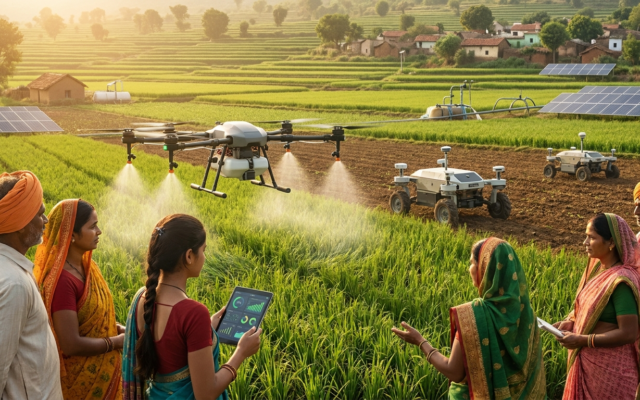
Imagine a farmer in a vast field, not guessing about water needs, but knowing precisely where and how much to irrigate. This is the essence of precision farming, and AI is its central nervous system. Through a network of sensors deployed across the fields, collecting real-time data on soil moisture, nutrient levels, and temperature, AI algorithms can analyze this information. They then translate these complex datasets into actionable insights delivered directly to the farmer’s smartphone or a simple dashboard. This means water is only applied where and when it’s needed, drastically reducing wastage – a critical concern in water-stressed regions like Gujarat.
This granular approach extends to nutrient management as well. Instead of blanket fertilization, AI can identify specific areas requiring particular nutrients, allowing for targeted application. This not only saves on expensive fertilizers but also prevents environmental pollution caused by runoff. For instance, an AI system might detect a nitrogen deficiency in a specific quadrant of a paddy field in West Bengal, prompting a precise, localized dose of urea, rather than an entire field application. This level of accuracy was unimaginable just a decade ago.
Smart Irrigation and Nutrient Management
The benefits are tangible. Farmers can achieve higher yields by ensuring optimal growing conditions for their crops. They also see a significant reduction in input costs, directly boosting their profit margins. Furthermore, by minimizing the use of water and chemicals, precision farming contributes to a more sustainable agricultural ecosystem, protecting the land for future use.
Predictive Analytics: Forecasting the Future of Your Harvest
Weather patterns are notoriously unpredictable, posing a constant threat to farmers. However, AI-powered predictive analytics are equipping them with a powerful new tool to mitigate these risks. By analyzing vast amounts of historical weather data, satellite imagery, and current meteorological conditions, AI models can forecast weather events with remarkable accuracy. This allows farmers to make proactive decisions, such as timing planting and harvesting to avoid adverse weather, or preparing for potential droughts or unseasonal frosts.
Consider a farmer in Rajasthan, known for its arid climate. AI can predict the onset of a heatwave weeks in advance, enabling the farmer to implement heat-stress management techniques for their crops. This could involve specific irrigation schedules or the use of shade nets, safeguarding the yield from potentially devastating damage. Similarly, in the hilly regions of Himachal Pradesh, AI can forecast unseasonal hailstorms, prompting farmers to take protective measures for their apple orchards.
Early Warning Systems and Risk Mitigation
These predictive capabilities extend beyond weather. AI can also forecast pest and disease outbreaks. By analyzing patterns in environmental data and crop health indicators, AI systems can flag potential issues before they become widespread epidemics. This early warning system allows farmers to intervene with targeted treatments, preventing significant crop loss and reducing the need for broad-spectrum pesticides.
“AI is not just about technology; it’s about empowering the farmer with knowledge. It’s about giving them the foresight to navigate the uncertainties of nature with confidence.”
Advertisement300×250 / native
AI for Pest and Disease Detection: The Invisible Watchman in Your Fields
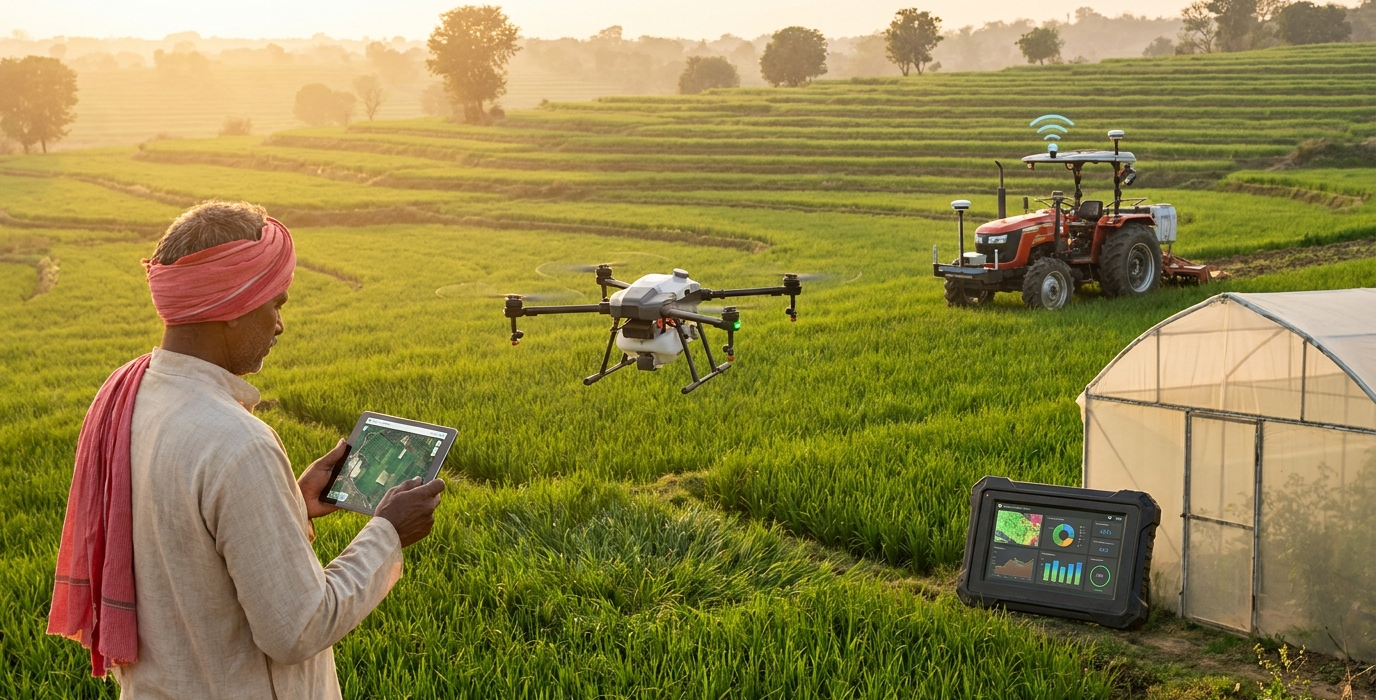
The battle against pests and diseases is a perpetual one for farmers. Traditionally, this involved manual scouting, which can be time-consuming and prone to missing early signs of infestation. AI is revolutionizing this process through sophisticated image recognition and machine learning algorithms. Drones equipped with high-resolution cameras can fly over fields, capturing images of crops. AI then analyzes these images, identifying subtle changes in leaf colour, texture, or structure that are indicative of specific pests or diseases, often long before they are visible to the human eye.
This technology is particularly impactful in regions with diverse agricultural practices. For instance, in the coffee plantations of Chikmagalur, Karnataka, AI can be trained to detect early signs of coffee leaf rust, a common fungal disease that can devastate yields. The system can differentiate between various stages of the disease and even identify specific pest species, allowing for highly targeted interventions. This precision means farmers can apply the exact treatment needed, minimizing chemical use and environmental impact.
Drone Technology and Image Analysis
Beyond drones, even smartphone applications are now leveraging AI for pest and disease diagnosis. Farmers can simply upload a photo of an affected plant, and the AI, trained on millions of images, can identify the problem and suggest appropriate remedies. This democratizes access to expert knowledge, making it available to even the most remote farmers.
A surprising fact is that some AI systems can now differentiate between beneficial insects and harmful pests, helping farmers avoid unnecessary eradication of natural predators. This nuanced understanding is a significant leap forward in integrated pest management.
Yield Prediction and Optimization: Maximizing Every Harvest
Maximizing yield is the ultimate goal for any farmer, and AI is providing unprecedented tools to achieve this. By integrating data from various sources – soil conditions, weather patterns, historical yield data, and even satellite imagery – AI models can predict crop yields with remarkable accuracy. This foresight allows farmers to plan their logistics, from harvesting schedules to market access, more effectively.
For example, an AI system might predict a bumper crop of sugarcane in Uttar Pradesh. This information can be shared with local sugar mills, allowing them to adjust their processing capacity and logistics accordingly, preventing bottlenecks. Conversely, if a lower yield is predicted, farmers can adjust their sales strategies or explore alternative markets.
Data Integration and Machine Learning Models
The sophistication of these AI models is constantly improving. They learn from each season’s data, refining their predictions and recommendations. This continuous learning loop ensures that farmers benefit from increasingly accurate insights. Furthermore, AI can analyze the impact of different farming practices on yield, helping farmers identify the most effective strategies for their specific land and crops. This data-driven approach moves farming away from tradition and towards scientifically optimized outcomes.
Market Access and Price Forecasting: Connecting Farmers to Better Opportunities
Farming doesn’t end with the harvest; it extends to selling the produce at a fair price. AI is now playing a crucial role in bridging the gap between farmers and markets, offering insights into price fluctuations and demand patterns. By analyzing market trends, consumer behaviour, and even global commodity prices, AI can help farmers anticipate future price movements. This allows them to make informed decisions about when and where to sell their produce, potentially fetching better prices and avoiding distress sales.
Imagine a farmer in Andhra Pradesh growing tomatoes. An AI platform could analyze demand from various cities, predict price trends in wholesale markets, and even identify potential bulk buyers. This empowers the farmer to negotiate better terms or choose the most lucrative sales channel. This is a significant departure from the traditional reliance on local middlemen, who often dictate prices.
Leveraging Market Data and Consumer Insights
Furthermore, AI can help farmers understand evolving consumer preferences. With a growing demand for organic produce or specific varietals, AI can guide farmers on what to grow to meet market needs. This proactive approach can lead to higher profitability and reduced risk of unsold produce. The ability to access and interpret this market intelligence is a game-changer for small and marginal farmers who often lack the resources to conduct such analysis themselves.
A surprising fact is that some AI platforms are now integrating blockchain technology to ensure transparency in the supply chain, allowing farmers to prove the origin and quality of their produce, thus commanding premium prices.
The Road Ahead: Challenges and Opportunities for Indian Agriculture
While the promise of AI in Indian agriculture is immense, its widespread adoption is not without its challenges. Cost of technology, access to reliable internet connectivity, and the need for digital literacy among farmers are significant hurdles. Many farmers, especially in remote areas, may not have the financial resources to invest in expensive AI-powered equipment or the technical know-how to operate them effectively. Bridging this digital divide is paramount.
However, the opportunities far outweigh the challenges. The Indian government, through initiatives like Digital India and various agricultural technology missions, is actively promoting the integration of AI and other digital tools in farming. Private sector companies and startups are also developing affordable and user-friendly AI solutions tailored for the Indian context. The increasing availability of open-source AI tools and the development of localized AI applications are making these technologies more accessible.
Government Initiatives and Private Sector Innovation
We are also seeing a rise in farmer producer organizations (FPOs) that are aggregating resources and knowledge, enabling collective adoption of AI technologies. These organizations can negotiate bulk discounts on technology, provide training, and share best practices, accelerating the adoption process. The future of Indian agriculture is undeniably linked to its ability to embrace these intelligent technologies. By investing in infrastructure, education, and accessible solutions, India can truly harness the power of AI to cultivate a smarter, more sustainable, and prosperous agricultural future for all its citizens.
Frequently Asked Questions
What are the biggest benefits of AI in Indian agriculture?
AI offers significant benefits, including increased crop yields, reduced waste of resources like water and fertilizers, early detection of pests and diseases, and improved market access through price forecasting. These advancements lead to greater profitability and sustainability for farmers.
How can farmers access AI technology if they have limited resources?
Several avenues exist: government subsidies and schemes, farmer producer organizations (FPOs) for collective purchasing and training, and affordable mobile-based AI applications are making technology more accessible. Many startups are also developing cost-effective solutions.
Is AI likely to replace farmers in India?
No, AI is designed to augment, not replace, farmers. It provides them with better tools and insights to make more informed decisions, enhancing their capabilities and making farming more efficient and less labor-intensive in specific tasks, but the farmer’s knowledge and oversight remain crucial.
What are the main challenges to adopting AI in Indian farming?
The primary challenges include the initial cost of technology, ensuring reliable internet connectivity in rural areas, and the need for digital literacy and training for farmers. Overcoming these requires concerted efforts from government, industry, and community initiatives.