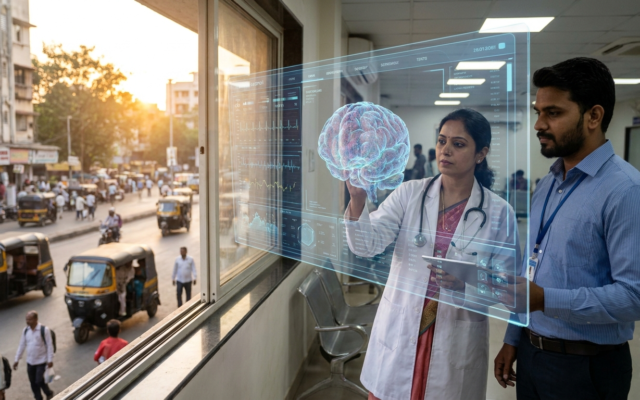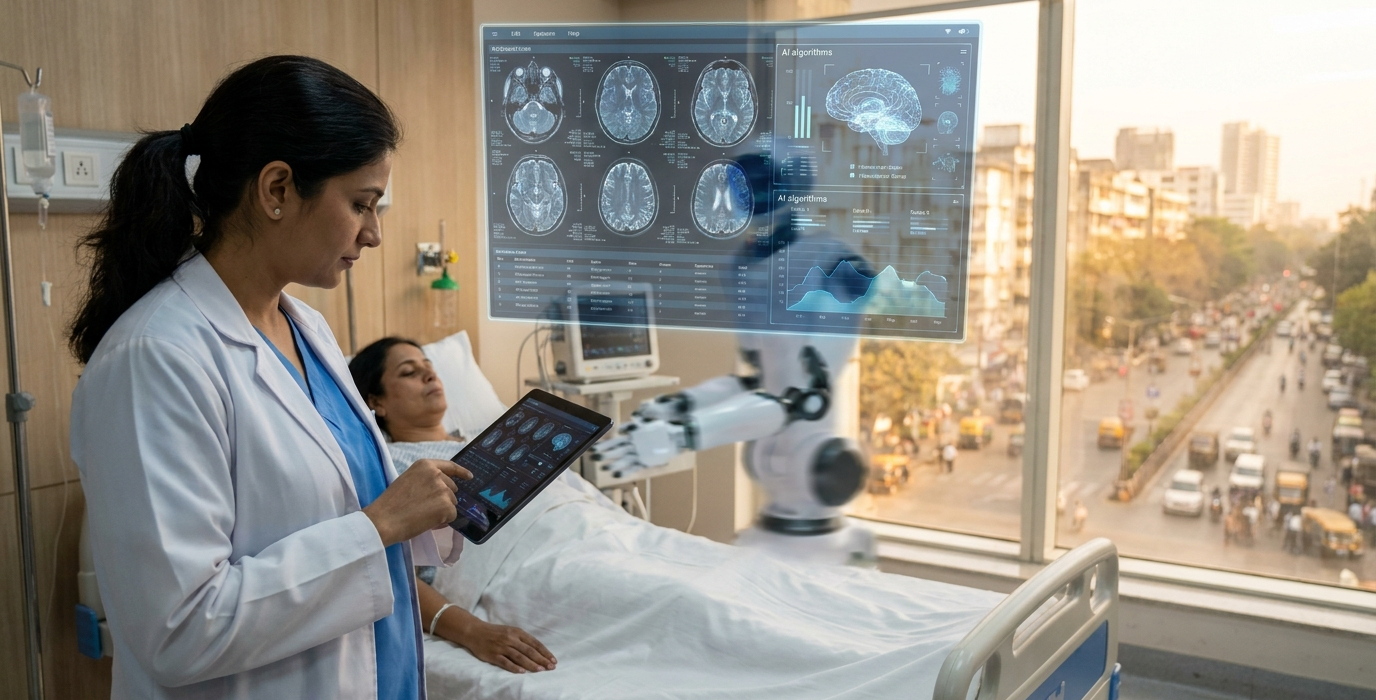
Artificial intelligence (AI) is no longer a futuristic dream; it’s a present-day reality rapidly reshaping industries across the globe. In India, a nation grappling with the immense challenge of providing accessible and quality healthcare to its vast population, AI is emerging as a powerful ally. From diagnosing diseases with unprecedented accuracy to streamlining administrative tasks and personalizing patient treatment, AI is ushering in a new era of medical innovation. We are witnessing a paradigm shift where technology isn’t just assisting healthcare professionals but is actively contributing to better patient outcomes and a more efficient healthcare ecosystem.
The AI Diagnosis Revolution: Seeing the Unseen
One of the most profound impacts of AI in Indian healthcare lies in its diagnostic capabilities. Imagine a world where subtle signs of diseases, often missed by the human eye, are detected early, leading to more effective treatment. This is becoming a reality thanks to AI algorithms trained on vast datasets of medical images and patient records. In cities like Bengaluru, renowned for its tech prowess, startups are developing AI-powered tools that can analyze X-rays, CT scans, and MRIs with remarkable speed and precision. These systems can identify anomalies indicative of conditions like diabetic retinopathy, tuberculosis, and even certain types of cancer, often at stages where early intervention is crucial.
Consider the case of detecting tuberculosis. Traditional methods can be time-consuming and require specialized laboratory infrastructure, which isn’t always readily available in remote parts of India. AI algorithms, however, can analyze chest X-rays to flag potential TB cases, allowing for faster referral and diagnosis. This is particularly significant in rural areas where access to radiologists and advanced diagnostic facilities is limited. The ability of AI to sift through thousands of images and pinpoint minute abnormalities democratizes advanced diagnostics, bringing cutting-edge medical insights closer to every patient, regardless of their location.
A surprising fact is that some AI models are now achieving accuracy rates comparable to, and in some specific tasks, even exceeding those of experienced human radiologists. This doesn’t mean AI is replacing doctors; rather, it’s augmenting their abilities, acting as a tireless co-pilot that flags potential issues, allowing doctors to focus their expertise on complex cases and patient interaction. This symbiotic relationship is key to leveraging AI’s power for the benefit of all.
Furthermore, the integration of AI into diagnostics extends beyond imaging. Natural Language Processing (NLP), a branch of AI, is being used to analyze unstructured clinical notes and patient histories. This allows for the extraction of critical information that might otherwise be buried in lengthy documents, helping to create a more comprehensive patient profile. This can aid in identifying risk factors, predicting disease progression, and even suggesting potential treatment pathways based on similar patient cases. The potential for AI to unlock hidden patterns within medical data is immense, promising a future where diagnoses are faster, more accurate, and more personalized.
Personalized Medicine: Tailoring Treatments to You
The one-size-fits-all approach to medicine is rapidly becoming obsolete, and AI is at the forefront of this transformation towards personalized healthcare. We all have unique genetic makeup, lifestyles, and responses to treatments. AI can analyze this complex web of individual data to predict how a patient will respond to specific medications or therapies, minimizing adverse effects and maximizing treatment efficacy. This is particularly revolutionary in the field of oncology, where tailoring chemotherapy regimens or identifying targeted therapies based on a tumor’s genetic profile can significantly improve survival rates.
In major cancer centers across India, such as those in Mumbai and Chennai, AI platforms are being deployed to analyze genomic data of tumors. These systems can identify specific mutations that make a patient susceptible to certain targeted therapies. This precision approach means patients receive treatments that are most likely to work for them, avoiding the often-debilitating side effects of treatments that might not be effective. It’s a significant step away from the traditional trial-and-error method, saving precious time and resources for both the patient and the healthcare system.
Beyond cancer, AI is also being used to personalize treatment plans for chronic diseases like diabetes and cardiovascular conditions. By analyzing a patient’s glucose levels, diet, activity patterns, and medication adherence, AI can provide real-time recommendations for lifestyle adjustments and medication dosages. This proactive approach empowers patients to take greater control of their health and helps healthcare providers manage chronic conditions more effectively. Imagine a mobile app powered by AI that alerts you to potential blood sugar spikes based on your recent food intake and activity, offering personalized advice on what to do next. This level of individualized care was once unimaginable.
A fascinating aspect of this personalized medicine revolution is the potential for AI to predict drug interactions. With the increasing number of medications prescribed to patients, especially the elderly, understanding how different drugs might interact is crucial. AI algorithms can cross-reference a patient’s medication list with extensive databases of drug interactions, flagging potential risks before they manifest as serious health problems. This foresight can prevent hospitalizations and improve the overall safety and effectiveness of medication management. We are moving towards a future where your treatment is not just based on your diagnosis, but on a deep understanding of you as an individual.
Streamlining Operations: Efficiency from Delhi to the Villages
Beyond direct patient care, AI is playing a crucial role in optimizing the operational efficiency of healthcare facilities, from large hospitals in Delhi to smaller clinics in the heart of rural Bihar. Administrative burdens often consume a significant portion of healthcare professionals’ time, detracting from their core focus on patient well-being. AI-powered solutions are stepping in to automate many of these repetitive and time-consuming tasks, freeing up valuable human resources.
Consider the administrative workload in a busy hospital. Patient scheduling, appointment reminders, billing, and medical record management are all critical but can be incredibly complex and prone to human error. AI-driven systems can automate much of this. For instance, intelligent chatbots can handle initial patient queries, schedule appointments, and send out automated reminders, reducing no-shows and optimizing clinic flow. This not only improves patient experience by providing quicker access to services but also enhances the efficiency of the healthcare staff.
Inventory management is another area where AI is making a difference. Hospitals need to manage vast stocks of medicines, equipment, and supplies. AI algorithms can predict demand based on historical data, seasonal trends, and even epidemic outbreaks, ensuring that essential supplies are always available while minimizing wastage due to overstocking. This is particularly important for critical medicines and life-saving equipment, where shortages can have dire consequences.
A surprising yet highly practical application of AI is in the realm of medical transcription. Traditionally, transcribing doctor’s notes and patient consultations is a manual process that can be slow and expensive. AI-powered speech recognition technology can now convert spoken medical dictations into accurate text with remarkable speed. This allows doctors to document patient encounters more efficiently, reducing their administrative burden and enabling them to see more patients. The accuracy of these systems has improved dramatically, making them a viable and cost-effective alternative to manual transcription.
Moreover, AI can analyze operational data to identify bottlenecks and inefficiencies within a hospital or clinic. By looking at patient wait times, staff allocation, and resource utilization, AI can provide actionable insights to improve workflows. This data-driven approach to operational management can lead to significant cost savings and a better overall patient experience. We are seeing AI work behind the scenes to make the entire healthcare journey smoother and more responsive, from the moment you book an appointment to the moment you receive your discharge summary.
The AI-Powered Virtual Assistant: Your Health Companion
The concept of a personal health assistant is no longer confined to science fiction. AI-powered virtual assistants are emerging as invaluable tools for patients, offering support, information, and guidance right at their fingertips. These assistants can act as a first point of contact for non-emergency health queries, provide medication reminders, and even monitor certain health metrics, all from the comfort of your home.
In India, where access to healthcare can be a challenge, especially in remote areas, virtual assistants can bridge critical gaps. Imagine a farmer in a remote village in Rajasthan receiving personalized advice on managing their hypertension through an AI-powered app. The assistant can prompt them to check their blood pressure, record the readings, and offer suggestions based on the data, potentially alerting them to seek professional medical help if the readings are concerning.
These virtual assistants are becoming increasingly sophisticated. They can understand natural language, allowing for intuitive interactions. Patients can ask questions about their symptoms, learn about specific medical conditions, or get information on healthy lifestyle choices. The AI can access a vast repository of medical knowledge, providing accurate and easy-to-understand information, thereby empowering patients to make informed decisions about their health. This is especially beneficial for individuals managing chronic conditions who need ongoing support and information.
A truly surprising development is the capability of some AI virtual assistants to detect early signs of mental health issues through voice analysis and text patterns. By analyzing changes in speech, tone, and the language used by a patient, these AI systems can identify potential indicators of depression, anxiety, or stress. This allows for early intervention and referral to mental health professionals, a critical step in addressing the growing mental health crisis in India and globally. The subtle nuances of human communication, once thought to be solely within the purview of human interpretation, are now being understood and utilized by AI for proactive health support.
Furthermore, these AI assistants can be integrated with wearable devices, such as smartwatches and fitness trackers. This allows for continuous monitoring of vital signs like heart rate, sleep patterns, and activity levels. The AI can then analyze this data to identify trends, alert users to potential health risks, and provide personalized recommendations for improvement. This constant, unobtrusive monitoring can be a game-changer for preventive healthcare, helping individuals stay healthier for longer.
Ethical Considerations and the Human Touch
As we embrace the transformative power of AI in Indian healthcare, it’s crucial to address the ethical considerations and ensure that the human touch remains at the core of patient care. While AI offers incredible advancements, we must be mindful of issues such as data privacy, algorithmic bias, and the potential for job displacement. The healthcare sector relies heavily on trust, and maintaining patient confidentiality is paramount. Robust data security measures and transparent policies are essential to ensure that sensitive patient information is protected.
Algorithmic bias is another critical concern. If the data used to train AI models is not representative of India’s diverse population, the AI may perform poorly or even discriminate against certain demographic groups. For instance, an AI trained primarily on data from urban populations might not be as effective in diagnosing conditions in individuals from rural or tribal communities. Ensuring diversity in training datasets and continuous monitoring for bias are vital steps to prevent such inequities.
We also need to consider the impact of AI on healthcare professionals. While AI can automate tasks, it should be seen as a tool to augment human capabilities, not replace them entirely. The empathy, compassion, and nuanced understanding that healthcare professionals provide are irreplaceable. The goal is to free up doctors and nurses from mundane tasks so they can spend more quality time with patients, strengthening the doctor-patient relationship. Continuous training and upskilling of the healthcare workforce will be crucial to adapt to an AI-integrated environment.
A surprising fact is that the Indian government, through initiatives like the National Health Policy, is actively encouraging the ethical integration of AI into healthcare. There’s a growing recognition that while AI offers immense potential, its deployment must be guided by a strong ethical framework that prioritizes patient well-being and equitable access. This proactive approach aims to harness the benefits of AI while mitigating potential risks.
Ultimately, AI in healthcare should always serve humanity. The technology is a means to an end: better health outcomes for everyone. We must ensure that AI tools are developed and deployed in a way that complements the skills of our dedicated healthcare professionals, enhances patient care, and upholds the highest ethical standards. The future of Indian healthcare lies in this intelligent collaboration between humans and machines, a partnership that promises a healthier and more equitable tomorrow for all.