Key Takeaways
- Modern scientific validation is transforming Ayurveda, moving beyond anecdotal evidence to clinical trials and molecular analysis.
- New research is identifying specific compounds in Ayurvedic herbs, unlocking precise therapeutic applications and reducing potential side effects.
- The integration of AI and genomics promises personalized Ayurvedic treatments, tailoring ancient principles to individual genetic profiles.
- Globally, there’s a growing demand for natural, holistic health solutions, positioning Ayurveda for significant international growth in the coming years.
The Dawn of Evidence-Based Ayurveda
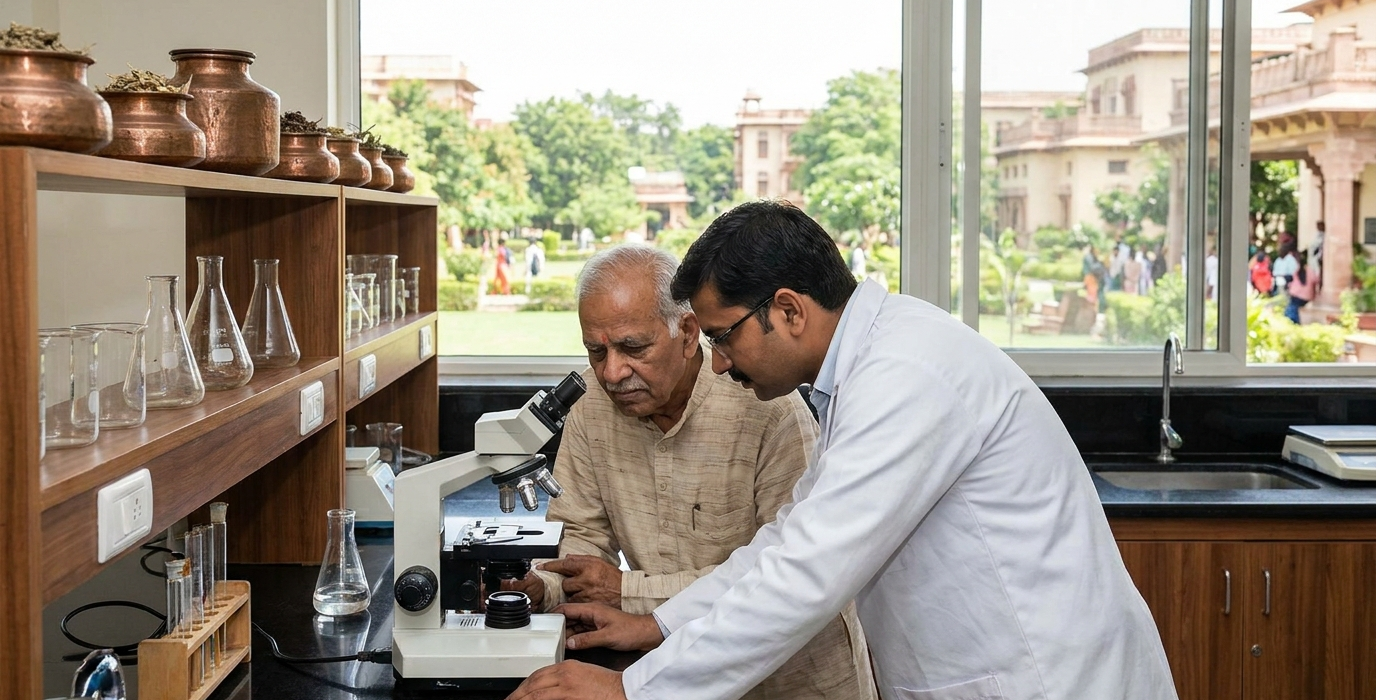
For millennia, Ayurveda has been a cornerstone of well-being in India and beyond, offering a holistic approach to health. However, its rich tradition has often been supported by anecdotal evidence rather than rigorous scientific scrutiny. Today, we stand at the cusp of a revolution where ancient wisdom is being meticulously examined in modern laboratories. This isn’t about replacing tradition; it’s about validating it, refining it, and making it more accessible and reliable for everyone.
Researchers across institutions in India, from the All India Institute of Medical Sciences (AIIMS) in Delhi to the Indian Institute of Science (IISc) in Bengaluru, are dedicating significant resources to this endeavor. They are employing cutting-edge technologies, including advanced spectroscopy, mass spectrometry, and genomics, to unravel the complex biochemical mechanisms behind Ayurvedic formulations. This shift is crucial for gaining global acceptance and for ensuring patient safety and efficacy, moving beyond the ‘trust us’ approach to a more ‘show us’ methodology that resonates with contemporary healthcare standards. The aim is to create a robust bridge between the time-tested practices of Ayurveda and the exacting demands of modern medicine.
Unlocking Nature’s Pharmacy: From Herbs to Active Compounds
The true power of Ayurveda lies in its vast materia medica – a treasure trove of medicinal plants. For centuries, practitioners have understood the synergistic effects of these plants, often used in complex formulations like decoctions and powders. The challenge has been to isolate and understand the specific molecules responsible for these therapeutic benefits. This is precisely what modern research is now achieving.
Take, for instance, Ashwagandha (Withania somnifera), a popular adaptogen. While its stress-relieving and immune-boosting properties have long been recognized, recent studies, particularly those emanating from research labs in Pune and Hyderabad, have identified specific active compounds, namely withanolides, as the key players. Researchers are now working to standardize extracts based on these active compounds, ensuring consistent potency and therapeutic outcomes. This granular understanding allows for more precise dosing and targeted treatment, minimizing variability and enhancing predictability, much like pharmaceutical drugs. This deep dive into the chemical constituents of Ayurvedic herbs is paving the way for novel drug discovery and the development of standardized, potent remedies.
The Rise of Personalized Ayurvedic Medicine
One of the most exciting frontiers in modern Ayurveda is the concept of personalized medicine. Ayurveda itself is inherently personalized; its principles of *dosha* (Vata, Pitta, Kapha) already acknowledge individual constitutions. Now, advanced technologies are taking this personalization to an unprecedented level. By integrating genomic data with Ayurvedic principles, researchers are aiming to create highly tailored treatment plans.
Imagine a scenario where your genetic predispositions, combined with your current health status and Ayurvedic *dosha* profile, are analyzed to formulate a unique herbal blend or lifestyle recommendation. This is no longer science fiction. Institutes like the Institute of Genomics and Integrative Biology (IGIB) in Delhi are exploring the genetic basis of responses to Ayurvedic therapies. For example, studies are investigating how variations in certain genes might influence an individual’s metabolism of specific Ayurvedic compounds, thereby affecting efficacy and potential side effects. This convergence of genomics and Ayurveda promises to unlock a new era of precision healthcare, where treatments are not one-size-fits-all but are precisely calibrated for each individual.
Ayurveda in the Age of Artificial Intelligence and Big Data
The integration of Artificial Intelligence (AI) and big data analytics is set to revolutionize how we understand and apply Ayurvedic knowledge. Vast historical texts, clinical observations, and the growing body of scientific research are being digitized and analyzed by AI algorithms. This allows for the identification of patterns and correlations that might have been invisible to human researchers.
AI can sift through millions of data points to predict the efficacy of certain formulations for specific conditions or even identify novel uses for known herbs. For example, AI algorithms could analyze patient data from Ayurvedic clinics in cities like Jaipur and identify subtle trends in symptom presentation and treatment response that lead to improved diagnostic accuracy. Furthermore, AI-powered diagnostic tools could assist Ayurvedic practitioners in making more informed decisions, integrating both traditional assessment methods and scientific data. This synergy between ancient knowledge and modern technology ensures that Ayurveda remains relevant and effective in the fast-paced world of 2026 and beyond.
Bridging Worlds: Clinical Trials and Regulatory Acceptance
For Ayurveda to achieve its full potential on the global stage, robust clinical trials and clear regulatory pathways are indispensable. While traditional texts offer invaluable insights, modern evidence-based validation is crucial for gaining trust from mainstream medical communities and regulatory bodies worldwide. India has made significant strides in this direction, with an increasing number of Ayurvedic products and treatments undergoing rigorous clinical trials.
The Ministry of Ayush (Ayurveda, Yoga & Naturopathy, Unani, Siddha and Homoeopathy) has been instrumental in promoting research and standardizing practices. Initiatives are in place to ensure that Ayurvedic research adheres to international standards for clinical trials, focusing on objective endpoints and statistical significance. For instance, trials are being conducted on Ayurvedic treatments for chronic conditions like osteoarthritis in patients across various Indian cities, from the bustling metropolises to smaller towns, using placebo-controlled, double-blind methodologies. This commitment to scientific rigor is not only building confidence within India but is also paving the way for greater acceptance of Ayurvedic products and therapies in markets like Europe and North America, which have stringent regulatory requirements.
The Global Resurgence of Natural and Holistic Health
The world is increasingly seeking natural, holistic approaches to health and wellness. In the aftermath of recent global health challenges, there’s a heightened awareness of the importance of preventive care, immunity, and overall well-being. This global trend perfectly aligns with the core philosophy of Ayurveda, which emphasizes balance and harmony within the body and with nature.
Consumers are actively looking for alternatives to synthetic drugs, seeking treatments that address the root cause of ailments rather than just symptoms. Ayurvedic herbs and formulations, with their long history of use and growing scientific backing, are perfectly positioned to meet this demand. We’re seeing Ayurvedic wellness centers and product lines gaining traction not just in cosmopolitan hubs like Mumbai and Bengaluru but also in international cities. This resurgence isn’t just a passing fad; it represents a fundamental shift in how people approach health, prioritizing natural solutions, preventative measures, and a deeper connection to their own bodies and the environment.
Frequently Asked Questions
What is the most significant recent advancement in Ayurvedic research?
The most significant advancement is the application of modern scientific methodologies, including genomics and AI, to validate and personalize Ayurvedic treatments. This moves beyond anecdotal evidence to provide reproducible and precise therapeutic applications.
Are Ayurvedic treatments now considered safe and effective by global health standards?
Increasingly, yes. Rigorous clinical trials adhering to international standards are being conducted, leading to greater acceptance and regulatory approval for many Ayurvedic products and therapies worldwide. However, individual product validation is ongoing.
Can Ayurveda be integrated with conventional Western medicine?
Absolutely. The field is moving towards integrative medicine, where Ayurvedic practitioners and conventional doctors collaborate. This approach uses the strengths of both systems to provide comprehensive patient care, often referred to as ‘Ayur-allopathy’.
How is technology like AI helping traditional Ayurvedic practitioners?
AI is helping by analyzing vast amounts of historical and clinical data to identify treatment patterns, predict outcomes, and even assist in diagnosis. This empowers practitioners with data-driven insights to complement their traditional knowledge.
What does the future hold for personalized Ayurvedic treatments?
The future involves highly personalized treatment plans based on an individual’s genetic makeup, lifestyle, and specific health needs, moving Ayurveda from a generalized approach to a precision-based system of health management.