Key Takeaways
- Bengaluru’s urban farming sector is experiencing a significant boom in 2026, driven by innovation and a growing demand for fresh, local produce.
- Vertical farms, rooftop gardens, and hydroponic systems are transforming city spaces, reducing food miles and enhancing food security.
- Key players, from large corporations to community initiatives, are making urban farming accessible and profitable, with a focus on sustainability and technology.
- Consumers are benefiting from fresher, more nutritious food options, while the city is seeing environmental improvements and new economic opportunities.
Bengaluru’s Concrete Jungles Turn Green
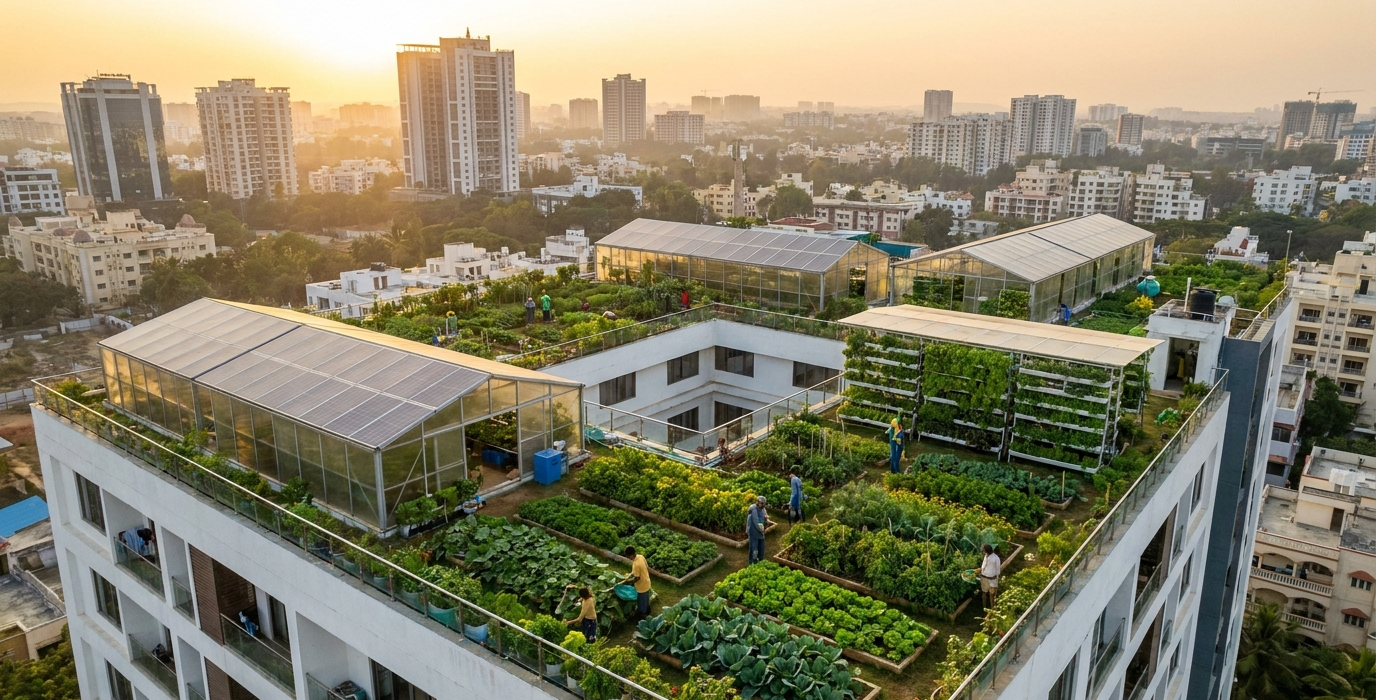
Bengaluru, often lauded as India’s Silicon Valley, is rapidly adding another feather to its cap: its burgeoning urban agriculture scene. In 2026, the Garden City is living up to its moniker in a way few could have imagined a decade ago. From the bustling heart of Koramangala to the quieter lanes of Malleswaram, once-underutilised spaces are now vibrant hubs of food production. This isn’t just about a few hobbyists; it’s a full-blown revolution, transforming rooftops, balconies, and even vertical spaces into productive farmlands.
The driving force behind this transformation is a confluence of factors. A growing awareness of the environmental impact of long-distance food supply chains, coupled with a desire for fresher, more nutritious produce, has created a strong consumer demand. Simultaneously, technological advancements and supportive policies are making urban farming more viable and scalable than ever before. We’re witnessing a paradigm shift, where the city itself is becoming a significant contributor to its own food basket.
This green leap is not merely an aesthetic upgrade; it’s a strategic move towards a more resilient and sustainable urban ecosystem. By bringing food production closer to consumption, Bengaluru is actively tackling issues like food wastage, carbon emissions from transportation, and the vulnerability of traditional supply chains to disruptions. The implications for public health and the local economy are profound, creating a model that other Indian cities are eager to emulate.
The Rise of the Vertical Farms and Hydroponic Havens
One of the most striking developments in Bengaluru’s urban farming landscape is the proliferation of high-tech vertical farms and sophisticated hydroponic systems. These methods allow for intensive cultivation in controlled environments, maximising yield while minimising resource use. Companies like ‘GreenScape Farms’ and ‘SkyHarvest Agri’ are leading the charge, establishing multi-storey facilities that stack crops vertically, bathed in precisely calibrated LED lighting. These farms can produce a variety of leafy greens, herbs, and even some fruits year-round, irrespective of external weather conditions.
Hydroponics, a soil-less growing technique, is also gaining significant traction. Systems like nutrient film technique (NFT) and deep water culture (DWC) are becoming commonplace. These systems deliver water and nutrients directly to the plant roots, leading to faster growth rates and significantly reduced water consumption compared to traditional agriculture. Many residential complexes and even individual apartment dwellers are adopting smaller-scale hydroponic units for their personal use, growing everything from tomatoes to chillies right on their balconies.
A surprising fact that highlights the efficiency of these systems: a well-managed vertical farm in Bengaluru can use up to 95% less water than a conventional farm for the same yield of produce. Furthermore, these controlled environments drastically reduce the need for pesticides, offering consumers a cleaner, healthier alternative. The economic viability is also improving, with initial investment costs decreasing and operational efficiencies enhancing profitability for these innovative ventures.
Rooftop Revolution: From Concrete Slabs to Edible Gardens
Beyond the high-tech installations, the more organic, community-driven rooftop gardening movement is equally impactful. Thousands of Bengaluru’s residents are transforming their flat rooftops, once used for drying clothes or simply collecting rainwater, into lush, productive gardens. This trend is particularly visible in densely populated areas where ground-level farming space is scarce.
These rooftop farms range from small, personal plots tended by families to larger, community-managed spaces that supply local residents and restaurants. Initiatives like the ‘Bengaluru Rooftop Gardeners Collective’ are providing training, resources, and a platform for knowledge sharing. They conduct workshops on composting, organic pest control, and crop rotation suitable for urban conditions. This has empowered many individuals to start their own gardens, fostering a sense of community and self-sufficiency.
The environmental benefits are tangible. These green roofs help insulate buildings, reducing energy consumption for cooling during Bengaluru’s warmer months. They also play a crucial role in managing stormwater runoff, a persistent challenge in the city. A fascinating aspect of this movement is the revival of heirloom varieties of vegetables and herbs that were once common in Karnataka but had fallen out of favour. These gardens are not just producing food; they are preserving culinary heritage.
Community Initiatives and Policy Support
The success of urban farming in Bengaluru in 2026 is not solely driven by individual efforts or private enterprise; it’s significantly bolstered by robust community initiatives and supportive government policies. Several non-governmental organisations (NGOs) and social enterprises are actively promoting urban agriculture through awareness campaigns, training programs, and access to resources. For instance, ‘UrbanaGro India’ has been instrumental in setting up community gardens in underserved neighbourhoods, providing access to fresh produce and employment opportunities.
The Karnataka government, recognising the strategic importance of urban farming, has introduced several policy frameworks. These include grants and subsidies for setting up urban farms, simplified regulations for land use, and incentives for businesses adopting sustainable farming practices. The ‘Bengaluru Urban Agriculture Policy 2025’ (and its subsequent amendments in 2026) has been particularly effective in streamlining approvals and encouraging public-private partnerships. This policy also focuses on integrating urban farms with the city’s waste management system, promoting the use of compost generated from organic waste.
A particularly inspiring initiative is the ‘Farm to School’ program, which collaborates with urban farms to supply fresh produce to school canteens. This not only ensures nutritious meals for students but also educates them about where their food comes from. This holistic approach, blending community engagement with governmental foresight, is crucial for the sustained growth of Bengaluru’s urban agriculture sector.
The Economic Landscape: From Micro-Enterprises to Corporate Investment
The economic impact of Bengaluru’s urban farming boom in 2026 is diverse and far-reaching. It spans from small-scale, micro-enterprises run by individuals and families to substantial investments from larger corporations. These micro-enterprises, often operating from home or small rented spaces, are finding success by catering to niche markets. They might specialise in exotic herbs, organic microgreens, or even traditional Karnataka produce, selling directly to consumers through local farmers’ markets or online platforms.
On the other end of the spectrum, established food companies and real estate developers are increasingly venturing into urban agriculture. They see it as a way to enhance their brand image, ensure a stable supply of high-quality ingredients, and tap into a growing market. Some developers are even incorporating urban farms as a key amenity in their residential and commercial projects, adding value and an eco-friendly appeal. This influx of corporate capital is helping to drive innovation, scale up operations, and improve efficiency through technological adoption.
The employment generation is also significant. These farms create jobs not only for farmers and horticulturalists but also for technicians managing hydroponic systems, logistics personnel for local delivery, and marketing professionals. A surprising economic insight: the local employment multiplier effect for urban farming in Bengaluru is estimated to be higher than for traditional agriculture, as it supports a wider range of ancillary services within the city.
Challenges and the Road Ahead
Despite the impressive growth, Bengaluru’s urban farming sector faces its share of challenges. One of the primary hurdles remains the high initial investment cost for sophisticated systems like vertical farms, although this is gradually decreasing. Access to suitable urban spaces can also be a constraint, with land prices in prime city locations being prohibitively high. Regulatory frameworks, while improving, still require further refinement to fully support the diverse needs of urban farmers.
Another critical area is water management. While hydroponic systems are water-efficient, the overall water security of the city remains a concern. Sustainable sourcing of water, including rainwater harvesting and treated wastewater, is paramount. Consumer education is also an ongoing effort; while demand is rising, many consumers still need to be convinced about the quality, safety, and nutritional value of urban-farmed produce.
“The future of food is increasingly urban. We’re not just growing vegetables; we’re cultivating community, health, and resilience right in our cities.”
Looking ahead, the trajectory is overwhelmingly positive. Continued technological innovation, stronger policy support, and growing consumer acceptance are expected to propel the sector further. Bengaluru has the potential to become a global leader in urban agriculture, demonstrating how cities can feed themselves sustainably and efficiently. The ongoing integration of smart technologies, such as AI-powered crop monitoring and IoT sensors for environmental control, will further enhance productivity and reduce waste.
Frequently Asked Questions
What are the benefits of urban farming in Bengaluru?
Urban farming in Bengaluru offers numerous benefits, including fresher, more nutritious produce for consumers, reduced food miles and carbon emissions, enhanced food security, creation of local employment opportunities, and improved urban green cover and stormwater management.
How can I start my own urban farm in Bengaluru?
You can start by assessing your available space (balcony, terrace, small plot). Begin with simpler methods like container gardening or small hydroponic kits. Many local organisations offer workshops and resources. Research suitable crops for Bengaluru’s climate and seek guidance from existing urban farming communities.
Is urban farming economically viable in Bengaluru?
Yes, urban farming is becoming increasingly economically viable. While initial setup costs can vary, efficient technologies like hydroponics and vertical farming are improving yields and reducing operational expenses. Selling directly to consumers or local restaurants can offer better profit margins.
What kind of crops are best suited for urban farming in Bengaluru?
Leafy greens, herbs, microgreens, tomatoes, chillies, and strawberries are excellent choices for urban farming in Bengaluru due to their relatively fast growth cycles and suitability for controlled environments or container gardening. Local heirloom vegetables can also be successfully cultivated.
Are there government schemes or support for urban farmers in Bengaluru?
Yes, the Karnataka government and various civic bodies offer incentives, subsidies, and training programs to support urban agriculture. The ‘Bengaluru Urban Agriculture Policy’ outlines several measures aimed at facilitating the growth of this sector, including simplified land use regulations and grants.