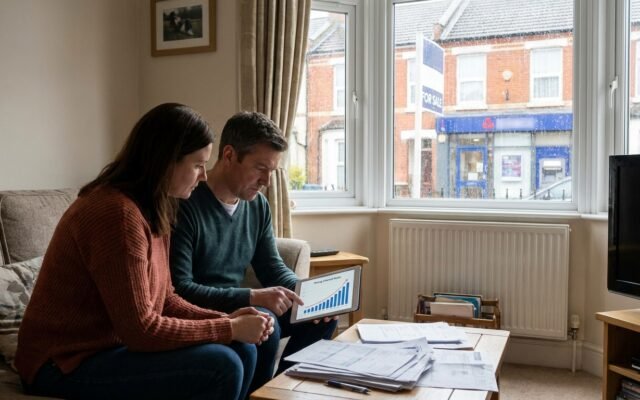
The familiar comfort of German savings accounts is starting to feel a bit like a worn-out pair of slippers – familiar, yes, but not exactly offering the spring in your step you need for today’s economic climate. With inflation nibbling away at purchasing power, many across Germany are waking up to the reality that simply tucking money away is no longer enough. They’re looking for more. They’re searching for ways to make their money work harder, to outpace rising prices and build real wealth for the future. This shift is palpable, from the bustling financial districts of Frankfurt to the quiet village savings banks dotting the Bavarian countryside.
Key Takeaways:
- Inflation is eroding the value of traditional savings accounts in Germany.
- German savers are increasingly exploring index funds for diversification and lower costs.
- Sustainable ETFs are gaining traction, aligning financial goals with ethical values.
- Understanding risk tolerance is crucial before diversifying your investment portfolio.
- Professional financial advice can help navigate the complexities of new investment strategies.
The Shrinking Value: Why Your Sparbuch Isn’t Enough Anymore
Picture this: it’s a crisp autumn morning in Hamburg, and you’re enjoying your favourite `Kaffee und Kuchen` at a local Konditorei. You’re thinking about your finances, perhaps reviewing your bank statement from your `Sparkasse` or `Volksbank`. For decades, the German `Sparbuch` (savings book) was a symbol of stability, a secure place to keep hard-earned money. It was the bedrock of financial planning for countless families, promising a guaranteed, albeit modest, return.
But the economic winds have shifted dramatically. Inflation, that silent thief, is now a very loud problem. When the cost of living – your groceries at Edeka, your heating bills, even that delightful `Kaffee und Kuchen` – rises faster than your savings account interest rate, you’re effectively losing money.
Think about it. If inflation is running at 6%, and your savings account offers a meager 1%, you’re experiencing a real-term loss of 5% on your savings each year. Over time, this erosion can be significant, impacting your ability to afford future goals like retirement, a down payment on a home, or your children’s education.
This is not a theoretical problem; it’s a daily reality for millions of Germans. The psychological comfort of having money “safe” is giving way to the anxiety of watching its purchasing power diminish. This is precisely why the conversation around traditional savings accounts is evolving. They still have a role, of course, for emergency funds and short-term goals. But for long-term wealth creation, they are increasingly falling short of what people need and expect in today’s economic landscape. The desire for growth is no longer a luxury; it’s a necessity.
Venturing into the Market: The Rise of Index Funds
As the limitations of traditional savings become clearer, a growing number of Germans are turning their attention to the stock market. But for many, the idea of picking individual stocks feels daunting, akin to navigating the intricate `Altstadt` of a historic city without a map. This is where index funds have emerged as a particularly appealing solution.
Think of an index fund as a large basket containing many different stocks, designed to mirror the performance of a specific market index, like the DAX (Deutscher Aktienindex) – Germany’s blue-chip stock market index. Instead of trying to guess which single company will soar, you’re investing in the broad performance of the German economy, or even a wider global market.
The appeal is multi-faceted. Firstly, diversification is built-in. By investing in an index fund, you’re automatically spreading your risk across dozens, if not hundreds, of companies. If one company falters, its impact on your overall investment is minimised, cushioned by the performance of the others.
Secondly, index funds are renowned for their low costs. Unlike actively managed funds where a fund manager tries to beat the market (often with higher fees), index funds simply aim to replicate the index. This means lower management fees, which, over the long term, can make a significant difference to your returns. For example, a fund with a 0.5% annual fee will, over 20 years, significantly outperform a similar fund with a 2% fee, assuming the same underlying performance.
Many German investors are now looking at ETFs (Exchange Traded Funds) that track major indices. These are not just for seasoned traders; they are accessible through online brokers and banks, making them a practical choice for individuals like Maria Schmidt, a 42-year-old teacher from Munich. Maria recently started investing in an ETF that tracks the MSCI World index.
“I used to be scared of the stock market,” she admitted. “But my neighbour, a retired engineer, explained how an index fund works. He said it’s like buying a tiny piece of a lot of successful companies. It made sense, and the fees are so low compared to what I was paying before for a managed fund that didn’t even perform that well.” This sentiment is echoed across Germany as more people like Maria recognise the power of passive investing.
Sustainable Investing: ETFs with a Conscience
Beyond the pursuit of pure financial growth, another powerful trend is reshaping how Germans are investing: the desire for sustainable investing. This isn’t just a niche interest anymore; it’s becoming mainstream, reflecting a deeper societal shift towards environmental and social responsibility. Many German investors, particularly younger generations, want their money to do more than just grow.
They want it to align with their values, to support companies that are actively contributing to a better future, rather than those that might be harming the planet or exploiting workers. This is where sustainable ETFs (Exchange Traded Funds) come into play, offering a way to invest in a diversified portfolio while prioritising environmental, social, and governance (ESG) factors.
These ETFs typically screen companies based on strict criteria. For instance, they might exclude companies involved in fossil fuels, tobacco, or controversial weapons. Conversely, they might favour companies with strong environmental policies, good labour practices, and ethical corporate governance. Think of an ETF focused on renewable energy companies, or one that invests in businesses with high standards for diversity and inclusion.
This approach allows investors to participate in the global economy while actively seeking out businesses that are part of the solution to global challenges, rather than part of the problem. The impact can be twofold: generating returns for the investor and fostering positive change in the corporate world.
The demand for these products has surged. Major financial institutions in Germany are now offering a wider array of ESG-focused ETFs. Investors are not just looking at the financial performance of these funds; they’re also scrutinising their ESG ratings and the underlying methodologies. Take, for example, a recent survey of German retail investors which indicated that over 60% consider ESG factors when making investment decisions.
This isn’t just about feeling good; research increasingly shows that companies with strong ESG credentials can also be more resilient and better managed in the long run, potentially leading to competitive financial returns. It’s a win-win scenario that appeals to a growing segment of the German population who want their investments to reflect their commitment to a more sustainable world, from the `Schwarzwald` to the shores of the Baltic Sea.
Navigating the Risks: Understanding Your Personal Risk Tolerance
As you begin to explore options beyond the traditional `Sparbuch`, it’s crucial to have an honest conversation with yourself about risk tolerance. This is perhaps the most vital step, often overlooked in the excitement of potential higher returns. Investing, by its very nature, involves risk. The value of your investments can go down as well as up, and you could get back less than you invested. Understanding how much risk you are comfortable taking is not just about your financial situation; it’s also deeply psychological.
Consider your age, your financial obligations, and your investment horizon. Are you in your early 30s, with decades until retirement and a stable income? You might be able to afford to take on more risk, perhaps with a higher allocation to equities through index funds or ETFs. Your longer time horizon allows you to ride out market volatility.
Conversely, if you are in your late 50s and planning to retire in a few years, your primary goal might be capital preservation. In this scenario, a higher allocation to less volatile assets, like bonds or even a portion kept in cash, might be more appropriate. It’s about finding the right balance for your unique circumstances.
Think of it like this: imagine you’re driving through the German countryside. Some roads are wide, well-maintained autobahns, perfect for making good time (like investing in broad market index funds). Others are narrow, winding country lanes with stunning views, but you might travel slower and encounter unexpected bumps (like investing in more volatile sectors or individual stocks). Your comfort level with speed and the possibility of a bumpy ride determines which road you choose.
Many financial advisors in Germany, like those you might find in Cologne or Stuttgart, will start by helping you complete a risk assessment questionnaire. This helps quantify your comfort level with potential losses in exchange for potential gains. It’s a personal journey, and there’s no single “right” answer. Being honest with yourself about your financial `Ziele` (goals) and your emotional capacity for market fluctuations is the first and most important step to building a resilient investment portfolio.
Expert Guidance: When to Seek Professional Advice
While the internet and financial news offer a wealth of information, navigating the world of investments can still feel overwhelming, especially when you’re moving away from the safety of a familiar `Sparkonto`. This is where seeking professional financial advice can be invaluable. Think of a qualified financial advisor in Germany not just as someone who sells you products, but as a trusted partner who can help you develop a comprehensive financial plan tailored to your specific needs and goals. They can offer objective insights, helping you avoid common pitfalls and make informed decisions.
For instance, someone like Herr Müller, a retired engineer from Berlin, might be comfortable with the basics of index funds but unsure about the optimal allocation of his savings, or how to integrate these new investments with his existing pension plans. A financial advisor can help him understand the tax implications of different investment vehicles in Germany. They can also help him select appropriate ETFs or funds based on his risk profile and long-term objectives, ensuring he doesn’t inadvertently invest in something too risky or too conservative for his needs.
Furthermore, financial advisors can provide a much-needed emotional buffer during times of market turbulence. When the DAX experiences a sharp downturn, it’s easy to panic and make impulsive decisions, like selling all your holdings at a loss. A good advisor can help you stay disciplined, reminding you of your long-term strategy and the historical resilience of well-diversified portfolios. They can also help you understand complex financial products, explain the intricacies of German financial regulations, and ensure your investment strategy remains aligned with your evolving life circumstances.
While there’s a cost associated with professional advice, for many Germans, the peace of mind, the potential for better long-term returns, and the avoidance of costly mistakes make it a worthwhile investment in itself. It’s a commitment to a more secure financial future, guided by expertise.
Building Your Future: A Broader Perspective
The journey from a simple `Sparbuch` to a diversified investment portfolio is more than just a financial transaction; it’s a fundamental shift in how you approach your future. It’s about taking control, about actively participating in building the financial security and opportunities you desire for yourself and your family. The economic landscape in Germany, and indeed globally, demands a more proactive stance. Inflation is a persistent reality, and relying solely on traditional savings accounts means accepting a steady decline in your money’s purchasing power.
Embracing alternative investment strategies like index funds and sustainable ETFs isn’t about chasing speculative gains; it’s about making informed choices that align with your goals and values. It’s about understanding that with careful planning and a degree of thoughtful risk-taking, you can not only preserve your wealth but also grow it over time. This is a path that requires education, patience, and a willingness to step outside your comfort zone. Whether you’re a young professional starting out in Frankfurt or a seasoned saver in a small Bavarian town, the tools and knowledge are increasingly accessible. The key is to begin, to take that first step towards understanding your options and making your money work for you. It’s about crafting a financial future that is not just secure, but also prosperous and aligned with the world you wish to live in.