Key Takeaways
- India’s electric scooter market is poised for rapid growth, with projections indicating a significant shift away from ICE vehicles by 2027.
- Key drivers include government incentives, falling battery costs, and an expanding charging infrastructure, making EVs a more practical choice for urban commuters.
- We explore the top emerging trends, from advanced battery tech to smart connectivity, that will shape the e-scooter landscape in the coming years.
- Understanding the total cost of ownership, including maintenance and charging, reveals the long-term financial benefits of switching to electric.
The Inevitable Electric Surge: Why 2027 is the Tipping Point
The hum of electric scooters is rapidly replacing the roar of their petrol-powered predecessors on Indian streets. This isn’t a distant dream; it’s a seismic shift happening right now, and by 2027, we can expect electric scooters to dominate the urban two-wheeler market. Several powerful forces are converging to accelerate this transition. Government policies, like the FAME II scheme (Faster Adoption and Manufacturing of Hybrid and Electric Vehicles), have been instrumental, offering significant subsidies that make electric options more accessible.
Beyond subsidies, the fundamental economics are becoming undeniably attractive. Battery costs, the single largest component of an electric scooter’s price, have been on a downward trajectory for years, and this trend is expected to continue. This reduction in upfront cost, combined with lower running expenses – think electricity versus petrol, and reduced maintenance – means the total cost of ownership for an electric scooter is becoming far more appealing. We’re seeing a confluence of technological advancement, policy support, and economic viability creating the perfect storm for electric mobility.
Decoding the Drivers: What’s Fueling the Electric Revolution?
Several interconnected factors are propelling the electric scooter revolution across India. Firstly, government initiatives have played a crucial role. Beyond direct subsidies, policies encouraging local manufacturing and setting ambitious EV adoption targets are creating a favourable ecosystem. This includes tax benefits and preferential treatment for electric vehicles in certain urban zones.
Secondly, technological advancements are making electric scooters more practical and desirable. Battery technology is evolving rapidly, offering longer ranges, faster charging times, and improved durability. Manufacturers are also integrating more sophisticated features, such as regenerative braking, advanced battery management systems, and even rudimentary AI for predictive maintenance. This makes the ownership experience smoother and more efficient.
Finally, consumer awareness and environmental consciousness are on the rise. As air quality concerns grow in major cities like Delhi and Bengaluru, consumers are increasingly seeking sustainable alternatives. The availability of a wider range of models, from budget-friendly options to performance-oriented machines, further broadens the appeal. This multifaceted approach, combining policy, technology, and growing public demand, is creating an unstoppable momentum.
Beyond the Price Tag: Understanding the True Cost of Ownership
When considering an electric scooter, it’s vital to look beyond the initial purchase price. The true value lies in the total cost of ownership (TCO) over the scooter’s lifespan. For electric scooters, this equation is increasingly favourable. While the upfront cost might still be slightly higher for some models compared to their Internal Combustion Engine (ICE) counterparts, the savings begin immediately.
Fuel costs are a major differentiator. Charging an electric scooter overnight using a standard home socket costs a fraction of filling a petrol tank. For instance, a typical electric scooter might cost ₹10-₹20 to fully charge, offering a range of 80-120 km, whereas a petrol scooter could easily cost ₹80-₹120 for a similar distance. Over a year, these savings can amount to thousands of rupees. Furthermore, electric scooters have far fewer moving parts than ICE vehicles. This translates to significantly reduced maintenance costs. No oil changes, no complex exhaust systems, and fewer wear-and-tear components mean fewer trips to the mechanic and lower repair bills.
The shift to electric scooters isn’t just about saving the planet; it’s about smarter personal finance in the long run.
Innovations on Two Wheels: Trends Shaping the E-Scooter Landscape
The electric scooter market is a hotbed of innovation, and several key trends are set to redefine the commuting experience by 2027. One of the most significant is the advancement in battery technology. We’re moving beyond standard lithium-ion cells towards solid-state batteries, which promise higher energy density (leading to longer ranges), faster charging, and improved safety. Companies are also exploring swappable battery models, addressing range anxiety and allowing for near-instantaneous “refuelling” at designated stations.
Another crucial development is the integration of smart connectivity and IoT features. Expect more e-scooters to come equipped with GPS tracking, anti-theft alerts, remote diagnostics, and even over-the-air software updates. These features not only enhance convenience and security but also allow manufacturers to gather data for future product improvements. The user interface is also evolving, with larger, more intuitive digital displays and smartphone integration becoming standard. This makes managing your ride – from checking battery status to planning routes – seamless.
Finally, the modular design and repairability aspect is gaining traction. As the market matures, there’s a growing emphasis on making components easily replaceable and upgradeable. This not only extends the scooter’s lifespan but also reduces waste and makes repairs more affordable. These innovations are not just about making e-scooters faster or sleeker; they are about making them more practical, user-friendly, and sustainable for the everyday Indian rider.
The Charging Conundrum: Building India’s Electric Highways
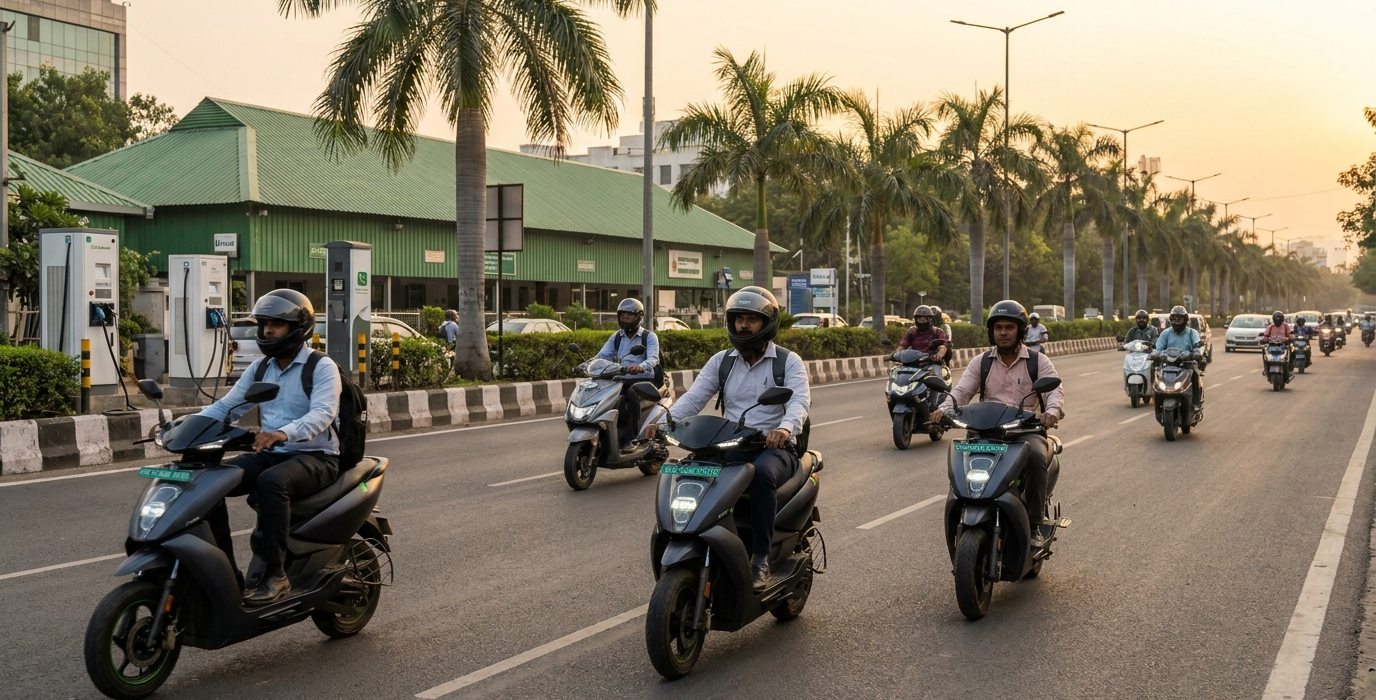
One of the most critical factors enabling widespread electric scooter adoption is the development of a robust and accessible charging infrastructure. While home charging remains the primary method for many, the expansion of public charging points is essential for longer journeys and for those living in apartments without dedicated parking. Cities like Bengaluru and Mumbai are already seeing a surge in public charging stations, often integrated into existing petrol stations, shopping malls, and residential complexes.
The government and private players are actively investing in this area. We’re seeing the emergence of battery-swapping networks, particularly for commercial fleets, which offer a quick solution to range anxiety. Initiatives like the establishment of charging hubs in key urban areas and along popular inter-city routes are crucial. A surprising fact is that by 2025, India aims to have over 400,000 charging points across the country, a significant leap from current numbers.
The technology itself is also evolving. Fast-charging solutions are becoming more common, capable of adding significant range in just 30-60 minutes. Standardisation of charging connectors is another area of focus, ensuring interoperability between different brands and charging networks. As this infrastructure continues to grow, the convenience of owning an electric scooter will only increase, making it a viable option for a much larger segment of the population.
Navigating the Options: Choosing Your Electric Ride
With the market expanding rapidly, choosing the right electric scooter can feel overwhelming. It’s important to consider your specific needs and priorities. Are you looking for a daily commuter with long range, or a zippy scooter for short city hops? Range is often the primary concern. Look for scooters that comfortably exceed your daily average commute, with a buffer for unexpected detours. Battery capacity, measured in kilowatt-hours (kWh), is a good indicator of potential range, but real-world performance depends on factors like rider weight, terrain, and riding style.
Performance is another key differentiator. Motor power, typically measured in kilowatts (kW), dictates acceleration and top speed. For city riding, a motor between 1.5 kW and 3 kW is usually sufficient, while those seeking a more dynamic experience might look for higher outputs. Charging time is also crucial. Some scooters offer fast charging capabilities, significantly reducing downtime.
Finally, features and build quality matter. Consider aspects like LED lighting, digital dashboards, disc brakes, suspension quality, and storage capacity. The availability of a robust service network and readily available spare parts in your locality is also a vital consideration. Don’t forget to factor in the manufacturer’s warranty on the battery and the vehicle itself.
| Feature | Entry-Level E-Scooter (e.g., Ola S1 X, Bounce Infinity E1) | Mid-Range E-Scooter (e.g., Ather 450X, TVS iQube ST) | Performance E-Scooter (e.g., Simple Energy Dot One) |
| :—————- | :——————————————————- | :————————————————– | :————————————————- |
| Price Range (₹) | 70,000 – 1,00,000 | 1,20,000 – 1,60,000 | 1,00,000 – 1,40,000 |
| Range (km per charge) | 80 – 120 | 100 – 150 | 100 – 150 |
| Top Speed (km/h) | 50 – 70 | 80 – 90 | 80 – 95 |
| Battery Capacity | 2 – 3 kWh | 3 – 4 kWh | 3 – 4 kWh |
| Charging Time | 4 – 6 hours | 3 – 5 hours | 3 – 4 hours (Fast Charge) |
| Key Features | Basic digital display, LED lights, drum brakes | Touchscreen, connected features, disc brakes, better suspension | Sporty design, advanced UI, performance-oriented motor |
Frequently Asked Questions
What is the expected market share of electric scooters in India by 2027?
Projections suggest that electric scooters could account for over 40-50% of new two-wheeler sales in India by 2027, a significant increase from current figures. This indicates a clear dominance in urban markets.
Are electric scooters more expensive to maintain than petrol scooters?
Generally, no. Electric scooters have fewer moving parts, eliminating the need for regular oil changes and complex engine maintenance. This significantly reduces the cost and frequency of servicing.
What is the average range of electric scooters available in India today?
The average range varies widely, but most electric scooters currently available offer a real-world range of between 80 km to 150 km on a single charge. High-performance models and those with larger batteries can offer even more.
Is the charging infrastructure sufficient for widespread adoption?
While still developing, the charging infrastructure is expanding rapidly. Public charging stations are becoming more common in cities, and battery-swapping networks are emerging. Home charging remains a convenient option for many.
What are the main government incentives for buying electric scooters in India?
Key incentives include subsidies under schemes like FAME II, which reduce the upfront purchase price. Additionally, some states offer road tax exemptions and registration fee waivers for electric vehicles.