Key Takeaways
- India is aggressively pursuing self-sufficiency in EV battery manufacturing, with a target date of 2027 for significant domestic production capabilities.
- Key government initiatives like the Production Linked Incentive (PLI) scheme are driving substantial investment from both established players and emerging startups.
- Challenges remain, including securing raw material supply chains, developing advanced recycling infrastructure, and fostering a skilled workforce.
- The push for localisation is not just about reducing import dependence but also about creating a robust ecosystem for innovation and competitive pricing for Indian consumers.
India’s Ambitious EV Battery Road Map: The Race to 2027
The hum of electric vehicles is growing louder on Indian streets, but beneath the surface, a silent race is underway. India has set an ambitious target: achieving significant self-sufficiency in electric vehicle (EV) battery manufacturing by 2027. This isn’t just a hopeful projection; it’s a strategic imperative backed by substantial government policy and a surge of private investment. The goal is clear: to move from being a major importer of battery components and cells to a global manufacturing powerhouse.
For years, India’s burgeoning EV sector has relied heavily on imported battery technology, primarily from East Asian nations. This dependence creates vulnerabilities, from supply chain disruptions to fluctuating costs. The current government, recognizing this strategic gap, has galvanized efforts to build a robust domestic battery ecosystem. The vision extends beyond mere assembly; it encompasses the entire value chain, from mining and refining raw materials to advanced cell manufacturing and end-of-life battery recycling.
The 2027 deadline signifies a critical inflection point. By this time, India aims to have a substantial portion of its EV battery needs met by domestic production. This will involve scaling up existing manufacturing facilities and nurturing new ones. The success of this roadmap will not only determine the pace of EV adoption in India but also position the nation as a key player in the global green energy transition. It’s a complex undertaking, fraught with challenges, but the momentum is undeniable.
The PLI Scheme: Fueling the Battery Manufacturing Boom
At the heart of India’s push for EV battery self-sufficiency lies the Production Linked Incentive (PLI) scheme. Launched with the aim of boosting domestic manufacturing across various sectors, the PLI for Advanced Chemistry Cell (ACC) Battery Storage is proving to be a game-changer for the EV industry. This scheme offers financial incentives to manufacturers based on their incremental sales of ACC batteries manufactured in India. It’s designed to attract large-scale investments and foster technological advancements.
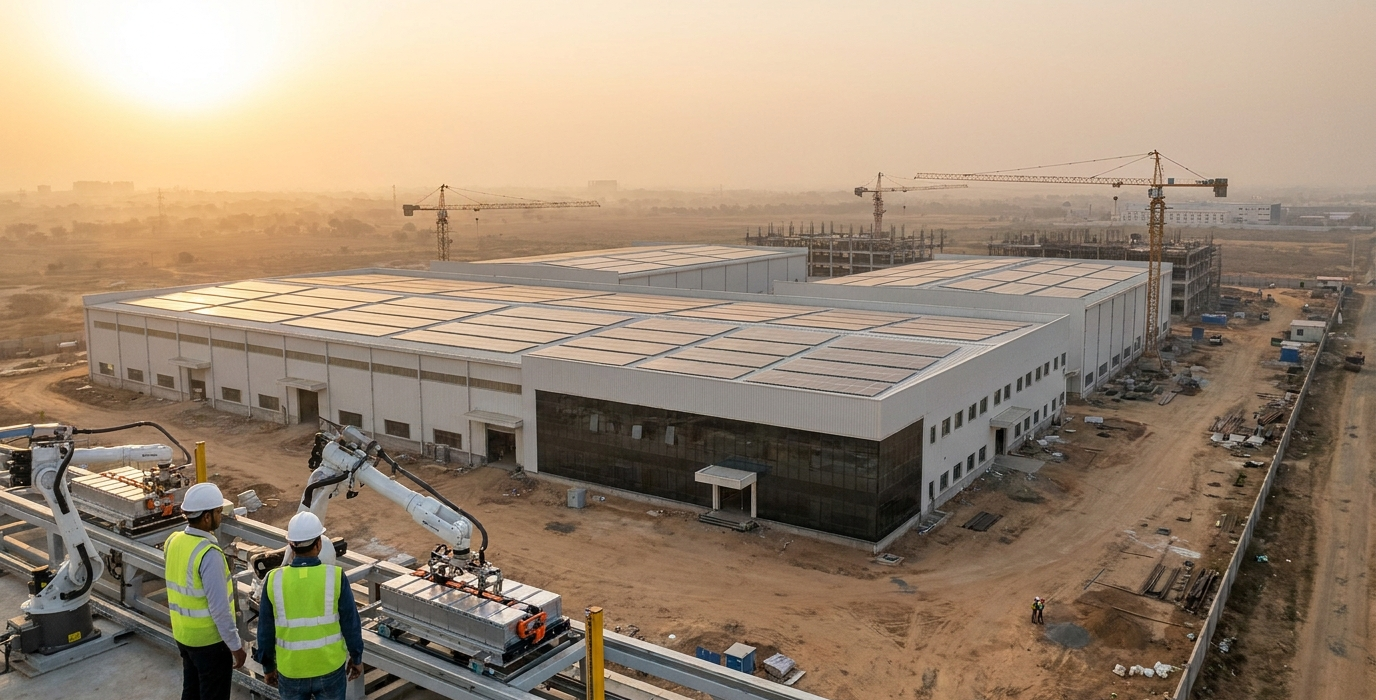
Several major players have already committed significant capital under this scheme. Companies like Reliance New Energy Solar, Ola Electric, and Rajesh Exports have announced ambitious plans to set up gigafactories for battery cell manufacturing. These projects represent billions of dollars in investment, signalling strong confidence in India’s manufacturing potential. The PLI scheme acts as a powerful catalyst, de-risking these large investments and encouraging companies to build state-of-the-art facilities.
The impact of the PLI scheme is multifaceted. It not only encourages the establishment of manufacturing capacity but also spurs research and development (R&D) in battery chemistries and manufacturing processes. By incentivizing domestic production, the government aims to create a competitive landscape that will drive down costs for consumers and improve the overall affordability of EVs. This strategic intervention is crucial for accelerating India’s transition to sustainable mobility.
Securing the Building Blocks: Raw Materials and Supply Chains
The most significant hurdle in achieving true EV battery self-sufficiency is securing a stable and cost-effective supply of raw materials. Lithium, cobalt, nickel, and manganese are the critical elements that form the backbone of most modern EV batteries. Currently, India is heavily reliant on imports for these materials, often sourced from regions with geopolitical complexities.
The government is actively exploring multi-pronged strategies to address this. One key focus is on forging strategic partnerships with resource-rich countries. Discussions are underway with nations like Chile, Argentina, and Australia – major lithium producers – to ensure consistent supply lines. Beyond international agreements, there’s a growing emphasis on exploring domestic mineral reserves, though these are often found in challenging geological conditions, such as in the remote regions of Jammu and Kashmir or Rajasthan.
Furthermore, the development of battery recycling infrastructure is gaining traction. As more EVs hit the roads, the volume of spent batteries will increase. Establishing efficient and environmentally sound recycling processes will allow India to recover valuable materials like lithium and cobalt from these end-of-life batteries. This circular economy approach is vital for reducing reliance on virgin materials and mitigating environmental impact. A surprising fact: India’s Council of Scientific and Industrial Research (CSIR) has developed indigenous technologies for extracting lithium from complex mineral ores, aiming to reduce dependence on imports even further.
Beyond Manufacturing: Innovation and R&D in Indian Batteries
While scaling up manufacturing capacity is paramount, India’s vision for battery self-sufficiency extends to fostering indigenous innovation and research and development (R&D). The goal isn’t just to assemble batteries but to design, develop, and manufacture next-generation battery technologies within India.
Academic institutions and research labs across the country are at the forefront of this R&D push. IITs (Indian Institutes of Technology) and IISc (Indian Institute of Science) are actively engaged in research on alternative battery chemistries, such as sodium-ion batteries, which use more abundant and cheaper materials than lithium. These alternative chemistries could significantly alter the cost dynamics of EVs in India, making them more accessible to a wider population.
Startups are also playing a crucial role. Companies like Log9 Materials are developing proprietary battery technologies focused on faster charging and longer lifespans, tailored for Indian operating conditions. The government is supporting these R&D efforts through grants, incubation programs, and collaborations with industry. The aim is to create a vibrant ecosystem where innovation can thrive, leading to the development of batteries that are not only cost-effective but also safer, more efficient, and environmentally sustainable.
The Ecosystem Approach: Beyond the Battery Cell
Achieving true self-sufficiency in EV batteries requires a holistic approach that encompasses the entire ecosystem, not just the cell manufacturing itself. This includes the production of essential components, the development of testing and validation facilities, and the establishment of a skilled workforce.
The government’s PLI scheme also extends to components, encouraging the domestic manufacturing of battery management systems (BMS), thermal management systems, and battery pack enclosures. This backward integration is crucial for building a truly resilient supply chain and reducing reliance on imported parts. Several Indian companies are investing in these areas, aiming to become key suppliers to the gigafactories.
Developing a skilled workforce is another critical element. The rapid expansion of the battery manufacturing sector will create thousands of jobs, but these will require specialized skills in areas like electrochemistry, materials science, and advanced manufacturing. Universities and vocational training institutes are stepping up to offer specialized courses and training programs. A surprising statistic: India’s first dedicated Battery Research and Innovation Centre, established in Bengaluru, is already collaborating with industry to fast-track the development and commercialization of new battery technologies.
Challenges and the Road Ahead: Navigating the Hurdles
While the momentum towards EV battery self-sufficiency is strong, the path ahead is not without its challenges. The sheer scale of investment required is immense, and attracting consistent, long-term capital remains a priority. Ensuring the availability of crucial raw materials at competitive prices, as discussed, is a persistent concern.
Technological obsolescence is another factor to consider. The battery landscape is evolving rapidly, with new chemistries and manufacturing techniques emerging continuously. India must invest not only in current technologies but also position itself to adopt and innovate in future battery solutions. Furthermore, developing robust and scalable recycling infrastructure is critical for environmental sustainability and resource security.
The 2027 target is audacious, but it’s a necessary catalyst for India to seize its destiny in the global EV revolution. It’s not just about producing batteries; it’s about building an entire industrial complex that can drive economic growth and environmental progress.
Despite these hurdles, the commitment from both the government and the private sector is unwavering. The potential rewards – reduced import bills, job creation, technological leadership, and a cleaner environment – are significant. The next few years will be critical in determining whether India can successfully navigate these challenges and emerge as a global leader in EV battery manufacturing.
Frequently Asked Questions
What is India’s target date for EV battery self-sufficiency?
India aims to achieve significant self-sufficiency in electric vehicle (EV) battery manufacturing by the year 2027. This involves scaling up domestic production capabilities across the entire battery value chain.
Which government schemes are supporting EV battery manufacturing in India?
The primary scheme is the Production Linked Incentive (PLI) for Advanced Chemistry Cell (ACC) Battery Storage. This scheme provides financial incentives to manufacturers based on their incremental sales of domestically produced batteries.
What are the main raw materials needed for EV batteries?
The key raw materials include lithium, cobalt, nickel, and manganese. India is working on securing these materials through international partnerships and exploring domestic reserves, alongside developing robust recycling processes.
Are there any Indian companies leading the charge in battery manufacturing?
Yes, major conglomerates like Reliance New Energy Solar and Ola Electric, along with companies like Rajesh Exports, have announced significant investments in setting up gigafactories for battery cell manufacturing. Several startups are also innovating in this space.