Key Takeaways
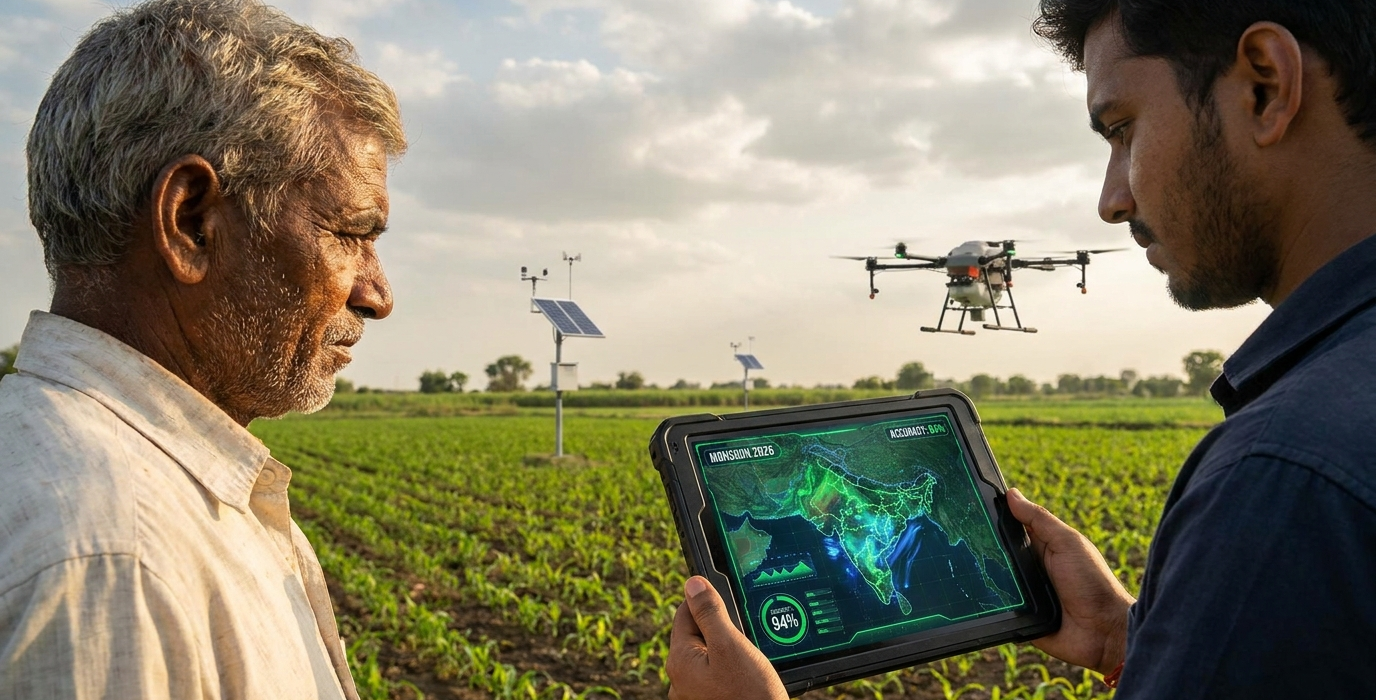
- AI models, leveraging satellite imagery and ground sensor data, are achieving unprecedented accuracy in monsoon rainfall predictions for 2026, offering farmers crucial lead times for planning.
- Specific AI applications like early pest and disease detection through image analysis, and optimized irrigation scheduling, are directly boosting crop yields and reducing resource wastage.
- The integration of AI is not just about prediction; it’s about actionable insights, empowering farmers with data-driven decisions for everything from seed selection to market forecasting.
- While adoption challenges remain, the tangible benefits seen in pilot projects across India highlight AI’s transformative potential for making Indian agriculture more resilient and profitable.
Unprecedented Monsoon Insights: AI’s 2026 Forecast Revolution
The lifeblood of Indian agriculture, the monsoon, has always been a source of both bounty and anxiety. For generations, farmers have relied on age-old wisdom, astronomical observations, and a keen eye on the sky. But in 2026, a new force is entering the equation: Artificial Intelligence. We’re witnessing a paradigm shift where sophisticated AI algorithms, fed with a torrent of data, are offering a level of predictive accuracy for the monsoon that was unimaginable just a few years ago.
This isn’t about a single, crystal-ball prediction. Instead, it’s a dynamic, evolving system. AI models are now capable of integrating vast datasets – from global atmospheric pressure readings and ocean temperatures to hyper-local satellite imagery and the granular output of IoT sensors deployed in fields across states like Maharashtra and Tamil Nadu. This multi-layered approach allows for more nuanced and timely forecasts, moving beyond broad regional predictions to more specific district-level insights.
For the 2026 monsoon season, early reports from leading agricultural research institutions indicate that AI-powered forecasting systems have demonstrated a significant reduction in error margins compared to traditional meteorological models. This enhanced accuracy translates directly into actionable intelligence for farmers. Imagine knowing with greater certainty, weeks in advance, whether a particular region will face a deficit or surplus of rainfall, or if the onset will be delayed. This foresight allows for crucial adjustments in planting schedules, water management strategies, and even crop selection.
One of the most surprising developments is the AI’s ability to predict not just the quantity, but also the *pattern* of rainfall. This means forecasting the timing of heavy downpours versus prolonged dry spells within the monsoon season. Such granular detail is invaluable for preventing waterlogging in some areas while ensuring consistent moisture in others, a critical factor for crops like rice and sugarcane.
From Prediction to Precision: AI in the Fields
While accurate monsoon prediction is a monumental achievement, the true power of AI in agriculture in 2026 lies in its ability to translate these forecasts into on-the-ground, precision farming practices. We’re seeing AI move beyond just forecasting weather to actively managing crop health and resource allocation with remarkable efficiency. This is transforming how farmers in regions from Haryana to Kerala cultivate their land.
Consider the challenge of pest and disease outbreaks, often exacerbated by unpredictable weather patterns. AI-powered image recognition systems are now analyzing drone footage and even smartphone pictures taken by farmers. These systems can identify early signs of infestation or disease, often before they are visible to the human eye. Early detection means targeted interventions, reducing the need for broad-spectrum pesticides and fungicides, saving costs, and protecting the environment.
Optimized irrigation is another area where AI is making a tangible impact. By analyzing soil moisture levels from sensors, weather forecasts, and the specific water needs of different crops at various growth stages, AI algorithms can precisely dictate when and how much water is required. This prevents both over-watering, which can lead to root rot and nutrient leaching, and under-watering, which stunts growth and reduces yield. Smart irrigation systems, guided by AI, are becoming increasingly common in horticulture farms in Himachal Pradesh and Karnataka.
Furthermore, AI is assisting in soil health management. By analyzing soil composition data, historical crop performance, and environmental factors, AI can recommend specific nutrient applications, crop rotations, and soil amendment strategies. This leads to healthier soil, improved crop quality, and sustained productivity over time. The goal is to move from generic agricultural advice to hyper-personalized recommendations for every field, every crop, and every farmer.
Data-Driven Decisions: Empowering the Indian Farmer
The narrative of AI in Indian agriculture in 2026 is one of empowerment. It’s about shifting decision-making from intuition and tradition alone to a robust foundation of data-driven insights. This is particularly crucial for smallholder farmers, who often operate with limited resources and are most vulnerable to climate shocks. AI platforms are being designed to be accessible, often through simple mobile interfaces, putting powerful analytical tools directly into their hands.
Beyond immediate crop management, AI is also contributing to better market access and price forecasting. By analyzing supply chain data, consumer demand trends, and even global commodity prices, AI can help farmers make informed decisions about *what* to grow and *when* to sell. This can prevent gluts in the market and ensure that farmers receive a fairer price for their produce, a significant step towards improving their livelihoods. Imagine a farmer in Gujarat receiving an alert that demand for a specific variety of groundnut is projected to rise in the coming weeks.
The concept of “farm advisory services” is being redefined. Instead of generic advice, AI-powered systems can provide personalized recommendations tailored to a farmer’s specific location, soil type, crop, and even their available resources. This level of customization was previously the domain of expensive consultants, but AI is democratizing access to expert-level guidance. It’s like having a team of agronomists, meteorologists, and market analysts working for you, 24/7.
One of the most exciting, albeit still emerging, applications is AI’s role in predictive maintenance for farm equipment. By monitoring sensor data from tractors, harvesters, and irrigation pumps, AI can predict potential mechanical failures before they occur. This proactive approach minimizes downtime during critical farming periods, saving farmers significant costs and lost productivity. This is especially relevant for cooperative farming initiatives and larger agricultural enterprises.
Navigating the Challenges: Adoption and Accessibility
Despite the incredible potential, the widespread adoption of AI in Indian agriculture in 2026 is not without its hurdles. We need to acknowledge the challenges that lie ahead to ensure that the benefits of this technology reach every farmer, from the vast plains of Punjab to the remote hills of Uttarakhand.
Perhaps the most significant barrier is digital literacy and access to technology. While smartphones are ubiquitous, the ability to effectively use advanced AI applications requires a certain level of digital fluency. Initiatives focused on training and education are paramount. This includes making user interfaces intuitive and providing support in local languages. Furthermore, reliable internet connectivity, especially in rural areas, remains a concern that needs continuous infrastructure development.
The cost of implementation is another factor. While many AI solutions are becoming more affordable, the initial investment in sensors, drones, and software can still be prohibitive for many smallholder farmers. Public-private partnerships, government subsidies, and the development of more cost-effective, open-source AI tools are crucial to bridge this gap. We are seeing innovative leasing models and pay-as-you-go services emerge, making AI more accessible.
Data privacy and security are also critical considerations. Farmers need to be assured that their data is protected and used ethically. Transparent data governance policies and robust cybersecurity measures are essential to build trust. Finally, integration with existing agricultural practices needs to be seamless. AI solutions should augment, not disrupt, the farmer’s existing knowledge and workflows. Field trials and pilot projects, like those being conducted in Andhra Pradesh’s Godavari delta region, are invaluable for refining these solutions and ensuring farmer buy-in.
AI-Powered Crop Insurance and Financial Inclusion
The transformative power of AI in 2026 extends beyond the farm gate, significantly impacting agricultural finance and insurance. By providing more accurate and granular data, AI is revolutionizing how farmers access credit and how insurance companies assess risk and process claims. This is opening new avenues for financial inclusion in the agrarian sector.
Traditionally, agricultural insurance has been a complex and often slow process. Claims were often based on broad area assessments or lengthy on-site inspections. AI, however, can leverage satellite imagery to monitor crop health and growth patterns across vast regions. It can detect early signs of distress due to drought, flood, or pest outbreaks, enabling faster and more accurate damage assessments. This means quicker claim payouts for farmers, providing essential financial relief when they need it most.
For financial institutions, AI offers a more sophisticated risk assessment tool. By analyzing a farm’s historical performance, soil data, weather patterns, and market trends, AI can provide a more reliable picture of creditworthiness. This could lead to more accessible and affordable loans for farmers, enabling them to invest in better seeds, fertilizers, and technology. It also helps banks mitigate their own risks, potentially leading to more stable lending practices in the agricultural sector.
We are also seeing the emergence of parametric insurance products powered by AI. Instead of assessing individual crop damage, these policies pay out based on pre-defined triggers, such as a specific rainfall deficit or a certain temperature threshold being crossed. AI’s predictive capabilities make these triggers more precise and reliable, simplifying the insurance process and ensuring rapid disbursement of funds when adverse weather conditions occur. A surprising statistic emerging from pilot programs in Rajasthan suggests that AI-driven parametric insurance has reduced claim processing times by up to 70%.
The Future Harvest: A Resilient and Prosperous Agriculture
As we look towards the future, the integration of AI into Indian agriculture in 2026 is not merely an incremental improvement; it represents a fundamental shift towards a more resilient, sustainable, and prosperous sector. The advancements we are seeing today are laying the groundwork for an agricultural revolution that will benefit farmers, consumers, and the nation as a whole.
The continuous evolution of AI algorithms means that predictive capabilities will only become more refined. We can anticipate even greater accuracy in forecasting not just rainfall, but also the impact of extreme weather events like cyclones and unseasonal frosts. This foresight is crucial for adapting to the increasing volatility of our climate and building a more robust food security system for India.
Furthermore, the interconnectedness of AI applications will create a synergistic effect. Optimized irrigation systems will work in tandem with AI-driven nutrient management, while early pest detection will inform the precise application of bio-pesticides. This holistic, data-driven approach will lead to significant reductions in resource wastage – water, fertilizer, energy – and minimize the environmental footprint of agriculture. This is a critical step towards achieving sustainable development goals.
The true measure of AI’s success in agriculture won’t be in the sophistication of the algorithms, but in the tangible increase in farmers’ income and the resilience of their livelihoods against climatic uncertainties.
The journey is ongoing, and challenges in accessibility and adoption persist. However, the momentum is undeniable. By fostering innovation, promoting digital literacy, and ensuring equitable access to these technologies, we can harness the full potential of AI to cultivate a future where Indian agriculture not only feeds a growing nation but also ensures prosperity for its farmers. This is the promise of the AI-driven harvest of 2026 and beyond.
Frequently Asked Questions
How accurate are AI monsoon predictions for 2026?
AI models for 2026 monsoon predictions are demonstrating significantly improved accuracy over traditional methods, integrating diverse data sources like satellite imagery and ground sensors. While no prediction is 100% certain, the error margins are shrinking, providing farmers with more reliable lead times for planning.
Can AI help smallholder farmers in India?
Yes, AI is increasingly being designed for accessibility to smallholder farmers through user-friendly mobile applications. It offers personalized advice on crop management, pest control, and market access, democratizing access to expert knowledge and potentially boosting their incomes.
What are the biggest challenges to AI adoption in Indian agriculture?
The primary challenges include digital literacy and access to technology, the initial cost of implementation for farmers, ensuring data privacy and security, and the need for seamless integration with existing farming practices. Overcoming these requires targeted training, financial support, and user-centric design.
Beyond weather, what other agricultural tasks can AI assist with?
AI can assist with a wide range of tasks including early pest and disease detection through image analysis, optimizing irrigation and nutrient application, predicting crop yields, improving soil health management, and even aiding in predictive maintenance for farm equipment and agricultural finance/insurance assessments.