The hum of electric vehicles is growing louder on German streets, but for many, the symphony is still missing a crucial note: rapid charging. Range anxiety and lengthy pit stops are persistent frustrations, holding back the full promise of e-mobility. Yet, beneath the surface, a quiet revolution is brewing. German startups, fueled by significant investment and a deep-seated engineering prowess, are not just dreaming of a better EV future; they’re building it, brick by battery cell.
Key Takeaways:
- German startups are making significant strides in battery technology and charging infrastructure.
- Innovations focus on dramatically reducing charging times and extending vehicle range.
- These advancements aim to overcome key consumer hurdles like range anxiety and charging availability.
- Expect to see tangible improvements in the everyday usability of electric cars in Germany within the next few years.
- The German government and private investors are actively backing these ambitious projects.
The Unseen Engine: Battery Breakthroughs in Bavaria
Imagine driving your electric car from Berlin to Munich, a journey of over 600 kilometers, without a single charging stop. This isn’t science fiction; it’s the ambitious goal driving many of Germany’s leading e-mobility innovators. At the heart of this push lies battery technology. Nowhere is this more evident than in the vibrant tech scene around Munich.
Companies like StoreDot, a company with strong German partnerships, are making waves. Their extreme fast charging (XFC) technology is impressive. They’ve demonstrated batteries capable of charging a significant range in just five minutes. This isn’t about incremental improvements. It’s a paradigm shift.
Think about your smartphone. How quickly you expect it to charge. Why should an electric car be any different?
The traditional lithium-ion battery, while a marvel of engineering, faces inherent limitations. The sheer amount of energy required to power a vehicle for hundreds of kilometers means a substantial battery pack. Charging this pack, especially at conventional speeds, can take hours. This is where the innovation comes in.
StoreDot, for example, is exploring advanced materials. They are looking at nanoparticles and organic compounds in their battery anodes. These materials allow for a much faster influx of ions during charging. Crucially, this doesn’t damage the battery’s structure. It also avoids significant degradation of its lifespan.
It’s a delicate balancing act. Think of filling a massive reservoir. It’s like using a garden hose versus a fire hydrant. The goal is to safely and efficiently turn that hose into a hydrant.
Early prototypes, showcased at industry events in Stuttgart, have consistently impressed. They demonstrate the ability to retain a high percentage of their original capacity. This holds true even after thousands of rapid charge cycles. This is crucial for consumer adoption. No one wants a battery that degrades rapidly after a few years of fast charging.
The economic implications are also significant. Faster charging means less downtime for commercial fleets. It means more convenience for taxi drivers. Ultimately, it’s a more appealing proposition for the average German consumer. Many are still hesitant about the practicalities of EV ownership. The research happening in labs across Bavaria is quietly dismantling the core arguments against widespread EV adoption.
Charging Ahead: Innovative Infrastructure Solutions
It’s not just about the batteries themselves. How we get power into them is equally critical. Germany, with its dense population and extensive Autobahn network, presents a unique challenge and opportunity for charging infrastructure. While the number of charging stations is growing, their distribution and speed remain key bottlenecks.
Companies like IONITY, a joint venture involving major automotive players including BMW and Mercedes-Benz, are expanding their high-power charging (HPC) network across Germany. These stations, often found at strategic rest stops along the A3 or A7, are already offering speeds that can add hundreds of kilometers of range in under 30 minutes. But the innovation doesn’t stop at simply installing more powerful chargers. Startups are exploring smarter grid integration and more efficient charging management systems.
Consider the concept of “plug and charge”. Instead of fumbling with apps or RFID cards at different charging providers, your car automatically authenticates itself with the charging station. It then initiates the charging process and bills your account seamlessly. This is a small convenience, but in the everyday experience of driving, it makes a world of difference.
Companies like UltiCharge, based in Berlin, are developing intelligent charging management software. This software can predict demand. It optimizes charging schedules to take advantage of lower off-peak electricity prices. It even enables bidirectional charging – allowing your car to feed power back into the grid during peak demand. This turns your EV from a consumer of electricity into a potential asset for grid stability.
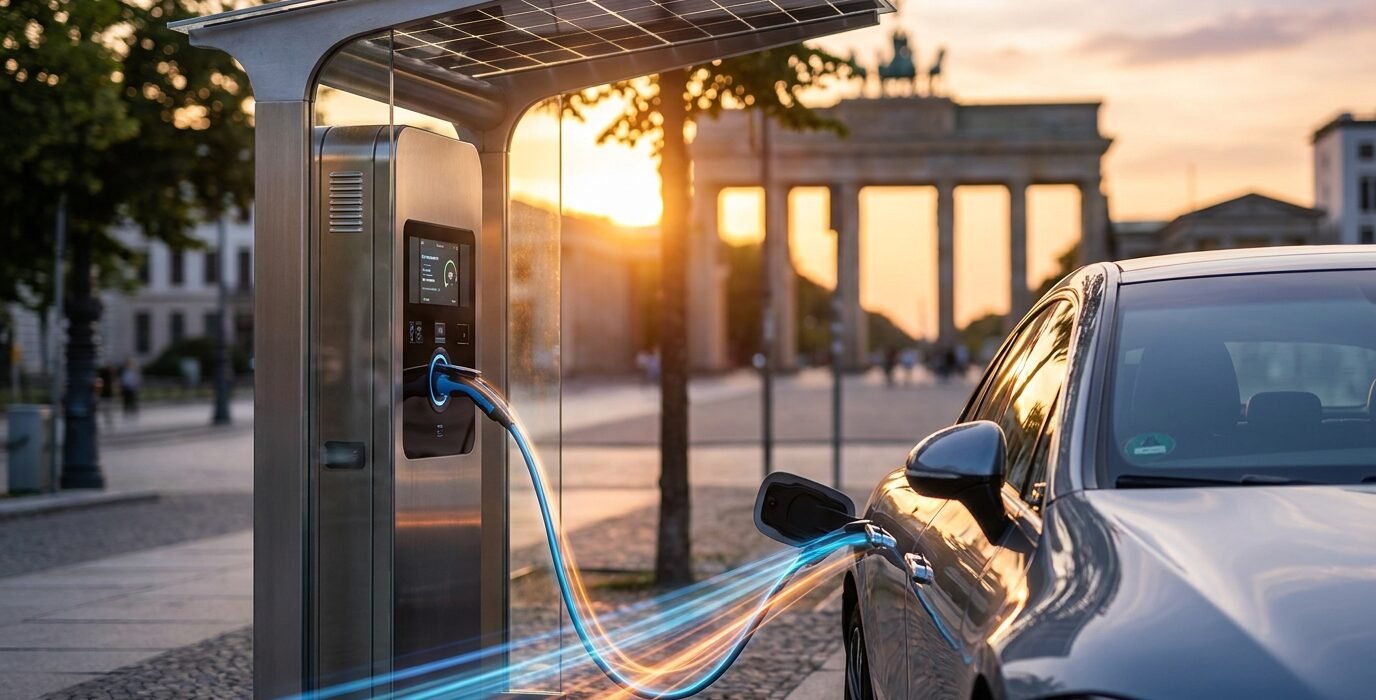
Furthermore, the physical design of charging stations is evolving. Imagine sleek, modular charging hubs that can be deployed rapidly. These could be integrated into existing parking structures or street furniture in cities like Hamburg. These solutions are designed not just for speed but for accessibility and ease of use. They cater to a diverse range of EV owners, from apartment dwellers without home charging to those needing a quick top-up on a long journey. The vision is a Germany where finding a fast, reliable charging point is as simple as finding a gas station today, but with a fraction of the environmental impact.
The Human Element: Overcoming Consumer Hesilancy
The most advanced technology in the world is useless if people don’t adopt it. For years, the prevailing sentiment in Germany regarding electric cars has been a mix of curiosity and caution. Range anxiety, the fear of running out of power far from a charging station, has been a significant barrier. Coupled with this is the perceived complexity of charging – different providers, apps, pricing structures, and the sheer time commitment often associated with refueling. This is where the new wave of German startups is focusing. They are concentrating not just on technical prowess but also on the user experience. They understand that for e-mobility to truly take hold, it needs to be as convenient, if not more so, than traditional gasoline-powered vehicles.
Take the story of Anna Schmidt, a freelance graphic designer living in a suburb of Cologne. She was skeptical about switching to an EV, despite environmental concerns. Her daily commute wasn’t excessively long, but the thought of planning a weekend trip to the Harz Mountains filled her with dread. “I kept imagining myself stranded on the side of the Autobahn, scrolling through an app, trying to find a charger that might be broken or already occupied,” she confessed during a recent tech meet-up.
Anna eventually took the plunge with a new electric model. She was partly swayed by the promise of faster charging hubs appearing along major routes. She found that while the infrastructure is still developing, the reality has been less daunting than she feared. The availability of reliable real-time charging information through apps like ADAC Maps has been a game-changer. This isn’t just about data; it’s about building confidence.
When drivers like Anna can see exactly where the fast chargers are, how many are available, and their current status, the fear begins to recede. Startups are also working on predictive charging solutions. Your car’s navigation system will automatically suggest optimal charging stops based on your destination and current battery level. This takes the mental load off the driver. This focus on making the EV experience intuitive and stress-free is crucial. It’s about demystifying the technology. It’s about making it feel as familiar and effortless as using your smartphone. The goal is to move from a mindset of “range anxiety” to one of “range confidence.”
Counter-Intuitive Charging: The Rise of Bidirectional Power
Here’s a fact that might surprise you: your electric car could soon be helping to power your home, or even the national grid. While the focus has largely been on getting energy into the car as quickly as possible, a burgeoning area of innovation is bidirectional charging, also known as Vehicle-to-Grid (V2G) technology. German companies are at the forefront of developing the hardware and software that will allow EVs to not only draw power but also discharge it. This is a massive shift in how we think about electric vehicles, transforming them from simple transport devices into mobile energy storage units.
Imagine a scenario in Berlin on a cold winter evening. Demand for electricity surges as everyone turns on their heaters and lights. Instead of relying solely on power plants, the grid could draw a small amount of power from thousands of parked EVs, helping to stabilize the network and prevent blackouts. Companies like Nuvve Holding Corp., which has strong European partnerships and research collaborations in Germany, are pioneering V2G platforms. Their technology enables EVs to communicate with the grid. It intelligently discharges power when it’s most needed and most valuable.
This has significant economic implications for EV owners. They could be compensated for providing grid services, effectively earning money while their car is parked. Furthermore, V2G technology can help integrate renewable energy sources like solar and wind power more effectively. When the sun shines or the wind blows, excess energy can be stored in EV batteries. When demand is high or renewable generation is low, that stored energy can be released.
This concept challenges the traditional, one-way flow of electricity. It introduces a dynamic, intelligent energy ecosystem. The infrastructure required – specialized chargers and sophisticated grid management software – is complex. But the potential benefits are enormous. It’s a counter-intuitive idea that your car, sitting idle for most of the day, could become a vital component of Germany’s energy future. This innovation moves beyond just a faster charge; it’s about a smarter, more integrated energy landscape.
Investment and Innovation: Fueling the Future
The e-mobility revolution in Germany isn’t happening in a vacuum. It’s being powerfully propelled by a confluence of government support, private investment, and a deeply ingrained culture of engineering excellence. The German government has recognized the strategic importance of e-mobility for both economic competitiveness and environmental goals. They have implemented substantial subsidies and funding programs for research and development.
This has created a fertile ground for startups to flourish. It attracts venture capital and fosters a spirit of rapid innovation. The sheer amount of capital flowing into this sector is staggering. Billions of Euros are being injected into companies working on everything from solid-state battery technology to advanced charging network management.
One notable example is the significant investment pouring into companies like Voltaiq, a German startup focusing on advanced battery management systems. Their software uses AI to optimize battery performance, predict lifespan, and ensure safety. This is particularly crucial for the demanding application of electric vehicles. These systems are not just about raw power; they are about intelligence and longevity.
The German Federal Ministry for Economic Affairs and Climate Action has launched numerous initiatives. These aim at boosting domestic battery production and research, recognizing the geopolitical importance of securing battery supply chains. Beyond government funding, major automotive manufacturers, themselves undergoing a massive transformation, are investing heavily in partnerships and acquisitions of smaller, agile startups.
This creates a dynamic ecosystem. Established players provide the scale and market access. Startups bring the disruptive ideas and rapid development cycles. Consider the impact of a successful Series B funding round for a company like ChargeM8, a Berlin-based firm developing ultra-fast charging solutions for urban environments. Such funding allows them to scale production. It helps them expand their pilot projects to cities like Frankfurt. It accelerates their timeline for commercial deployment.
This injection of capital doesn’t just fund new technologies. It creates jobs, fosters expertise, and solidifies Germany’s position as a leader in the global transition to electric mobility. It’s a virtuous cycle of investment, innovation, and job creation. All are aimed at accelerating the shift towards a sustainable transportation future.
The Road Ahead: A Connected and Convenient Electric Germany
As we look beyond the immediate technological advancements, the broader significance of these e-mobility innovations for Germany becomes clear. We are moving towards a future where electric vehicles are not just a niche product for early adopters but a mainstream choice for the vast majority of German consumers. The frustrations of slow charging and limited range are steadily being replaced by the promise of convenience, performance, and a cleaner environment. The integration of faster charging infrastructure, coupled with smarter grid management and the potential of bidirectional charging, creates a holistic ecosystem that supports widespread EV adoption.
Think about the impact on daily life in a city like Dresden. Imagine being able to charge your car in the time it takes to grab a coffee and a pastry. Picture planning longer road trips, perhaps to the picturesque Bavarian Alps, with the same ease and confidence you would have driving a gasoline car. You’d know that fast-charging stations are readily available. This isn’t just about reducing carbon emissions, though that is a critical benefit for a nation increasingly focused on climate action. It’s also about economic opportunity, with Germany poised to be a global leader in developing and exporting these cutting-edge e-mobility solutions.
The startups we’ve discussed, and many more like them, are not just building better batteries or faster chargers. They are building the infrastructure for a cleaner, more efficient, and more connected future. They are ensuring that Germany remains at the vanguard of automotive innovation, just as it has for over a century. The electric hum you hear today will, in the coming years, become the powerful, quiet roar of a nation fully embracing its e-mobility destiny, transforming not just how we travel, but how we power our lives. The journey is far from over, but the direction is undeniable.