Key Takeaways
- India’s IT sector faces a critical juncture in 2026, with the ongoing remote and hybrid work models demanding strategic adaptation for sustained growth and talent retention.
- Companies must invest in robust digital infrastructure and cybersecurity to ensure seamless operations and data protection in distributed work environments.
- Rethinking office spaces from mere work hubs to collaboration centres is essential for fostering innovation and employee engagement in a flexible work era.
- A focus on employee well-being, digital upskilling, and inclusive policies will be paramount for attracting and retaining top tech talent in India’s competitive landscape.
The Shifting Sands of Work: India’s IT Sector at a Crossroads
The hum of servers and the clatter of keyboards in sprawling tech parks across Bengaluru, Hyderabad, and Pune have long defined India’s IT prowess. But the seismic shifts triggered by global events are fundamentally reshaping this landscape. As we navigate 2026, the question isn’t *if* remote and hybrid work models will persist, but *how* India’s IT sector will strategically adapt to harness their potential. The days of mandatory daily commutes to glass-and-steel edifices are fading, replaced by the flexibility of home offices and the strategic use of physical spaces for collaboration. This transition presents both immense opportunities and significant challenges.
For years, the IT industry has been a powerhouse of job creation and economic growth for India. However, the pandemic accelerated a trend that was already brewing: the desire for greater work-life balance and the feasibility of working from anywhere. Now, as companies grapple with employee expectations and the ongoing need for agility, a permanent recalibration of work strategies is not just beneficial, but essential. The ability to attract and retain the best minds, irrespective of their geographical location, will be a defining factor in the sector’s future success. This requires more than just allowing employees to work from home; it demands a complete reimagining of how work gets done, how teams collaborate, and how company culture is fostered.
Investing in the Digital Backbone: Infrastructure and Cybersecurity Imperatives
In this new era of distributed teams, the bedrock of operations is no longer a centralized office network, but a resilient and secure digital infrastructure. Companies that have embraced remote and hybrid models understand that investing in robust cloud solutions, high-speed internet access for all employees, and reliable collaboration tools is non-negotiable. Without this foundational digital backbone, productivity will falter, and the seamless flow of information will be jeopardized. This means looking beyond basic internet connectivity and ensuring that employees, whether in a bustling metro like Mumbai or a Tier-3 city like Coimbatore, have the digital resources to perform at their best.
Cybersecurity, however, takes on an even more critical dimension. With employees accessing sensitive company data from diverse locations and personal networks, the attack surface for cyber threats expands exponentially. Implementing multi-factor authentication, robust endpoint security, regular security awareness training, and secure VPN solutions are no longer optional add-ons; they are core operational necessities. The threat of data breaches, ransomware attacks, and intellectual property theft looms larger than ever. Proactive security measures, including continuous monitoring and incident response planning, are vital to protect the integrity and confidentiality of company information and client data.
Redefining Office Spaces: From Work Hubs to Collaboration Sanctuaries
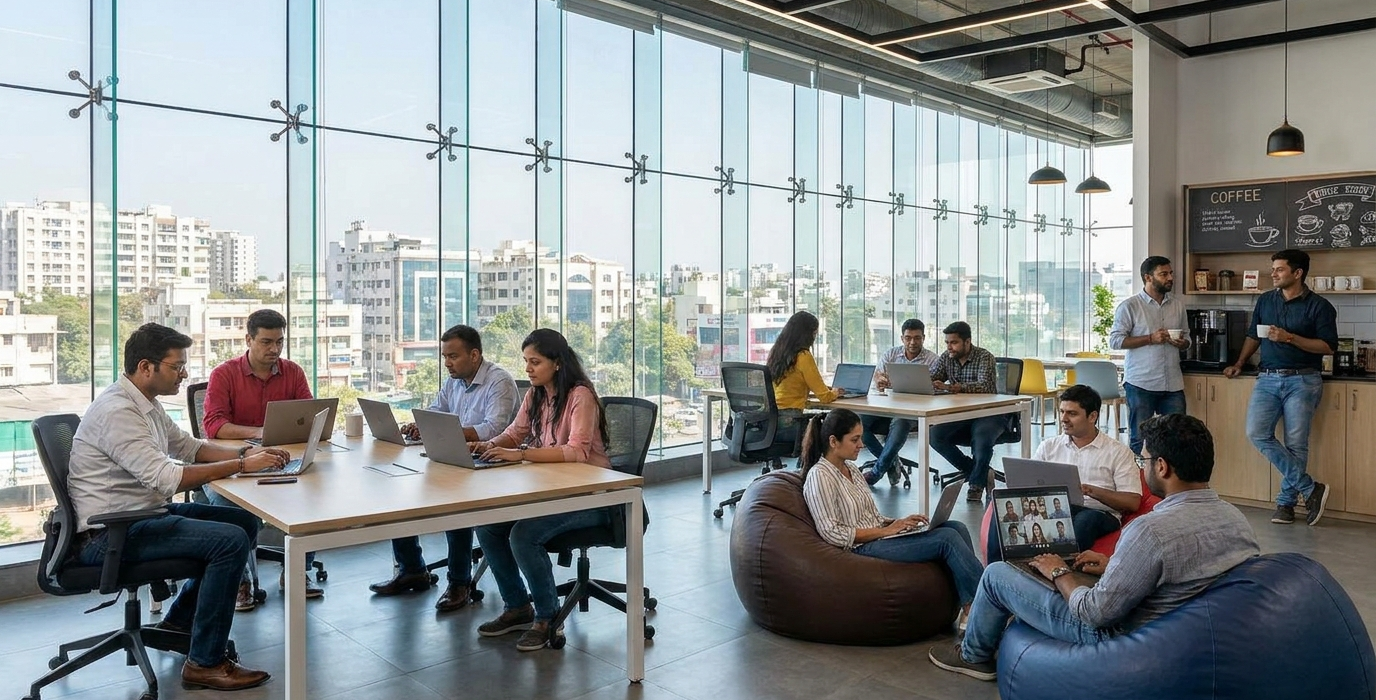
The traditional office, once the epicentre of daily work life, is undergoing a profound transformation. For many IT companies in India in 2026, the office is evolving from a place where individuals perform routine tasks to a dynamic hub for collaboration, innovation, and social connection. This shift necessitates a rethinking of office design and functionality. Instead of rows of individual cubicles, we are seeing more open, flexible spaces, dedicated project rooms, brainstorming areas, and comfortable zones for informal interactions. The goal is to create an environment that draws employees in for specific purposes, fostering a sense of community and shared purpose.
Companies are experimenting with various models. Some are opting for smaller, strategically located satellite offices in residential areas, reducing commute times for employees who prefer a physical workspace. Others are investing in state-of-the-art conference facilities equipped for seamless hybrid meetings, ensuring that remote participants feel as connected and engaged as those present in person. The emphasis is on creating spaces that are not just functional, but also inspiring and conducive to creativity. This transition is a delicate balancing act, requiring careful consideration of employee preferences, project needs, and the overall company culture. It’s about making the office a destination, not a daily obligation.
Talent Acquisition and Retention: The New Battlegrounds
In the fierce competition for top tech talent in India, the ability to offer flexible work arrangements has become a significant differentiator. Companies that rigidly adhere to pre-pandemic norms risk losing out to more adaptable competitors. Offering a genuine hybrid model, where employees have a say in their work location and schedule, is increasingly becoming an expectation rather than a perk. This flexibility extends beyond just physical location; it encompasses working hours that accommodate personal needs and a focus on outcomes rather than hours clocked in. This is particularly relevant for retaining experienced professionals who value autonomy and work-life integration.
Furthermore, fostering a strong company culture in a distributed environment requires deliberate effort. Virtual team-building activities, regular check-ins, transparent communication channels, and mentorship programs are crucial for maintaining employee morale and a sense of belonging. Investing in employee well-being, including mental health support and resources for creating ergonomic home workspaces, is also paramount. For instance, a company based in Electronic City, Bengaluru, might offer stipends for home office setup or provide access to mental wellness platforms. Ultimately, attracting and retaining talent in 2026 will hinge on creating an inclusive, supportive, and flexible work environment that truly values its employees.
The Rise of the Digital Nomad and Global Talent Pools
One of the most fascinating developments is the rise of the “digital nomad” within India’s tech workforce. With reliable internet and collaborative tools, skilled professionals can now work from anywhere, whether it’s a serene beach in Goa, the hills of Himachal Pradesh, or even while travelling abroad. This opens up a vast, untapped talent pool for Indian IT companies. They are no longer limited to hiring within a specific city or even the country. Companies in cities like Chennai can now tap into the expertise of a developer living in a smaller town, or even an Indian national working remotely from a different continent, potentially offering cost efficiencies and access to specialized skills.
This globalized approach to talent, however, brings its own set of complexities. Companies need to navigate different time zones, diverse cultural expectations, and varying legal and tax regulations. Establishing clear communication protocols, embracing asynchronous work practices, and fostering a culture of trust and accountability are essential for managing these distributed teams effectively. The ability to adapt to these new paradigms will be a key determinant of success for Indian IT firms looking to compete on a global stage.
Upskilling and Reskilling: Preparing for the Future of Tech Roles
The rapid evolution of technology, coupled with the shift to flexible work models, necessitates a continuous focus on upskilling and reskilling the workforce. New tools, platforms, and methodologies are constantly emerging, and employees need to be equipped with the skills to adapt. This is not just about technical proficiency; it also includes developing soft skills crucial for remote collaboration, such as effective virtual communication, digital project management, and problem-solving in a distributed setting. Companies must proactively identify skill gaps and provide accessible, relevant training programs.
Investing in continuous learning is no longer a benevolent gesture; it’s a strategic imperative for long-term competitiveness. For example, a firm in Noida might partner with online learning platforms to offer courses in AI, machine learning, or advanced cybersecurity to its employees. This not only enhances individual capabilities but also ensures that the company remains at the forefront of technological innovation. A proactive approach to reskilling can also help redeploy employees whose roles might be impacted by automation or changing industry demands, fostering loyalty and a stable workforce.
“The true measure of an IT company’s success in 2026 won’t be its physical footprint, but its digital agility and its ability to cultivate a thriving, connected workforce, regardless of location.”
Navigating the Hybrid Landscape: A Comparative Look at Work Models
As Indian IT firms solidify their remote and hybrid strategies, understanding the nuances of different approaches is crucial. While a fully remote model offers maximum flexibility, it can sometimes pose challenges in terms of team cohesion and spontaneous collaboration. Conversely, a heavily office-centric approach may struggle to attract and retain talent in today’s market. Most companies are finding a balance, and the effectiveness of each model often depends on the company’s specific needs, culture, and the nature of its work.
Here’s a simplified look at how some common hybrid models might be perceived:
| Work Model | Key Characteristics | Potential Advantages | Potential Challenges |
|---|---|---|---|
| Fully Remote | Employees work from home or anywhere, with minimal or no requirement for physical office presence. | Maximum flexibility, wider talent pool, reduced real estate costs. | Can impact team cohesion, spontaneous collaboration, and company culture. |
| Hybrid (Fixed Days) | Employees are assigned specific days to work from the office and specific days to work remotely. | Ensures regular in-person interaction, predictable team presence. | Less flexibility for employees, potential scheduling conflicts, requires careful coordination. |
| Hybrid (Flexible Days/Office as Hub) | Employees have flexibility in choosing their office days, with the office serving as a collaboration and meeting space. | Balances flexibility with in-person interaction, caters to diverse employee needs. | Requires strong communication and coordination, potential for underutilization of office space if not managed well. |
| Remote-First with Office Option | The default is remote work, but a physical office is available for those who prefer it or for specific team activities. | Prioritizes remote flexibility while maintaining physical touchpoints, can be cost-effective. | Still requires intentional efforts to foster connection and prevent a two-tiered culture. |
The choice of model isn’t a one-size-fits-all solution. Companies in India are increasingly experimenting and tailoring these approaches to suit their unique operational demands and employee demographics. The key is to remain agile and willing to adapt as the landscape continues to evolve.
Frequently Asked Questions
What are the biggest challenges for India’s IT sector in adopting remote work?
The primary challenges include ensuring robust cybersecurity across distributed networks, maintaining a strong company culture and team cohesion, and addressing potential digital divides in employee access to reliable internet and suitable workspaces. Effective management of hybrid teams and fostering innovation in a decentralized environment also pose significant hurdles.
How can IT companies in India maintain employee engagement with hybrid work models?
Engagement can be maintained through regular, transparent communication, investing in virtual team-building activities, providing opportunities for social interaction (both virtual and in-person), offering employee well-being programs, and ensuring that remote employees have equal opportunities for growth and recognition.
Is the traditional office space becoming obsolete for Indian IT firms?
Not entirely, but its role is evolving. Offices are increasingly being repurposed as collaboration hubs, innovation centres, and spaces for team meetings and social gatherings, rather than solely for individual, routine work. Companies are focusing on creating flexible, purpose-driven office environments.
What are the most critical skills for IT professionals in a remote/hybrid work environment?
Beyond technical expertise, critical skills include strong virtual communication and collaboration, digital project management, self-discipline and time management, adaptability, problem-solving in a distributed setting, and digital literacy. Continuous learning and upskilling are also paramount.
How can Indian IT companies ensure fairness and inclusivity in hybrid work models?
Fairness and inclusivity are achieved by standardizing performance evaluations irrespective of work location, ensuring equal access to information and opportunities for all employees, implementing clear policies on hybrid work, and actively seeking feedback to address any perceived biases or inequities.