Key Takeaways
- India’s AI adoption is accelerating, creating new high-skill roles while automating some existing ones.
- The focus is shifting towards reskilling and upskilling the workforce, particularly in sectors like IT, manufacturing, and customer service.
- Emerging AI-driven fields like prompt engineering and AI ethics offer significant career opportunities.
- Government initiatives and private sector partnerships are crucial for a smooth transition and inclusive growth in the AI era.
The AI Tide: Reshaping India’s Employment Landscape in 2026
The year 2026 marks a pivotal moment for India’s economy, with Artificial Intelligence no longer a futuristic concept but a tangible force reshaping industries and, consequently, its vast workforce. We are witnessing an unprecedented acceleration in AI adoption across sectors, from the bustling IT hubs of Bengaluru to the manufacturing corridors of Gujarat. This isn’t just about new software or smarter algorithms; it’s about a fundamental shift in how work is done, what skills are valued, and where future opportunities lie.
For millions of Indians, this technological wave brings a mix of excitement and apprehension. While AI promises increased efficiency, innovation, and the creation of entirely new job categories, it also raises concerns about job displacement in traditional roles. Understanding this dual impact is crucial for individuals, businesses, and policymakers alike as we navigate this transformative period. The conversation is no longer *if* AI will change jobs, but *how* and *how fast*, and what proactive steps we must take.
The Rise of the AI-Augmented Professional
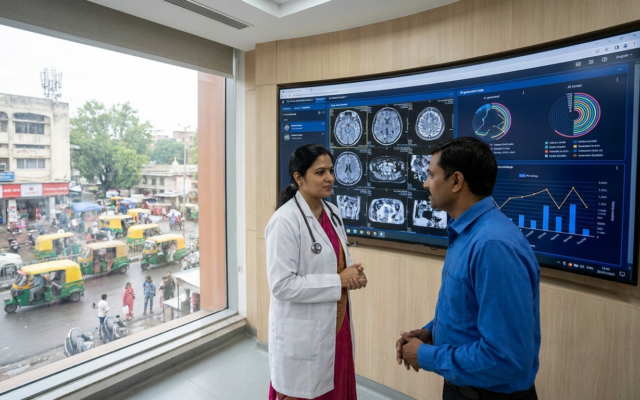
The narrative of AI simply replacing human jobs is increasingly outdated. In 2026, we are seeing a far more nuanced reality: AI is becoming a powerful co-pilot, augmenting human capabilities and creating demand for a new breed of professionals. Think of a financial analyst in Mumbai who now uses AI tools to sift through vast market data in seconds, allowing them to focus on strategic interpretation and client advisory rather than manual data crunching. Or a doctor in a Tier-2 city like Coimbatore leveraging AI-powered diagnostics to identify potential diseases with greater accuracy and speed.
These roles don’t eliminate the human element; they elevate it. The emphasis is shifting from repetitive, rule-based tasks to skills that AI cannot easily replicate: critical thinking, creativity, emotional intelligence, and complex problem-solving. We are seeing a surge in demand for professionals who can work *alongside* AI, understanding its outputs, guiding its processes, and ensuring its ethical deployment. This requires a proactive approach to learning and adaptation, making continuous upskilling not just a career advantage, but a necessity.
Emerging Roles: The New Frontline of AI Careers
As AI integrates deeper into our professional lives, entirely new job titles and specializations are emerging at a rapid pace. Gone are the days when a computer science degree was the sole gateway to tech careers. Today, we’re seeing a burgeoning demand for roles that are directly tied to the development, deployment, and ethical governance of AI systems. Consider the rise of Prompt Engineers, individuals skilled in crafting precise instructions for AI models to generate desired outputs, a skill becoming critical for content creation, coding assistance, and even design.
Beyond prompt engineering, roles like AI Ethicists are gaining prominence. These professionals are tasked with ensuring AI systems are fair, transparent, and free from bias, a critical concern as AI influences decisions in hiring, lending, and even law enforcement. We are also seeing a significant uptick in demand for AI Trainers and Data Curators, who ensure the quality and relevance of the data used to train AI models. The Indian startup ecosystem, particularly in cities like Pune and Hyderabad, is buzzing with innovation in these nascent fields, offering exciting new career paths for those willing to embrace them.
Bridging the Skills Gap: Reskilling and Upskilling Imperatives
The most significant challenge facing India’s workforce in this AI era is the widening skills gap. While new jobs are being created, many existing roles, particularly in sectors like data entry, basic customer support, and certain manufacturing processes, are susceptible to automation. The urgency to reskill and upskill the existing workforce cannot be overstated. This isn’t a task for individuals alone; it requires a concerted effort from educational institutions, corporations, and the government.
Initiatives like the National Skill Development Corporation (NSDC) are playing a crucial role, partnering with tech giants and industry bodies to offer specialized training programs in AI, machine learning, and data analytics. Companies are increasingly investing in internal training academies, recognizing that nurturing talent from within is more sustainable than constantly seeking external hires. For individuals, the path forward involves embracing lifelong learning, seeking out online courses, vocational training, and certifications that align with the evolving demands of the AI-driven economy. The ability to adapt and learn new skills will be the most valuable asset in the coming years.
Sectoral Shifts: Where AI is Making the Biggest Impact
The impact of AI is not uniform across all sectors of the Indian economy. The Information Technology (IT) and Business Process Management (BPM) sectors, long the backbone of India’s service exports, are undergoing a significant transformation. AI-powered automation is streamlining tasks in areas like software testing, customer service, and data processing, leading to a shift towards higher-value roles like AI development, cloud architecture, and cybersecurity. Companies like Infosys and TCS are actively investing in AI capabilities to maintain their competitive edge.
Beyond IT, manufacturing is also experiencing a profound AI-driven evolution. Smart factories, utilizing AI for predictive maintenance, quality control, and robotics, are becoming more common, particularly in states like Tamil Nadu and Gujarat. Even traditional sectors like agriculture are not untouched, with AI being used for crop monitoring, yield prediction, and precision farming, promising to boost productivity for farmers in regions like Punjab and Haryana. The healthcare sector is another key area, with AI assisting in drug discovery, personalized medicine, and administrative efficiency, creating new opportunities for medical professionals and technicians.
Navigating the Ethical and Social Dimensions
As AI becomes more pervasive, it brings with it a complex web of ethical and social considerations that we, as a society, must actively address. The potential for algorithmic bias, where AI systems perpetuate or even amplify existing societal inequalities, is a significant concern. For instance, an AI used in recruitment processes, if trained on historical data that reflects gender or caste bias, could inadvertently discriminate against certain candidates. Ensuring fairness, transparency, and accountability in AI systems is paramount.
Furthermore, questions around data privacy and security are becoming increasingly critical. As AI models require vast amounts of data to learn, robust frameworks are needed to protect sensitive personal information. The Digital Personal Data Protection Act, 2023, is a step in the right direction, but its effective implementation and evolution in the face of rapidly advancing AI technologies will be key. We also need to consider the social impact of job displacement, ensuring that transition support and safety nets are in place for those whose livelihoods are most affected. This requires thoughtful policy-making and a commitment to an inclusive AI future.
| AI Skill Area | Typical Roles | Estimated Salary Range (INR per annum) – 2026 | Required Education/Certifications |
|---|---|---|---|
| Machine Learning & Deep Learning | ML Engineer, AI Scientist, Data Scientist | ₹12,00,000 – ₹30,00,000+ | B.Tech/M.Tech/PhD in CS/IT, Specialized Certifications (e.g., Coursera, Udacity) |
| AI Ethics & Governance | AI Ethicist, AI Policy Analyst, Compliance Officer | ₹10,00,000 – ₹25,00,000 | Master’s in Ethics/Law/Sociology with AI focus, Specialized Courses |
| Prompt Engineering | Prompt Engineer, AI Content Strategist | ₹6,00,000 – ₹15,00,000 | Strong understanding of NLP, Creative Writing Skills, Domain Expertise |
| AI Infrastructure & MLOps | MLOps Engineer, Cloud AI Engineer | ₹14,00,000 – ₹35,00,000+ | B.Tech/M.Tech, Cloud Certifications (AWS, Azure, GCP), DevOps Experience |
“The AI revolution in India is not about replacing humans, but about creating a more intelligent, efficient, and ultimately, more human-centric workforce, provided we invest wisely in skills and ethical frameworks.”
Frequently Asked Questions
Will AI take away all jobs in India by 2026?
No, AI will not take away all jobs. While some routine tasks are being automated, AI is also creating new, high-skill jobs and augmenting human capabilities in existing roles. The focus is shifting towards skills that AI cannot replicate, such as creativity, critical thinking, and emotional intelligence.
What are the most in-demand AI jobs in India right now?
Currently, Machine Learning Engineers, Data Scientists, AI Researchers, Prompt Engineers, and AI Ethicists are among the most sought-after roles. Demand is also high for professionals who can manage AI infrastructure and deploy AI models (MLOps).
How can I prepare myself for the AI-driven job market in India?
Focus on continuous learning and upskilling. Consider pursuing certifications in AI, machine learning, and data analytics. Develop strong foundational skills in areas like programming, statistics, and problem-solving, and cultivate soft skills like communication and adaptability.
Are there government initiatives to help Indians adapt to AI?
Yes, the Indian government, through bodies like the National Skill Development Corporation (NSDC) and various digital India initiatives, is actively promoting AI education and skill development programs. Many partnerships exist with industry to offer relevant training and reskilling opportunities.