Key Takeaways
- India’s AI startup ecosystem is booming, with innovators focusing on sectors from healthcare to sustainable agriculture.
- We’re highlighting five key players poised for significant growth and impact in 2026, showcasing diverse applications of AI.
- These companies are not just adopting AI; they are pioneering novel solutions that address real-world challenges in India and globally.
- Understanding these startups offers a glimpse into the future of technology and its potential to transform industries.
The New Wave: India’s AI Surge in 2026
The year 2026 marks a pivotal moment for India’s artificial intelligence landscape. Gone are the days when AI was a concept confined to research labs and multinational corporations. Today, a vibrant ecosystem of homegrown startups is not just adopting AI but is actively shaping its trajectory. These agile innovators are leveraging cutting-edge machine learning, natural language processing, and computer vision to solve complex problems across diverse sectors. From revolutionizing healthcare access in remote villages to optimizing crop yields for millions of farmers, the impact is palpable and growing.
What makes this surge particularly exciting is the deep understanding these startups have of the Indian context. They are building solutions that are not only technologically advanced but also culturally relevant and economically viable for our diverse nation. This allows them to tackle challenges that might be overlooked by global players. We’re witnessing a shift where Indian ingenuity, fueled by AI, is setting new benchmarks for innovation. This article dives into five such promising startups that you should be keeping a close eye on this year.
HealthAI Diagnostics: Revolutionizing Rural Healthcare
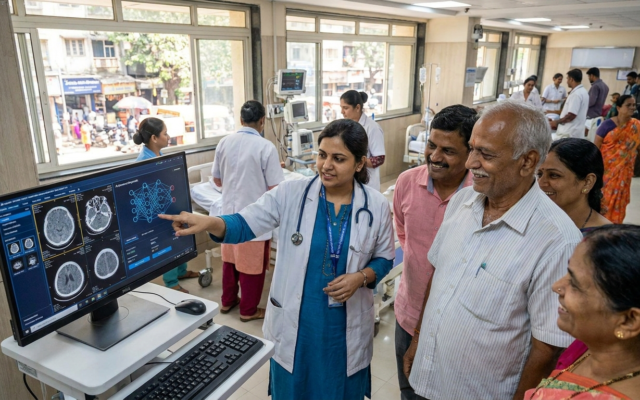
Imagine a doctor’s expertise reaching the farthest corners of India, instantly. HealthAI Diagnostics is making this a reality. This Bengaluru-based startup is developing AI-powered diagnostic tools that can analyze medical images, such as X-rays and retinal scans, with remarkable accuracy. Their technology is designed to be accessible even in areas with limited infrastructure, often relying on low-bandwidth connections and portable devices. This significantly reduces the burden on rural healthcare workers and provides timely diagnoses that can save lives.
Their flagship product, “NetraScan,” uses deep learning algorithms to detect diabetic retinopathy from fundus images. This condition, if left untreated, can lead to blindness. HealthAI Diagnostics’ solution allows local health workers to perform initial screenings, flagging potential cases for further review by specialists. This dramatically increases the reach of critical eye care services, a significant challenge in a country with a large diabetic population. The startup is also working on AI models for early detection of tuberculosis and certain types of cancer from other imaging modalities.
The potential impact is immense. By democratizing access to advanced diagnostics, HealthAI Diagnostics is not just improving healthcare outcomes but also fostering a more equitable system. Their commitment to affordability and usability ensures that their technology can be implemented effectively across the vast and varied healthcare landscape of India. This is AI truly serving humanity at its core.
AgriBotics Solutions: Smart Farming for a Greener Tomorrow
Indian agriculture, the backbone of our economy, faces constant pressure from climate change, soil degradation, and resource scarcity. AgriBotics Solutions, operating from Pune, is stepping up to the challenge with its innovative AI-driven platform for precision agriculture. They are empowering farmers with data-driven insights to optimize every aspect of their crop cycle, from planting to harvesting.
Their system integrates data from various sources, including satellite imagery, IoT sensors deployed in fields, and local weather forecasts. AgriBotics’ AI algorithms analyze this vast dataset to provide farmers with highly specific recommendations. These include optimal irrigation schedules, precise fertilizer application, early pest and disease detection, and even advice on the best time to sow and harvest for maximum yield. This not only boosts productivity but also significantly reduces wastage of water and chemicals.
One of their most impressive features is the predictive modeling for crop health. Using machine learning, AgriBotics can forecast potential outbreaks of diseases or pest infestations weeks in advance. This allows farmers to take preventative measures, minimizing crop damage and increasing their profitability. Beyond just recommendations, they are also developing AI-powered drones for automated spraying and targeted interventions, further enhancing efficiency and reducing manual labor. Their focus on accessible mobile interfaces ensures that even smallholder farmers can benefit from this advanced technology.
A surprising fact about AgriBotics is their success in using AI to predict micro-climate variations within a single farm. This level of granularity allows for hyper-localized agricultural strategies, making a tangible difference in yield and resource efficiency even on small plots of land. This is a testament to their deep understanding of the diverse agricultural realities across India.
FinTech AI Navigators: Democratizing Financial Access
Financial inclusion remains a critical goal for India, and FinTech AI Navigators, a Mumbai-based startup, is at the forefront of using AI to achieve it. They are building intelligent platforms that simplify financial services, making them accessible and understandable for everyone, especially the underbanked and unbanked populations.
Their core offering is an AI-powered financial advisory service that goes beyond traditional banking. It analyzes an individual’s spending patterns, income, and financial goals to provide personalized advice on savings, investments, and debt management. The system uses natural language processing to communicate these complex financial concepts in simple, vernacular languages, breaking down literacy barriers. This makes sophisticated financial planning achievable for individuals who may not have had access to such services before.
FinTech AI Navigators also leverages AI for fraud detection and risk assessment in micro-lending. By analyzing alternative data sources, such as mobile phone usage and social media activity (with explicit user consent and strict privacy protocols), their algorithms can assess the creditworthiness of individuals who lack formal credit histories. This opens up avenues for small businesses and individuals to access much-needed capital, fostering economic growth at the grassroots level.
Their platform also includes AI-driven chatbots that provide instant customer support, answer queries 24/7, and guide users through various financial processes. This not only improves customer experience but also significantly reduces operational costs for financial institutions. The startup’s commitment to ethical AI and data privacy is a cornerstone of its operations, ensuring trust and long-term adoption.
“The true power of AI in India lies not just in its technological prowess, but in its ability to bridge existing divides – be it in healthcare, agriculture, or finance. These startups are the architects of that bridge.”
Edutech AI Innovators: Personalizing Learning for All
The educational landscape in India is vast and varied, with challenges ranging from teacher shortages to standardized curricula that don’t cater to individual learning styles. Edutech AI Innovators, a startup from Hyderabad, is tackling these issues head-on with its AI-powered personalized learning platforms. They aim to make quality education accessible and effective for every student, regardless of their background or learning pace.
Their flagship product, “GyanAI,” adapts to each student’s unique learning path. It uses AI to assess a student’s strengths and weaknesses in real-time, identifying areas where they struggle or excel. Based on this continuous assessment, the platform delivers customized content, practice exercises, and even interactive simulations that are tailored to their specific needs. This ensures that students receive the right level of challenge and support, maximizing engagement and comprehension.
GyanAI also provides valuable insights to educators. Teachers receive detailed analytics on their students’ progress, highlighting common misconceptions or areas where the class as a whole might need additional attention. This allows them to move away from a one-size-fits-all approach and focus their teaching efforts more effectively. The platform’s AI-powered tutoring bots can also offer instant help and explanations, freeing up teachers to focus on more complex pedagogical tasks and one-on-one student interaction.
A fascinating aspect of Edutech AI Innovators’ work is their focus on vernacular languages. They are developing AI models capable of understanding and generating educational content in multiple Indian languages, ensuring that language is not a barrier to quality learning. This is a significant step towards truly democratizing education across the country, making advanced learning tools available to students from diverse linguistic backgrounds.
Sustainable AI Labs: Greening India’s Industries
As India strides towards its sustainability goals, the role of technology in reducing environmental impact becomes paramount. Sustainable AI Labs, a Chennai-based startup, is leveraging AI to drive efficiency and eco-friendly practices across various industrial sectors.
Their focus areas include optimizing energy consumption in manufacturing plants, improving waste management processes, and developing AI solutions for renewable energy integration. For instance, their AI algorithms can analyze real-time energy usage data within factories to identify inefficiencies and suggest adjustments that lead to significant power savings. This not only reduces operational costs for businesses but also contributes to a lower carbon footprint.
In the realm of waste management, Sustainable AI Labs is developing AI-powered sorting systems that can identify and separate recyclable materials with greater accuracy and speed than traditional methods. This enhances the efficiency of recycling plants and promotes a more circular economy. They are also working on AI models that can predict and manage the flow of energy in smart grids, facilitating the seamless integration of solar and wind power sources, which are often intermittent.
One of their most impactful projects involves using AI to monitor and predict environmental factors like air and water quality in industrial zones. By analyzing data from sensors and satellite imagery, their systems can alert authorities and industries to potential pollution spikes, allowing for proactive interventions. This commitment to environmental stewardship through advanced technology positions them as a crucial player in India’s green transition.
Their work extends to predictive maintenance for industrial machinery, using AI to anticipate equipment failures. This not only prevents costly downtime but also optimizes resource usage by ensuring machinery operates at peak efficiency, further contributing to sustainability goals. This proactive approach is a hallmark of their intelligent design.
The Road Ahead: India’s AI Future
The five startups we’ve highlighted – HealthAI Diagnostics, AgriBotics Solutions, FinTech AI Navigators, Edutech AI Innovators, and Sustainable AI Labs – represent just a fraction of the vibrant AI innovation happening across India. Their diverse applications demonstrate the transformative power of artificial intelligence when coupled with a deep understanding of local needs and challenges.
As these companies mature and scale their operations, we can expect to see profound societal and economic impacts. They are not just building businesses; they are building solutions that address critical issues, create new opportunities, and contribute to a more sustainable and equitable future for India and the world. The ingenuity and drive of these entrepreneurs are setting a powerful precedent, proving that India is not just a consumer of AI but a significant innovator in its own right.
The continued growth of the Indian AI startup ecosystem is fueled by a growing pool of talent, increasing access to data, and supportive government policies. We are on the cusp of an era where AI will be deeply integrated into the fabric of our daily lives, driven by the very companies that are emerging today. For investors, policymakers, and indeed, all citizens, understanding and supporting these innovators is key to unlocking the immense potential of India’s AI revolution.
Frequently Asked Questions
What are the biggest challenges for Indian AI startups in 2026?
Key challenges include access to high-quality, diverse data for training AI models, bridging the talent gap by nurturing specialized AI skills, and ensuring ethical AI development and deployment, especially concerning data privacy and bias. Securing adequate funding for scaling operations also remains a significant hurdle.
How is AI impacting traditional Indian industries?
AI is driving significant efficiency gains and innovation in traditional sectors. In agriculture, it optimizes crop yields; in healthcare, it enhances diagnostics; in manufacturing, it improves predictive maintenance and energy efficiency; and in finance, it expands access to services. These advancements are leading to increased productivity, reduced costs, and improved sustainability.
What role do government policies play in supporting Indian AI startups?
Government policies are crucial. Initiatives like the National AI Strategy, incentives for R&D, and the establishment of AI research hubs and centers of excellence provide a conducive environment. Policies aimed at data democratization and digital infrastructure development also play a vital role in fostering innovation and adoption.
Can these AI solutions be scaled beyond India?
Yes, many of these solutions have global applicability. Startups focusing on areas like healthcare diagnostics, sustainable agriculture, and financial inclusion are developing technologies that can address similar challenges in other developing nations. Their ability to adapt to diverse cultural and economic contexts is key to their international scalability.