Key Takeaways
- AI tools are now assisting Indian doctors in diagnostics, from identifying diabetic retinopathy to spotting early signs of cancer, leading to faster and more accurate assessments.
- These intelligent systems can analyse vast medical datasets, including radiology scans and pathology slides, often detecting subtle patterns missed by the human eye.
- While AI is a powerful aid, it’s crucial to understand its limitations; it acts as a co-pilot, not a replacement for experienced medical professionals.
- We’re seeing significant advancements in AI-powered drug discovery and personalised treatment plans, promising a future of more effective and tailored healthcare.
AI: The Scalpel’s New Partner in India’s Healthcare Revolution
Imagine a world where a doctor, even in a remote village in Rajasthan, has access to the diagnostic prowess of a dozen specialists. This isn’t science fiction anymore; it’s the emerging reality powered by Artificial Intelligence (AI) in India’s burgeoning healthcare sector. Today, AI is rapidly moving from research labs into the frontline of patient care, acting as a formidable ally for our dedicated medical professionals. Think of it as an incredibly intelligent, tireless assistant, capable of sifting through mountains of data with breathtaking speed and accuracy.
AI’s impact is already palpable across various medical disciplines. In ophthalmology, for instance, AI algorithms are proving remarkably adept at detecting diabetic retinopathy, a leading cause of blindness, often from simple retinal scans. This is particularly crucial for India, which bears a significant global burden of diabetes. Similarly, in radiology, AI is helping to flag suspicious nodules on chest X-rays or identify subtle anomalies in mammograms, potentially catching cancers at their earliest, most treatable stages. We’re not just talking about incremental improvements; we’re witnessing a paradigm shift in how diagnoses are made.
The sheer volume of medical information generated daily is staggering. AI systems can process and learn from this data – encompassing everything from patient histories and genetic profiles to millions of medical images – far beyond human capacity. This allows them to identify complex patterns and correlations that might otherwise remain hidden. The goal isn’t to replace the human touch, but to augment it, freeing up doctors from routine tasks and empowering them with deeper insights for more informed decision-making.
Unlocking Insights from Medical Imagery: A New Dawn for Diagnostics
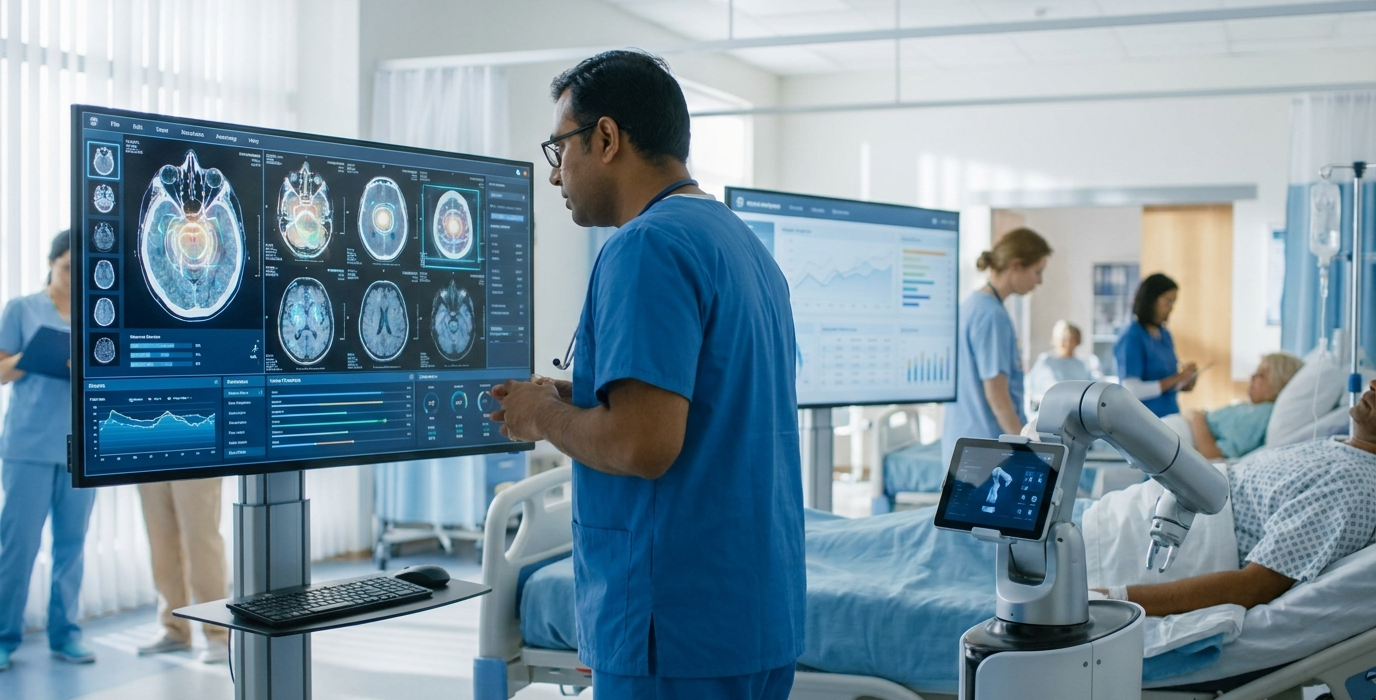
One of the most transformative applications of AI in Indian healthcare lies in its ability to interpret medical images. Radiologists and pathologists spend countless hours meticulously examining X-rays, CT scans, MRIs, and microscopic slides. AI algorithms, trained on vast datasets of these images, can now perform many of these tasks with remarkable speed and accuracy. This is especially beneficial in a country like India, where there’s a significant demand for specialist interpretation, often exceeding the available supply.
Consider the detection of tuberculosis (TB) from chest X-rays. AI models can analyse these images, highlighting areas suggestive of the disease. This can be a game-changer in resource-limited settings, where access to experienced radiologists might be scarce. The AI can act as a first-pass filter, flagging potential cases for human review, thereby speeding up the diagnostic process and potentially preventing the further spread of infectious diseases. We’ve seen pilot programs in cities like Bengaluru showing promising results in reducing the time to diagnosis.
Beyond infectious diseases, AI is making strides in oncology. Algorithms are being developed to detect early signs of breast cancer, lung cancer, and even skin cancer from images. These systems can identify subtle textural changes or pixel patterns that might be imperceptible to the human eye. This early detection is paramount for improving patient outcomes. Furthermore, AI can assist in grading tumours, providing oncologists with more precise information to tailor treatment strategies. The ability of AI to consistently apply its learned patterns without fatigue is a significant advantage.
Personalised Medicine: Tailoring Treatments to Your Unique Blueprint
The era of one-size-fits-all medicine is gradually fading, and AI is a primary driver of this revolution. By analysing an individual’s unique genetic makeup, lifestyle factors, and medical history, AI can help predict their susceptibility to certain diseases and their likely response to different treatments. This shift towards personalised medicine promises to make healthcare more effective and less prone to adverse drug reactions. Imagine receiving a treatment plan specifically designed for your body’s biology, rather than a standard protocol.
In oncology, AI is already playing a crucial role. It can analyse tumour DNA to identify specific mutations that might respond to targeted therapies. This helps oncologists select the most appropriate drugs, maximising efficacy while minimising side effects. For instance, an AI might analyse the genomic profile of a lung cancer patient and recommend a specific immunotherapy drug that has a higher probability of success for that particular genetic subtype. This level of precision was unimaginable just a decade ago.
Beyond cancer, AI is being used to optimise treatment for chronic conditions like diabetes and heart disease. By continuously monitoring data from wearable devices and electronic health records, AI can predict potential complications and suggest adjustments to medication or lifestyle. This proactive approach can help prevent hospital admissions and improve the quality of life for millions. We are seeing early applications of AI in predicting cardiovascular events in high-risk patients in cities like Hyderabad, allowing for timely interventions. This is about moving from reactive care to proactive wellness.
Beyond Diagnosis: AI’s Role in Drug Discovery and Research
The journey of a new drug from laboratory to patient is notoriously long, expensive, and fraught with failure. AI is stepping in to accelerate this process, dramatically reducing the time and cost associated with drug discovery and development. By sifting through vast chemical libraries and biological data, AI can identify potential drug candidates much faster than traditional methods. This could lead to faster breakthroughs for diseases that currently have limited treatment options.
AI algorithms can predict how molecules will interact with biological targets, forecast potential side effects, and even design novel drug compounds from scratch. This ability to simulate and predict significantly reduces the need for costly and time-consuming laboratory experiments. Companies are now using AI to identify existing drugs that could be repurposed for new diseases, a strategy that can bring treatments to market much quicker. We’re talking about potentially finding cures or effective treatments for conditions that have plagued humanity for generations.
In India, with its strong pharmaceutical industry and a vast pool of research talent, AI in drug discovery holds immense promise. It can help researchers identify promising leads for diseases prevalent in the subcontinent, such as dengue or certain neglected tropical diseases. The ability of AI to analyse complex biological pathways and protein structures is a significant advantage. This isn’t just about making existing drugs cheaper; it’s about discovering entirely new classes of medicines and bringing hope to patients who have exhausted current options.
The Human Element: Why AI is a Co-Pilot, Not a Replacement
It’s crucial to address a common concern: will AI replace doctors? The overwhelming consensus among medical professionals and AI developers is a resounding no. AI is best understood as a sophisticated co-pilot for healthcare providers. It excels at pattern recognition, data analysis, and performing repetitive tasks with incredible efficiency. However, it lacks the human qualities essential for patient care: empathy, intuition, complex ethical reasoning, and the ability to build rapport and trust.
A doctor’s role involves far more than just interpreting scans or lab results. It includes understanding a patient’s anxieties, communicating complex medical information with compassion, and making difficult ethical decisions. AI can provide data-driven insights, but the final judgment call, the nuanced discussion with a patient about treatment options, and the emotional support – these remain firmly in the domain of human doctors. Think of it as a powerful tool, like an advanced stethoscope or an MRI machine, that enhances a doctor’s capabilities.
The implementation of AI in hospitals and clinics requires careful consideration of ethical guidelines and regulatory frameworks. We need to ensure that AI systems are unbiased, secure, and used in a way that prioritises patient safety and privacy. Training healthcare professionals to effectively use and interpret AI-generated insights is also paramount. The integration of AI is a journey that requires collaboration between technologists, clinicians, policymakers, and patients to ensure it serves humanity’s best interests. This collaborative approach is key to unlocking AI’s full potential responsibly.
Navigating the Future: Challenges and Opportunities for AI in Indian Healthcare
While the potential of AI in Indian healthcare is immense, several challenges need to be addressed for its widespread adoption. Data privacy and security are paramount concerns. Robust frameworks are needed to ensure patient data is protected and used ethically. Building trust among patients and healthcare providers in AI technologies is another significant hurdle. Demonstrating the reliability and safety of AI systems through rigorous clinical validation and transparent reporting will be essential.
The digital divide in India presents another challenge. Ensuring that AI-powered healthcare solutions are accessible to underserved populations in rural and remote areas is critical. This might involve developing AI tools that can function effectively with limited internet connectivity or on basic mobile devices. Furthermore, the cost of implementing and maintaining AI systems can be substantial, requiring significant investment from both public and private sectors.
However, the opportunities far outweigh the challenges. AI can help alleviate the shortage of medical specialists in India, improve the quality of care, and make healthcare more affordable and accessible. It can lead to earlier disease detection, more effective treatments, and a more proactive approach to public health. The Indian government’s focus on digital health initiatives and the country’s vibrant tech ecosystem provide fertile ground for AI innovation in healthcare. We are at the cusp of an era where AI will become an indispensable part of our healthcare journey, augmenting human expertise and improving lives across the nation and beyond.
Frequently Asked Questions
How is AI currently being used in Indian hospitals?
AI is currently being used for tasks like analysing medical images (X-rays, CT scans) for disease detection, assisting in drug discovery, personalising treatment plans, and improving hospital operational efficiency through predictive analytics.
Will AI replace the need for doctors in India?
No, AI is seen as a tool to augment doctors’ capabilities, not replace them. It handles data analysis and pattern recognition, freeing up doctors for critical thinking, patient interaction, and complex decision-making.
What are the biggest challenges for AI in Indian healthcare?
Key challenges include data privacy and security, ensuring equitable access across rural and urban areas, the cost of implementation, and building trust among patients and healthcare professionals.
Can AI help with diagnostics in remote areas of India?
Yes, AI holds significant potential for remote diagnostics. AI-powered tools can analyse medical images or data sent from remote locations, providing specialist-level insights where human specialists are scarce.