Key Takeaways
- India’s electric vehicle market is poised for significant growth beyond 2026, driven by government incentives, falling battery costs, and expanding charging infrastructure.
- Two-wheeler and three-wheeler segments will continue to lead adoption, offering practical and affordable mobility solutions for the masses.
- The four-wheeler passenger vehicle segment is rapidly maturing, with a wider range of models and increasing consumer confidence in range and performance.
- Navigating the EV landscape requires understanding charging options, government subsidies, and the evolving resale market.
The Electric Surge: India’s EV Landscape in 2026 and Beyond
The hum of electric motors is becoming an increasingly familiar sound on Indian roads, and by 2026, this symphony is set to crescendo. We’re not just talking about a gradual shift; we’re witnessing a full-blown revolution in personal mobility, powered by innovation, policy, and a growing environmental consciousness. For consumers and businesses alike, the question is no longer *if* electric vehicles (EVs) will dominate, but *how* quickly and *which* segments will lead the charge.
This article dives deep into what you can expect from India’s EV market in 2026 and the years that follow. We’ll explore the key drivers of this growth, the challenges that remain, and how you can best position yourself to benefit from this electrifying future. From the bustling streets of Delhi to the coastal towns of Kerala, the electric wave is reshaping how we commute, transport goods, and envision sustainable urban living.
Two & Three-Wheelers: The Backbone of India’s EV Adoption
The story of India’s EV success is, and will continue to be, largely written by its two- and three-wheeler segments. These vehicles are the workhorses of Indian transportation, serving millions daily for commutes, deliveries, and small-scale commerce. Their electric counterparts offer compelling advantages: lower running costs, reduced emissions in densely populated urban areas, and quieter operation, enhancing the urban soundscape.
By 2026, you’ll find an even more diverse array of electric scooters and motorcycles hitting the market, from budget-friendly models ideal for students to performance-oriented machines for enthusiasts. Similarly, the electric autorickshaw (e-rickshaw) and cargo three-wheeler segments are experiencing exponential growth. These are vital for last-mile logistics and offer a more sustainable livelihood for drivers, with significantly lower fuel and maintenance expenses compared to their internal combustion engine (ICE) predecessors. Companies are investing heavily in battery swapping technology and robust charging networks specifically tailored for these high-utilization vehicles, making range anxiety a thing of the past for many operators.
A surprising fact: While often overlooked, the electric three-wheeler segment in India, particularly the e-rickshaw, is already one of the largest in the world by volume. Its growth trajectory is steep, making it a critical component of India’s overall EV ambitions and a key indicator of the nation’s commitment to electric mobility.
The Four-Wheeler Passenger Car Market: Maturing Nicely
The passenger car segment, while starting from a smaller base, is rapidly maturing and offering a compelling alternative for Indian car buyers by 2026. Gone are the days of a handful of expensive, niche EV models. We are now seeing a steady influx of attractive options across various price points and body styles. Expect to see more compact SUVs, sedans, and even hatchbacks equipped with modern EV technology, appealing to a broader spectrum of consumers.
Manufacturers, both domestic and international, are committed to expanding their EV portfolios in India. This competition is driving innovation, leading to better battery range, faster charging capabilities, and improved in-car technology. Consumer perception is also shifting positively; as more EVs become visible on the roads and charging stations become more common, the initial hesitancy regarding range and charging infrastructure is diminishing. The total cost of ownership, when factoring in lower running costs and government incentives, is becoming increasingly competitive with traditional petrol and diesel cars, especially for urban dwellers with predictable commute patterns.
The availability of performance variants and premium EVs is also on the rise, catering to a segment of the market that prioritizes driving dynamics and cutting-edge features. This dual approach – offering practical, affordable options alongside aspirational, technologically advanced vehicles – is key to widespread adoption in the four-wheeler space. We anticipate significant advancements in battery technology, promising longer ranges and reduced charging times, further easing the transition for potential buyers.
Charging Up: Infrastructure and Options in 2026
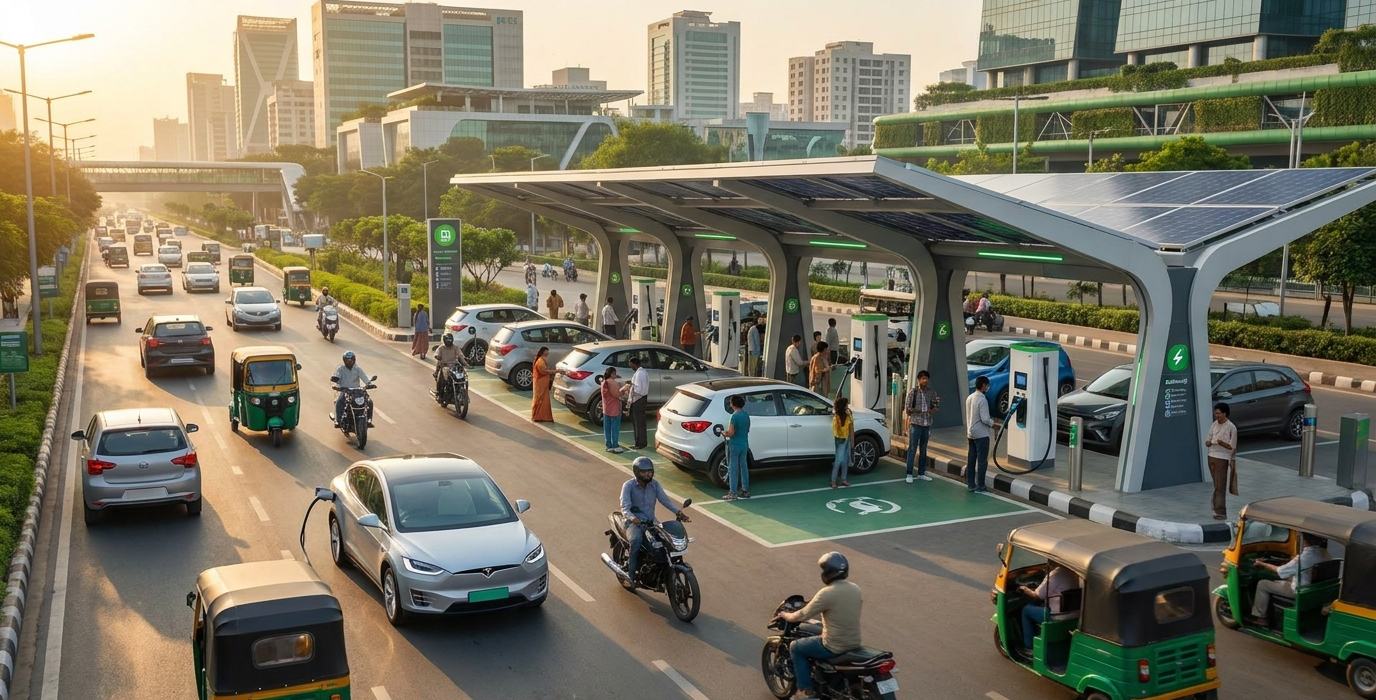
One of the most critical factors for widespread EV adoption is the availability and accessibility of charging infrastructure. By 2026, you’ll find a significantly more robust and widespread charging network across India. Government initiatives, coupled with private sector investments, are rapidly expanding the number of public charging stations in cities, along highways, and at key destinations.
Home charging remains the most convenient option for many, and the trend towards installing charging points in residential complexes and individual homes is growing. For those living in apartments or without dedicated parking, public charging stations, including those at shopping malls, office complexes, and petrol pumps, will become increasingly commonplace. We’re also seeing the rise of fast-charging stations that can add significant range in just 20-30 minutes, making long-distance travel more feasible for EV owners.
Battery swapping stations, particularly prevalent for two- and three-wheelers, will also see significant expansion. This technology allows users to quickly exchange a depleted battery for a fully charged one, eliminating the wait time associated with charging. This is a game-changer for commercial fleets and high-utilization vehicles, ensuring minimal downtime. The integration of smart charging solutions, allowing users to schedule charging during off-peak hours to benefit from lower electricity tariffs, is also becoming more sophisticated.
A surprising fact: India is aiming to deploy over 400,000 charging points by 2026, a substantial leap from the infrastructure available just a few years prior. This aggressive expansion includes a mix of slow, fast, and ultra-fast chargers, catering to diverse needs.
Government Support and Incentives: Fueling the EV Engine
Government policies and incentives have been, and will continue to be, a cornerstone of India’s EV growth story. Schemes like the Faster Adoption and Manufacturing of Electric Vehicles (FAME) India scheme, and various state-level subsidies, are designed to make EVs more affordable and attractive to consumers. By 2026, you can expect these policies to be refined and potentially expanded, offering continued financial benefits.
These incentives typically come in the form of upfront purchase subsidies, which directly reduce the on-road price of electric vehicles. Additionally, many states offer exemptions from road tax and registration fees for EVs, further lowering the cost of ownership. For manufacturers, Production Linked Incentive (PLI) schemes are encouraging domestic manufacturing of EVs and their components, including batteries, which is crucial for long-term sustainability and cost reduction.
Beyond direct financial aid, the government is also focusing on creating a supportive ecosystem. This includes setting targets for EV adoption in government fleets, promoting R&D in battery technology, and establishing charging infrastructure standards. We are also seeing increased efforts to promote green financing options, making it easier for consumers and businesses to secure loans for EV purchases. These multi-pronged approaches ensure that the momentum generated by early adopters continues to grow, making EVs a mainstream choice.
Navigating the EV Ecosystem: What You Need to Know
As you consider making the switch to electric mobility in 2026 and beyond, it’s essential to be informed. Understanding the nuances of the EV ecosystem will help you make the best choice for your needs and budget. Firstly, assess your daily commute and typical travel patterns. This will help you determine the required battery range and the most suitable charging solutions.
Secondly, research available subsidies and tax benefits. These can significantly impact the overall cost of ownership. Don’t forget to look at both central government schemes like FAME and any specific incentives offered by your state government. Thirdly, familiarize yourself with charging infrastructure in your locality and on your frequent routes. Apps and online maps can help you locate nearby charging stations, including public and private options.
Finally, consider the resale value of EVs. While the used EV market is still evolving, it’s becoming more robust. Factors like battery health and the availability of charging infrastructure in the buyer’s region will play a role. As battery technology improves and manufacturing scales up, the long-term cost-effectiveness of EVs, including their resale value, is expected to improve considerably. Staying informed about battery lifecycle management and replacement costs will also be important as you plan for the long term. The key is to approach the transition with a clear understanding of the benefits and practicalities.
“By 2026, India’s EV market is transitioning from early adoption to mainstream acceptance, driven by a potent combination of falling costs, expanding infrastructure, and unwavering government support. The era of electric mobility is not just dawning; it’s truly arriving.”
Frequently Asked Questions
What is the current range of electric cars available in India in 2026?
By 2026, you can expect a wide range of electric cars with real-world ranges typically between 300 km and 500 km on a single charge. Some premium models may offer even higher ranges, exceeding 600 km. Manufacturers are continuously improving battery technology to address range anxiety for everyday use and longer journeys.
Are electric vehicles more expensive to maintain than petrol cars in India?
Generally, EVs are significantly cheaper to maintain than petrol or diesel cars. They have fewer moving parts, eliminating the need for oil changes, spark plug replacements, and exhaust system maintenance. While battery replacement is a long-term consideration, its cost is decreasing, and most EV batteries come with long warranties (e.g., 8 years or 160,000 km).
Where can I find public charging stations in India by 2026?
Public charging stations will be increasingly available in major cities, highways, and at commercial hubs like shopping malls, multiplexes, and corporate offices by 2026. Many oil marketing companies and private players are investing in expanding this network. Mobile apps dedicated to EV charging will help you locate and sometimes even book charging slots.
Will the cost of electric cars in India come down further by 2026?
Yes, the cost of electric cars is expected to continue its downward trend by 2026. This is due to several factors: decreasing battery costs due to economies of scale in manufacturing, increased domestic production of EVs and components, and ongoing government subsidies and incentives. The gap in upfront cost between EVs and their ICE counterparts is narrowing.