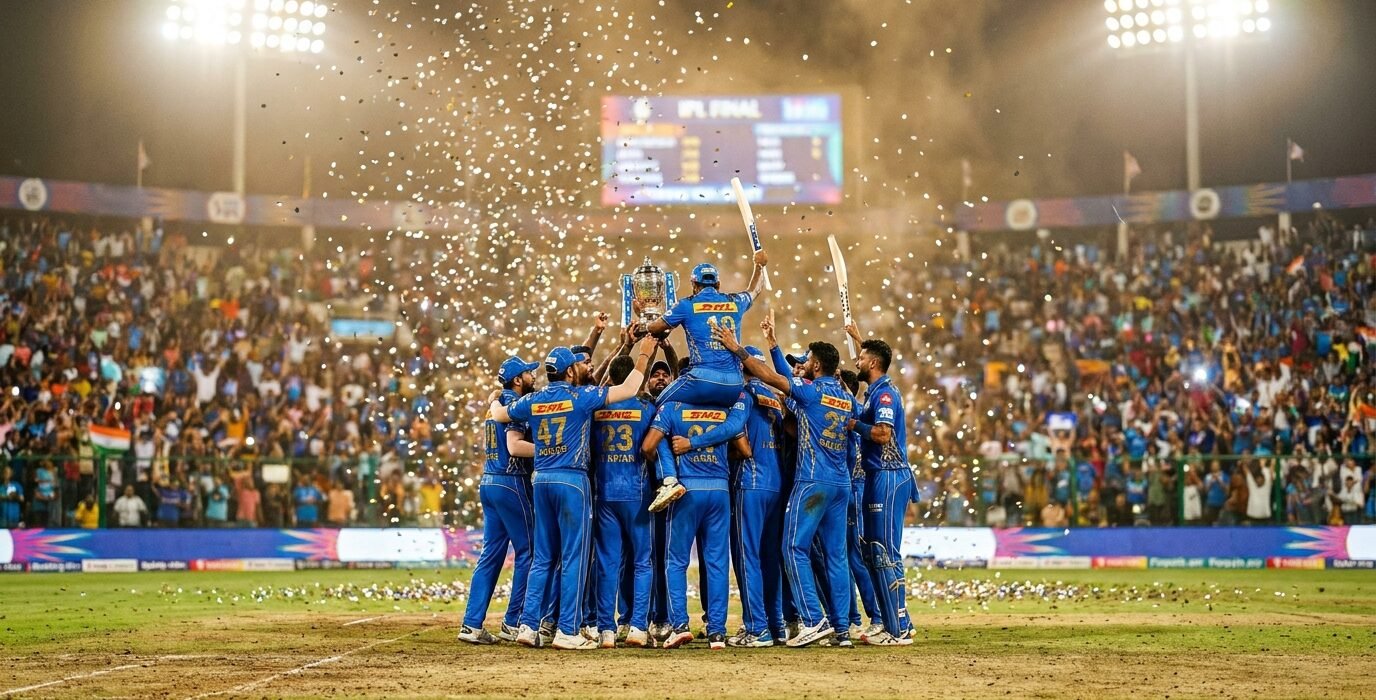
The roar of the Wankhede Stadium was deafening, a physical force that vibrated through the very seats. It wasn’t just a crowd; it was an ocean of blue and gold, a sea of anticipation that had been building for nearly two months. When the final wicket fell, that ocean erupted, a tidal wave of pure, unadulterated joy washing over Mumbai. This wasn’t just another IPL final; it was a story etched in sweat, courage, and a dash of destiny.
Key Takeaways:
- The Chennai Super Kings emerged victorious in a nail-biting IPL 2026 final against the Mumbai Indians.
- A pivotal late-innings surge by CSK’s captain, MS Dhoni, proved instrumental in setting a challenging target.
- The Mumbai Indians’ chase faltered in the death overs, with crucial wickets falling at critical junctures.
- Individual brilliance from CSK’s bowlers, particularly Deepak Chahar, stifled the MI run rate.
- The victory marks Chennai Super Kings’ sixth IPL title, solidifying their dynasty.
Wankhede Roars: A City United in Hope
The air in Mumbai on that fateful evening was thick with more than just the usual monsoon humidity. It crackled with an electric current, a collective breath held by millions across the city and beyond. The Wankhede Stadium, a coliseum of cricket dreams, was a kaleidoscope of colours. The familiar blue wave of the Mumbai Indians faithful met the vibrant yellow of the Chennai Super Kings supporters, creating a visual spectacle that mirrored the intensity on the pitch. From the bustling lanes of Dadar to the upscale apartments of Bandra, conversations revolved around one thing: the IPL 2026 final. Families gathered, friends met at local chai stalls, and the collective pulse of cricket-mad India beat in unison. This wasn’t just a game; it was a festival, a tradition that brings communities together, transcending age, gender, and social divides. The sheer scale of the event, with its glittering opening ceremonies and celebrity endorsements, always elevates it, but the final is where the true magic resides. It’s where legends are made and heartbreaks are etched into sporting folklore. The pre-match buzz was palpable, a symphony of drumbeats, chants, and the anxious murmur of commentary. Every player walking out for warm-ups was met with a deafening roar, a testament to their hero status. The stage was set, not just for a match, but for a narrative that would be retold for years to come, a story of triumph against the odds. The Mumbai Indians, playing on their home turf, carried the weight of expectation from a fanbase that demands nothing less than victory. Their journey to the final had been a testament to their fighting spirit, overcoming early stumbles to reach the pinnacle. On the other side, the Chennai Super Kings, a team built on experience and unwavering belief, were looking to add another glorious chapter to their storied legacy. The sheer volume of the crowd, estimated at over 30,000, was an entity in itself, capable of swaying momentum with its sheer force.
Dhoni’s Masterclass: The Unflappable Leader’s Late Surge
As the dust settled from the initial overs, a sense of cautious optimism pervaded the CSK camp. They had managed to post a respectable, but not insurmountable, total on the board. Yet, the momentum seemed to be subtly shifting towards the Mumbai Indians. The scoreline, while decent, felt like a challenge rather than a declaration. Then, the inevitable happened. The man, the myth, the legend – MS Dhoni – walked out to the crease. The stadium collectively held its breath. Even in the twilight of his incredible career, Dhoni’s presence on the field is an event. His calm demeanour, even under immense pressure, is legendary. This final was no different. With a few overs remaining and the run rate needing a significant boost, Dhoni unleashed a performance that reminded everyone why he is revered. He wasn’t hitting sixes with reckless abandon, but rather with surgical precision. Each shot was calculated, each placement perfect. He found gaps that seemed non-existent, nudged the ball into spaces that baffled the fielders, and occasionally, unleashed a signature helicopter shot that sent the yellow army into delirium. I remember watching from the press box, the sheer concentration on his face. It wasn’t just about hitting the ball; it was about reading the bowler, understanding the field placement, and executing with flawless technique. He played the anchor role, but with an aggressive undertone that put the MI bowlers on the back foot. He rotated the strike intelligently, ensuring that boundaries were also on the menu. One particular shot, a perfectly timed pull shot over square leg for a boundary, showcased his immense power and skill, even at this stage of his career. He seemed to be carrying the hopes of his team on his shoulders, but with a grace and composure that only he possesses. The 40 runs he scored in the death overs, coming off just 18 balls, were not just runs; they were an affirmation of his enduring class and his ability to perform when it mattered most. This surge pushed CSK’s total to a challenging 185, a score that suddenly made the Mumbai Indians’ task significantly harder. The statistics don’t always tell the full story, but Dhoni’s late blitz was a masterclass in pressure batting, a testament to years of experience and an unshakeable belief in his own abilities.
The Mumbai Indians’ Chase: A Tale of Two Halves
Chasing a target of 186 at the Wankhede was never going to be easy, especially in an IPL final. The Mumbai Indians, however, had built their campaign on resilience and a knack for chasing big totals. The opening pair came out with intent, looking to negate the early pressure from the CSK bowlers. Rohit Sharma, ever the aggressor, found his timing early, dispatching a couple of boundaries that brought the crowd to its feet. Ishan Kishan, his usual dynamic self, looked to support him, playing a few aggressive strokes. For a while, it seemed like the home side was well on track. They reached the 50-run mark comfortably within the powerplay, setting a positive tone for the innings. However, cricket, as we know, is a game of glorious uncertainties. The introduction of Deepak Chahar, known for his ability to swing the ball and pick up early wickets, proved to be a turning point. Chahar, with his clever variations and pinpoint accuracy, managed to find the edge of Rohit Sharma’s bat, sending him back to the pavilion. This was a massive blow for MI. The momentum, which had been building, suddenly faltered. The pressure shifted back to the chasing side. The middle order, which had been solid throughout the tournament, found themselves in a precarious situation. Suryakumar Yadav, a magician with the bat, tried to steady the ship, but the CSK bowlers, buoyed by the breakthrough, were bowling with renewed vigour. The required run rate, which had been manageable, started to creep up. Every dot ball felt like a missed opportunity, every single a small victory for the fielding side. The Wankhede crowd, which had been roaring with enthusiasm, now offered nervous murmurs and encouraging chants. The sheer brilliance of the CSK bowling attack, led by Chahar, was evident in their disciplined lines and lengths. They didn’t give the MI batsmen any easy room to manoeuvre. The pressure was mounting with every passing over. The chase, which had started with so much promise, began to unravel, a stark reminder of how quickly fortunes can change in T20 cricket.
The Death-Overs Squeeze: Wickets Fall, Hopes Dim
As the match entered its crucial final phase, the tension in the Wankhede was almost unbearable. The Mumbai Indians needed a significant surge of runs, and they had the firepower to do it. However, the Chennai Super Kings, with their experienced bowlers and astute captaincy, had other plans. The death overs in T20 cricket are a battle of nerves, a test of skill, and a prime opportunity for bowlers to assert their dominance. This final was a textbook example of that. Deepak Chahar, having already picked up a crucial wicket, continued to be a thorn in the side of the MI batsmen. His ability to bowl yorkers and slower balls with precision made it incredibly difficult for the batsmen to break free. He didn’t just rely on pace; he used his brain, mixing up his deliveries to keep the batsmen guessing. One particular over, where he conceded only four runs and picked up the vital wicket of Kieron Pollard, was a masterclass in death-overs bowling. Pollard, known for his big-hitting prowess, was completely nullified by Chahar’s variations. Then came the spell from Ravindra Jadeja. Known for his economical bowling and ability to pick up wickets in the middle overs, Jadeja turned up the heat in the death overs. He bowled with incredible accuracy, his left-arm spin making it difficult for the MI batsmen to target him. He managed to get the crucial wicket of Hardik Pandya, who was looking to accelerate, with a brilliant googly that deceived him completely. The fielding behind the stumps was equally sharp, with Dhoni making a couple of sharp catches that further demoralized the chasing side. The required run rate, which had been hovering around 10-12 runs per over, started to climb steadily. Every boundary that was hit was met with a collective gasp of hope, only to be followed by a sense of despair as the next few balls were dot deliveries or singles. The pressure of the final, coupled with the disciplined bowling, started to take its toll. The Mumbai Indians’ middle and lower order, usually so effective, found themselves unable to cope with the sustained pressure. The wickets kept tumbling at regular intervals, effectively ending any realistic hopes of a comeback. The crowd, which had been vociferous, now offered more muted cheers, the realization of defeat slowly sinking in. The death-overs phase was where the IPL 2026 final was truly decided, with CSK’s bowlers executing their plans to near perfection.
The Unsurprising Dominance of Experience: CSK’s Sixth Crown
As the final wicket fell, and the Chennai Super Kings players erupted in joyous celebration, it was hard not to reflect on the underlying narrative of their success. This victory, their sixth IPL title, wasn’t a fluke. It was the culmination of meticulous planning, shrewd player management, and an unwavering belief in their core philosophy. While the flashy young talent often grabs headlines, the CSK dynasty has been built on the bedrock of experience. Their squad, year after year, is a blend of seasoned veterans and promising youngsters, but it’s the old warhorses who often steer them through choppy waters. Take the example of MS Dhoni himself. At his age, many players would have hung up their boots. Yet, he continues to lead from the front, his strategic mind sharper than ever. His ability to read the game, make crucial bowling changes, and inspire his players is unparalleled. Then there’s the consistent performance of players like Jadeja, who, despite facing injuries, always seems to deliver when it matters most. Even in this final, it was the experienced bowlers who choked the opposition in the crucial death overs. This isn’t to say they lack young talent. They have always nurtured promising players, giving them opportunities and the confidence to express themselves. However, they understand the value of continuity and stability. They don’t often go for wholesale changes, preferring to build on their existing strengths. This approach, while sometimes criticized for being less dynamic than other franchises, has proven incredibly effective. They play a brand of cricket that is disciplined, intelligent, and built on a strong team culture. The Chennai Super Kings have consistently shown that in the high-pressure environment of an IPL final, experience often trumps raw talent. Their ability to handle pressure, to execute plans under duress, and to stay calm when the game is on the line is a direct result of the seasoned professionals they have in their ranks. This sixth title is not just a statistic; it’s a testament to a well-oiled machine that understands the intricacies of the game and how to win consistently. It’s a lesson for every franchise in the league about the enduring power of experience and a strong, consistent team ethos.
The Yellow Army’s Eternal Faith: A Dynasty Forged in Chennai
The sight of the Chennai Super Kings lifting the IPL trophy is becoming a familiar one, a testament to their unparalleled success in the league. Their sixth title is more than just a numerical achievement; it’s a symbol of an enduring dynasty, a team that has consistently defied expectations and set new benchmarks for excellence. For the ardent supporters, the “Yellow Army,” this victory is the culmination of months of hope, anxiety, and unwavering faith. They are not just fans; they are an integral part of the CSK narrative, their fervent cheers echoing through stadiums across India, providing a constant source of motivation for the players. The bond between the team and its supporters is palpable, a reciprocal relationship built on shared triumphs and the resilience shown during challenging times. This win, particularly at the iconic Wankhede Stadium against a formidable opponent like the Mumbai Indians, adds another glorious chapter to their storied history. It reinforces their reputation as the most consistent and successful franchise in the IPL. The celebrations that will undoubtedly sweep across Chennai, from Marina Beach to the smallest of villages, will be a reflection of the joy and pride this team brings to its home state. It’s a reminder of how sport can unite a population, creating a collective sense of identity and belonging. The Chennai Super Kings have managed to cultivate an aura of invincibility, not through arrogance, but through consistent performance and a deep understanding of the game. Their ability to adapt, to evolve, and to continue winning even as players age and new challengers emerge is remarkable. This victory is not just for the current squad; it’s for every player who has ever donned the yellow jersey, for every coach and support staff member, and for the millions of fans who have stood by them through thick and thin. The IPL 2026 final will be remembered for its thrilling conclusion, but more importantly, for the reaffirmation of the Chennai Super Kings’ status as true titans of Indian cricket, their dynasty forged not just in talent, but in the unwavering faith of their passionate supporters.