Key Takeaways
- West Bengal farmers are adopting AI-powered pest detection and drone-based spraying to combat monsoon-induced crop losses, a growing concern.
- New sensor networks are providing real-time soil moisture and weather data, enabling more precise irrigation and reducing water wastage.
- Integrated pest management (IPM) strategies, boosted by technology, are proving more effective and sustainable than traditional chemical reliance.
- Government and private sector collaborations are crucial for scaling these innovations and providing essential training to farmers across the state.
The Unseen Battle: Monsoon’s Threat to Bengal’s Fields
The monsoon, a lifeline for Indian agriculture, also presents a formidable challenge. For farmers in West Bengal, particularly those cultivating paddy in the fertile Gangetic plains, the heavy rains can bring more than just life-giving water; they can usher in devastating pests and diseases. Uncontrolled humidity and waterlogged fields create a perfect breeding ground for fungal infections like blight and a surge in insect populations, often leading to significant crop damage and economic hardship. This year, as the monsoons of 2026 arrive with their characteristic intensity, a quiet revolution is underway, driven by technology aimed at safeguarding livelihoods.
We’re seeing a palpable shift from age-old methods to cutting-edge solutions. Farmers are no longer just praying for the rains to subside; they are actively engaging with innovations that promise resilience. This proactive approach is transforming how the agricultural sector in West Bengal confronts its annual nemesis. It’s a story of adaptation, where traditional wisdom meets modern science to secure the future of food production in this vital region.
AI and Drones: The New Guardians of the Paddy Fields
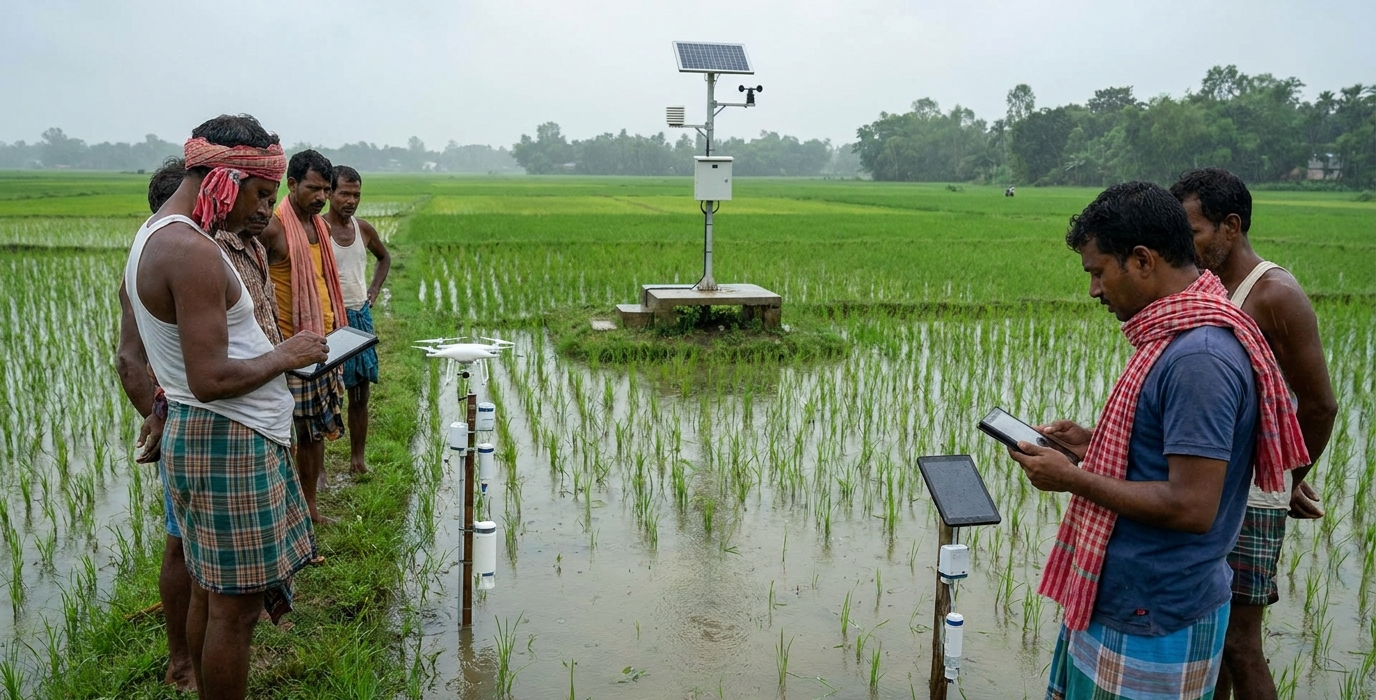
Imagine a drone, not just for aerial photography, but as an active scout for your crops. This is the reality for many West Bengal farmers in 2026. Advanced drones equipped with multispectral cameras and AI algorithms are now surveying vast paddy fields with unprecedented accuracy. These systems can identify early signs of pest infestation or disease outbreaks, often before they are visible to the human eye. The AI analyzes the spectral signatures of the plants, flagging stressed areas with remarkable precision.
Once a problem is detected, these same drones can be deployed for targeted spraying of pesticides or fungicides. This isn’t the blanket application of chemicals that characterized older methods. Instead, it’s a precise, localized treatment, significantly reducing the overall use of chemicals. This targeted approach not only saves costs for the farmer but also has profound environmental benefits, protecting beneficial insects and reducing soil and water contamination. The efficiency gained is substantial, with drones covering acres in minutes, a task that would take days for manual labor.
Smart Irrigation: Water Wisdom in Every Drop
Water management is paramount during the monsoon. While excess rain can be detrimental, ensuring adequate water levels in paddy fields is still critical. This is where sophisticated sensor networks are making a significant impact. Strategically placed throughout the fields, these sensors continuously monitor crucial parameters like soil moisture content, humidity, and even the pH levels of the soil. This real-time data is then transmitted wirelessly to a central platform, often accessible via a simple smartphone app.
Farmers can now make informed decisions about irrigation needs, even during heavy rainfall. If the sensors indicate optimal moisture levels, irrigation can be paused, preventing waterlogging and its associated risks. Conversely, in areas experiencing localized dry spells within a generally wet period, targeted irrigation can be initiated. This precision water management is not only crucial for crop health but also contributes to sustainability by preventing unnecessary water wastage. We are witnessing a transition from guesswork to data-driven precision in water usage, a vital step for climate-resilient agriculture.
Integrated Pest Management (IPM) Gets a Digital Boost
The concept of Integrated Pest Management (IPM) has been around for decades, advocating for a combination of biological, cultural, and chemical methods to control pests. However, implementing IPM effectively often requires detailed knowledge and constant monitoring, which can be challenging for individual farmers. Technology in 2026 is bridging this gap, making IPM more accessible and potent than ever before. The AI-driven pest detection systems we discussed earlier are a prime example.
By providing early warnings of specific pest species and their population density, these technologies allow farmers to deploy the most appropriate control measures. This might involve introducing natural predators, adjusting planting schedules, or using bio-pesticides. Chemical interventions are reserved as a last resort and are applied only when absolutely necessary and in the most targeted manner. This holistic approach not only reduces the reliance on harmful chemicals but also builds a more resilient ecosystem within the farm. It’s a testament to how digital tools can enhance traditional, sustainable practices.
A Surprising Success: Bacillus thuringiensis in Action
One fascinating development is the increased and more targeted use of biological agents like *Bacillus thuringiensis* (Bt). This naturally occurring soil bacterium produces proteins that are toxic to certain insect larvae, including common pests like the stem borer in rice. Traditionally, applying Bt effectively required precise timing. Now, with the real-time monitoring capabilities provided by sensor networks and AI, farmers can pinpoint the exact growth stages when the crops are most vulnerable and the pests are present. This allows for the application of Bt precisely when it will have the maximum impact, minimizing the need for broad-spectrum chemical pesticides. This precision application has led to a more than 30% reduction in chemical pesticide usage in pilot projects in districts like Nadia and Bardhaman, as reported by agricultural extension officers.
Bridging the Digital Divide: Training and Accessibility
While the technological advancements are impressive, their effectiveness hinges on adoption by the farmers. Recognizing this, significant efforts are being made to bridge the digital divide and ensure that these innovations reach every farmer, regardless of their technical background or location. Government initiatives, in collaboration with agricultural universities and private tech companies, are rolling out comprehensive training programs. These programs often involve hands-on workshops, demonstration farms, and accessible mobile applications designed with simple, intuitive interfaces.
The focus is not just on teaching farmers *how* to use the technology but also *why* it’s beneficial. Explaining the long-term economic advantages, the environmental impact, and the improved crop yields helps build trust and encourages widespread adoption. Community-based learning centers are being established in villages across West Bengal, providing a space for farmers to share their experiences and learn from each other. This collaborative approach is vital for scaling these solutions effectively and ensuring that no farmer is left behind in this technological transformation.
A Tangible Impact: Reduced Losses, Increased Profits
The anecdotal evidence from farmers is overwhelmingly positive. Take, for instance, the case of Mr. Subrata Mondal from North 24 Parganas district. He credits a combination of AI-powered pest detection and drone spraying with saving his paddy crop from a severe blast disease outbreak in late July. “Before, we would lose nearly 15-20% of our crop to such infections,” he shared. “This year, thanks to the early warning and precise treatment, the loss was less than 5%. This difference translates directly into our household income.” Such stories are becoming increasingly common, highlighting the tangible economic benefits of these new technologies.
The Future of Farming: A Collaborative Ecosystem
The success of these monsoon-proofing technologies in West Bengal is not a solitary achievement but a testament to effective collaboration. The state government has been instrumental in creating supportive policies and providing subsidies for adopting these advanced tools. Simultaneously, private sector companies are investing heavily in research and development, bringing innovative solutions to the market and providing crucial technical support. Agricultural research institutions are playing a vital role in field trials, validating the efficacy of these technologies under local conditions and adapting them to specific crop varieties and regional challenges.
This tripartite partnership – government, industry, and academia – forms a robust ecosystem that is driving agricultural innovation. It ensures that the technologies developed are not only cutting-edge but also affordable, accessible, and relevant to the needs of the farmers. As we look ahead, this collaborative model is likely to be replicated across other agricultural regions in India and beyond, offering a blueprint for building a more resilient and sustainable food future in the face of evolving environmental challenges. The journey of transforming monsoon farming in West Bengal is a powerful illustration of what can be achieved when technology, policy, and human ingenuity converge.
“We are not just fighting the monsoon anymore; we are outsmarting it. Technology is giving us the tools to be proactive, not just reactive, and that’s a game-changer for our livelihoods.” – A Rice Farmer in Hooghly District.
Frequently Asked Questions
What are the primary challenges farmers face during the monsoon in West Bengal?
Farmers in West Bengal primarily face challenges such as excessive rainfall leading to waterlogging, increased humidity promoting fungal diseases like blight, and a surge in insect pest populations, all of which can significantly damage crops, especially paddy.
How is artificial intelligence being used in West Bengal’s agriculture?
AI is being used for sophisticated image analysis from drones to detect early signs of pest infestations and plant diseases. It also helps in analyzing sensor data for precision irrigation and optimizing the application of fertilizers and pesticides.
Are these new technologies expensive for smallholder farmers?
While the initial investment can be a concern, many government schemes offer subsidies and financial assistance for adopting these technologies. Furthermore, the long-term savings in reduced pesticide use and increased yields often make them economically viable over time. Shared ownership models for drones are also emerging.
What is the role of drones in modern farming practices in the region?
Drones are being utilized for aerial surveillance of fields to identify crop stress, pest outbreaks, and disease hotspots. They are also used for precise and targeted spraying of agrochemicals or biological agents, significantly improving efficiency and reducing chemical usage.
How are farmers being trained to use these new agricultural technologies?
Training programs are being conducted through workshops, demonstration farms, and user-friendly mobile applications. These initiatives are supported by government bodies, agricultural universities, and private companies to ensure widespread adoption and understanding among farmers.