Key Takeaways
- Mumbai’s urban farms are using cutting-edge technology to grow fresh produce within city limits, reducing food miles and increasing accessibility.
- Vertical farming, hydroponics, and aeroponics are key methods enabling high yields in small spaces, tackling land scarcity in dense urban environments.
- These initiatives offer significant environmental benefits, including reduced water usage and lower carbon emissions compared to traditional agriculture.
- Consumers are gaining access to fresher, more nutritious food year-round, contributing to improved public health and a more resilient food system for India.
The Concrete Jungle Gets a Green Makeover
Mumbai, a city synonymous with relentless energy and soaring skyscrapers, is quietly undergoing a green revolution. Beneath the shadow of its iconic skyline, a new generation of farmers is cultivating a future where fresh, nutritious food is grown right in the heart of the metropolis. This isn’t your grandfather’s farm; we’re talking about high-tech urban farms that are transforming the way Mumbaikars eat and think about their food. Imagine plucking crisp lettuce or juicy tomatoes, grown just kilometres from your doorstep, available throughout the year regardless of monsoon or heatwave. This is the promise of urban agriculture, and Mumbai is leading the charge.
For too long, India’s megacities have relied on produce transported over hundreds, sometimes thousands, of kilometres. This journey not only diminishes freshness and nutritional value but also carries a significant carbon footprint. Now, innovative entrepreneurs and passionate individuals are bringing farming back to the city. They are leveraging limited urban spaces, from rooftops to repurposed warehouses, to cultivate a diverse range of crops. This movement is more than just a trend; it’s a vital response to the growing challenges of food security, sustainability, and public health in our rapidly urbanising nation.
Vertical Farming: Reaching for the Sky, Rooted in Innovation
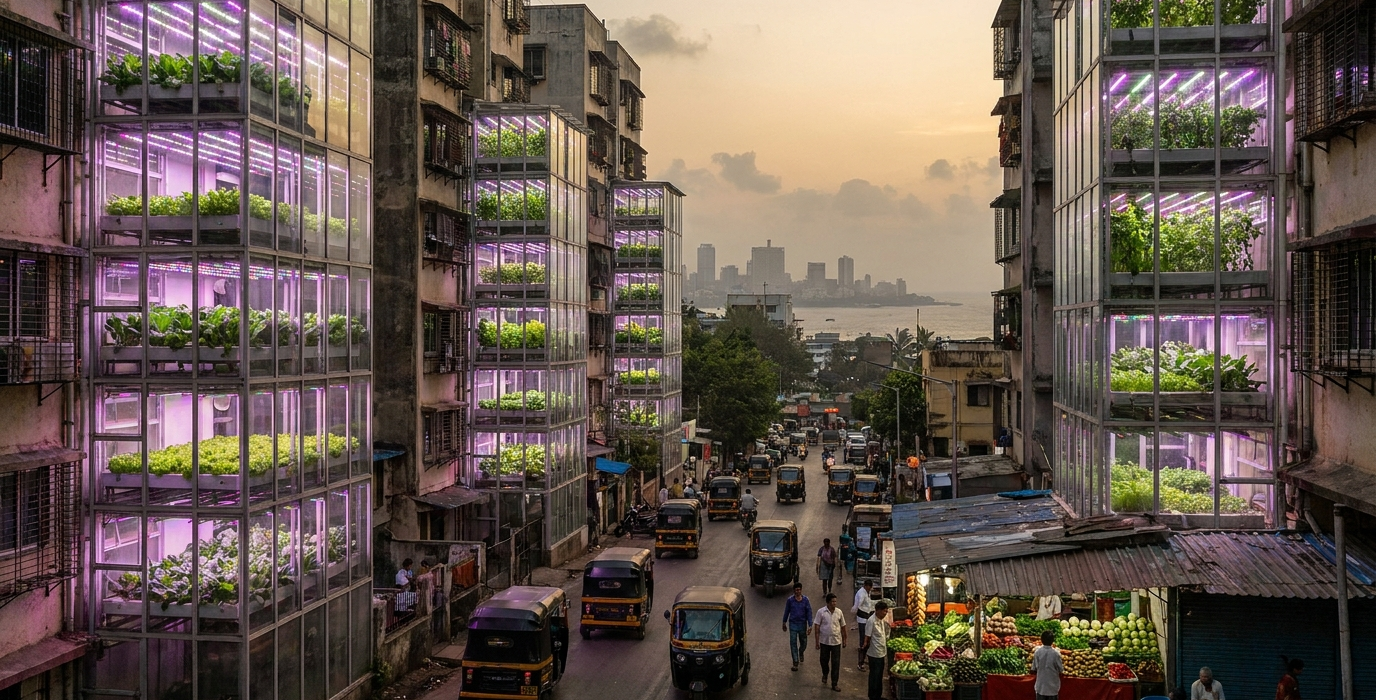
The star player in Mumbai’s urban farming landscape is undoubtedly vertical farming. This revolutionary approach involves growing crops in vertically stacked layers, often in controlled indoor environments. Think of multi-storey buildings dedicated not to offices, but to lush green produce. This method is a game-changer for cities like Mumbai, where land is at a premium and incredibly expensive. By growing upwards, these farms can achieve significantly higher yields per square metre than traditional fields, making efficient use of limited urban real estate.
These vertical farms are not simply stacking plants; they are meticulously engineered ecosystems. Sophisticated climate control systems manage temperature, humidity, and CO2 levels, creating the ideal growing conditions for each specific crop. LED lighting replaces natural sunlight, providing the precise spectrum and intensity required for optimal growth, allowing for year-round cultivation and predictable harvests. This level of control means that problems like pests and diseases are minimised, drastically reducing the need for pesticides and herbicides. The result is produce that is not only fresh and healthy but also grown with significantly less environmental impact.
Hydroponics and Aeroponics: Growing Without Soil
At the heart of many of these vertical farms lie two soil-less cultivation techniques: hydroponics and aeroponics. Hydroponics involves growing plants in nutrient-rich water solutions, where the roots are constantly bathed in a carefully balanced mix of essential minerals. This method allows for precise control over nutrient delivery, ensuring plants receive exactly what they need for rapid, healthy growth. We see vibrant greens, herbs, and even some fruiting plants flourishing in these systems across Mumbai.
Aeroponics takes this a step further. In aeroponic systems, plant roots are suspended in the air and misted with a fine spray of nutrient-rich water. This technique provides roots with maximum oxygen, leading to even faster growth rates and higher yields. It’s a highly efficient method that uses substantially less water than traditional agriculture, a critical advantage in water-scarce urban environments. For instance, some aeroponic systems can use up to 95% less water than conventional farming, a staggering statistic that highlights its sustainability credentials. These technologies are not just about growing food; they are about growing it smarter, more efficiently, and with a lighter touch on our planet.
The Sustainability Dividend: Fresher Food, Healthier Planet
The environmental benefits of urban farming in Mumbai are profound and far-reaching. By cultivating produce within the city, we dramatically reduce food miles. This means fewer trucks, fewer planes, and less fuel burned to get your vegetables from farm to fork. The reduction in transportation emissions directly translates to a lower carbon footprint for our food supply. This is a critical step towards combating climate change and building a more sustainable future for our cities.
Beyond emissions, these urban farms are pioneers in water conservation. Hydroponic and aeroponic systems recirculate water, minimising waste. Compared to conventional agriculture, which can be incredibly water-intensive, these methods are a revelation. A study by the Indian Institute of Horticultural Research found that hydroponic systems can reduce water consumption by as much as 70-90% for certain crops. Furthermore, by controlling growing conditions, urban farms can minimise or eliminate the need for harmful pesticides and herbicides, leading to healthier produce for consumers and less pollution in our urban ecosystems. It’s a win-win for both our health and the environment.
Bridging the Gap: Access to Nutritious Food for All
One of the most compelling aspects of Mumbai’s urban agriculture movement is its potential to improve food accessibility and affordability. For many in densely populated urban areas, access to fresh, high-quality produce can be a challenge, often limited by cost and availability. Urban farms can shorten supply chains, cutting out middlemen and potentially lowering prices for consumers. This direct connection between grower and consumer fosters transparency and builds trust.
Moreover, these farms often focus on growing a diverse range of nutritious crops that might otherwise be difficult to source fresh in a city. Imagine having access to exotic herbs, microgreens, and a wider variety of leafy vegetables year-round. This increased availability of nutrient-rich foods can have a significant positive impact on public health, helping to combat malnutrition and promote healthier diets. We are not just growing food; we are cultivating healthier communities, one fresh harvest at a time. The initiative by the Mumbai Municipal Corporation to allocate rooftop spaces for urban farming projects is a testament to this vision.
Challenges and the Road Ahead
Despite the incredible promise, urban farming in Mumbai is not without its hurdles. Initial investment costs for setting up high-tech vertical farms can be substantial, requiring significant capital for infrastructure, technology, and skilled personnel. Energy consumption for lighting and climate control is another key consideration, though advancements in LED efficiency and renewable energy integration are helping to mitigate this. Educating consumers about the benefits and value of locally grown urban produce is also an ongoing effort.
Furthermore, regulatory frameworks need to adapt to support and streamline urban agriculture initiatives. Navigating permits, zoning laws, and food safety standards can be complex for new entrants. However, the momentum is building. Government support, private sector investment, and growing consumer demand are creating a fertile ground for this sector to flourish. We are witnessing a paradigm shift, where cities are no longer just consumers of food, but also significant producers, creating a more resilient and sustainable food system for generations to come. A surprising fact: Some studies suggest that the energy used by vertical farms to grow produce can be offset by the reduced transportation emissions, making them a net positive in the carbon equation.
Frequently Asked Questions
What are the main benefits of urban farming in Mumbai?
Urban farming in Mumbai offers reduced food miles, leading to fresher produce and lower carbon emissions. It also promotes water conservation, improves food accessibility, and can lead to healthier diets for city dwellers.
How does vertical farming work in a city like Mumbai?
Vertical farming involves growing crops in vertically stacked layers, typically in controlled indoor environments. It uses technologies like LED lighting and precise climate control to maximise yield in limited urban spaces, often employing hydroponic or aeroponic systems.
Is urban farming expensive to set up?
The initial investment for high-tech urban farms, particularly vertical farms, can be substantial. However, the long-term benefits in terms of yield, efficiency, and reduced operational costs related to transportation and spoilage can make it a viable business model.
What are hydroponics and aeroponics?
Hydroponics grows plants in nutrient-rich water, while aeroponics mists plant roots suspended in the air with these solutions. Both methods are soil-less, highly efficient in water usage, and enable faster plant growth.
Will urban farming replace traditional agriculture in India?
Urban farming is unlikely to entirely replace traditional agriculture, which is vital for the country’s vast food production needs. Instead, it is expected to complement traditional methods, providing fresh, local produce for urban populations and enhancing overall food security and resilience.