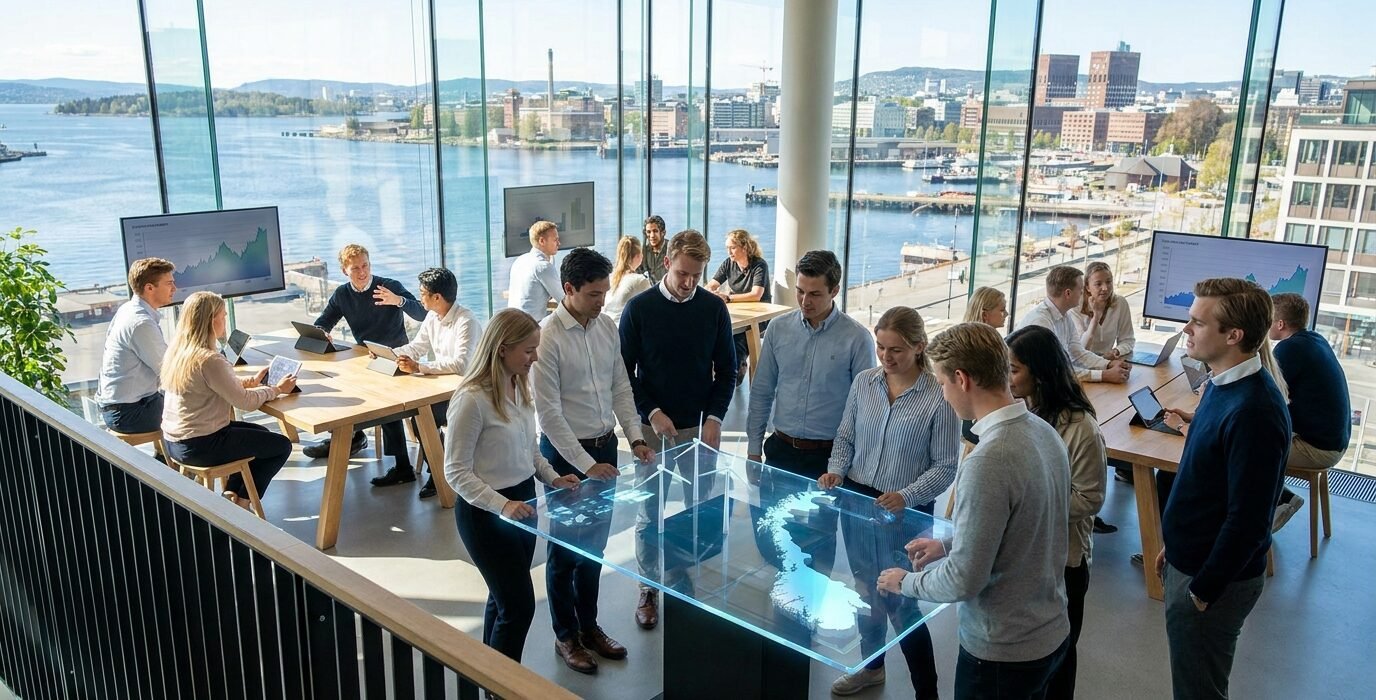
Imagine the crisp Norwegian air filling your lungs. You stand on a fjord’s edge. Untouched beauty surrounds you. It’s a stark contrast to the innovation buzzing within its cities. This is Norway. A nation synonymous with sustainability. Not just in its landscapes. Increasingly, in its financial markets.
For too long, “green” investing felt like a checkbox. A tick-box exercise for ESG scores. But what if the real future of wealth creation lies deeper? What if it’s about actively solving problems? Building a truly circular economy? The next wave of investment isn’t just about avoiding harm. It’s about creating profound, measurable good.
Key Takeaways:
Advertisement300×250 / native
- Discover investment avenues in Norway that move beyond standard ESG reporting.
- Understand the principles and opportunities in impact investing and the circular economy.
- Learn how Norwegian companies are pioneering innovative sustainable solutions.
- Gain insights into practical steps for aligning your investments with tangible positive change.
- Explore the future landscape of responsible finance in a Nordic context.
The ESG Evolution: More Than Just a Scorecard
For years, the mantra has been ESG. Environmental, Social, and Governance factors became the standard language. Investors gauged a company’s commitment to responsible practices. Countless reports detailed carbon footprints. Diversity metrics and board structures were scrutinized.
In Norway, this resonated deeply. The nation has deeply ingrained cultural values. Its sovereign wealth fund, the Government Pension Fund Global (GPFG), has long championed responsible ownership. Walking through Oslo’s Aker Brygge, you see sleek, modern buildings. They are a testament to forward-thinking design. It’s easy to see why ESG principles have taken root here. Companies like Equinor, once solely an oil giant, are now heavily invested in renewable energy. This demonstrates a tangible shift.
However, the ESG framework, while crucial, can feel defensive. It focuses on what not to do. It’s about mitigating risks. Reducing negative impact. But what about actively seeking positive impact? What about investments designed from the ground up to be fundamentally good? Good for society and the planet? This is where the conversation needs to expand.
The limitations of ESG become apparent. A company might score well on governance. Yet, it could still rely heavily on fossil fuels. A social initiative might be more about public relations than systemic change. We need to look beyond the scorecard. Understand the true intent and outcome of our investments. The Norwegian investment landscape is ripe for this deeper exploration. It’s pushing the boundaries of responsible finance. This evolution is not just a trend. It’s a necessary step.
Impact Investing: Building a Better Tomorrow, Brick by Brick
Beyond familiar ESG metrics lies impact investing. This is where capital is deployed with a clear intention. The goal: generate positive, measurable social and environmental impact. Alongside a financial return. Think of it as investing with a dual purpose.
In Norway, a nation with a strong social safety net. And high social trust. The appetite for such investments is naturally high. It’s not just about ethics. It’s about seeing economic opportunities. Opportunities in solving pressing global challenges.
Consider companies developing innovative solutions. For clean water access in rural areas. Or those creating affordable housing. Using sustainable materials. These aren’t just philanthropic ventures. They are viable businesses. They have growing markets.
A prime example can be found in Bergen. This city has a rich maritime history. Today, visionary entrepreneurs leverage this heritage. They build businesses focused on sustainable aquaculture. They employ cutting-edge technology. This reduces environmental impact. It ensures ethical practices.
One such company, let’s call it “FjordAqua Solutions,” isn’t just focused on its ESG score. It actively measures the reduction in fish mortality. This is due to improved water quality monitoring. It also tracks the decrease in antibiotic usage. Its investors aren’t just looking at profit margins. They’re looking at tangible improvements. Improvements in ecosystem health. And community well-being.
This is the essence of impact investing. A proactive approach. It seeks to create value. By addressing societal needs. It requires sophisticated measurement. Moving beyond simple compliance. Understanding real-world outcomes. For every krone invested. This deliberate focus on positive, measurable change is a hallmark of the next wave.
[Related: Story about innovative Norwegian startups on The Daily Zap]
The Circular Economy: Closing Loops and Opening Opportunities
The concept of a circular economy is gaining significant traction in Norway. It’s moving away from the linear “take-make-dispose” model. This is an economy designed to regenerate itself. Waste is minimized. Resources are kept in use. For as long as possible.
For investors, this represents a paradigm shift. It unlocks new avenues for growth. And innovation. Instead of investing in companies that extract raw materials. The focus shifts. To those that design products for longevity. Repairability. And recyclability. Or those that facilitate reuse. And repurposing of materials.
This is particularly relevant in Norway. The country has a strong commitment to resource efficiency. And environmental stewardship. The stunning landscapes, from the Lofoten Islands to the vast forests of the north, serve as a constant reminder. A reminder of the finite nature of our planet’s resources.
Consider the textile industry. Traditionally a major polluter. A circular approach in Norway is seeing companies develop advanced recycling technologies. They transform old clothes into new fibers. Or create biodegradable materials from waste products.
One visionary entrepreneur in Trondheim, a hub of technological innovation, has developed a platform. It connects businesses with surplus materials. To those who can repurpose them. Effectively turning waste streams into revenue streams. This isn’t just about reducing landfill. It’s about creating entirely new business models. And supply chains.
Investors are increasingly looking at companies innovating in material science. Industrial symbiosis. Product-as-a-service models. Here, customers pay for product use. Not ownership. This incentivizes manufacturers. To create durable and repairable goods. This deep dive into circularity represents a fundamental rethinking. Of economic activity. It presents a wealth of untapped investment potential.
Beyond the Oil Barrel: Diversifying Sustainable Futures
Norway’s economic narrative has long been dominated by oil and gas. The nation has prudently managed its oil wealth. But there’s a growing recognition. The future of sustainable investment lies in diversification. Beyond these traditional sectors.
This isn’t about abandoning established industries overnight. It’s about strategically channeling capital. Towards emerging and established sectors. Driving the green transition. The government’s own commitment to renewable energy is strong. Particularly hydropower and offshore wind. This provides a robust foundation.
However, the real innovation is happening in less obvious areas. Think about the potential in sustainable agriculture. Advanced recycling infrastructure. Or the development of green hydrogen technologies. These are sectors aligned with sustainability goals. They are also poised for significant growth. As global demand for clean solutions escalates.
We’ve seen significant investment flow into offshore wind projects. Along the Norwegian coast. A natural extension of the nation’s offshore expertise. Companies aren’t just building turbines. They are innovating in floating wind technology. This allows deployment in deeper waters. Opening up vast new potential.
Beyond energy, consider advancements in battery technology. For electric vehicles and grid storage. Norwegian companies are at the forefront of research and development. Aiming to create more sustainable and efficient battery solutions.
This diversification extends to the bioeconomy. With investments in sustainable forestry. Algae cultivation for food and fuel. And the development of bioplastics. The shift is palpable. From reliance on finite resources. To an embrace of renewable and regenerative ones. This strategic pivot is not just environmentally sound. It’s economically astute. It positions Norway as a leader. In the green industries of tomorrow.
The Role of Technology and Innovation: A Norwegian Advantage
Technology and innovation are the crucial catalysts driving Norway’s next wave of sustainable investment. This isn’t just about adopting existing green technologies. It’s about pioneering new ones. The country’s strong educational institutions foster this. A culture embracing technological advancement helps. Government support for R&D creates fertile ground.
Consider the advancements in artificial intelligence and machine learning. They are being applied to optimize energy consumption. In buildings and industrial processes. Or the use of blockchain technology. To enhance transparency and traceability in supply chains. Ensuring sustainable claims can be verified. These technologies aren’t merely add-ons. They are fundamental enablers. Of truly sustainable business models.
One striking example comes from marine technology. Norway’s extensive coastline and deep fjords have spurred innovation. Think of autonomous underwater vehicles. For environmental monitoring of marine ecosystems. Or advanced sensor technology for sustainable fishing practices.
Companies are developing AI-powered systems. They can identify and track fish populations. With minimal disruption. Or monitor the health of coral reefs in real-time. Further inland, in the mountainous regions, there’s a push for smart grid solutions. These efficiently manage decentralized renewable energy sources.
These innovations aren’t just about creating efficient systems. They are about building a future. Where economic activity is intrinsically linked to ecological well-being. The investment opportunities here are immense. Supporting companies building the infrastructure for a sustainable future. The surprising element is how deeply embedded these advancements are becoming. Even in the most traditional Norwegian industries. Transforming them from within.
Navigating the Landscape: Actionable Insights for You
So, how can you, as an investor, tap into this exciting evolution in Norway? It starts with looking beyond headline ESG ratings. Delve deeper into a company’s actual impact. Ask yourself: Is this company merely mitigating harm? Or is it actively creating good? Are its business models designed for a circular future? Or are they still tied to linear consumption? Your due diligence is paramount.
Seek out investment funds. Funds that explicitly focus on impact investing. Or the circular economy. Scrutinize their portfolios. Do they invest in companies measurably solving real-world problems? Look for funds providing detailed impact reports. Not just financial returns. Websites like the Global Impact Investing Network (GIIN) offer resources. And directories of impact funds.
In Norway, consider engaging with local financial advisors. Those who specialize in sustainable finance. They can provide insights. Into specific Norwegian companies and funds. Aligning with these emerging trends. Don’t be afraid to ask challenging questions. How does the company measure its impact? What are its long-term goals for sustainability beyond compliance? For instance, if a company claims to be sustainable in its packaging, ask if it’s using recycled materials. Designing for recyclability. Or exploring compostable alternatives. This level of inquiry will help you identify genuine leaders. Remember, the most impactful investments align your financial goals with your values. Contributing to a more sustainable and equitable world. One investment at a time.