A quiet revolution is brewing in the emerald fields of New Zealand. It’s echoing all the way to Delhi. Once known solely for its pristine landscapes and world-class wool, New Zealand’s agricultural sector is transforming. Cutting-edge technology is fueling this change. But the real story, buzzing with ambition and shared opportunity, is the surge of Indian investment and expertise. It’s an unlikely partnership. This convergence of innovation and capital promises to reshape farming for generations.
Key Takeaways:
- New Zealand’s advanced agritech ecosystem is actively attracting significant investment from Indian companies and venture capitalists.
- This influx is driven by New Zealand’s reputation for sustainable farming practices and its government’s supportive policies for innovation.
- Indian firms are finding opportunities in areas like precision agriculture, dairy tech, and biosecurity, leveraging New Zealand’s existing strengths.
- The collaboration aims to address global food security challenges and boost productivity through technological integration.
- This partnership is poised to create new jobs, foster knowledge exchange, and strengthen the economic ties between the two nations.
The Green Fields Beckon: Why India is Looking South
Imagine rolling hills dotted with contented sheep. The air is crisp with the scent of clover. This idyllic image, synonymous with New Zealand, is now overlaid with something else: a vibrant hum of technological advancement. For decades, New Zealand has been a global leader in agricultural innovation. Dairy and sheep farming are particular strengths. This deep-rooted expertise, combined with a national commitment to sustainability, has created an irresistible pull. A stable economic environment also helps. Investors seeking to disrupt and enhance global food production are looking this way.
India, with its burgeoning population, sees a unique opportunity. Its vast agricultural sector is ripe for modernization. The sheer scale of India’s agricultural needs is immense. This, coupled with its growing appetite for advanced technological solutions, makes New Zealand’s agritech scene a natural fit. It’s not just about financial returns. It’s about accessing proprietary knowledge. It’s about building a bridge for shared growth.
We’re talking about a strategic alignment of interests. New Zealand’s pioneering spirit meets India’s vast market potential. Farmers in the Waikato region are accustomed to gentle innovation. Now, they find themselves at the forefront of a cross-continental tech surge. Consider a dairy farm near Hamilton. What was once manual herd management is now augmented by AI-powered sensors. These sensors track everything from cow health to milk quality in real-time. This isn’t science fiction. It’s the new reality being funded, in part, by forward-thinking Indian capital.
The New Zealand government has played a crucial role. It actively encourages foreign investment in key sectors like agritech. Streamlined processes and incentives make this easier. This proactive stance reassures investors. Their ventures are not just welcome but actively supported. It’s a calculated move. It fosters a thriving ecosystem that benefits both nations. The narrative is shifting. It’s moving from simply exporting agricultural produce to exporting agricultural innovation. India is keen to be a major player in this evolving landscape. This shift is particularly evident in regions like the Bay of Plenty, where traditional horticulture is being enhanced by smart irrigation systems funded by overseas capital.
From Software to Soil: Indian Giants Enter the Fray
The initial wave of Indian interest wasn’t just from venture capitalists. Established Indian corporations, recognizing the immense potential in New Zealand’s agritech sector, have begun making significant inroads. Companies that have traditionally dominated India’s IT and manufacturing sectors are now pivoting. They see the tangible, real-world applications of technology in agriculture. These aren’t just passive investments. They often involve active partnerships. Indian firms bring their own technological prowess and market access to the table.
One prominent example is the growing engagement of Indian tech conglomerates. They are looking to integrate their data analytics and AI capabilities into New Zealand’s farm management systems. They see the potential to enhance efficiency, reduce waste, and improve yields. All this, while adhering to New Zealand’s stringent environmental standards. Imagine a company like Wipro or Tech Mahindra. They aren’t just developing software for banks. They are deploying sophisticated algorithms to optimize irrigation for a vineyard in Marlborough. This is happening.
The Indian firms are not just buying into existing businesses. They are actively looking to collaborate on developing new solutions. They bring their experience in scaling technologies rapidly. This is applied to the relatively smaller, but highly specialized, New Zealand market. This creates a symbiotic relationship. New Zealand provides the cutting-edge agricultural science. It offers the fertile ground for pilot projects. Indian firms offer the capital, the large-scale deployment expertise, and access to a massive domestic market.
A prime illustration of this trend can be seen with increased collaboration between Indian agritech startups and their New Zealand counterparts. These partnerships are often facilitated by government-backed trade missions and innovation hubs. These are designed to foster connections. For instance, a recent delegation from Haryana, a major agricultural state in India, spent time in the Canterbury region. They explored opportunities in precision farming equipment and drone technology for crop monitoring. This hands-on approach is crucial. It builds trust and understanding. It moves beyond abstract investment figures to concrete, on-the-ground collaborations. The goal is clear: to harness the best of both worlds. The aim is to create agricultural solutions that can be deployed globally. This exchange is already yielding results, with some joint ventures focusing on developing novel pest control methods suitable for both the unique New Zealand environment and the diverse Indian agricultural landscape.
The Tech on the Farm: Precision, Drones, and Data
What exactly is drawing this substantial Indian interest? It’s the sophisticated technology being developed and deployed within New Zealand’s agricultural landscape. Think beyond the tractor. We’re talking about precision agriculture. This concept has moved from theoretical discussions to daily practice on many Kiwi farms.
This involves using GPS, sensors, and data analytics. These tools manage crops and livestock with unparalleled accuracy. Farmers can now apply fertilizer and water only where and when they are needed. This significantly reduces waste and environmental impact. Drones are becoming ubiquitous. They are equipped with high-resolution cameras and sensors. They can map fields, monitor crop health, detect diseases early, and even deliver targeted treatments.
This aerial perspective offers efficiency and detail. It was unimaginable just a decade ago. For instance, a farmer in the Hawke’s Bay region might use a drone. It identifies areas of a vineyard stressed due to insufficient water. This allows for precise irrigation adjustments. Then there’s the revolution in livestock management. New Zealand’s dairy industry, a global powerhouse, is a hotbed of innovation in this area. Smart tags on cows monitor their health, activity levels, and reproductive cycles. This feeds data into sophisticated management platforms.
AI-powered systems can predict disease outbreaks before they become visible. This allows for early intervention. It can save entire herds. A dairy cooperative in Northland is reportedly piloting an AI system. It analyzes a cow’s gait and rumination patterns. This detects early signs of lameness, a common and costly issue. This data-driven approach extends to biosecurity as well. New Zealand has strict biosecurity laws. Preventing the introduction of pests and diseases is paramount. Technology plays a vital role. This includes advanced detection systems at ports. It also includes sophisticated monitoring tools on farms. These quickly identify and contain any potential threats. This focus on data and advanced technology isn’t just about increasing yields. It’s about creating more resilient, sustainable, and profitable farming operations. Indian investors see this technological maturity as a significant advantage. It’s a platform upon which they can build and scale. The adoption of sensor technology in sheep farming, for example, is allowing for more precise health monitoring, a development of great interest to Indian livestock producers.
Bridging Gaps: Sustainability and Scalability
One of the most compelling aspects of this burgeoning partnership is the shared commitment to sustainability. New Zealand farmers, often operating in a pristine environment, are acutely aware of their ecological footprint. This inherent focus on environmental stewardship aligns perfectly with the growing global demand for sustainably produced food. Indian investors are not just looking for profit. They are increasingly seeking to invest in businesses that have a positive impact.
New Zealand’s agritech sector offers a compelling narrative. It shows how technology can be used to enhance productivity while minimizing environmental harm. For example, innovations in reducing methane emissions from livestock are a key area of interest. This is a significant challenge for the global agricultural sector. Companies developing novel feed supplements or waste management systems are attracting attention from Indian firms. They are looking to address these critical issues.
Beyond environmental sustainability, there’s the question of scalability. New Zealand’s agricultural sector, while highly advanced, is relatively small in global terms. Indian investors, with their experience in scaling businesses to serve a market of over a billion people, see the potential to adapt and deploy New Zealand’s innovations on a much larger scale. This can be done back home and in other global markets. A company developing an advanced water-saving irrigation system in the arid regions of Canterbury might find its technology is perfectly suited for the water-scarce agricultural belts of Rajasthan.
This transfer of technology and expertise is a two-way street. Indian firms bring their understanding of market dynamics, supply chain management, and large-scale implementation. This can help New Zealand agritech companies overcome the challenges of expanding beyond their domestic market. It’s a strategic fusion. New Zealand’s innovative edge meets India’s vast market reach and implementation expertise. This collaboration is not just about financial transactions. It’s about building a future where technology and sustainability go hand-in-hand. The goal is to feed a growing world. The success stories emerging from this partnership are already demonstrating that profitable agriculture can also be environmentally responsible. The development of biodegradable mulching films in New Zealand, for instance, is finding a receptive market in India where waste reduction is a major concern.
The Human Element: Farmers, Innovators, and the Future
While technology and investment figures are important, the heart of this story lies with the people. It’s about the New Zealand farmer. Perhaps a third-generation sheep farmer in the South Island. They are cautiously yet optimistically embracing new digital tools. It’s about the young Indian entrepreneur. They see a viable market and a shared vision in the rolling hills of the North Island. This cross-cultural collaboration requires more than just capital. It demands understanding, adaptation, and a willingness to learn from each other.
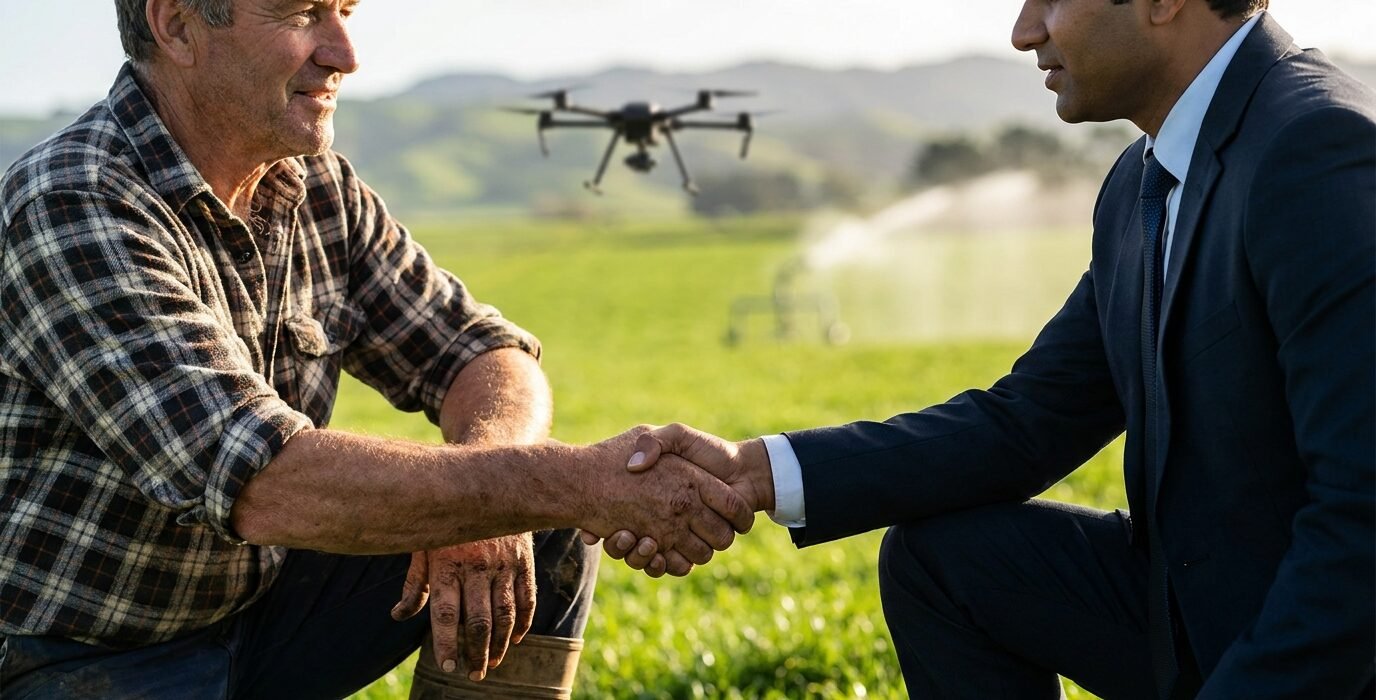
Take the story of a dairy farm near Masterton. The owner, a man named David, initially viewed the prospect of new Indian investment with skepticism. He was used to the ‘Kiwi way’ of doing things. However, he found that the investors weren’t just looking to dictate terms. They were keen to understand his deep knowledge of his land and his animals. They brought in data scientists. These scientists worked alongside his farmhands. They helped them interpret the real-time data from new sensors. David’s initial apprehension transformed into genuine collaboration. He learned about advanced data analytics. The Indian team gained invaluable insights into the practical challenges of day-to-day dairy farming in New Zealand.
This human element is crucial for success. It’s about building trust and fostering genuine partnerships. For Indian investors, understanding the nuances of New Zealand’s agricultural culture is important. This includes its emphasis on quality, environmental care, and a generally more relaxed, but highly professional, work ethic. This understanding is as important as understanding the financial projections. Similarly, New Zealanders are learning about the dynamism and rapid execution capabilities that Indian businesses often bring. This exchange of knowledge and experience is creating a more robust and resilient agritech ecosystem for both nations. The future of agriculture isn’t just about machines and algorithms. It’s about people working together. It’s about bridging cultural divides. It’s about leveraging collective expertise to solve some of the world’s most pressing challenges. The laughter and shared meals after a long day in the fields, whether in Pune or Palmerston North, are as vital as the handshake over a new investment deal. The shared learning extends to best practices in farm management, with Indian farm managers visiting New Zealand to observe and implement efficient rotational grazing techniques.
Looking Ahead: A Harvest of Shared Prosperity
The partnership between New Zealand’s agritech sector and Indian investment is more than just a financial transaction. It’s a strategic alignment that holds immense promise for both nations. For New Zealand, it means access to capital for further innovation. It means expanded market reach for its technologies. It means a boost to its economy through job creation and knowledge transfer. Indian companies gain access to world-class agricultural expertise. They gain access to cutting-edge technologies. They gain a stable platform for developing and testing solutions that can be deployed globally.
The implications for global food security are also significant. By enhancing productivity, reducing waste, and promoting sustainable practices, this collaboration can contribute to feeding a growing world population more efficiently and responsibly. We’re seeing a tangible shift. It’s moving from traditional farming methods to a data-driven, technologically advanced future. This isn’t just about individual farms. It’s about reshaping an entire industry. The insights gained from New Zealand’s specialized dairy and horticulture sectors can be adapted and scaled. This addresses the diverse agricultural needs of India and beyond. This cross-pollination of ideas and capital is creating a powerful engine for innovation. It’s a testament to the fact that when nations collaborate, focusing on shared goals and mutual benefit, remarkable progress can be achieved. The fields of New Zealand, once a symbol of pastoral beauty, are now also a testament to a future where technology, sustainability, and international partnership are cultivating a harvest of shared prosperity. The seeds of this collaboration, sown with foresight and nurtured with mutual respect, are poised to yield a bountiful future for agriculture worldwide. This partnership is a clear signal of the growing interconnectedness of global agriculture and the vital role of technological advancement in ensuring future food supplies.