Key Takeaways
- India’s sustainable startup ecosystem is experiencing rapid growth, driven by innovation in sectors like renewable energy, waste management, and agri-tech.
- Consumers and investors are increasingly prioritizing eco-friendly products and services, creating a fertile ground for green businesses.
- Government initiatives and policy support are playing a crucial role in fostering the development of these sustainable ventures.
- The challenges for these startups include scaling operations, securing consistent funding, and navigating complex regulatory landscapes.
The Green Wave: India’s Sustainable Startup Boom
The year 2026 marks a pivotal moment for India’s entrepreneurial spirit, as a powerful wave of sustainability-focused startups is reshaping the nation’s economic landscape. These ventures are not just about profit; they are deeply embedded with a commitment to environmental stewardship and social responsibility. From the bustling metropolises of Mumbai and Delhi to the agricultural heartlands of Punjab and the coastal regions of Kerala, innovative solutions are emerging to tackle India’s most pressing environmental challenges. This burgeoning sector is attracting significant attention, not only from conscious consumers but also from investors keen to back businesses with a positive impact.
We’re seeing a fundamental shift in how business is conceived and executed. Gone are the days when growth at any cost was the sole mantra. Today, impact and sustainability are becoming integral to business models, driving both purpose and profit. This transformation is fueled by a growing awareness among the Indian populace about climate change, resource depletion, and pollution. Consequently, demand for eco-friendly products and services is soaring, providing a robust market for these new-age businesses. This article delves into the heart of this green revolution, exploring the key sectors, the driving forces, and the exciting future of sustainable startups in India.
Innovations in Renewable Energy and Cleantech
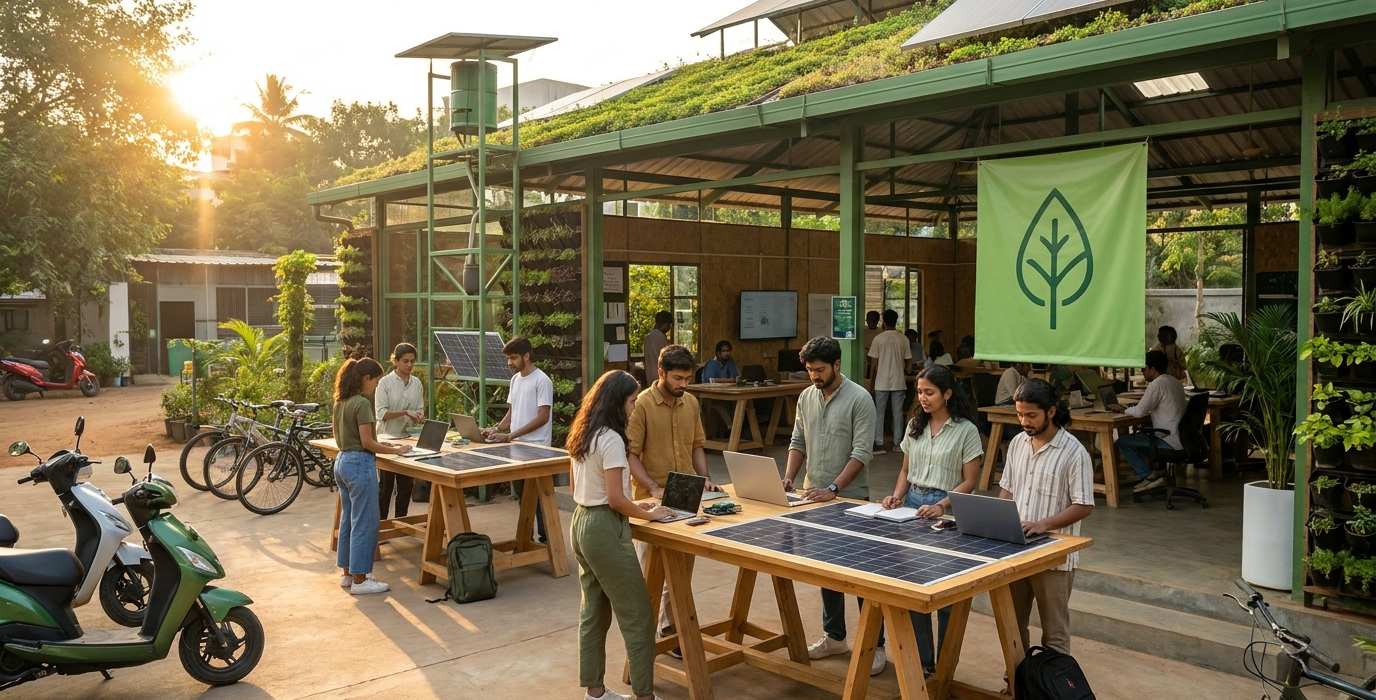
One of the most dynamic areas within India’s sustainable startup scene is renewable energy and cleantech. Startups are pioneering solutions that go beyond traditional solar and wind power. We’re witnessing breakthroughs in areas like advanced battery storage, smart grids, and even micro-energy solutions for rural communities. Companies are developing innovative materials for solar panels that increase efficiency and reduce manufacturing costs, making solar power more accessible than ever before. Others are focusing on decentralized energy generation, empowering villages with reliable and affordable electricity.
The potential here is immense. India’s ambitious renewable energy targets for 2030 are creating a significant market opportunity, and startups are at the forefront of innovation to meet these goals. For instance, some ventures are exploring geothermal energy potential in regions like the Himalayas, a largely untapped resource. Another surprising development is the rise of startups focused on hydrogen fuel cells, aiming to provide clean energy solutions for transportation and industrial applications. These cleantech innovators are not only contributing to India’s environmental goals but also creating new economic opportunities and reducing reliance on fossil fuels.
Waste Management: Turning Trash into Treasure
The challenge of waste management in India is monumental, with rapidly growing urban populations generating vast quantities of refuse. However, this challenge has also become a fertile ground for entrepreneurial innovation. Startups are revolutionizing how we think about waste, transforming it from a problem into a valuable resource. We are seeing sophisticated recycling technologies that can process complex mixed waste streams that were previously unmanageable. These initiatives are crucial for reducing landfill burden and preventing pollution of land and water bodies.
Beyond traditional recycling, many startups are focused on upcycling and converting waste into usable products. This includes everything from turning plastic waste into construction materials and textiles to converting organic waste into biogas and high-quality compost. For example, a venture in Chennai is using segregated plastic waste to create durable, affordable paving blocks, addressing both waste disposal and infrastructure needs. Another promising area is the development of smart waste collection systems that use IoT technology to optimize routes and reduce fuel consumption for waste disposal vehicles. These innovations are not only environmentally sound but also economically viable, creating a circular economy where waste is minimized.
Agri-tech for a Sustainable Future
Agriculture, the backbone of India’s economy, is also undergoing a green transformation, thanks to innovative agri-tech startups. These companies are leveraging technology to make farming more sustainable, efficient, and resilient. They are developing solutions that address critical issues like water scarcity, soil degradation, and the impact of climate change on crop yields. We’re seeing the adoption of precision farming techniques, utilizing drones and sensors to monitor crop health, soil conditions, and water needs, thereby optimizing resource utilization and reducing chemical inputs.
Startups are also focusing on organic farming practices and developing bio-fertilizers and bio-pesticides that are safe for both the environment and human health. For instance, a startup in rural Haryana is working with local farmers to promote drought-resistant crop varieties and implement water-efficient irrigation systems. Another area of significant growth is vertical farming and urban agriculture solutions, which help reduce the land footprint of food production and minimize transportation emissions. These agri-tech pioneers are crucial in ensuring food security while safeguarding India’s natural resources for future generations.
Circular Economy Models and Sustainable Consumption
The concept of a circular economy, where resources are kept in use for as long as possible, is gaining significant traction among Indian startups. This model contrasts sharply with the traditional linear ‘take-make-dispose’ approach. Startups are building businesses around repair, reuse, and remanufacturing, extending the lifespan of products and minimizing waste. We are seeing the rise of platforms that facilitate the rental and sharing of goods, from tools and equipment to clothing and electronics, promoting a culture of access over ownership.
Consumer behavior is also shifting, with a growing demand for ethically sourced and sustainably produced goods. This has led to the emergence of startups offering eco-friendly alternatives to everyday products, such as biodegradable packaging, natural personal care items, and clothing made from recycled materials. A notable example is a company in Bengaluru that has developed a fully compostable alternative to single-use plastics for food service. The focus here is on educating consumers and making sustainable choices convenient and affordable, thereby driving widespread adoption of circular economy principles.
Investment Trends and Government Support
The growing maturity and impact of India’s sustainable startups are not going unnoticed by investors. Venture capital firms and impact investors are increasingly allocating significant capital to this sector. We’re seeing a rise in dedicated green funds and impact investing platforms specifically targeting environmental and social enterprises. These investors recognize the long-term profitability and the positive societal returns offered by sustainable businesses. The fact that many of these startups are demonstrating strong revenue growth and profitability further solidifies investor confidence.
Beyond private investment, the Indian government is actively supporting the sustainable startup ecosystem through various policies and initiatives. Schemes like the National Clean Energy Fund and incentives for renewable energy adoption are providing crucial financial and regulatory backing. Furthermore, incubators and accelerators focused on cleantech and sustainability are playing a vital role in nurturing early-stage ventures, providing mentorship, and facilitating access to markets. For example, the recent announcement of a ₹5,000 crore ‘Green Hydrogen Mission’ by the government in early 2026 is expected to catalyze significant innovation and investment in this crucial sector, creating a robust pipeline of opportunities for aspiring entrepreneurs.
Challenges and the Road Ahead
Despite the tremendous progress, sustainable startups in India still face a unique set of challenges. Scaling operations efficiently while maintaining environmental integrity can be complex. Securing consistent and adequate funding, especially for ventures with longer gestation periods, remains a hurdle. Navigating the often-intricate regulatory landscape and obtaining necessary clearances can also be time-consuming. Furthermore, building consumer awareness and changing deeply ingrained consumption habits requires sustained effort.
However, the outlook remains overwhelmingly positive. The confluence of technological innovation, growing consumer consciousness, supportive government policies, and increasing investor interest is creating an unprecedented environment for sustainable businesses to thrive. As these startups mature and expand their reach, they will not only drive economic growth but also play a critical role in India’s journey towards a greener, more equitable, and sustainable future. The next decade promises to be a transformative period for India’s entrepreneurial landscape, with sustainability at its core.
Frequently Asked Questions
What are the most promising sectors for sustainable startups in India in 2026?
The most promising sectors include renewable energy (solar, wind, hydrogen), waste management (recycling, upcycling, waste-to-energy), agri-tech (precision farming, organic solutions), and circular economy models focusing on reducing consumption and extending product lifecycles.
How is the Indian government supporting sustainable businesses?
The government provides support through financial incentives, policy frameworks (like the Green Hydrogen Mission), tax breaks for green initiatives, and funding for research and development. Incubators and accelerators also offer crucial mentorship and resources.
What are the biggest challenges faced by sustainable startups in India?
Key challenges include scaling operations while maintaining sustainability, securing consistent funding, navigating complex regulations, and educating consumers to drive adoption of eco-friendly products and services.
Are sustainable products more expensive in India?
While some sustainable products may have a higher upfront cost due to advanced materials or ethical sourcing, many startups are working to make them more affordable through innovation and economies of scale. The long-term cost savings and environmental benefits often outweigh the initial price difference.