Key Takeaways
- Electric scooter adoption in India is accelerating rapidly, driven by falling prices, enhanced performance, and government incentives.
- By 2026, e-scooters are poised to become the dominant personal urban transport solution in major Indian cities, challenging petrol-powered alternatives.
- Key players are innovating with better battery tech, swappable battery models, and connected features to meet diverse consumer needs.
- Consumers stand to benefit from significant long-term savings on fuel and maintenance, alongside a cleaner urban environment.
The E-Scooter Surge: India’s Urban Transport Revolution is Here
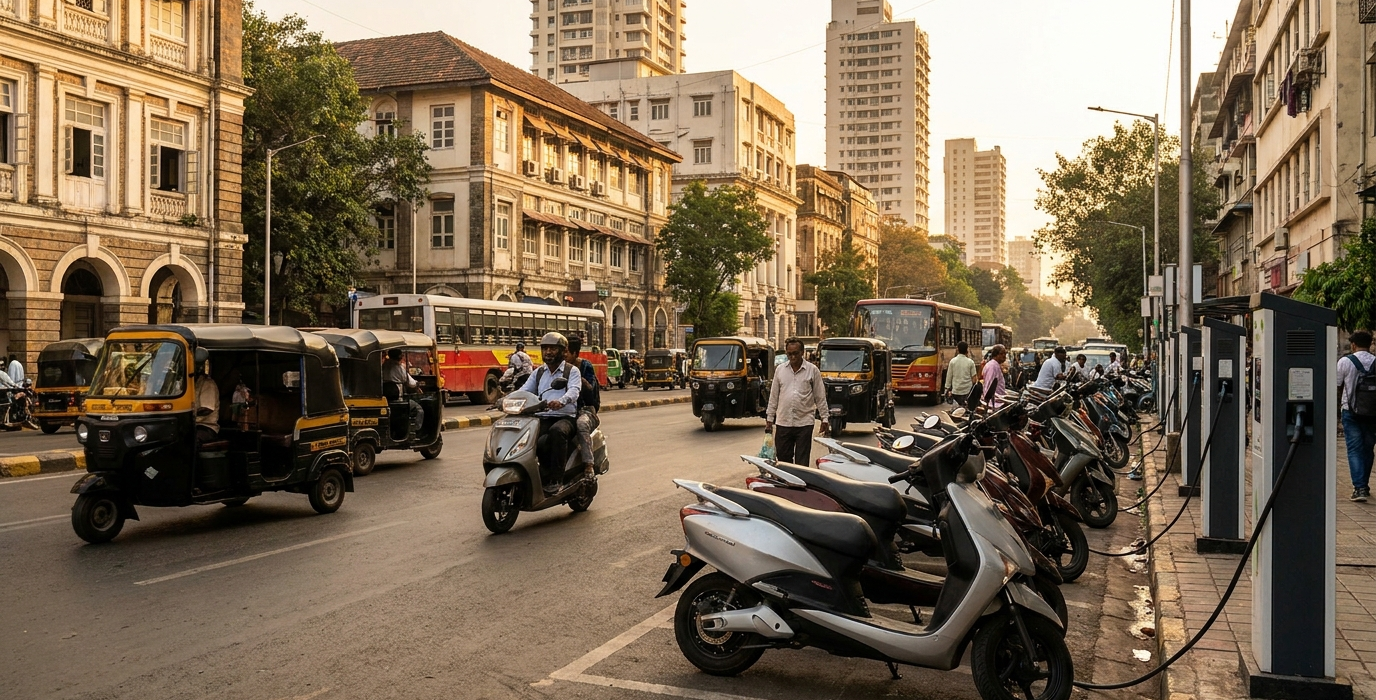
The hum of electric scooters is no longer a novelty; it’s the soundtrack of India’s urban future. In the past year alone, we’ve witnessed an unprecedented surge in e-scooter sales, a trend that shows no signs of slowing down. By August 2026, it’s clear that these silent, zippy machines are rapidly reshaping how Indians navigate their bustling cities, from the crowded lanes of Chandni Chowk in Delhi to the tech hubs of Bengaluru. We’re not just talking about a gradual shift; this is a full-blown revolution, powered by innovation, affordability, and a growing consciousness about our environment.
Several factors are converging to fuel this electric wave. Firstly, the cost of ownership has become increasingly attractive. With battery prices dropping and manufacturers achieving economies of scale, the upfront cost of many e-scooters is now comparable to their petrol counterparts. When you factor in the significantly lower running costs – electricity being far cheaper than petrol, and reduced maintenance needs – the long-term savings become undeniable. This financial appeal is resonating deeply with a broad spectrum of Indian consumers, from daily commuters to young professionals.
Furthermore, the performance and features of these scooters have improved dramatically. Gone are the days of sluggish acceleration and limited range. Today’s e-scooters offer robust performance, comfortable rides, and increasingly sophisticated features like smart connectivity, GPS tracking, and advanced safety systems. The variety of models available means there’s an e-scooter for almost every need, whether you’re looking for a compact city runabout or a more powerful option for longer commutes. The market is responding with an enthusiasm that signals a fundamental change in our mobility habits.
Government Push and Consumer Demand: A Winning Combination
The Indian government’s commitment to electric mobility has been a critical catalyst in this e-scooter explosion. Policy interventions, including subsidies under schemes like the Faster Adoption and Manufacturing of Electric Vehicles (FAME) II (and its subsequent iterations), have played a pivotal role in bringing down prices and making electric options more accessible. These incentives make the transition from a polluting petrol vehicle to a cleaner electric one financially viable for a much larger segment of the population.
Beyond direct subsidies, there’s a concerted effort to build the necessary ecosystem. This includes promoting domestic manufacturing, encouraging charging infrastructure development, and setting ambitious targets for EV adoption. States like Maharashtra, Gujarat, and Tamil Nadu have been particularly proactive, offering additional state-level incentives and streamlining approvals for charging stations. This multi-pronged approach creates a positive feedback loop: as more people buy e-scooters, the demand for charging infrastructure grows, which in turn makes owning an e-scooter even more practical.
Consumer sentiment is also shifting palpably. There’s a growing awareness of the environmental impact of traditional vehicles, particularly the air quality issues plaguing India’s major metropolitan areas. The desire for cleaner air and a more sustainable lifestyle is increasingly influencing purchasing decisions. E-scooters offer a tangible way for individuals to contribute to this positive change without compromising their daily mobility needs. This fusion of government support, industry innovation, and evolving consumer values has created the perfect storm for the e-scooter revolution we are witnessing.
Innovation on Two Wheels: What’s Under the Hood?
The rapid evolution of e-scooter technology is a key reason for their widespread adoption. Manufacturers are no longer just assembling components; they are actively innovating to address consumer pain points and enhance the riding experience. Battery technology remains a central focus. We’re seeing improvements in energy density, leading to longer ranges on a single charge, and faster charging times. Companies are also exploring advanced battery management systems to prolong battery life and ensure safety.
One of the most exciting developments is the rise of swappable battery models. Companies like Bounce Infinity and Ather Energy are pioneering this concept, allowing riders to exchange a depleted battery for a fully charged one at designated stations. This eliminates range anxiety and the need to wait for charging, making e-scooters as convenient as refueling a petrol vehicle. Imagine pulling into a roadside kiosk near Connaught Place and swapping your battery in under a minute – this is becoming a reality.
Beyond the core powertrain, connectivity and smart features are becoming standard. Many e-scooters now come equipped with Bluetooth connectivity, allowing them to pair with a smartphone app. This enables features like remote diagnostics, vehicle tracking, riding analytics, and even over-the-air software updates. These ‘smart’ scooters offer a premium experience that appeals to a tech-savvy younger demographic and enhances overall usability and security. The integration of IoT (Internet of Things) is transforming e-scooters from simple modes of transport into connected mobility devices.
Affordability Meets Performance: Your E-Scooter Options
The sheer variety of electric scooters available in the Indian market by 2026 is astounding, catering to every budget and need. For the budget-conscious commuter, entry-level models from brands like Ampere and Okinawa offer reliable performance and decent range at prices that are highly competitive with their petrol counterparts. These are often lightweight, easy to manoeuvre, and perfect for navigating congested city streets. You can find models with a top speed of around 45 kmph, suitable for most urban commutes, starting in the ₹60,000-₹80,000 range.
Moving up the spectrum, we see a host of performance-oriented scooters. Brands like Ola Electric, Ather Energy, and TVS Motor Company are leading the charge with scooters that offer higher top speeds (up to 70-80 kmph), longer range (100-150 km on a single charge), and more advanced features. These are ideal for those who need to cover longer distances within the city or have a daily commute that extends beyond the central business districts. Prices for these premium models typically range from ₹1.2 lakh to ₹1.8 lakh, but the total cost of ownership remains significantly lower than petrol scooters over their lifespan.
Here’s a quick look at how some popular categories stack up:
| Category | Typical Price Range (INR) | Key Features | Ideal For |
|---|---|---|---|
| Entry-Level Commuter | 60,000 – 90,000 | 35-50 kmph top speed, 50-80 km range, basic connectivity | Short city commutes, first-time EV buyers |
| Mid-Range Performance | 90,000 – 1,30,000 | 50-65 kmph top speed, 80-120 km range, advanced app integration, better suspension | Daily office commutes, inter-city travel within 30-40 km radius |
| Premium/Performance | 1,30,000 – 2,00,000+ | 70-90 kmph top speed, 120-180 km range, swappable batteries, high-end tech features, superior build quality | Enthusiasts, long-distance urban commuting, tech-savvy users |
The increasing competition means you can expect even more attractive deals and technological advancements as we move through 2026.
Long-Term Savings and Environmental Impact: A Win-Win
The financial argument for switching to an electric scooter is compelling, and the savings only grow over time. Consider a typical petrol scooter owner in Mumbai who rides approximately 10,000 km per year. With petrol prices hovering around ₹110 per litre and a mileage of 45 kmpl, the annual fuel cost alone can easily exceed ₹24,000. Add to this the regular maintenance costs for the engine, oil changes, and other wear-and-tear components, which can easily amount to another ₹5,000-₹7,000 annually.
Now, contrast this with an electric scooter. Charging an e-scooter with a 2 kWh battery at a rate of ₹7 per kWh for 10,000 km would cost roughly ₹1,400 in electricity annually. Maintenance is also significantly lower; there are fewer moving parts, no oil changes, and brake wear is often reduced due to regenerative braking systems. Over a year, you could be looking at savings of over ₹20,000 on running costs alone, not to mention the reduced hassle of frequent service visits. Over the typical 5-7 year lifespan of a scooter, these savings can run into lakhs of rupees.
> “The true cost of ownership for an electric scooter is dramatically lower than its petrol equivalent. By 2026, the upfront price parity is just the beginning; the long-term financial benefits are what will truly cement its place in Indian households.”
The environmental benefits are equally, if not more, significant. Electric scooters produce zero tailpipe emissions, meaning they don’t directly contribute to the smog and pollution that choke our cities. A widespread shift from petrol to electric scooters in a city like Delhi could lead to a measurable improvement in air quality, reducing respiratory illnesses and creating a healthier living environment for everyone. While the electricity generation itself has an environmental footprint, the overall lifecycle emissions of EVs are significantly lower than those of internal combustion engine vehicles, especially as India’s grid becomes increasingly reliant on renewable energy sources. This makes the e-scooter a responsible choice for both your wallet and the planet.
The Future is Electric: What to Expect Next
As we look ahead from August 2026, the trajectory of electric scooters in India is clear: continued growth, enhanced innovation, and deeper integration into the urban fabric. We can anticipate further reductions in battery costs, driven by global supply chain efficiencies and advancements in battery chemistry. This will likely lead to even more affordable e-scooter models entering the market, making them accessible to an even wider audience, including those in Tier 2 and Tier 3 cities. The dream of owning an electric scooter will no longer be confined to metropolitan elites.
Charging infrastructure will continue to expand and become more sophisticated. Beyond swappable battery networks, we’ll see more public charging points in residential complexes, commercial spaces, and along major roadways. The integration of smart grids and vehicle-to-grid (V2G) technology might even allow e-scooters to contribute to grid stability in the future. Imagine your scooter contributing power back to the grid during peak demand, earning you credits.
Expect to see greater specialization and segmentation in the e-scooter market. Manufacturers will introduce models tailored for specific use cases – ultra-lightweight scooters for last-mile delivery, robust off-road capable scooters for semi-urban areas, and high-performance scooters that rival traditional motorcycles. Connectivity features will become more advanced, with AI-powered navigation, predictive maintenance alerts, and enhanced safety features becoming standard. The e-scooter is no longer just a mode of transport; it’s evolving into a personalized, intelligent mobility companion.
Frequently Asked Questions
What is the average lifespan of an electric scooter battery in 2026?
By 2026, most high-quality electric scooter batteries are designed to last for approximately 5-7 years or between 500 to 1,000 charge cycles, whichever comes first. Many manufacturers offer warranties on their batteries, providing peace of mind.
Are electric scooters practical for Indian road conditions?
Yes, many modern electric scooters are designed with robust suspension systems and durable builds to handle the varied road conditions found in India. Models from reputable brands undergo rigorous testing to ensure they are suitable for daily commuting across different terrains.
How much does it cost to charge an electric scooter in India in 2026?
The cost varies based on local electricity tariffs and battery size, but generally, charging an electric scooter costs significantly less than fueling a petrol scooter. For a typical scooter with a 2 kWh battery, it might cost anywhere from ₹10 to ₹20 for a full charge, depending on the state’s electricity rates.
What government incentives are available for buying electric scooters in 2026?
While specific schemes can evolve, government incentives often include direct subsidies on the purchase price (like those under FAME II iterations), reduced road tax, and registration fee waivers. Many state governments also offer additional incentives. It’s best to check with your local dealership or state transport department for the most current offers.
Is the charging infrastructure for electric scooters adequate in Indian cities?
The charging infrastructure is rapidly expanding, with a growing number of public charging stations, dedicated battery swapping networks, and home charging solutions becoming available. While coverage varies by city, major metropolitan areas are seeing significant improvements, making e-scooter ownership increasingly convenient.