Imagine a world where your phone doesn’t just stream video; it anticipates your needs. Where lag is a forgotten relic. Connections are as seamless as thought. This isn’t science fiction. It’s the promise of 6G. And Norway is quietly, yet determinedly, paving the way. While the rest of the world is still fully embracing 5G, Norway’s commitment to pioneering 6G research is about to redefine what we expect from our mobile devices.
Key Takeaways:
- Norway is a global leader in 6G research, aiming to deploy the technology by 2030.
- 6G promises speeds 100 times faster than 5G, enabling real-time, immersive experiences.
- Beyond speed, 6G will integrate AI, sensing capabilities, and a hyper-connected digital and physical world.
- Expect new applications in healthcare, transportation, and entertainment, radically changing daily life.
- While widespread adoption is years away, Norway’s investment offers a glimpse into the future of mobile connectivity for everyone.
The Fjords’ Silent Revolution: Norway’s Early 6G Vision
Standing on the rugged coastline near Stavanger, with the North Sea wind whipping around you, it’s easy to feel a sense of isolation. Yet, within this dramatic landscape, Norway is fostering a technological revolution. The country isn’t just thinking about the next generation of mobile networks; it’s actively building it. Many nations are still wrestling with the rollout and optimization of 5G. Norway, through institutions like the University of Tromsø and its dedicated research centers, is already deep in the trenches of 6G development. This isn’t just about faster downloads. It’s about an entirely new paradigm of connectivity.
The Norwegian government, recognizing the strategic importance of future telecommunications, has made significant investments in 6G research and development. This proactive approach, driven by a desire to remain at the forefront of global innovation, positions Norway as a crucial player in shaping the digital future. Think of it as a quiet, determined race. The prize is not just speed, but intelligence and seamless integration. The ambition is palpable. We’re talking about a potential leap from gigabits per second to terabits. That’s a difference so vast it’s almost incomprehensible. This will enable instantaneous data transfer. Something that sounds like a dream when you’re buffering a movie in a remote cabin. The focus in Oslo and other tech hubs is on creating a network that is not only faster but also more intelligent, more pervasive, and more integrated into the fabric of our lives. This early investment signals a long-term commitment. The aim is for a full deployment by the end of this decade. That’s remarkably ambitious when you consider the current state of 5G infrastructure worldwide. The country’s commitment is underscored by initiatives like the 6G research program at the University of Tromsø. This program is exploring the fundamental technologies that will power this next era.
Beyond Speed: The AI-Infused Network
The conversation around 6G often starts and ends with speed. And yes, the projected speeds are astonishing. Potentially 100 times faster than what 5G offers. Imagine downloading a full-length, high-definition movie in less than a second. But the true revolution of 6G lies far beyond mere velocity. It’s about the integration of artificial intelligence (AI) directly into the network infrastructure itself. This isn’t just about faster data pipes. It’s about a network that can learn, adapt, and even predict.
Professor Elina Virtanen, a leading researcher at the Oulu-based Centre for Wireless Communications (part of the University of Oulu, which has strong ties with Norwegian research), explained this concept during a recent webinar. “We’re moving from a network that transmits data to a network that understands it,” she stated. “6G will leverage AI to optimize performance in real-time, manage resources dynamically, and even anticipate user needs. Think of it as a conscious network, always working to provide the best possible experience without you even having to ask.” This means your device won’t just connect. It will be intrinsically linked to an intelligent system. This system can manage your connectivity based on your context, your location, and your current activity. For example, if you’re walking through the bustling streets of Bergen and suddenly need to make an urgent video call, the network will intelligently prioritize your connection. This ensures no dropped frames or pixelation. This level of proactive network management is something that 5G, with its focus on speed and lower latency, simply cannot achieve. It’s the difference between a superhighway and a self-driving car that navigates traffic intuitively. The implications for everyday users are profound. It suggests a future where mobile devices become even more seamless extensions of ourselves. They will anticipate our needs before we even articulate them. This AI integration is not a hypothetical feature. It’s a core design principle for 6G. Norway’s research is at the forefront of exploring these possibilities.
Sensing the World: A Network That Sees and Feels
One of the most mind-bending advancements promised by 6G is its ability to act as a ubiquitous sensing network. This means the network itself will possess the capability to sense its environment. It can gather data about physical spaces, objects, and even human presence in a way that current networks can only dream of. Imagine a network that doesn’t just carry signals but also perceives the world around it. This is achieved through the integration of advanced sensing technologies. This includes advanced radar and optical sensing, directly into the base stations and devices.
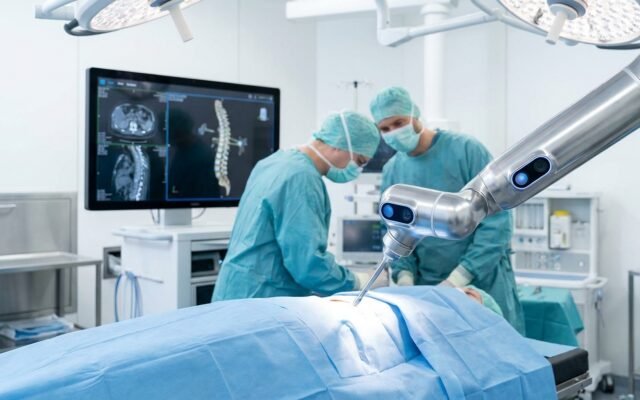
This capability opens up a Pandora’s Box of innovative applications. For instance, in healthcare, 6G could enable remote patient monitoring with an unprecedented level of detail. Sensors embedded within the network could track vital signs, monitor gait for early detection of neurological issues, or even assess the air quality in a patient’s room. This would all be without the need for bulky, intrusive wearable devices. A doctor in Oslo could receive real-time, high-fidelity data about a patient in a remote village in Northern Norway. This enables more accurate diagnoses and personalized treatment plans. Furthermore, in smart cities, this sensing capability could revolutionize urban planning and management. Imagine traffic lights that dynamically adjust based on real-time traffic flow detected by the network. Or public spaces that can monitor crowd density to ensure safety during events. This is not just about connecting devices. It’s about connecting the physical and digital worlds in a truly symbiotic way. The network becomes an extension of our senses. It provides a rich, multi-dimensional understanding of our surroundings. This level of environmental awareness means that applications could be developed that react to subtle changes in the environment. They can offer proactive assistance rather than reactive responses. For consumers, this could translate into safer commutes, more efficient public services, and even more responsive home environments. The idea of a network that can “feel” its surroundings is a radical departure from current thinking. It pushes the boundaries of what telecommunications can achieve.
The Immersive Experience: Holoportation and Beyond
If you’ve ever felt frustrated by the limitations of video calls, even the high-definition ones we have today, prepare for a seismic shift. 6G is poised to usher in an era of true immersive experiences. This makes concepts like holoportation a tangible reality. This goes far beyond simply seeing and hearing someone on a screen. It’s about feeling present with them, regardless of physical distance. The ultra-low latency and massive bandwidth of 6G networks will enable the seamless transmission of incredibly rich, high-fidelity data. This includes holographic projections and real-time sensory feedback.
Consider the possibility of attending a business meeting in Tromsø. You would appear as a lifelike holographic projection in a conference room in, say, Singapore. You wouldn’t just be a talking head. Your gestures, your presence, and even subtle micro-expressions could be transmitted with perfect fidelity. This could redefine remote work, global collaboration, and even how we connect with loved ones. Imagine visiting family members who live far away. You could have a holographic presence in their living room. Share a cup of coffee and a conversation as if you were truly there. Beyond personal interactions, the entertainment industry is set to be revolutionized. Think of attending live concerts or sporting events. Not just as a spectator in a stadium, but as an active participant. You could move through a virtual representation of the event space, experiencing it from any angle. Gaming will move from interactive simulations to fully realized, persistent virtual worlds. The line between the physical and digital will blur. This level of immersion is predicated on the ability of the network to transmit vast amounts of data with virtually no delay. The latency targets for 6G are in the microsecond range. That’s a gargantuan leap from the millisecond latency of 5G. This is what makes real-time holographic communication and other ultra-immersive experiences possible. It’s a future where distance becomes an increasingly irrelevant factor in how we interact and experience the world. The potential for businesses to conduct remote training, for engineers to collaborate on complex 3D designs in real-time, or for educators to offer truly engaging virtual field trips is immense.
Navigating the Uncharted: Challenges and Opportunities
While the vision for 6G is undeniably exciting, the path to its widespread deployment is not without its hurdles. Norway’s pioneering spirit is crucial here. It allows for the exploration and testing of these new frontiers in a controlled environment. One of the primary challenges is the development of new materials and hardware. The frequencies envisioned for 6G, potentially extending into the terahertz (THz) spectrum, require entirely new antenna designs, chipsets, and transmission technologies. These frequencies offer immense bandwidth but also face challenges with signal propagation and interference.
Furthermore, the sheer complexity of an AI-infused, sensing network requires advancements in spectrum management and cybersecurity. Ensuring that these vast networks are secure, reliable, and do not inadvertently create new vulnerabilities is paramount. “We are not just building a faster network; we are building a more intelligent and integrated system,” noted Dr. Lars Hansen, a senior engineer at Telenor’s research division in Fornebu. “This requires a complete rethinking of network architecture, security protocols, and regulatory frameworks. It’s a monumental task, but one we are tackling head-on.” The energy consumption of these advanced networks is another significant consideration. While advancements in energy efficiency are a key research area, ensuring that 6G networks are sustainable is a crucial aspect of their development. Norway’s commitment to renewable energy sources, like its abundant hydropower, could provide a significant advantage in powering these future networks. The opportunities, however, far outweigh the challenges. Early investment in 6G research allows countries like Norway to shape the standards and protocols that will govern this new era of connectivity. This can lead to significant economic benefits. It fosters innovation in industries that will leverage 6G capabilities, from advanced manufacturing to personalized medicine. It also ensures that the benefits of this technology are distributed equitably. There’s a focus on bridging the digital divide, even in remote and sparsely populated areas. The groundwork being laid now in Norwegian research labs is setting the stage for a global technological evolution. Understanding these challenges is key to appreciating the scale of the endeavor.
Your Mobile Future: What Does it Mean for You?
So, what does Norway’s ambitious leap towards 6G actually mean for you, the everyday mobile user, even if you’re living miles away from Stavanger or Tromsø? The immediate answer is: not much, for now. We’re still years away from seeing 6G networks widely available. Most experts predict commercial deployments starting around 2030. However, the work being done today in Norway and other leading nations is laying the foundation for a future. It’s a future where your smartphone, and indeed all your connected devices, will operate on a level of intelligence and capability we can currently only imagine.
Think about the apps you use daily. With 6G, the lag that sometimes plagues even simple tasks will vanish. Live translation during conversations could become as seamless and accurate as speaking the same language. Augmented reality applications will move from novelties to indispensable tools. They will overlay crucial information onto your environment with perfect realism. Imagine walking through a historical site in Trondheim. You see a perfectly rendered, interactive reconstruction of its past appear before your eyes, all streamed instantly to your device. The potential for enhanced personal safety is also significant. Imagine a future where your phone, powered by the intelligent sensing capabilities of 6G, can detect hazards in your immediate environment. Perhaps a failing piece of infrastructure or an approaching vehicle in a blind spot. It can then alert you proactively. This level of responsiveness and integration promises to make our digital lives not just more convenient. It could also make them safer and more enriching. While the term “6G” might sound like a distant technological concept, its development is an investment in the very fabric of our future communication and interaction. It’s about a world where technology fades into the background. It works seamlessly to enhance our human experiences. The research conducted in Norway is not just about pushing technological boundaries. It’s about envisioning and building a more connected, intelligent, and immersive future for all of us. The seeds are being sown today for the mobile experiences you’ll be enjoying tomorrow.