As India navigates the demographic landscape of 2026, the story of our nation is no longer just about numbers, but about the profound shift in where and how we live. Understanding these density patterns is essential for anyone planning a business, buying property, or simply trying to grasp the pulse of our rapidly evolving cities and villages.
Key Takeaways
- Urban centers like Bengaluru and the NCR are reaching critical saturation points, forcing a shift toward tier-2 satellite towns.
- Rural migration patterns are evolving, with a significant number of working-age individuals returning to semi-urban hubs for better digital connectivity.
- The Office of the Registrar General and Census Commissioner of India remains the primary authority for tracking these decadal shifts and demographic data.
- Population density is increasingly dictated by infrastructure investment rather than historical agricultural fertility.
The Urban Explosion: Beyond the Mega-Cities
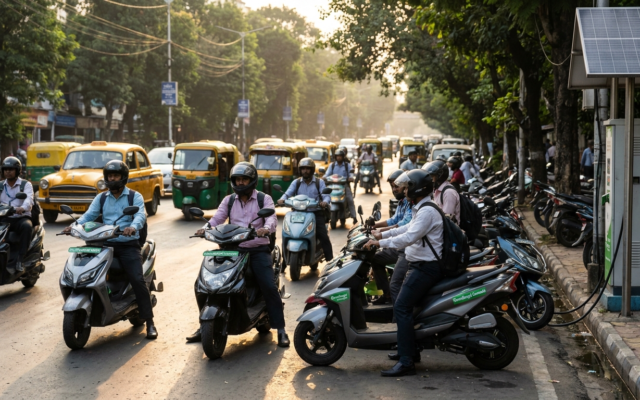
The traditional narrative of India being “a land of villages” is undergoing a structural edit. In 2026, we are witnessing a phenomenon where the density of mega-cities like Mumbai and Delhi is not just rising, but spilling over into a massive “peri-urban” expansion. People are moving out of the expensive, congested city centers and into developing suburbs that boast better road connectivity and digital infrastructure.
For instance, the density in areas surrounding the Outer Ring Road in Hyderabad has grown at a pace that surprises even seasoned urban planners. While central districts remain crowded, the real growth is happening in the corridors between major industrial parks and residential hubs. This shift is supported by government policies focusing on the NITI Aayog vision for sustainable urban development. By spreading the load, these regions are trying to avoid the total gridlock seen in older urban cores.
One surprising fact is that some districts in North India are now more densely populated per square kilometer than parts of the Netherlands, a country long considered the global benchmark for high-density living. This density is not just about buildings; it is about the intense pressure on water, power, and waste management systems. As a citizen, you might notice this in the rising cost of services and the competitive nature of property acquisition in these high-growth zones.
The Rural-Urban Continuum: A New Demographic Reality
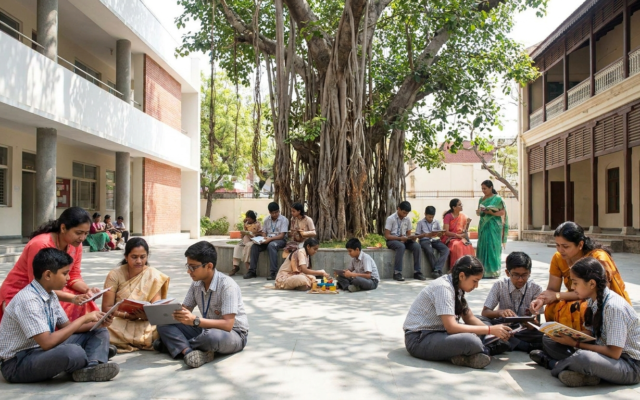
We often think of the divide between rural and urban India as a stark line, but in 2026, it is more of a blurry gradient. The rise of “rurban” areas—villages that have adopted urban-style economic activity—is changing the density map. You no longer need to move to a metropolis to be part of the service economy. With widespread 5G access, remote work has allowed many professionals to remain in their ancestral towns, keeping density stable in regions that were previously seeing mass exodus.
The Ministry of Rural Development has been instrumental in providing the infrastructure—like better roads and rural water supply—that makes these areas viable for the long term. This stabilization is preventing the total desertion of villages, which was a major trend in the early 2020s. Instead, we see a “circular migration” where people move between their hometowns and large cities based on seasonal demand and economic opportunity.
It is fascinating to note that India’s rural density is far higher than most developed nations, which creates unique opportunities for local entrepreneurship. If you operate a business, you might find that the “rural” market is surprisingly dense and ready for localized digital services. The challenge for policymakers remains ensuring that schools, clinics, and broadband reach these high-density rural pockets to prevent them from becoming overburdened.
Comparing Density Across Indian States
To understand the scale of the challenge, we must compare the density figures across different regions. Some states have managed their growth through decentralization, while others face immense pressure on a small land footprint.
| Region/State | Primary Density Driver | Growth Trend 2026 |
|---|---|---|
| Delhi NCR | Administrative & Services | High (Expansion to outskirts) |
| West Bengal | Agricultural & Industrial | Moderate (Rural consolidation) |
| Bihar | Agricultural | High (Youth demographic) |
| Kerala | Geographic/Linear Settlement | Stable (High service access) |
As the table shows, the drivers of density vary wildly. Bihar remains one of the most densely populated regions due to its fertile land and historical settlement patterns. In contrast, states like Kerala exhibit a unique “linear” density, where the entire state functions almost like one long, interconnected urban sprawl. This difference matters for how you look at the future of real estate and labor availability in these specific states.
Infrastructure and the Density Trap
Infrastructure is the ultimate arbiter of how much density a city can handle. When we talk about density, we are really talking about the capacity of roads, the reliability of the grid, and the robustness of public transport. In 2026, the cities that are succeeding are those that have invested heavily in mass transit systems, like the expansion of metro lines in cities like Pune and Ahmedabad.
Population density is not merely a count of people per square kilometer; it is a measure of our collective demand for the limited resources that define our quality of life.
Without adequate investment, high density leads to what planners call the “density trap.” This occurs when the cost of maintaining basic services exceeds the tax revenue generated by the residents. We see this in older parts of historic cities where sewage systems are pushed to their limit. The solution is often redevelopment, but that brings its own social challenges. As a resident, you should be aware of the “Master Plan” for your city, as these documents dictate the vertical growth allowed in your neighborhood.
Environmental Impact and Resource Management
High density has a direct correlation with environmental strain. In 2026, air and water quality are no longer just environmental concerns; they are economic variables. Cities with higher density often deal with higher “urban heat island” effects, where buildings and asphalt trap heat, making summers noticeably more uncomfortable than in the surrounding countryside.
The government is increasingly turning to data from the Central Pollution Control Board to decide where to allow new high-rise construction. If you are looking to buy a home, check if your area is near a designated green zone. In dense urban environments, proximity to a public park or a water body is now the most premium asset you can possess. The density of trees and open spaces is becoming as important as the density of people.
Frequently Asked Questions
Why is India’s population density so uneven across different states?
The variance is largely driven by historical, geographic, and economic factors. Historically, the Gangetic plains have been the most fertile, leading to higher agricultural density, while modern economic centers have drawn massive migration due to industry, leading to high urban density.
How can I find the exact population density of my own district?
You can find authoritative data through the official Census of India portal. While the latest full decadal census provides the baseline, state-level economic surveys published annually often provide updated projections for specific districts.
What are the biggest risks of living in a high-density area in 2026?
The primary risks include increased pressure on local infrastructure, such as water supply and traffic congestion, as well as higher exposure to environmental stressors like air pollution and heat island effects. Proper urban planning and individual investment in self-sustaining systems like solar panels or water harvesting can mitigate some of these challenges.
Does high density always mean higher economic growth?
Not necessarily. While high density allows for efficient service delivery and economies of scale, it requires a proportional investment in infrastructure. Without that infrastructure, high density can actually lead to economic stagnation due to lost productivity from traffic and health issues.