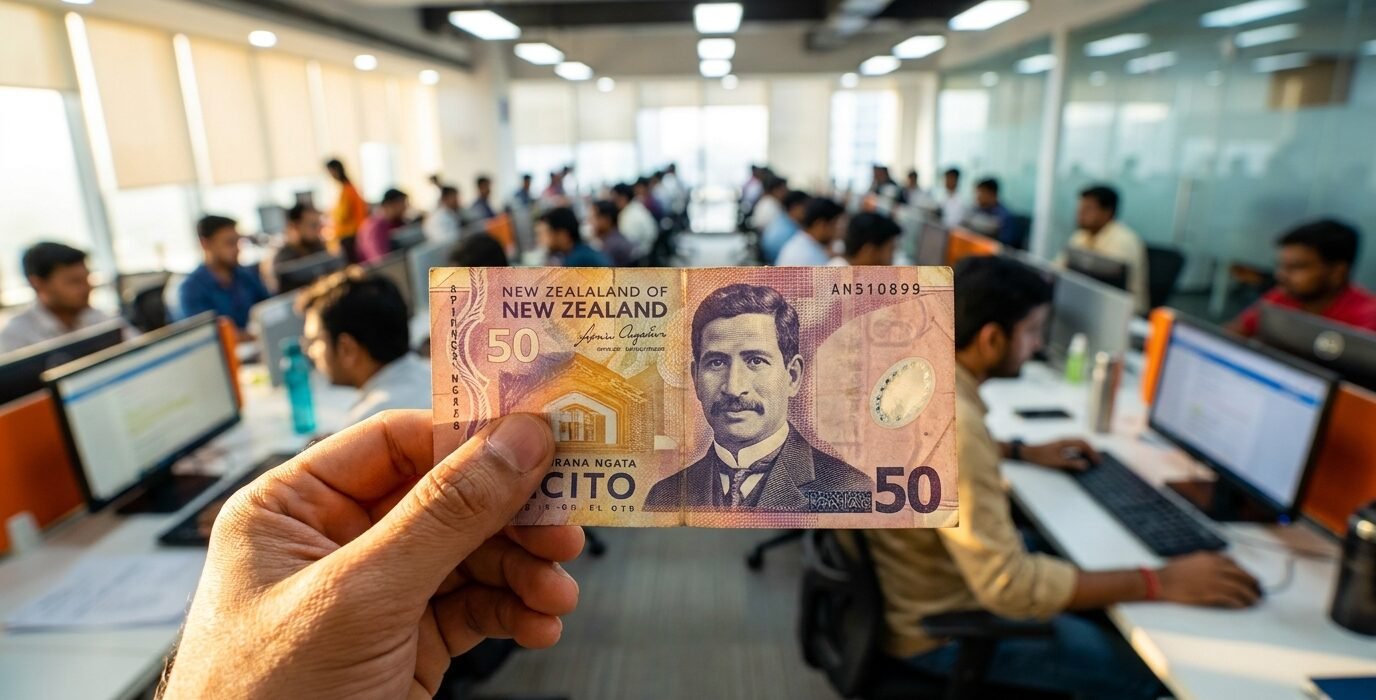
Imagine Wellington’s harbour on a crisp morning. The air bites. Seagulls cry overhead. Now picture a shrewd investor, perhaps a seasoned dairy farmer from the Waikato, scanning a digital dashboard. Not for milk prices. But for the next Flipkart or Byju’s. This isn’t science fiction anymore. A quiet but significant shift is underway. New Zealand capital is increasingly finding its way into the dynamic, often exhilarating, world of Indian startups. What’s driving this cross-Pacific flow? And what should you, as a potential Kiwi investor, know before you dive in?
Key Takeaways:
- New Zealand investors are increasingly looking beyond traditional markets. India’s booming startup ecosystem presents attractive opportunities.
- Factors like India’s large, young population, rapid digitalisation, and government support are drawing foreign capital.
- However, navigating the Indian market involves significant risks. These include regulatory complexities, currency fluctuations, and the inherent volatility of early-stage ventures.
- Due diligence, understanding cultural nuances, and seeking expert advice are crucial. They help mitigate risks and maximise potential returns.
- This trend offers a chance for diversification and potentially high growth for Kiwi investors. But it requires a strategic and informed approach.
The Allure of the Ganges: Why India Beckons Kiwi Capital
The sheer scale of India’s digital transformation is almost impossible to overstate. It’s a nation where a smartphone is often the primary, sometimes only, gateway to the internet. It connects people to banking, education, and commerce. This massive, young, and increasingly aspirational population forms fertile ground for innovation. For New Zealand investors, accustomed to the more mature, perhaps slower-growing markets of Australasia and Europe, India represents a frontier brimming with potential. Think of it like discovering a new, fertile patch of land for kiwifruit vines. But instead of soil, it’s a burgeoning digital economy.
Consider the demographics alone. India boasts a median age of around 28 years. This means a vast, tech-savvy workforce. It also means a massive consumer base eager to adopt new products and services. Companies are emerging to cater to every conceivable need. From hyperlocal delivery services in bustling metros like Mumbai. To ed-tech platforms bridging educational gaps in rural Rajasthan. These aren’t just small businesses. Many are scaling at a pace that would make a seasoned entrepreneur from Auckland’s Ponsonby feel dizzy. The government’s push for Digital India. Initiatives like Digital India and Startup India further bolster this ecosystem. They offer incentives and streamline processes. This creates a more predictable, albeit still complex, environment for foreign investment. We are seeing a confluence of factors. A hungry market. Innovative entrepreneurs. Supportive policy. It’s a potent mix. It’s hard for any capital, including that from Aotearoa, to ignore.
From Rural Roots to Unicorn Dreams: Anecdotes from the Ground
The stories emerging from this cross-border investment are often remarkable. Take, for instance, the case of Sarah, a retired schoolteacher from Christchurch. She had a modest sum invested in a few local businesses. But her portfolio felt a bit… staid. A chance conversation at a community centre. With a friend’s son, who had recently returned from a stint in Bangalore. It opened her eyes. He spoke passionately about the innovation he’d witnessed. A company developing affordable solar solutions for rural homes. Another creating AI-driven agricultural advisory services for farmers in Punjab. Sarah, initially hesitant, decided to research further.
She connected with a few emerging investment platforms. These platforms specialise in curating deals for international investors in Indian startups. After months of rigorous due diligence. Speaking with founders. Understanding the market dynamics. She allocated a small but significant portion of her savings into two promising ventures. One was a fintech company. It aimed to provide micro-loans to small businesses in Tier 2 and Tier 3 cities. This segment is often underserved by traditional banking. The other was a sustainable packaging startup. It addressed India’s growing waste management problem. Sarah admits the initial investment felt like a leap of faith. “It was certainly different from investing in a local bakery,” she chuckled during a recent video call. “But the potential for impact, and the sheer energy of these young founders… it was infectious. And frankly, the returns I’ve seen so far are far beyond what I’d ever get here.” Her experience, while just one among many, illustrates the human element behind the financial transactions. Personal connections. Belief in founders. A desire to be part of something transformative.
Decoding the Indian Startup Landscape: Beyond the Hype
It’s easy to get swept up in the headlines about India’s rapidly growing startup scene. It’s often referred to as the “Silicon Valley of Asia.” However, beneath the surface of multi-billion dollar valuations and rapid growth lies a complex ecosystem. It has its own unique challenges and rewards. For a New Zealand investor, understanding these nuances is paramount. The sheer volume of startups can be overwhelming. India sees thousands of new ventures being launched each year. They span sectors from e-commerce and logistics to deep tech and biotechnology. This diversity offers a broad spectrum of investment opportunities. But it also means that identifying truly viable businesses requires a discerning eye. It demands a deep understanding of specific market verticals.
Furthermore, the regulatory environment, while improving, can still be a labyrinth. Navigating corporate law, taxation policies, and foreign exchange regulations in India requires expertise. Unlike New Zealand, where compliance is often straightforward, Indian regulations can be intricate and subject to change. This is where platforms that offer structured investment pathways become invaluable. Often through venture capital funds or angel networks. They act as intermediaries. They handle much of the legal and compliance heavy lifting. A surprising fact for many is the prevalence of “bootstrapped” startups in India. These are companies that have achieved significant scale without external funding. They rely on organic growth and clever business models. While this signifies resilience, it also means that the valuation methodologies for these companies can differ from those in Western markets. Investors need to be aware of these variations. They shouldn’t simply apply familiar benchmarks. The key is to look beyond the immediate hype. Understand the underlying business fundamentals, market penetration strategies, and the long-term vision of the founding team.
The Hidden Risks: Currency, Culture, and Capital Flight
While the potential for significant returns draws Kiwi capital to India, it’s crucial to acknowledge the inherent risks involved. Perhaps the most immediate concern for international investors is currency fluctuation. The Indian Rupee (INR) can be volatile against the New Zealand Dollar (NZD). A strong performance by a startup can be significantly eroded. This happens if the Rupee weakens against the NZD by the time profits are repatriated. This isn’t a minor detail. It can be the difference between a successful investment and one that merely breaks even or incurs a loss. Imagine a robust 20% return in Rupees, only to see it shrink to 10% or less due to currency depreciation.
Beyond economics, there are cultural and operational differences that can pose challenges. Business practices, communication styles, and the pace of decision-making can vary considerably. They differ from what a New Zealander might be accustomed to. A project that might take a few weeks to finalise in Wellington could take months in India. This is due to hierarchical structures or the need for multiple approvals. Building strong relationships and fostering trust with Indian entrepreneurs is vital. But it requires patience and an understanding of local customs. Another risk, albeit less common for well-vetted investments, is the potential for capital flight or unexpected regulatory shifts. These could impact foreign ownership. While the Indian government has made efforts to create a welcoming environment, geopolitical factors or domestic policy changes can always introduce unforeseen challenges. It’s a sobering reminder that investing in emerging markets is never a sure bet. You’re not just betting on a business idea. You’re betting on a country’s economic trajectory. You’re betting on its ability to maintain a stable, investor-friendly climate.
Navigating the Maze: Due Diligence and Expert Guidance
So, how does a Kiwi investor, perhaps sitting in their comfortable home in Queenstown, make sense of this complex landscape and mitigate these risks? The answer lies in rigorous due diligence and seeking out expert guidance. This isn’t a market where you can simply “wing it” or rely on word-of-mouth alone. First, understand the sector you’re investing in. Is it a sunrise industry with immense growth potential? Or a crowded space with fierce competition? Research the market size, the competitive landscape, and the regulatory hurdles specific to that sector.
Next, scrutinise the founders. Are they experienced? Do they have a clear vision and a robust business plan? What is their track record? Investors often say they invest in people as much as in ideas. Platforms that provide detailed founder profiles, background checks, and even interviews can be invaluable here. Financial projections need to be examined with a critical eye. Are they realistic? What assumptions are they based on? Seek out independent financial advisors. They should specialise in emerging markets or have experience with Indian investments. Consider the exit strategy. How will you eventually realise your returns? Will the startup be acquired by a larger entity? Or will it go public through an Initial Public Offering (IPO)? Understanding these potential exit routes is crucial for assessing the long-term viability of your investment. Don’t underestimate the power of networking. Connecting with other New Zealanders who have invested in India. Or with people who have deep ties to the Indian startup ecosystem. This can provide invaluable insights and warnings. It’s about building a robust support system.
The Long Game: Diversification and the Future of Global Capital
The growing interest from New Zealand investors in Indian startups is more than just a fleeting trend. It represents a fundamental shift in how capital is being deployed globally. For New Zealand, a nation historically reliant on agricultural exports and tourism, diversifying its investment portfolio into high-growth, technology-driven markets like India offers a strategic advantage. It provides an opportunity to participate in industries that are shaping the future. This goes beyond the traditional economic drivers. This isn’t about abandoning New Zealand businesses. It’s about adding a new dimension to wealth creation.
Think of it as hedging your bets. While New Zealand’s economy is stable, its growth potential in certain sectors might be capped. This is due to its relatively small domestic market. India, with its massive scale and rapid development, offers exponential growth prospects. This diversification can lead to greater portfolio resilience. It absorbs shocks in one market by capitalizing on growth in another. Furthermore, it fosters a deeper understanding and connection between two nations. As Kiwi capital flows into India, it brings not just money but also expertise, best practices, and a different perspective. This exchange can be mutually beneficial. It enriches both economies and fosters stronger bilateral ties. The future of global investment is increasingly interconnected. New Zealand’s participation in India’s startup story is a testament to this evolving reality. It’s a story of looking beyond familiar shores. It’s a search for new avenues for prosperity and innovation. It’s a story that is still very much being written.