Key Takeaways
- India’s digital journey in 2026 sees significant progress in rural connectivity, driven by the BharatNet project and private sector investments.
- While urban centres boast 5G saturation, the focus for the next two years is on expanding reliable internet to remote villages, improving digital literacy, and ensuring affordability.
- Emerging technologies like satellite internet are playing a crucial role in reaching previously unconnected areas, offering a new lifeline for education, healthcare, and commerce.
- The push for digital inclusion is not just about access; it’s about empowering citizens with the skills and resources to truly benefit from the digital revolution.
The Unfolding Digital Tapestry: Connecting Bharat in 2026
As we navigate 2026, India’s digital landscape is a dynamic canvas, painted with bold strokes of progress and emerging challenges. The ambitious vision of a digitally empowered nation is steadily becoming a reality, particularly as the government and private sector intensify efforts to bridge the persistent rural-urban divide. While our cities hum with the latest in 5G technology, the true test of Digital India lies in its ability to reach the remotest corners of our vast subcontinent. We are witnessing a concerted push, not just for more fibre optic cables and towers, but for a holistic approach that encompasses affordability, digital literacy, and relevant content.
The BharatNet project, a cornerstone of this endeavour, continues its relentless march. Originally conceived to connect all Gram Panchayats with optical fibre, its phased implementation is now showing tangible results. By mid-2026, we are seeing a significant uptick in villages gaining access to high-speed internet, transforming the lives of millions. This isn’t just about social media or entertainment; it’s about unlocking opportunities for education, healthcare, governance, and economic participation that were once unimaginable.
The government’s Digital India initiative, launched a decade ago, has laid the foundational framework. Now, in 2026, we are reaping the benefits of that sustained focus. The narrative has shifted from mere “access” to “meaningful access,” a distinction that is crucial for genuine digital inclusion. This means ensuring that the internet is not just available, but also affordable, reliable, and accompanied by the necessary skills to utilize it effectively. The journey is far from over, but the momentum is undeniable.
BharatNet’s Evolving Reach: From Gram Panchayat to Every Home
The BharatNet project, a behemoth in India’s digital infrastructure ambition, is no longer just about connecting Gram Panchayats. Its evolution in 2026 signals a deeper penetration into the fabric of rural life. While the initial phase focused on establishing the backbone connectivity to over 200,000 Gram Panchayats, the current push is to extend this network further, reaching individual households and businesses. This is crucial, as simply having a connection at the Panchayat office doesn’t automatically translate to widespread digital adoption by villagers.
We are seeing a strategic pivot towards last-mile connectivity solutions. This includes partnerships with local entrepreneurs and service providers who can leverage the BharatNet backbone to offer Wi-Fi hotspots and affordable broadband packages. The aim is to make internet access as ubiquitous and accessible as electricity, a goal that seemed distant just a few years ago. The success of this phase hinges on creating a sustainable ecosystem where local demand fuels further investment and expansion.
One of the surprising developments we’ve observed is the innovative use of existing infrastructure. In some regions, underutilized fibre optic cables laid for other government projects are being repurposed to accelerate BharatNet’s reach. This pragmatic approach, coupled with a more agile deployment strategy, is helping to overcome logistical hurdles that have historically plagued large-scale infrastructure projects in India. The focus now is on speed, efficiency, and ensuring that the deployed infrastructure is robust and future-proof.
Sub-heading: The Role of Public-Private Partnerships
The government recognizes that it cannot achieve these ambitious connectivity goals alone. Public-private partnerships (PPPs) are becoming increasingly vital. Telecom operators, internet service providers, and technology companies are collaborating with the Department of Telecommunications to extend their networks into underserved rural areas. These partnerships are often structured to share the risks and rewards, making investment in rural infrastructure more attractive for private entities.
We are also seeing the emergence of innovative business models within these PPPs. For instance, some companies are exploring revenue-sharing agreements with local bodies or offering tiered subscription plans to cater to the diverse economic strata in rural India. This adaptive approach is key to ensuring that the digital revolution is inclusive and benefits everyone, not just the affluent. The focus is on creating a win-win situation where businesses find profitability and citizens gain access.
Beyond Fibre: Satellite Internet’s Rural Renaissance
While fibre optics remain the preferred choice for high-density areas, the sheer geographical challenges in some of India’s most remote regions – think the high-altitude villages of Ladakh or the dense forests of the Northeast – necessitate alternative solutions. This is where satellite internet is carving out its niche in 2026, offering a lifeline to communities that have remained digitally isolated for decades. Companies like Starlink and OneWeb are making significant inroads, providing high-speed internet where laying fibre is prohibitively expensive or simply impossible.
The impact of satellite internet goes beyond mere connectivity. For students in remote hamlets, it means access to online educational resources, virtual classrooms, and a world of knowledge previously out of reach. For healthcare, it enables telemedicine consultations with specialists in distant cities, drastically improving access to critical medical advice and diagnostics. These services are not a luxury; they are essential for improving the quality of life and well-being of these communities.
A surprising fact we’ve uncovered is the increasing adoption of satellite internet by local governance bodies in remote areas. These Panchayats are using it to access government portals for schemes, submit reports, and even conduct virtual meetings, demonstrating a tangible improvement in administrative efficiency. This leapfrogging of traditional infrastructure barriers is a testament to the transformative power of innovative technology. The speed of deployment for satellite terminals is also a significant advantage, often taking weeks instead of months or years.
Sub-heading: Affordability as a Key Enabler
One of the primary concerns with satellite internet has historically been its cost. However, in 2026, we are seeing a concerted effort from providers to bring down the price of both hardware and monthly subscriptions. Government subsidies and partnerships with local organizations are also playing a role in making these services more accessible to the average rural household. The aim is to ensure that this advanced technology doesn’t become a privilege for the few.
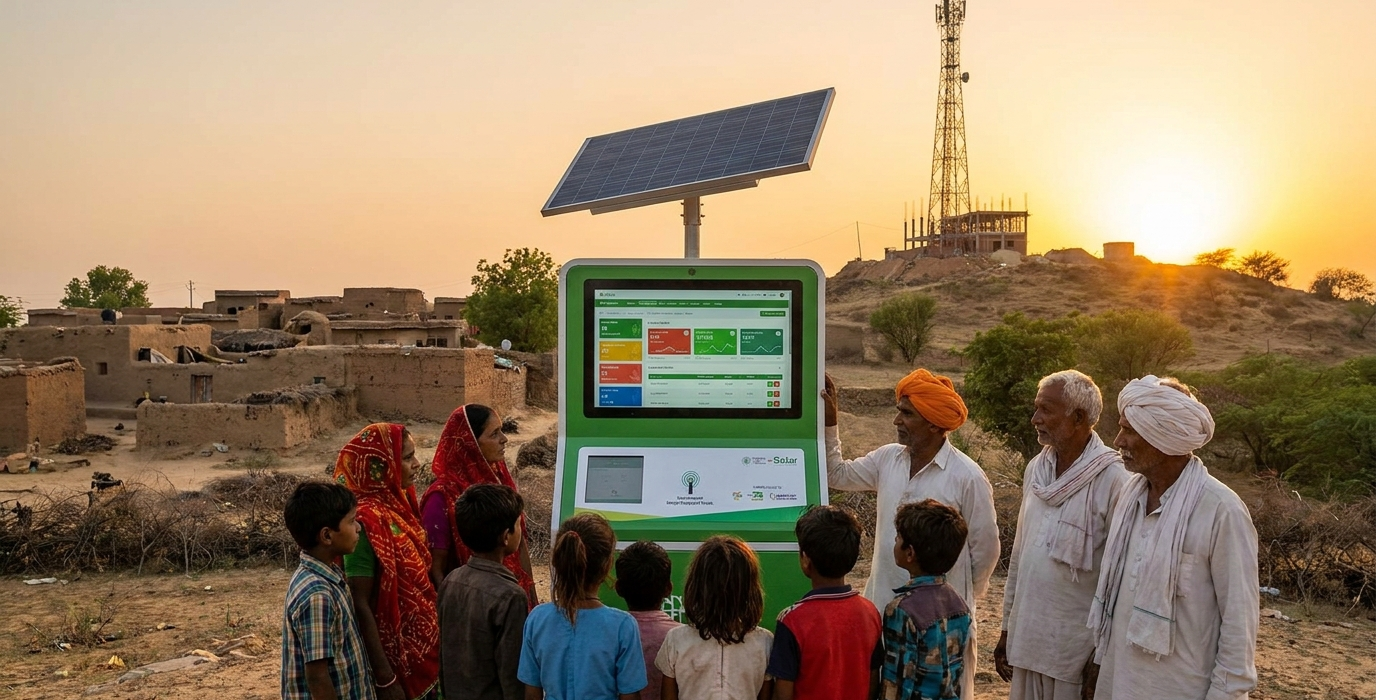
We are also witnessing the development of community-based Wi-Fi hubs powered by satellite internet. In these models, a single satellite connection serves multiple households, significantly reducing the individual cost burden. This approach fosters a sense of shared access and encourages local digital adoption, creating micro-ecosystems of digital engagement.
Digital Literacy: Empowering Citizens for the 21st Century
Access to the internet is only the first step; the true measure of Digital India’s success in 2026 lies in its citizens’ ability to effectively utilize this powerful tool. Digital literacy programs are therefore receiving renewed emphasis, targeting not just the youth but also the elderly and those in rural areas who may have had limited exposure to technology. Initiatives like ‘Digital Saksharta Abhiyan’ (DISHA) are being scaled up and adapted to local needs and languages.
These programs go beyond basic computer skills. They focus on teaching individuals how to navigate the internet safely, identify misinformation, access government services online, and leverage digital platforms for economic opportunities. For instance, training farmers on using weather forecasting apps or helping artisans market their crafts online are becoming integral components of these literacy drives. The goal is to equip every Indian with the confidence and competence to participate fully in the digital economy.
A fascinating aspect of the current digital literacy push is the use of gamification and vernacular content. Instead of traditional classroom settings, many programs now employ interactive apps and games that teach digital concepts in local languages. This makes learning more engaging and accessible, especially for those who may be intimidated by formal training methods. We’ve also seen the rise of community-led digital ambassadors who act as local points of contact for digital guidance.
Sub-heading: Bridging the Generational Gap
Special focus is being placed on bridging the generational gap in digital adoption. While younger generations often adapt quickly, many older citizens may feel left behind. Programs are being designed to specifically address their needs, often focusing on practical applications like online banking, communicating with family via video calls, and accessing health information. The warmth and patience of digital volunteers are proving invaluable in building trust and encouraging participation.
The integration of digital literacy into existing community structures, such as Self-Help Groups (SHGs) and village cooperatives, is proving particularly effective. This leverages existing social networks and trusted community leaders to disseminate knowledge and encourage adoption. It transforms digital learning from an isolated task into a collective endeavour.
The Economic Ripple Effect: Opportunities in Digital Bharat
The expansion of digital infrastructure and literacy in rural India is creating a significant economic ripple effect in 2026. Small businesses and entrepreneurs are leveraging the internet to expand their reach beyond local markets, accessing new customer bases and supply chains. E-commerce platforms are seeing a surge in participation from rural artisans, farmers, and small manufacturers, allowing them to sell their products directly to consumers across the country and even internationally.
This increased connectivity is also boosting the gig economy and the service sector in rural areas. Individuals can now offer their skills and services online, from content writing and graphic design to virtual assistance and customer support. This diversification of income sources is vital for rural economic development and provides new avenues for employment, particularly for young people.
We’ve encountered incredible stories of rural entrepreneurs who, with just a smartphone and internet access, have built thriving businesses. Consider a small weaver from Kanchipuram who now supplies her exquisite silk sarees to customers in Mumbai and Delhi through online platforms, or a farmer in Maharashtra who uses an app to track market prices and sell his produce directly to food processing units, cutting out middlemen. These are not isolated incidents; they represent a growing trend.
Sub-heading: Digital Payments and Financial Inclusion
The widespread adoption of digital payments, facilitated by initiatives like UPI (Unified Payments Interface), has been a game-changer. In 2026, even in the most remote villages, transactions are increasingly becoming cashless. This enhances transparency, reduces leakage, and provides greater financial security for individuals and small businesses. It also integrates more people into the formal financial system, paving the way for easier access to credit and other financial services.
The government’s continued push for digital identity solutions, like Aadhaar, further strengthens this ecosystem. Coupled with mobile banking and simplified payment gateways, it creates a robust framework for financial inclusion. This is particularly impactful for women in rural areas, empowering them with greater control over their finances and economic independence.
Looking Ahead: Challenges and Opportunities in 2026 and Beyond
While the progress in 2026 is commendable, the journey towards complete digital inclusion is ongoing, presenting its own set of challenges. Ensuring the long-term sustainability of rural connectivity infrastructure, particularly in difficult terrains, remains a significant hurdle. Furthermore, the cybersecurity landscape is constantly evolving, demanding robust measures to protect citizens from online threats and data breaches.
We must also address the issue of digital inequality within communities. While overall connectivity improves, ensuring equitable access for all, regardless of socio-economic status, gender, or disability, requires continuous effort. This means not just providing access but also ensuring affordability and relevance of digital services for diverse user groups.
The potential for further innovation is immense. We are exploring the use of AI and machine learning to personalize digital learning experiences and to provide more targeted support for rural businesses. The integration of IoT (Internet of Things) devices in agriculture and rural infrastructure promises to further enhance efficiency and resource management. The vision of a digitally empowered India is not a distant dream; it is a tangible reality that we are actively shaping, day by day.
“In 2026, the true measure of Digital India’s success isn’t just the number of internet connections, but the number of lives transformed by them – the student learning, the entrepreneur selling, the farmer accessing vital information.”
Frequently Asked Questions
What is the current status of BharatNet in rural India?
By mid-2026, BharatNet has connected a significant majority of Gram Panchayats with optical fibre. The focus is now on enhancing last-mile connectivity to individual households and businesses, with innovative solutions like Wi-Fi hotspots and satellite internet playing a crucial role in extending reach to the most remote areas.
How is digital literacy being promoted in rural areas?
Digital literacy is being promoted through scaled-up government programs like DISHA, often utilizing gamification, vernacular content, and community-led initiatives. These programs focus on practical skills, online safety, and leveraging digital tools for economic and social empowerment, targeting all age groups.
What role does satellite internet play in India’s digital inclusion efforts?
Satellite internet is crucial for connecting areas where laying fibre optic cables is impractical or too costly, such as high-altitude regions or dense forests. It offers high-speed access for education, healthcare, and governance, with ongoing efforts to reduce costs and improve affordability for rural communities.
Are there specific initiatives to support rural entrepreneurs digitally?
Yes, numerous initiatives are focused on empowering rural entrepreneurs. This includes facilitating access to e-commerce platforms, providing training on digital marketing, and promoting digital payment solutions like UPI to help them reach wider markets and improve their economic prospects.