Key Takeaways
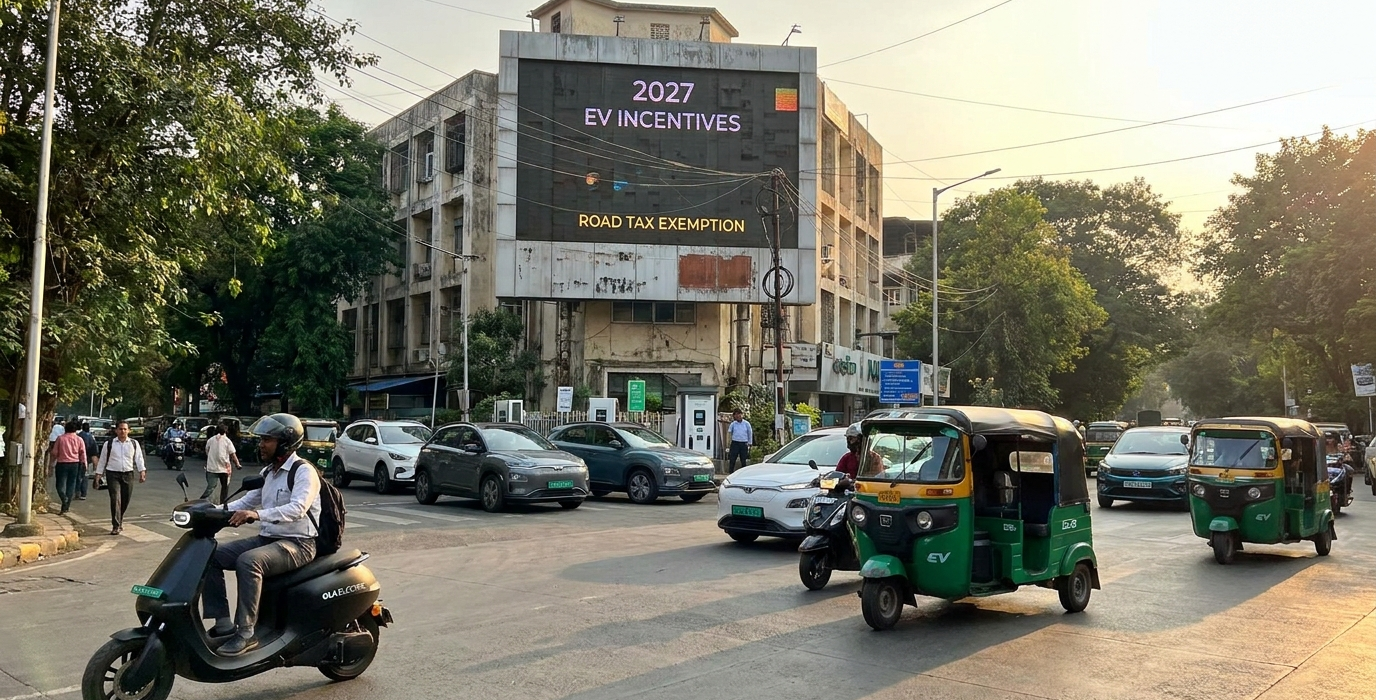
- Significant road tax exemptions for electric vehicles (EVs) are anticipated to continue and potentially expand beyond 2027, driven by national climate goals and evolving state policies.
- While central government policies like FAME III are crucial, individual state governments are increasingly setting their own EV adoption targets, leading to a patchwork of incentives.
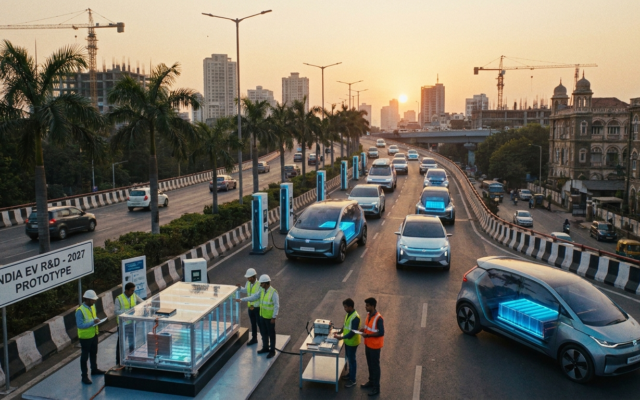
- Beyond tax breaks, expect a surge in public charging infrastructure, battery swapping advancements, and local manufacturing support in key EV hubs like Gujarat, Tamil Nadu, and Maharashtra.
- For consumers, this means lower upfront costs and reduced running expenses, making EV ownership increasingly attractive, especially for two- and three-wheeler segments.
The Shifting Landscape of EV Road Tax in India: Beyond 2027
The buzz around electric vehicles (EVs) in India is no longer a whisper; it’s a growing hum that promises to reshape our commutes and our nation’s energy future. As we stand in mid-2026, the question on many minds, from the bustling streets of Mumbai to the tranquil lanes of Kochi, is: what happens to the crucial road tax exemptions for EVs after their current tenure? The good news is, the momentum is strong, and a complete rollback of these incentives seems highly unlikely.
India’s commitment to its ambitious climate targets, particularly those outlined in its Nationally Determined Contributions (NDCs) under the Paris Agreement, places EVs at the forefront of its decarbonization strategy. These tax benefits, often hailed as a significant driver for early adoption, are more than just a perk; they are a strategic tool designed to nudge consumers towards cleaner transportation. Governments, both at the Centre and in the states, recognize that sustained incentives are vital to bridge the initial cost gap between EVs and their internal combustion engine (ICE) counterparts.
We are already seeing states like Delhi and Telangana extend their road tax waivers well into the future, some even offering 100% exemption for electric two-wheelers and cars. This trend is not isolated. Other states are actively reviewing their policies, with discussions around extending existing waivers or introducing new ones gaining traction. The narrative is shifting from a temporary push to a more permanent integration of EVs into India’s automotive ecosystem. Therefore, expecting a complete disappearance of these benefits post-2027 would be premature and, frankly, contrary to the nation’s overarching green agenda.
State-Led Initiatives: A Patchwork of Progress
While national policies like the Faster Adoption and Manufacturing of (Hybrid &) Electric Vehicles (FAME) scheme have been instrumental, the true dynamism in EV incentives is increasingly originating from individual states. As of 2026, we’re witnessing a fascinating divergence in how states are approaching EV adoption, creating a nuanced landscape for consumers and manufacturers alike. This state-led approach allows for tailored policies that cater to local needs and existing industrial strengths.
Consider the proactive stance of states like Gujarat and Tamil Nadu, which have not only offered attractive road tax and registration fee waivers but have also aggressively pursued policies to attract EV manufacturing. Their industrial policies often include substantial subsidies and support for setting up battery plants and assembly units. This dual approach – incentivizing demand through tax breaks and boosting supply through manufacturing support – is proving to be a potent combination.
On the other hand, states like Uttar Pradesh are focusing heavily on electrifying their vast public transport fleets and commercial vehicle segments, often coupling tax benefits with schemes for fleet operators. This means that while the overarching goal of promoting EVs remains constant, the specific benefits and the ease of availing them can vary significantly from one state to another. For a consumer in Punjab looking to buy an electric scooter, the road tax exemption might be straightforward, but the availability of charging infrastructure or local subsidies could differ from a similar purchase in Kerala. Understanding these state-specific nuances is becoming increasingly critical for anyone considering an EV purchase in the coming years.
Beyond Tax Breaks: The Expanding Ecosystem of Support
The conversation around EV incentives in India is rapidly evolving beyond mere road tax exemptions. By 2027, we anticipate a far more comprehensive ecosystem of support that addresses the entire lifecycle of an electric vehicle, from purchase to disposal. This holistic approach is essential for mainstream adoption, moving beyond early adopters and into the broader Indian consumer base.
One of the most significant areas of development will be charging infrastructure. While the current FAME scheme has provided a push, the next phase will likely see substantial private sector investment, spurred by government mandates and public-private partnerships. Expect to see charging stations proliferate not just in major metros like Bengaluru and Hyderabad, but also along national highways and in Tier-2 and Tier-3 cities. Some states are even exploring innovative models like battery swapping stations for electric two-wheelers and three-wheelers, which can dramatically reduce charging times and upfront battery costs.
Furthermore, local manufacturing of EVs and their components, especially batteries, is set to receive a major boost. Initiatives like the Production Linked Incentive (PLI) schemes are designed to make India a global hub for EV production. This will not only drive down vehicle costs through economies of scale but also create a robust supply chain, reducing reliance on imports. The goal is to make EVs not just an environmentally sound choice, but also an economically sensible one, supported by a robust and localized ecosystem.
Impact on Consumer Affordability and Choice
The continuation and potential expansion of road tax exemptions, coupled with other evolving incentives, are poised to make electric vehicles significantly more affordable and attractive for the average Indian consumer by 2027. This is particularly crucial for the two-wheeler and three-wheeler segments, which form the backbone of personal and commercial mobility in many parts of India.
Currently, the upfront cost of an EV can be a deterrent. However, when you factor in the savings from zero road tax, reduced registration fees, and lower GST rates (often 5% for EVs compared to 28% plus cess for ICE vehicles), the total cost of ownership begins to tilt favorably towards electric. For instance, a family in Chennai considering an electric car might save anywhere from ₹1 lakh to ₹2 lakh over the vehicle’s lifetime due to these tax benefits alone, depending on the vehicle’s price and state policies.
Moreover, the projected increase in the variety of EV models available across different price points, driven by expanding local manufacturing and competitive pressures, will offer consumers more choices than ever before. We’re moving beyond a niche market to a situation where an electric option will be viable for a much wider spectrum of buyers, from budget-conscious commuters to families seeking a sustainable and cost-effective primary vehicle. The sustained incentives are effectively democratizing EV ownership.
The Role of FAME III and Future Policy Frameworks
As we look beyond 2027, the role of centrally-driven schemes like FAME will undoubtedly evolve. While FAME I and FAME II have laid a strong foundation, the upcoming FAME III and subsequent policy frameworks are expected to address emerging challenges and opportunities in the EV sector. The focus will likely shift from initial market creation to fostering a mature and self-sustaining EV ecosystem.
Key areas that FAME III and future policies are anticipated to target include scaling up charging infrastructure to meet growing demand, promoting domestic battery manufacturing and recycling, and developing skilled manpower for EV maintenance and repair. There’s also a growing conversation around performance-based incentives rather than just purchase subsidies, encouraging manufacturers to focus on vehicle efficiency, range, and durability.
Beyond tax exemptions, we might see policies that encourage faster adoption of electric buses for public transport, incentives for last-mile delivery fleets to transition to electric, and even schemes to incentivize the retrofitting of existing ICE vehicles into electric ones. The government’s strategy is becoming more sophisticated, aiming to weave EVs into the fabric of India’s energy security and economic growth, ensuring that the momentum built in the early 2020s continues robustly.
Surprising Facts and Emerging Trends
While the broad strokes of EV growth are well-understood, several surprising facts and emerging trends are shaping the future of road tax and incentives in India. One such fascinating development is the emergence of “charging-as-a-service” models gaining traction, where consumers pay a monthly subscription for unlimited charging rather than per-unit consumption. This could further reduce the perceived running cost barrier for EVs, making them even more competitive against traditional vehicles.
Another unexpected yet significant trend is the focus on “battery as a service” (BaaS) for electric two-wheelers. Companies are exploring models where the battery is leased separately from the vehicle, drastically reducing the upfront purchase price of the scooter or motorcycle. This, combined with ongoing tax benefits, could make electric two-wheelers as affordable as their petrol counterparts upfront, a game-changer for mass adoption in cities like Pune and Lucknow.
Furthermore, while many states offer blanket exemptions, a few are beginning to experiment with performance-linked tax benefits. This means that EVs that achieve higher efficiency ratings or longer ranges might qualify for greater tax concessions. This policy shift aims to encourage manufacturers to invest in better technology, pushing the boundaries of EV performance in India. These subtle yet impactful shifts indicate a maturing policy environment that is both adaptive and forward-thinking.
“The road tax exemptions are just the tip of the iceberg. The real revolution lies in the integrated ecosystem of charging, manufacturing, and battery innovation that will make EVs the default choice for most Indians by the end of this decade.”
Frequently Asked Questions
Will road tax exemptions for EVs continue after 2027 in India?
It is highly probable that road tax exemptions for electric vehicles (EVs) will continue beyond 2027. Driven by national climate goals and strong state-level support, these incentives are seen as crucial for sustained EV adoption. While the exact nature and duration may vary by state, a complete rollback is unlikely.
Which Indian states offer the best EV tax benefits currently?
States like Delhi, Telangana, and Maharashtra are currently recognized for offering some of the most attractive EV tax benefits, including significant road tax and registration fee waivers, often extending for several years or even the lifetime of the vehicle for certain categories. However, policies are dynamic, so checking the latest state-specific announcements is always recommended.
How do EV incentives impact the overall cost of ownership compared to petrol vehicles?
EV incentives, including road tax exemptions, lower GST rates, and reduced registration fees, significantly reduce the total cost of ownership over the vehicle’s lifespan. When combined with lower running costs due to cheaper electricity and reduced maintenance, EVs become more economical than their petrol counterparts, despite potentially higher upfront purchase prices.
Are there any specific EV segments that benefit most from current tax exemptions?
Electric two-wheelers and three-wheelers generally benefit most from current tax exemptions, as many states offer 100% waivers for these segments. This is crucial for making them affordable for a large segment of the Indian population, driving mass adoption for personal commuting and last-mile deliveries.