Key Takeaways
- AI-powered drones are set to significantly boost agricultural yields across India by 2027, offering precision spraying, targeted irrigation, and early disease detection.
- Emerging AI solutions are making farming more sustainable, reducing water and pesticide usage, and improving soil health management.
- Startups and government initiatives are driving the adoption of these technologies, with increasing accessibility for smallholder farmers.
- Data analytics and AI-driven insights are empowering farmers to make smarter, more informed decisions about crop management and market trends.
The Sky’s the Limit: Drones as Your New Farmhands
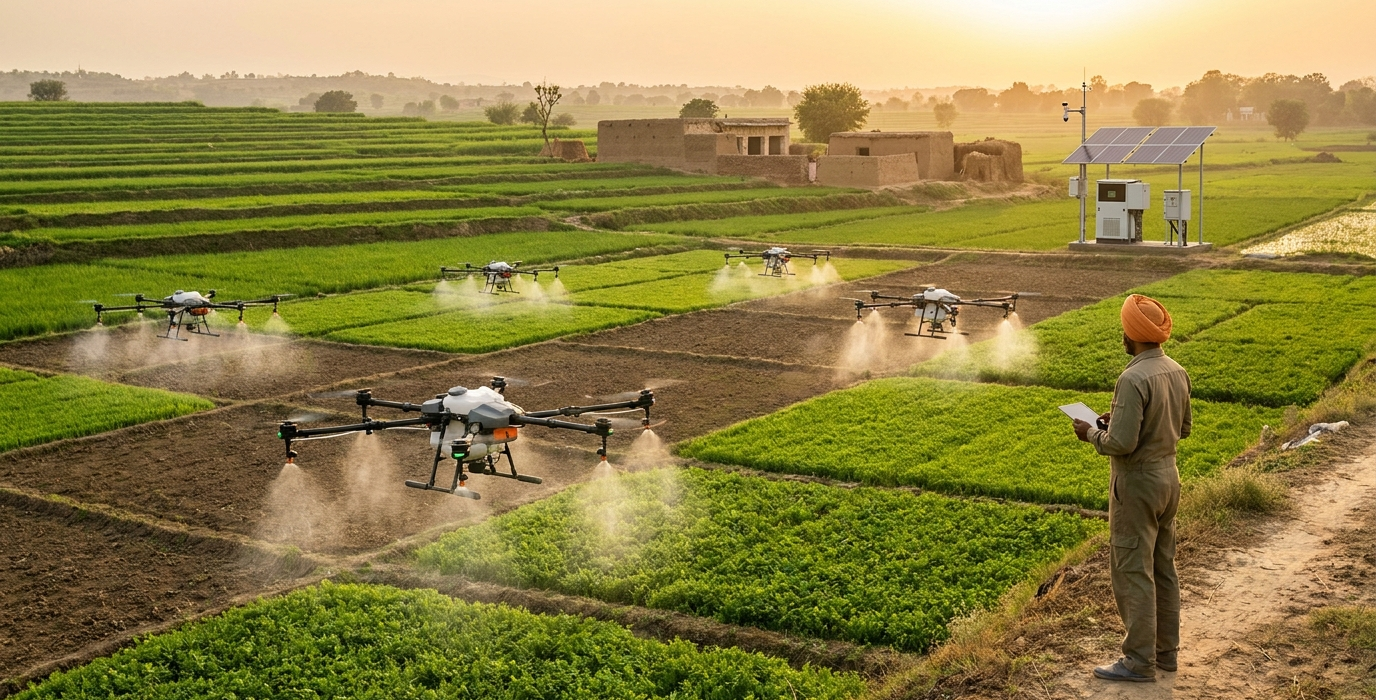
Imagine a future where your fields are monitored and managed by intelligent machines, flying high above. This isn’t science fiction anymore; it’s the rapidly evolving reality of Indian agriculture in 2026. AI-powered drones are no longer a novelty but a crucial tool poised to redefine crop yields by 2027. These aerial assistants offer unparalleled precision, revolutionising everything from planting to harvest.
They can meticulously map your land, identifying nutrient deficiencies or areas requiring more water with pinpoint accuracy. This level of detail was unimaginable just a few years ago for many farmers. The drones then execute tasks like spraying pesticides or fertilisers with extreme precision, ensuring no wastage and minimal environmental impact. This targeted approach means healthier crops and significant cost savings. You’re no longer broadcasting expensive chemicals across entire fields, hoping for the best.
The data these drones collect is gold. They can spot early signs of pest infestations or diseases that might be invisible to the naked eye. This allows for proactive intervention, preventing widespread damage and saving potentially entire harvests. For farmers in regions like Punjab or the Cauvery Delta, where agricultural output is critical, this early warning system is a game-changer. It’s about moving from reactive problem-solving to intelligent, predictive management of your farm.
Precision Agriculture: Water, Nutrients, and the Power of Data
Beyond just aerial surveillance, AI is driving a wave of precision agriculture that’s transforming how you manage vital resources. Think about water, a precious commodity, especially in drought-prone areas like Marathwada or Rajasthan. AI-driven irrigation systems, often integrated with drone data or ground sensors, can now deliver water exactly when and where it’s needed. This means optimised water usage, drastically reducing waste and ensuring crops receive consistent hydration.
The same principle applies to fertilisers and soil nutrients. AI algorithms analyse soil samples and crop health data to recommend precise nutrient application. This not only boosts crop quality and yield but also prevents the overuse of chemical fertilisers, which can degrade soil health over time. Healthy soil is the foundation of sustainable farming, and AI is helping you rebuild and maintain it.
Furthermore, AI is enabling sophisticated crop monitoring. Machine learning models can learn to identify specific crop varieties and assess their growth stages and health. This allows for tailored interventions for different parts of your field, recognising that not all areas of a farm behave identically. This granular approach to farm management is a significant departure from traditional, one-size-fits-all methods.
Early Detection: Your AI Shield Against Pests and Diseases
One of the most impactful applications of AI in agriculture today is its ability to detect and predict threats to your crops. Pests and diseases can spread like wildfire, decimating yields and causing immense financial distress. AI-powered imaging and sensor technology on drones and ground-based devices can identify subtle changes in leaf colour, texture, or growth patterns that signal the onset of a problem.
These systems are trained on vast datasets of crop images, allowing them to recognise specific pathogens or insect infestations with remarkable accuracy. This means you can receive an alert about a potential outbreak days, or even weeks, before it becomes a visible crisis. This early warning allows for timely and targeted treatment, often with less potent, more eco-friendly solutions.
Consider the challenges faced by farmers in the tea gardens of Darjeeling or the spice plantations of Kerala. A single undetected disease can affect an entire season’s yield. AI acts as your vigilant sentry, providing an early warning system that protects your livelihood. This proactive defence mechanism is proving to be far more effective and cost-efficient than traditional, reactive pest control methods.
Empowering Farmers: Accessibility and the Rise of Agri-Tech Startups
The narrative surrounding AI in agriculture is increasingly one of empowerment, not exclusion. While advanced technology might seem daunting, a burgeoning ecosystem of Indian agri-tech startups is focused on making these solutions accessible and user-friendly for farmers of all scales. Many of these companies offer subscription-based services or pay-per-use models, reducing the upfront investment barrier.
Government initiatives and subsidies are also playing a vital role in encouraging the adoption of these technologies. Programs aimed at digitising agriculture and supporting farmer producer organisations (FPOs) are providing training and financial assistance. This is crucial for bridging the digital divide and ensuring that smallholder farmers in regions like Uttar Pradesh or Bihar can also benefit.
Moreover, the user interfaces for these AI-powered tools are becoming increasingly intuitive. Many now feature simplified mobile apps that provide clear, actionable insights in local languages. You don’t need to be a tech expert to benefit; the technology is being designed to work for you. This democratisation of AI is key to its widespread success and its ability to uplift the entire agricultural sector.
Smart Decisions: AI-Driven Insights for Better Profitability
AI in agriculture is not just about optimising field operations; it’s also about making smarter business decisions. By analysing vast amounts of data – from weather patterns and soil conditions to market prices and consumer demand – AI can provide farmers with predictive insights that enhance profitability. This is about moving beyond intuition to data-backed strategic planning.
For instance, AI algorithms can help you decide the optimal time to plant and harvest specific crops based on predicted weather and market trends. They can also identify the most profitable crop rotations for your specific land and market conditions. This kind of foresight can significantly increase your revenue and reduce the risk of market volatility.
Consider a farmer in Maharashtra deciding whether to plant more cotton or soybeans for the next season. AI can process historical data, current market prices, and even global demand forecasts to offer a well-informed recommendation. This data-driven approach helps you minimise risks and maximise potential returns. It’s like having a seasoned agricultural economist at your fingertips, available 24/7.
Sustainable Futures: AI’s Role in Eco-Friendly Farming
The push towards sustainable agriculture is gaining momentum globally, and AI is at the forefront of this movement in India. By enabling precision in resource management, AI directly contributes to reducing the environmental footprint of farming. Less water used means less strain on local water tables. Precisely applied fertilisers and pesticides mean less chemical runoff into our rivers and soil.
AI also plays a role in optimising crop yields without necessarily increasing land use. This is critical for preserving biodiversity and natural habitats. By getting more from existing farmland, we reduce the pressure to convert forests or grasslands into agricultural areas. This is a vital step in our collective effort to combat climate change.
Furthermore, AI is being used to develop more resilient crop varieties that can withstand extreme weather conditions exacerbated by climate change. By analysing genetic data and environmental factors, researchers are identifying traits that can improve drought resistance or heat tolerance. This forward-looking application ensures food security for the future, making our agricultural systems more robust against environmental challenges.
Frequently Asked Questions
What is the current adoption rate of AI in Indian agriculture?
While precise figures are still emerging, adoption is growing rapidly. Early adopters are primarily large agricultural enterprises and progressive FPOs. However, with increasing accessibility and government support, we anticipate a significant surge in adoption among smallholder farmers in the coming 2-3 years, particularly for drone services and AI-powered advisory platforms.
How much does AI technology cost for an average Indian farmer?
Costs vary significantly depending on the technology. Basic AI-powered advisory apps can be accessed for a nominal subscription fee or sometimes even for free through government schemes. Drone services are often offered on a pay-per-acre or per-mission basis, making them affordable for seasonal use. For larger investments in automated irrigation or sensor networks, initial costs can be higher, but long-term savings in resources and increased yields often provide a strong return on investment.
Are AI tools available in regional Indian languages?
Yes, a growing number of Indian agri-tech companies are prioritising multilingual support. Many AI-powered apps and advisory platforms now offer interfaces and content in major regional languages like Hindi, Tamil, Telugu, Marathi, and Bengali. This is a critical step towards ensuring that technology is truly accessible and understandable to farmers across diverse linguistic backgrounds.
What are the biggest challenges to AI adoption in Indian agriculture?
Key challenges include the digital literacy of farmers, ensuring reliable internet connectivity in rural areas, and the initial cost of some technologies. Building trust in new technologies and providing adequate training and ongoing support are also crucial. Overcoming these hurdles will require continued collaboration between technology providers, government agencies, and agricultural communities.
Can AI help with crop insurance and risk management?
Absolutely. AI can analyse historical yield data, weather patterns, and satellite imagery to provide more accurate crop health assessments, which can streamline insurance claim processes. It can also help insurers develop more nuanced risk models, potentially leading to fairer premiums and faster payouts for farmers. This data-driven approach enhances transparency and efficiency in crop insurance.