The Dawn of the Smart Farm: AI Arrives in India’s Fields
For centuries, Indian agriculture has been a dance with the elements – the monsoon’s fickle favour, the soil’s unyielding nature, the ever-present threat of pests and diseases. Farmers, the backbone of our nation, have relied on generations of wisdom, intuition, and sheer hard work. But a new partner is stepping onto the field, one that promises to transform this age-old rhythm: Artificial Intelligence (AI). This isn’t science fiction anymore; AI is actively working in Indian fields, from the paddy terraces of Kerala to the wheat fields of Punjab, ushering in an era of unprecedented efficiency and potential prosperity.
Imagine a farmer receiving real-time advice on their mobile phone, tailored to their specific plot of land, telling them exactly when to irrigate, which nutrient is lacking, or if a disease is brewing before it even becomes visible. This is the power of AI-driven agricultural solutions, and it’s no longer a distant dream. These technologies are making farming smarter, more predictable, and crucially, more profitable for the very people who feed us. We’re talking about a revolution that’s not just about technology, but about empowering farmers with data-driven insights that were once the exclusive domain of large corporations.
The sheer scale of Indian agriculture, with its diverse agro-climatic zones and millions of smallholder farmers, presents unique challenges. However, it also offers a fertile ground for AI to demonstrate its transformative potential. From predicting crop yields with remarkable accuracy to optimizing resource usage and even connecting farmers directly to markets, AI is poised to reshape the agricultural landscape in ways we are only just beginning to comprehend. This is not about replacing the farmer’s expertise, but about augmenting it, giving them tools to navigate an increasingly complex and volatile world.
The narrative of AI in agriculture often focuses on high-tech gadgets and complex algorithms. While these are certainly part of the story, the real impact lies in making these sophisticated tools accessible and understandable to the average Indian farmer. Startups and research institutions across India are working tirelessly to develop user-friendly platforms that translate complex data into actionable advice, often in local languages. This democratisation of AI is key to its widespread adoption and its ability to truly uplift the farming community.
Precision Farming: The Magic of Micro-Management
The concept of precision farming, often enabled by AI, is a game-changer. Instead of treating an entire field uniformly, AI allows farmers to manage it at a granular level, sometimes down to a single plant. This means applying water, fertilizers, and pesticides only where and when they are needed, in the precise amounts required. This not only leads to significant cost savings on inputs but also drastically reduces environmental impact.
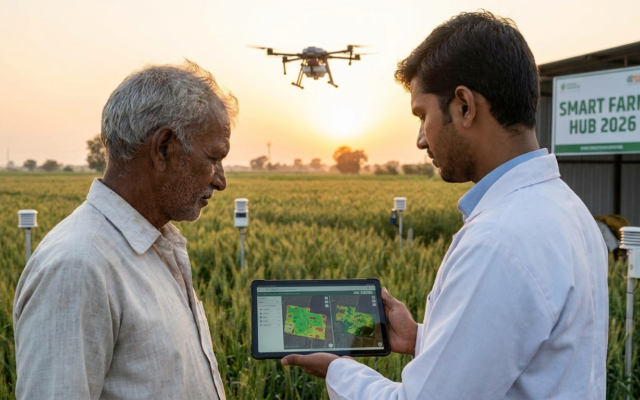
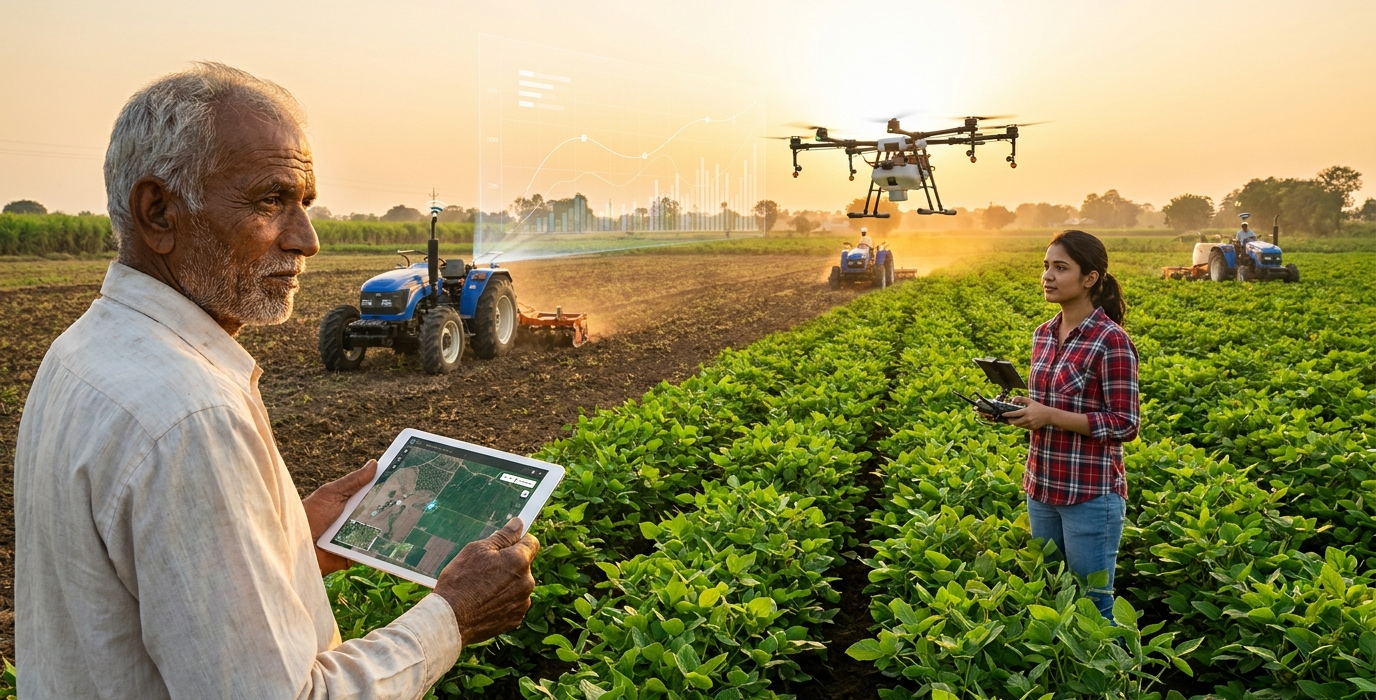
Consider satellite imagery and drone technology. AI algorithms analyze the data captured by these sources to create detailed maps of a farm. These maps can reveal variations in soil health, crop vigour, and even identify areas prone to waterlogging or nutrient deficiency. A farmer in Maharashtra, for example, can use this information to irrigate specific zones of their sugarcane field that are showing signs of stress, rather than flooding the entire area. This intelligent application of resources is a far cry from traditional, broad-stroke farming practices.
Furthermore, AI-powered pest and disease detection systems are becoming increasingly sophisticated. Instead of relying on visual inspection, which can often miss early signs, AI can analyze images captured by cameras on drones or even smartphones. These systems can identify the tell-tale patterns of specific pests or diseases with remarkable accuracy, often before they become a visible threat to the entire crop. Early detection, as we all know, is crucial for effective and less resource-intensive management. This means farmers can intervene with targeted treatments, saving both the crop and their investment.
One surprising fact is how AI is helping to optimize the application of fertilizers. By analyzing soil composition and crop needs, AI can recommend specific blends and application timings, leading to a reduction in nitrogen fertilizer use by up to 20% in some studies. This not only saves money but also reduces the environmental burden associated with excess nitrogen runoff, a significant issue in many agricultural regions.
Predictive Analytics: Forecasting the Future of Harvests
The unpredictability of weather has always been a farmer’s greatest adversary. But AI is equipping them with the ability to forecast and mitigate risks associated with changing climate patterns. Predictive analytics, powered by machine learning algorithms, can analyze vast datasets including historical weather data, current meteorological conditions, and even satellite-based climate models to provide highly localized forecasts.
This means a farmer in Rajasthan can receive an alert predicting a severe heatwave weeks in advance, allowing them to take protective measures for their crops, such as increasing shade cover or adjusting irrigation schedules. Similarly, predictions of unseasonal rainfall can help farmers in the Western Ghats decide on the optimal time to harvest their spices, minimizing spoilage and maximizing quality.
Beyond weather, AI can also predict crop yields with impressive accuracy. By factoring in variables like soil type, seed quality, planting density, and weather patterns, AI models can provide estimates of the expected harvest. This information is invaluable for farmers, enabling them to plan their logistics, storage, and marketing strategies effectively. Imagine knowing, with reasonable certainty, how much your harvest will be, allowing you to negotiate better prices with buyers or arrange for timely transportation to markets in cities like Chennai or Kolkata.
This predictive power extends to market trends as well. AI can analyze consumer demand, commodity prices, and supply chain dynamics to advise farmers on which crops might be most profitable to cultivate in the upcoming season. This shift from reactive to proactive decision-making is crucial for ensuring farmer livelihoods in a competitive global market.
Resource Optimization: Doing More with Less
Water scarcity is a growing concern across India, particularly in arid and semi-arid regions. AI-driven irrigation systems offer a powerful solution to this challenge. By integrating data from soil moisture sensors, weather forecasts, and the specific water needs of different crops, AI can automate irrigation, ensuring that water is delivered precisely when and where it’s needed, and in the optimal quantity. This dramatically reduces water wastage compared to traditional flood or sprinkler irrigation methods.
A farmer in Gujarat, for instance, can utilize an AI system that monitors soil moisture levels in their cotton fields. The system will then automatically trigger irrigation only when the soil reaches a pre-defined dryness threshold, preventing over-watering and conserving precious water resources. This intelligent approach not only saves water but also improves crop health by preventing issues like root rot caused by excessive moisture.
The optimization of fertilizer and pesticide usage is another significant benefit. As mentioned earlier, AI can ensure that these inputs are applied only when necessary and in the correct doses. This targeted application minimizes the risk of crop damage from over-application and reduces the environmental pollution that can result from excessive chemical runoff into soil and water bodies. This is particularly important for organic farmers looking to maintain their certifications while ensuring crop health and yield.
A surprising aspect of resource optimization through AI is its role in seed selection. AI algorithms can analyze genetic data and environmental suitability to recommend the best seed varieties for specific regions and soil types, leading to higher germination rates and more robust plant growth. This ensures that farmers are investing in the most promising seeds for their land, maximizing their chances of a successful harvest right from the start.
AI-Powered Insights for Smallholder Farmers
The narrative of AI in agriculture often conjures images of large, automated farms. However, the true potential for impact in India lies in empowering the millions of smallholder farmers who form the backbone of our food security. AI solutions are increasingly being designed with this demographic in mind, focusing on affordability, accessibility, and user-friendliness.
Mobile-based AI applications are leading the charge. These platforms can provide farmers with personalized advice, pest and disease alerts, and market price information directly on their smartphones, often in their local dialect. A farmer in a remote village in Odisha can receive an audio alert about an impending pest infestation and get immediate guidance on how to combat it, all through a simple voice command or a few taps on their phone.
These AI tools are not just about providing information; they are about fostering a data-driven mindset. By offering insights into crop performance, resource usage, and potential risks, AI helps farmers make more informed decisions, moving away from traditional, often speculative, practices. This gradual shift can lead to a significant increase in their income and a reduction in crop losses.
Furthermore, AI is being used to create digital marketplaces that connect farmers directly with consumers and businesses, bypassing intermediaries. This can lead to better prices for their produce and reduce post-harvest losses. Imagine a farmer in Tamil Nadu being able to list their surplus onions on an AI-powered platform and secure a buyer in Bangalore within hours, ensuring fresh produce reaches consumers and the farmer gets a fair price.
A truly remarkable, albeit less publicized, application of AI is in its ability to help farmers access credit and insurance more easily. By analyzing historical farm data, yield patterns, and market prices, AI can provide lenders and insurers with a more accurate assessment of risk, making it easier for smallholder farmers to obtain financial products that were previously out of reach.
The Road Ahead: Challenges and Opportunities
While the promise of AI in Indian agriculture is immense, we cannot ignore the challenges that lie ahead. Widespread adoption requires robust digital infrastructure, including reliable internet connectivity and affordable smartphones, especially in rural areas. Bridging the digital divide is paramount to ensuring that the benefits of AI reach every farmer, regardless of their location or socio-economic status.
Farmer education and training are also critical. Many farmers may be hesitant or unfamiliar with new technologies. Comprehensive training programs that demonstrate the practical benefits of AI tools, delivered in a language and format they understand, will be essential for building trust and encouraging uptake. This is where government initiatives and collaborations with agricultural universities and NGOs play a vital role.
Data privacy and security are also important considerations. As AI systems collect vast amounts of data about farms and farmers, ensuring that this information is protected and used ethically is crucial. Clear regulations and robust security measures need to be in place to safeguard farmers’ sensitive data.
Despite these challenges, the opportunities presented by AI in Indian agriculture are too significant to ignore. From enhancing crop yields and improving resource efficiency to increasing farmer incomes and ensuring food security for a growing population, AI has the potential to be a true catalyst for change. As we move forward, a collaborative approach involving technology providers, government agencies, researchers, and, most importantly, the farmers themselves will be key to unlocking the full potential of this revolution and ensuring a brighter, more sustainable future for Indian agriculture.