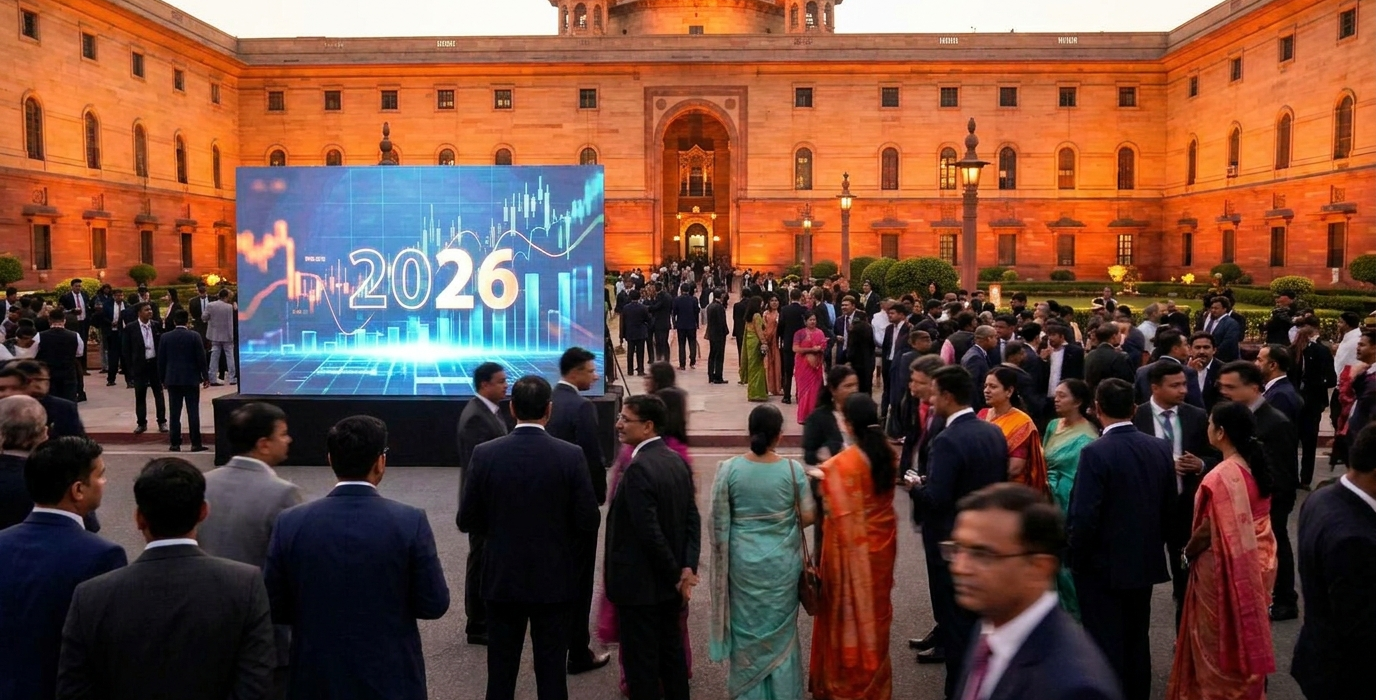
The Countdown Begins: Unpacking the Likely Date for India’s 2026 Budget
As the dust settles on the current fiscal year, attention inevitably turns towards the horizon, specifically to the Union Budget for 2026. While an official announcement is still some months away, the Indian financial calendar follows a predictable rhythm. You can confidently expect the Finance Minister to present the next full Union Budget in the first week of February 2026.
This timing is not arbitrary. It aligns with the constitutional requirement to lay the budget before Parliament, typically happening around this period to allow for ample discussion, debate, and eventual enactment before the new financial year commences on April 1st. This allows government ministries and departments crucial time to plan their expenditure and allocate resources effectively for the upcoming year.
The interim budget, often presented in a general election year, would have preceded this full budget. However, once the new government is formed after the 2024 general elections, the focus will squarely shift to formulating a comprehensive financial blueprint for 2026. This is the moment when the government outlines its economic vision, fiscal priorities, and policy initiatives for the nation.
Understanding this timeline is vital for businesses, investors, and citizens alike. It provides a crucial window for anticipation, preparation, and strategic planning. Whether you are a startup looking for incentives, a farmer anticipating agricultural support, or an individual planning your investments, knowing when the budget will be unveiled allows you to align your expectations and actions.
The anticipation surrounding the budget is palpable each year. It’s a document that can significantly influence the economic trajectory of the country, impacting everything from inflation rates to job creation. The forthcoming 2026 budget will undoubtedly carry immense weight, setting the tone for economic development and social welfare initiatives for the coming year.
Decoding the Economic Pulse: Key Focus Areas for the 2026 Budget
As we look ahead to the Union Budget 2026, several key themes are likely to dominate the discourse and policy decisions. Given India’s current economic landscape and global challenges, expect a strong emphasis on sustainable growth and inclusive development. The government will be keen to build upon recent achievements while addressing emerging vulnerabilities.
One of the most critical areas will be infrastructure development. The ‘Gati Shakti’ initiative, aiming for integrated infrastructure planning and execution, is expected to receive continued impetus. This includes a renewed focus on expanding connectivity through roads, railways, and waterways, particularly in rural and semi-urban areas. We might see enhanced allocations for projects that boost logistics efficiency and reduce transportation costs, a significant bottleneck for Indian businesses.
Another significant focus will undoubtedly be on manufacturing and ‘Make in India’. With global supply chains undergoing reorientation, India has a golden opportunity to become a manufacturing powerhouse. Expect policies designed to incentivize domestic production, attract foreign direct investment in key sectors, and promote technological adoption. This could involve targeted subsidies, tax breaks for new industrial units, and measures to improve the ease of doing business.
The digital economy will also remain a cornerstone. Initiatives like Digital India are transforming how services are delivered and how businesses operate. The budget is likely to feature provisions for further enhancing digital infrastructure, promoting digital literacy, and supporting the growth of fintech and e-commerce. A surprising fact here: India’s digital payment transactions have witnessed exponential growth, surpassing many developed nations in volume, a trend the government will be keen to sustain and expand.
Furthermore, the government is likely to address the growing imperative of green and sustainable development. Climate change concerns are increasingly influencing economic policy. We could see increased investment in renewable energy, incentives for electric vehicles, and policies promoting a circular economy. This aligns with India’s international commitments and the growing global demand for sustainable practices.
Empowering the Workforce: Jobs, Skilling, and Entrepreneurship in Focus
The creation of meaningful employment opportunities will be a paramount concern for the Union Budget 2026. As India navigates a dynamic global job market, the government’s strategy will likely revolve around fostering a skilled workforce and encouraging entrepreneurship. This is not just about numbers; it’s about empowering citizens and driving economic participation.
Expect a significant push towards skill development programs tailored to industry needs. The National Skill Development Corporation (NSDC) and various sector-specific initiatives will likely see increased funding. The focus will be on equipping young Indians with the competencies required for emerging sectors like AI, data analytics, green technology, and advanced manufacturing. Reskilling and upskilling existing workers to adapt to technological advancements will also be crucial.
The budget may also introduce new schemes or bolster existing ones to support startups and small and medium-sized enterprises (SMEs). These entities are the backbone of India’s economy, driving innovation and employment. Potential measures could include easier access to credit, simplified regulatory frameworks, and incubation support. A genuinely surprising fact is that India has the third-largest startup ecosystem globally, a testament to its entrepreneurial spirit, and the budget will aim to nurture this further.
Particular attention will likely be paid to sectors with high employment generation potential. This could include the textile and apparel industry, which has a significant share of women in its workforce, or the tourism and hospitality sector, poised for a strong rebound. Investments in these areas not only create jobs but also contribute to regional development and cultural preservation.
The government might also explore innovative approaches to job creation, perhaps through public-private partnerships in infrastructure projects or by incentivizing companies to invest in labor-intensive industries. The overarching goal will be to ensure that economic growth translates into tangible employment benefits for a large and growing population, bridging the gap between aspirations and opportunities.
Fiscal Prudence and Growth: Navigating the Economic Tightrope
The Union Budget 2026 will undoubtedly face the delicate task of balancing fiscal prudence with the imperative for sustained economic growth. In a world grappling with inflation and geopolitical uncertainties, the government’s approach to managing public finances will be closely scrutinized.
Maintaining a disciplined fiscal deficit will likely remain a priority. While stimulus measures may be necessary, the government will aim to keep the deficit within manageable limits to ensure macroeconomic stability and maintain investor confidence. This could involve a strategic review of expenditure, focusing on efficiency and prioritizing projects with the highest socio-economic returns.
Revenue generation will also be a key consideration. While the government may resist large-scale tax hikes that could dampen economic activity, we might see efforts to broaden the tax base and improve tax administration. Plugging revenue leakages and ensuring compliance will be crucial. The Goods and Services Tax (GST) regime, having matured over the years, might see further refinements to enhance its efficiency and compliance.
On the expenditure side, the budget will likely continue to prioritize capital expenditure. Investments in infrastructure, as discussed earlier, are crucial for long-term growth and have a significant multiplier effect on the economy. Allocations towards social infrastructure, such as healthcare and education, will also remain important to ensure inclusive development.
The government might also explore ways to optimize public sector undertakings (PSUs) and potentially divest non-core assets to generate revenue and improve efficiency. A surprising fact: India’s public debt as a percentage of GDP, while significant, is managed with a focus on sustainability, unlike some other developing economies that have faced debt crises. The budget will aim to reinforce this stability.
Ultimately, the success of the fiscal strategy will hinge on its ability to foster an environment conducive to private investment, encourage consumption, and support export growth, all while keeping inflationary pressures in check.
Aiding the Aam Aadmi: Social Welfare and Inclusion in the Budgetary Framework
The concept of the ‘Aam Aadmi’ – the common person – remains central to India’s developmental narrative, and the Union Budget 2026 is expected to reflect this commitment through robust social welfare measures and initiatives promoting inclusivity.
The healthcare sector is likely to see continued focus, building on the lessons learned from global health challenges. Expect increased allocations for strengthening primary healthcare infrastructure, expanding access to affordable medicines, and perhaps new schemes to address non-communicable diseases, which are on the rise. The Ayushman Bharat scheme, India’s flagship health insurance program, may receive further enhancements to reach more beneficiaries.
Education, the bedrock of future prosperity, will also be a key area. The National Education Policy (NEP) 2020 provides a roadmap, and the budget will likely support its implementation through increased funding for teacher training, digital learning initiatives, and infrastructure development in schools and higher education institutions. Special attention might be given to early childhood education and vocational training.
The budget will also likely address the needs of the agricultural sector, the lifeline for a significant portion of the Indian population. While specific allocations will depend on prevailing conditions, expect continued support through subsidies, credit facilities, and initiatives aimed at improving farm productivity and market access. The government may also look at further strengthening crop insurance schemes and promoting diversification into high-value crops.
Furthermore, measures to support vulnerable sections of society, including women, scheduled castes, scheduled tribes, and the elderly, will remain a priority. This could involve targeted financial assistance programs, skill development initiatives tailored to their needs, and policies aimed at reducing gender and social inequalities. A surprising fact related to social inclusion: India has one of the largest food security programs globally, the National Food Security Act, which aims to provide subsidized food grains to a vast population, a system the budget will continue to underpin.
The overarching goal will be to ensure that economic progress is shared equitably, leaving no one behind and fostering a society where every citizen has the opportunity to thrive.
Global Connections and Local Impact: India’s Budget in a Connected World
The Union Budget 2026 will not be formulated in a vacuum. India’s economic policies are increasingly intertwined with global trends, and the budget will need to navigate this complex international landscape while focusing on domestic priorities.
The ongoing geopolitical shifts and the rebalancing of global supply chains present both challenges and opportunities for India. The budget might include provisions to leverage these shifts, encouraging foreign direct investment in strategic sectors and promoting India as a reliable alternative manufacturing hub. Trade agreements and initiatives to boost exports will likely feature prominently.
Climate change and the global push towards decarbonization will undoubtedly influence budgetary allocations. Investments in renewable energy, sustainable agriculture, and green technologies will be crucial not only for meeting climate targets but also for attracting international green finance. This aligns with India’s ambitious renewable energy goals and its leadership role in international climate forums.
The budget may also address measures to strengthen India’s position in the global digital economy. This could involve policies to foster innovation in AI, blockchain, and other emerging technologies, attracting global talent and investment in these fields. India’s growing influence in international financial institutions and its engagement in global economic dialogues will also shape its budgetary outlook.
A crucial, and perhaps surprising, aspect is India’s growing role in providing development assistance to other nations, particularly in South Asia and Africa. While not a direct budgetary item in the traditional sense, the underlying economic strength reflected in the budget enables such international cooperation, enhancing India’s geopolitical standing.
In essence, the Union Budget 2026 will be a testament to India’s evolving economic strategy – one that is firmly rooted in domestic progress but increasingly connected to and influential in the global arena. It will aim to harness global opportunities while safeguarding national interests and ensuring that economic growth benefits all its citizens.