Key Takeaways
- Bengaluru’s Metro, particularly the Purple and Blue Lines, is set for significant expansion, promising to reshape daily commutes for millions.
- New stations in key business districts and residential hubs will drastically cut travel times and reduce reliance on personal vehicles.
- The expanded network aims to integrate seamlessly with existing transit, offering a holistic urban mobility solution.
- Expect enhanced accessibility for traditionally underserved areas, fostering economic growth and improving quality of life.
The Purple Line Reaches Further: Connecting West to East Like Never Before
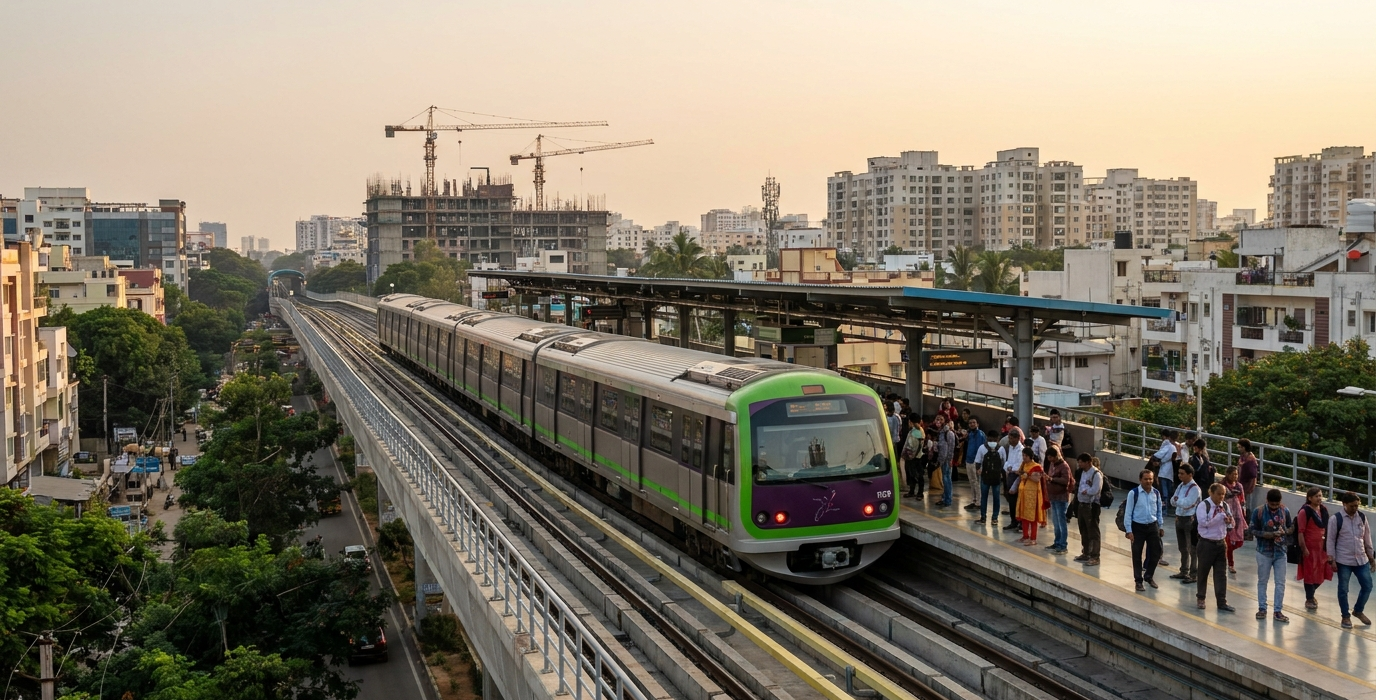
Bengaluru’s Purple Line, a vital artery of the city’s Namma Metro, is undergoing a transformative expansion that will fundamentally alter how residents navigate the eastern and western corridors. The much-anticipated extension, slated for full operational commencement by late 2026, will push the Purple Line’s reach significantly, connecting Whitefield to Kadugodi and beyond, while also extending westward towards Challaghatta. This isn’t just about adding more stations; it’s about weaving a more robust tapestry of connectivity across Bengaluru’s sprawling urban landscape. Imagine a commute from the burgeoning IT hubs of Whitefield to the established business districts of MG Road or Indiranagar, without the notorious Bengaluru traffic. This expansion promises exactly that, offering a swift, reliable, and increasingly crucial alternative.
The impact on daily commuters will be profound. For residents in areas like Kadugodi, Mahadevapura, and KR Puram, who have long grappled with congested roads and lengthy travel times, the Metro offers a beacon of hope. The new stations are strategically placed to serve not only residential areas but also the numerous IT parks and commercial centres that define these eastern outskirts. This means fewer hours spent in traffic jams and more time for family, work, or leisure. Furthermore, the westward extension towards Challaghatta is designed to ease the burden on existing arterial roads, potentially decongesting areas that have become synonymous with gridlock. The integration of these new segments is not just about passenger convenience; it’s a strategic move towards a more sustainable and efficient urban mobility ecosystem for Bengaluru.
Bridging the Gap: From IT Parks to Residential Havens
The new stations along the Purple Line extension are more than just transit points; they are catalysts for urban development and economic activity. Areas that were once considered peripheral are now poised to become more attractive for both residents and businesses. The proximity to major IT corridors will provide employees with a stress-free commute, potentially boosting productivity and employee satisfaction. Simultaneously, improved connectivity can lead to a rise in property values and increased commercial opportunities in the surrounding neighbourhoods. This ripple effect underscores the broader economic implications of such large-scale infrastructure projects. It signifies Bengaluru’s commitment to future-proofing its infrastructure and ensuring that its growth is sustainable and inclusive.
The Blue Line’s Strategic Advance: Unlocking Northern and Southern Access
While the Purple Line grabs headlines for its eastward and westward reach, the Blue Line expansion is equally critical in reshaping Bengaluru’s north-south axis. This phase of development focuses on extending the Blue Line’s reach, aiming to connect key residential areas with the city’s commercial heart and its northern peripheries. The planned stations are strategically positioned to serve burgeoning residential communities and to alleviate pressure on existing road networks that are currently buckling under immense traffic volume. The Blue Line’s advancement is about creating a more balanced and integrated transit network, ensuring that no part of the city feels isolated or underserved.
This expansion is particularly significant for residents in the northern parts of Bengaluru, who have often faced arduous commutes to reach southern business districts or vice versa. The Blue Line’s new segments promise to drastically reduce travel times, making daily commutes more predictable and less taxing. Imagine travelling from Hebbal or Nagawara directly to areas like Central Silk Board or even further south without the need for multiple bus changes or enduring notorious traffic snarls. This improved connectivity is expected to stimulate economic activity in the northern regions, attracting businesses and residents alike, and fostering a more integrated urban fabric. The vision is to make inter-district travel within Bengaluru as seamless and efficient as possible, transforming the daily grind into a manageable journey.
Enhancing Interconnectivity: A Network Effect
The true power of the Blue Line expansion lies in its ability to enhance connectivity with other Metro lines and existing transport infrastructure. As the Blue Line extends, it will intersect with other key Metro corridors, creating a web of seamless transfers. This network effect is crucial for creating a truly integrated public transportation system. Passengers will be able to switch between lines with ease, expanding their travel options exponentially. This integrated approach is what transforms a series of individual lines into a comprehensive urban mobility solution. It’s about making the entire city accessible, efficiently and affordably, for everyone.
Integrating with the City: Beyond the Metro Tracks
Bengaluru’s Metro expansion isn’t happening in a vacuum. A crucial aspect of its success hinges on its seamless integration with other modes of transport. The Bengaluru Metro Rail Corporation Limited (BMRCL) has been actively working to ensure that the new stations are not just Metro hubs but integrated transit centres. This means enhanced connectivity with bus routes, auto-rickshaw stands, and designated drop-off/pick-up zones for ride-sharing services. The aim is to create a “first-mile, last-mile” solution, ensuring that commuters can reach their final destinations from the Metro station with ease and convenience. This holistic approach is essential for encouraging people to ditch their private vehicles and embrace public transport.
Consider the scenario post-expansion: a commuter from a distant suburb might take a feeder bus to their nearest Metro station, board the Blue Line to a key interchange, switch to the Purple Line to reach their office in Whitefield, and then take a short auto-rickshaw ride to their workplace. This entire journey, which might have taken over two hours in peak traffic, could potentially be reduced to less than an hour. This significant time saving is not just a personal benefit; it translates into increased productivity for businesses and a reduced carbon footprint for the city. The BMRCL’s focus on multi-modal integration is a testament to its understanding of the complex challenges of urban mobility in a city like Bengaluru.
The Role of Feeder Services and Last-Mile Connectivity
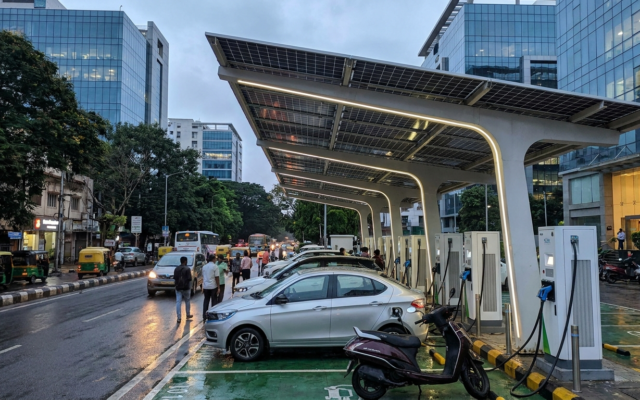
The success of these new Metro lines will heavily rely on the efficiency of feeder services. BMRCL is actively exploring partnerships with bus operators and on-demand mobility providers to ensure that last-mile connectivity is robust. This includes dedicated bus lanes leading to Metro stations, increased frequency of feeder buses, and designated zones for electric scooters and bicycles. The goal is to make the transition from home to Metro and from Metro to destination as smooth as possible. Without effective last-mile solutions, the benefits of the expanded Metro network might not be fully realised by all sections of the population, particularly those living further away from stations.
Economic and Social Impact: A Connected Bengaluru
The expansion of Bengaluru’s Metro network is poised to deliver significant economic and social benefits, extending far beyond just reduced travel times. By enhancing connectivity to previously underserved areas, the Metro is effectively opening up new economic opportunities. Businesses located near new stations can expect increased footfall and easier access for employees. This can lead to job creation and foster the growth of small and medium enterprises (SMEs) in these developing corridors. Furthermore, the improved accessibility can make these areas more attractive for real estate development, potentially leading to a surge in housing and commercial property values.
On a social level, the Metro expansion promotes inclusivity and improves the quality of life for residents. It provides a reliable and affordable mode of transport for students travelling to educational institutions, for the elderly to access healthcare facilities, and for all citizens to participate more actively in the city’s cultural and recreational life. The reduction in traffic congestion also contributes to a healthier environment by lowering air and noise pollution. This creates a more liveable and sustainable city for everyone. The ability to move around freely and efficiently can foster a greater sense of community and reduce the social isolation that often plagues residents of large, sprawling metropolises.
A Surprising Fact: Bengaluru Metro’s Unique Design Element
Did you know that many of the newest stations on Bengaluru’s Metro lines incorporate a unique design element inspired by the traditional South Indian stepwells? These architectural features, known as ‘baolis’, are not only aesthetically pleasing but also serve a functional purpose by aiding in natural ventilation and light penetration. This thoughtful integration of heritage with modern infrastructure showcases a commitment to creating a Metro system that is both efficient and culturally resonant. It’s a subtle yet significant detail that adds a layer of local character to the urban transit experience.
Future Prospects and Challenges: Sustaining the Momentum
As Bengaluru continues its rapid urbanisation, the expansion of its Metro network is a critical step towards ensuring sustainable growth. The BMRCL has ambitious plans for future phases, aiming to further extend the reach of the Metro and integrate it with peripheral towns and cities. These long-term visions include connecting to Kempegowda International Airport more directly and expanding the network into emerging growth corridors. The success of the current expansions will undoubtedly pave the way for these future endeavours, building public confidence and demonstrating the viability of large-scale public transport projects. The commitment to continuous improvement and expansion is key to keeping pace with Bengaluru’s dynamic growth trajectory.
However, the path forward is not without its challenges. Funding for such massive infrastructure projects remains a perennial concern, requiring sustained government support and innovative financing models. Land acquisition for new lines and stations can also be a complex and time-consuming process, often leading to delays. Furthermore, ensuring the operational efficiency and timely maintenance of the expanded network will require significant investment and skilled manpower. The BMRCL must also continuously adapt to evolving urban mobility needs, incorporating new technologies and exploring partnerships to enhance the passenger experience. The challenge lies in not just building more lines, but in building a smarter, more resilient, and more user-centric transit system for the future.
A Glimpse into the Next Phase: Airport Connectivity and Beyond
While the current expansions focus on intra-city connectivity, future plans are ambitious. Discussions are ongoing for a direct Metro link to Kempegowda International Airport, a project that would be a game-changer for travellers and the city’s international connectivity. This ambitious plan, if realised, would drastically reduce travel time to the airport, making it more accessible for both domestic and international passengers. It signifies Bengaluru’s aspiration to be a truly global city, with world-class infrastructure to match.
Frequently Asked Questions
When will the new Purple Line extensions be fully operational?
The new extensions of the Purple Line, connecting Whitefield to Kadugodi and extending westward to Challaghatta, are expected to be fully operational by late 2026. BMRCL is working diligently to complete all necessary testing and safety checks before the official inauguration.
How will the Blue Line expansion improve connectivity in North Bengaluru?
The Blue Line expansion will significantly enhance connectivity in North Bengaluru by extending its reach to key residential and commercial areas. This will provide residents with a faster and more reliable mode of transport to southern parts of the city, reducing reliance on road travel and easing congestion.
Are there plans for integrating the Metro with other public transport options?
Yes, BMRCL is prioritising integration with other public transport. This includes improving last-mile connectivity through feeder buses, auto-rickshaw stands, and designated areas for ride-sharing services at all new and existing Metro stations.
What is the estimated impact of the Metro expansion on traffic congestion?
The Metro expansion is projected to significantly reduce traffic congestion by offering a viable alternative to private vehicles. As more commuters switch to the Metro, we can expect a noticeable decrease in road traffic, leading to shorter travel times for all road users and improved air quality.