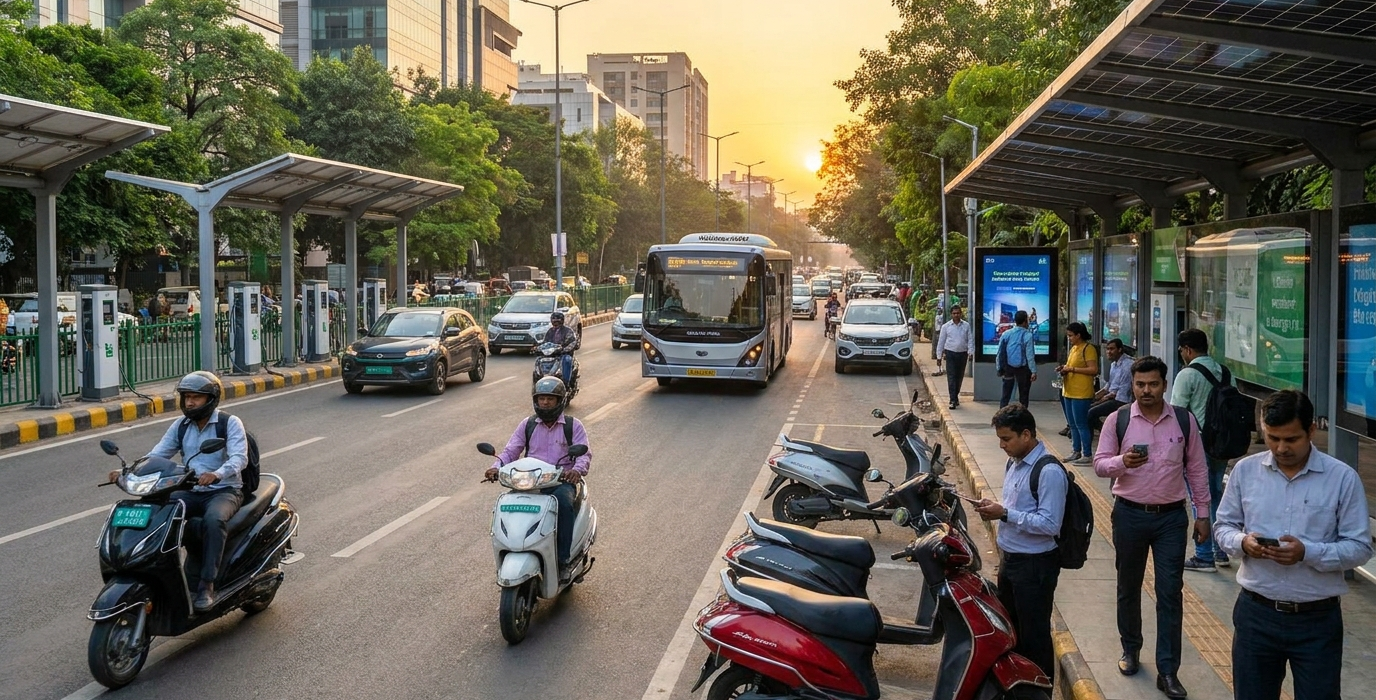
Key Takeaways
- India’s EV market is experiencing unprecedented growth in 2026, driven by government incentives, falling battery costs, and increasing consumer awareness.
- Two-wheeler EVs continue to dominate sales, but the electric car segment is rapidly expanding, with new models offering better range and affordability.
- Charging infrastructure remains a key challenge, though significant investments are being made to expand the network, particularly in Tier 2 and Tier 3 cities.
- The future of Indian EVs is bright, with innovations in battery technology, faster charging, and integrated mobility solutions poised to reshape urban commutes.
The Electric Surge: Why 2026 is a Tipping Point for Indian EVs
The hum of electric motors is no longer a distant whisper in India; it’s a growing chorus that’s reshaping our roads. As of mid-2026, the electric vehicle (EV) revolution is no longer a nascent dream but a tangible reality, marked by accelerating adoption rates and a palpable shift in consumer preference. We’re witnessing a period of unprecedented growth, fueled by a confluence of supportive government policies, technological advancements, and a dawning environmental consciousness among Indian consumers.
Gone are the days when EVs were seen as niche, expensive curiosities. Today, they represent a dynamic and expanding segment of the automotive market. This surge is not confined to a single category; it’s a broad-based movement impacting two-wheelers, three-wheelers, and increasingly, passenger cars and commercial vehicles. The sheer volume of new models being launched, coupled with significant investments in charging infrastructure, signals a robust commitment to a cleaner, more sustainable transportation future for India.
Government Push and Global Trends Converge
India’s ambition to become a global EV manufacturing hub is translating into concrete action. The Production Linked Incentive (PLI) schemes for Advanced Chemistry Cell (ACC) battery storage and automobiles are actively encouraging domestic production and attracting foreign investment. We’re seeing a ripple effect as international players increasingly set up shop or forge partnerships to tap into India’s vast potential. This isn’t just about reducing our reliance on fossil fuels; it’s about creating jobs, fostering innovation, and positioning India as a leader in green mobility.
The global narrative around climate change and sustainable development is also playing a crucial role. As countries worldwide embrace electrification, India is strategically aligning itself with this global movement. The benefits are manifold: reduced air pollution in our densely populated cities, lower fuel import bills, and the development of a cutting-edge technological ecosystem. This dual focus on national priorities and global sustainability is what makes the 2026 EV landscape so compelling.
Two-Wheeler Dominance Continues, But the Four-Wheeler Race is Heating Up
For years, the electric two-wheeler segment has been the undisputed champion of India’s EV market, and 2026 sees this trend continuing with even greater vigour. The affordability, practicality, and increasing range of electric scooters and motorcycles have made them a preferred choice for daily commutes across the country, from the bustling streets of Delhi to the scenic bylanes of Kochi. Brands are offering a wider array of models, catering to diverse needs, from utilitarian workhorses to stylish urban cruisers.
The average cost of battery packs has seen a significant dip, making electric two-wheelers more competitive than their Internal Combustion Engine (ICE) counterparts over their lifecycle. This cost-effectiveness, combined with lower running costs and government subsidies, has unlocked a massive consumer base. We are also seeing a rise in battery-swapping solutions, addressing range anxiety and making EV ownership even more convenient for riders on the go.
The Electric Sedan and SUV Take Centre Stage
While two-wheelers lead the charge, the electric car segment is experiencing a transformative period. We are no longer talking about a handful of premium offerings. 2026 is the year when electric sedans and SUVs are becoming increasingly accessible to the Indian middle class. Manufacturers are launching vehicles with improved battery technology, offering ranges that comfortably exceed 400-500 kilometres on a single charge, effectively eliminating range anxiety for most daily users.
New entrants and established players alike are vying for market share, introducing models that balance performance, features, and competitive pricing. The introduction of more compact electric SUVs and affordable sedans is a game-changer, bringing the dream of electric car ownership within reach for a much larger demographic. This expansion is critical for achieving mass adoption and significantly reducing the carbon footprint of personal transportation.
Charging Ahead: Infrastructure Development and the Roadblocks Ahead
The most significant hurdle for widespread EV adoption in India has historically been the availability and accessibility of charging infrastructure. While this remains a challenge, the progress made in 2026 is undeniable. We are witnessing a concerted effort from both public and private sectors to build a robust charging network across the nation. Government initiatives are driving the installation of charging stations along national highways, in residential complexes, and at public parking spaces.
Companies are also innovating with charging solutions. We’re seeing the rise of faster charging technologies that can replenish a significant portion of a battery in under 30 minutes. Furthermore, the integration of charging facilities into existing fuel stations and the development of smart charging solutions that optimize electricity usage are making charging more convenient and cost-effective. However, the sheer scale of India means that building this infrastructure to meet the growing demand requires sustained and accelerated investment, especially in Tier 2 and Tier 3 cities.
Bridging the Gap: Public-Private Partnerships and Innovative Solutions
The government’s role in facilitating infrastructure development through policies and subsidies is crucial. Simultaneously, private players are stepping up, recognizing the immense business opportunity. Electric mobility startups and established energy companies are collaborating to create charging hubs, deploy mobile charging units, and develop smart grid solutions. The aim is to ensure that charging an EV becomes as simple and accessible as refueling a petrol car.
One surprising development we’re seeing is the increasing use of renewable energy sources to power EV charging stations. Solar-powered charging points are becoming more common, especially in sun-drenched regions like Rajasthan and Gujarat, further enhancing the sustainability credentials of electric mobility. This integration of green energy into the charging ecosystem is a significant step towards a truly circular economy for transportation.
Consumer Confidence and Emerging Trends: What’s Driving Adoption?
The Indian consumer’s perception of EVs has undergone a dramatic transformation. In 2026, factors like environmental consciousness, lower running costs, and improved performance are primary drivers of adoption. Many consumers are now keenly aware of the air quality issues plaguing major cities and see EVs as a personal contribution to a cleaner environment. The rising prices of petrol and diesel also make the long-term economic benefits of EVs increasingly attractive.
We’re also observing a growing trend towards integrated mobility solutions. Consumers are looking for seamless experiences that combine vehicle purchase, charging, and even battery maintenance. This includes the rise of subscription models for EVs, which offer a hassle-free ownership experience. The increasing availability of financing options and attractive EMI schemes are further democratizing EV ownership, making it accessible to a broader segment of the population.
The ‘Smart’ Factor: Connected Cars and Future Mobility
The appeal of EVs extends beyond their environmental benefits. The integration of smart technologies is a significant draw. Modern electric cars come equipped with advanced infotainment systems, connectivity features, and over-the-air updates, mirroring the tech-forward nature of smartphones. These connected car features enhance the driving experience and provide valuable data for vehicle management and performance optimization.
Beyond personal vehicles, we are seeing a significant push towards electrifying public transport and commercial fleets. Electric buses are becoming a common sight in major metropolitan areas like Bengaluru and Chennai, reducing operational costs and improving air quality. Logistics companies are also exploring electric vans and trucks for last-mile delivery, driven by government mandates and the desire for operational efficiency. This multi-pronged approach is essential for a comprehensive shift to electric mobility.
The Economic Impact: Job Creation and Manufacturing Prowess
The burgeoning EV industry in India is not just about cleaner air; it’s also a significant engine for economic growth. The push towards domestic manufacturing, particularly for batteries and critical components, is creating a ripple effect across the supply chain. This is leading to substantial job creation, from research and development to manufacturing, assembly, and maintenance. The government’s focus on a self-reliant EV ecosystem, often termed ‘Atmanirbhar Bharat,’ is driving this domestic capability.
Investments in the sector are pouring in from both domestic conglomerates and international automotive giants. This influx of capital not only bolsters manufacturing capacity but also fosters the development of indigenous technological expertise. We are seeing Indian companies emerge as key players in battery technology, power electronics, and charging solutions, positioning the country as a potential global supplier. The economic benefits are far-reaching, extending to ancillary industries and service providers.
From Assembly to Innovation: Building a Green Economy
The narrative is evolving from mere assembly of imported parts to genuine innovation and product development within India. Research institutions and universities are actively collaborating with industry partners to develop next-generation battery technologies, more efficient electric powertrains, and sustainable charging solutions. This focus on R&D is crucial for long-term competitiveness and for India to truly lead in the global EV race.
Furthermore, the economic opportunities extend to the repair and maintenance sector. As more EVs hit the road, there’s a growing demand for skilled technicians who can service and repair these sophisticated vehicles. Training programs are being initiated to equip the workforce with the necessary skills, ensuring that the EV revolution translates into sustainable employment for a large segment of the population. This economic transformation is a testament to India’s evolving industrial landscape.
Beyond the Commute: Electric Mobility’s Role in India’s Future
The impact of electric vehicles in India in 2026 extends far beyond individual car owners. It’s about fundamentally reshaping our urban landscapes and our approach to sustainability. As more cities embrace electric buses and two-wheelers, we can expect a noticeable improvement in air quality and a reduction in noise pollution. This will make our cities more liveable and healthier for everyone, from the bustling markets of Chennai to the residential colonies of Pune.
The electrification of commercial fleets, including delivery vehicles and taxis, is also a critical piece of the puzzle. This not only reduces operational costs for businesses but also contributes significantly to lowering the overall carbon footprint of the transportation sector. Companies are realizing the dual benefits of lower fuel bills and a positive brand image associated with sustainable practices. We are seeing innovative business models emerge, such as pay-per-use electric mobility services, making it easier for businesses of all sizes to transition.
A Glimpse into Tomorrow: Battery Tech and Sustainable Logistics
Looking ahead, advancements in battery technology are poised to further accelerate adoption. Solid-state batteries, offering higher energy density and improved safety, are on the horizon and could dramatically increase EV range while reducing charging times. Innovations in battery recycling and second-life applications are also gaining traction, addressing concerns about the environmental impact of battery disposal. This closed-loop approach is vital for true sustainability.
“The EV revolution in India isn’t just about replacing petrol pumps with charging stations; it’s about creating a cleaner, smarter, and more economically vibrant future for all our citizens.”
The integration of EVs with the smart grid is another exciting frontier. Vehicle-to-grid (V2G) technology, where EVs can feed power back into the grid during peak demand, has the potential to stabilize electricity supply and integrate renewable energy sources more effectively. Imagine your car not just as a mode of transport, but as a mobile energy storage unit contributing to a more resilient and sustainable power infrastructure. This is the kind of forward-thinking innovation that will define India’s electric mobility journey.
Frequently Asked Questions
Is it still expensive to buy an electric car in India in 2026?
While upfront costs for electric cars can still be higher than comparable petrol vehicles, the gap is narrowing rapidly. Government subsidies, falling battery prices, and the introduction of more affordable models are making EVs increasingly accessible. Crucially, the total cost of ownership, factoring in lower running and maintenance costs, often makes EVs more economical over their lifespan.
What is the biggest challenge facing EV adoption in India?
The primary challenge remains the expansion of charging infrastructure, particularly in rural areas and smaller towns. While significant progress is being made, ensuring widespread, reliable, and fast charging availability is crucial for mass adoption. Range anxiety, though decreasing, is still a concern for some consumers.
Are electric two-wheelers a good investment in India?
Absolutely. Electric two-wheelers are already a compelling proposition for many Indians due to their lower running costs, reduced maintenance, and environmental benefits. With improving battery technology and wider model availability, they offer a practical and economical solution for daily commuting.
What are the government incentives for buying EVs in India?
The Indian government offers various incentives, including subsidies on EV purchases (especially for electric two-wheelers and three-wheelers), tax benefits on loans for EVs, and reduced road tax and registration fees in many states. The Production Linked Incentive (PLI) schemes also indirectly support EV adoption by boosting domestic manufacturing.
Will my electricity bill increase significantly if I switch to an EV?
While charging an EV at home will increase your electricity consumption, the cost is generally much lower than refueling a petrol or diesel vehicle. Many EV owners find that charging overnight during off-peak hours can further minimize the impact on their electricity bills. Furthermore, the overall savings on fuel costs often outweigh any increase in electricity charges.