Managing diabetes, especially with dietary considerations rooted in our rich culinary heritage, can feel like navigating a complex maze. For many across Maharashtra and beyond, the Marathi language offers a familiar and comforting lens through which to approach health. This guide is crafted for you, our readers, who are seeking practical, culturally relevant, and genuinely useful dietary advice for 2026. We understand that a one-size-fits-all approach rarely works. Therefore, we’ve consulted with nutritionists and diabetes educators to bring you a balanced Marathi meal plan, focusing on wholesome ingredients and mindful eating practices. Our aim is to empower you with knowledge, making informed food choices easier and more accessible, right from your breakfast poha to your evening bhakri. Let’s explore how to harmonise traditional tastes with modern health needs.
Understanding the Marathi Diet and Diabetes
The traditional Marathi diet is a vibrant tapestry of flavours and textures, often featuring grains like jowar, bajra, and rice, alongside dals, vegetables, and dairy. While inherently wholesome, certain preparation methods and ingredient choices can impact blood sugar levels. For instance, deep-fried snacks and sweets, though delicious, require mindful moderation for individuals managing diabetes. Understanding the glycaemic index (GI) of common Marathi staples is crucial. High-GI foods cause a rapid spike in blood sugar, while low-GI foods release glucose more slowly, promoting stable energy levels. This is where our focus lies: adapting familiar dishes to be diabetes-friendly without sacrificing their essence.
We’ll delve into specific food groups and their roles in a diabetes management plan. Emphasis will be placed on complex carbohydrates, lean proteins, and healthy fats. For example, instead of refined flour chapati, we encourage whole-wheat bhakri or millet-based rotis. Fibre-rich vegetables, like leafy greens (palak, methi) and gourds (dudhi, padwal), are excellent choices for their low GI and abundant nutrients. Incorporating pulses and dals (tur dal, moong dal) provides essential protein and fibre, aiding in satiety and blood sugar control. We’ll also discuss the importance of portion control and mindful eating habits, which are as vital as the food choices themselves.
Furthermore, we recognise the cultural significance of certain meals and festivals. While we advocate for balanced eating, we don’t aim to eliminate joy from your plate. Instead, we offer strategies for making festive foods healthier and for managing dietary challenges during special occasions. Our approach is about sustainable lifestyle changes, not temporary restrictions. The goal is to create a harmonious balance where delicious Marathi cuisine and effective diabetes management coexist beautifully, ensuring you can enjoy your meals with confidence and well-being throughout 2026 and beyond.
Breakfast: Starting Your Day Right
The first meal of the day sets the tone for your blood sugar levels and energy throughout the day. For a Marathi-style breakfast that’s diabetes-friendly, we recommend options that are rich in fibre and protein, and moderate in carbohydrates. Forget the sugary cereals and processed breakfast mixes. Instead, consider a hearty bowl of jowar or bajra porridge, made with water or unsweetened almond milk. You can enhance its nutritional profile by adding a handful of nuts like almonds and walnuts, or a sprinkle of chia seeds. This provides sustained energy without a sharp spike in glucose.
Another excellent choice is upma, but with a twist. Opt for whole-wheat rava (semolina) or broken wheat (dalia) instead of fine rava. Load it with plenty of vegetables like carrots, peas, beans, and capsicum. A tempering with mustard seeds, curry leaves, and a pinch of asafoetida (hing) adds flavour without adding unhealthy fats. Ensure you cook it with minimal oil. A small serving of this vegetable-rich upma can be a satisfying and blood-sugar-friendly start to your day.
For those who prefer something lighter, a modest portion of poha can be made healthier. Instead of using a large amount of flattened rice, increase the proportion of vegetables and add a good source of protein like roasted peanuts or a few sprouts. Lemon juice squeezed over it adds a refreshing tang. Avoid adding sugar or serving it with large quantities of fried accompaniments. Think of it as a canvas for nutritious additions, rather than the main event.
A surprising fact you might find useful is that incorporating a tablespoon of fenugreek seeds (methi dana) soaked overnight into your breakfast routine, perhaps by adding them to your porridge or even chewing them raw if tolerated, has shown promising results in managing blood glucose levels. Fenugreek contains soluble fibre which can help slow down digestion and sugar absorption. Always consult your doctor or a dietitian before making significant changes to your diet, especially concerning supplements or specific ingredients.
Lunch and Dinner: Balanced Plates
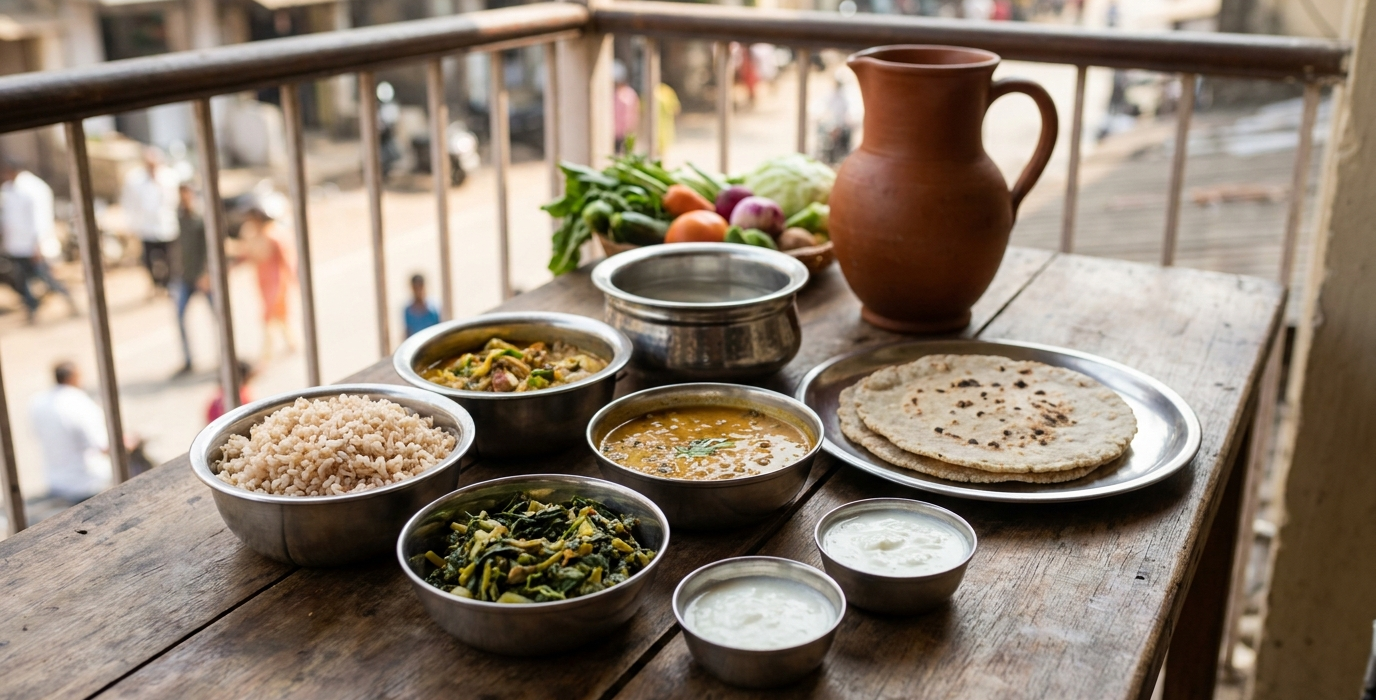
For your main meals, lunch and dinner, the principle of a balanced plate is paramount in a Marathi diabetes diet. Aim to fill half your plate with non-starchy vegetables, a quarter with lean protein, and the remaining quarter with complex carbohydrates. This visual guide helps you create naturally portion-controlled and nutritionally complete meals. Think of a typical Marathi thali and how you can adapt it. The focus should be on whole grains, diverse vegetables, and pulses.
When it comes to carbohydrates, prioritise whole grains. Instead of white rice, opt for brown rice, jowar bhakri, bajra bhakri, or ragi (finger millet) rotis. These offer more fibre and a lower glycaemic impact compared to refined grains. Pair these with a generous serving of sabzi (vegetable dish). Leafy greens like palak, methi, and chavli (cowpea leaves) are excellent. Other diabetes-friendly vegetables include dudhi (bottle gourd), padwal (snake gourd), bhopla (pumpkin), and okra (bhindi). These are best prepared using minimal oil, opting for steaming, stir-frying, or light sautéing rather than deep-frying.
Protein sources are vital for satiety and muscle health. Include dals like moong dal, masoor dal, and tur dal in your meals. Lentil-based dishes like usal (sprouted pulses) are also highly beneficial due to their high fibre and protein content. For non-vegetarian options, grilled or baked fish, chicken breast, and lean cuts of meat are good choices. Avoid rich, creamy gravies and fried meats. Curd (dahi) or buttermilk (taak) are excellent accompaniments, providing probiotics and calcium without excessive fat, provided they are made from low-fat milk and are unsweetened.
A surprising fact that can enhance your meals is the inclusion of traditional Indian spices. Turmeric (haldi), fenugreek (methi), cinnamon (dalchini), and bitter gourd (karela) have demonstrated potential benefits in blood sugar management. For instance, regular consumption of karela, whether in the form of a sabzi or juice, is renowned for its hypoglycemic properties. While it might not be everyone’s favourite, incorporating it once or twice a week can be highly beneficial. Remember, consistent, small changes can yield significant long-term results.
Snacks and Beverages: Mindful Choices
Snacking between meals is often a necessity, especially for individuals with diabetes, to maintain stable blood sugar levels and prevent overeating at main meals. The key is to choose snacks that are nutrient-dense, fibre-rich, and low in refined sugars and unhealthy fats. For those familiar with Marathi snacks, we need to differentiate between the healthier options and those best avoided or consumed in very small quantities. Traditional items like bhajis or fried vadas are generally high in calories and unhealthy fats, and should be limited.
Instead, consider options like a small handful of unsalted nuts (almonds, walnuts, pistachios), roasted chana (chickpeas), or murmura (puffed rice) mixed with a few chopped onions and tomatoes. A small bowl of plain yogurt (dahi) or a glass of unsweetened buttermilk (taak) are excellent choices. Fruit can be a good snack, but it’s important to choose lower-glycaemic options and be mindful of portion sizes. For instance, a small apple, a pear, or a handful of berries are generally better than a very ripe banana or mango, especially if eaten alone. Pairing fruit with a source of protein or fat, like a few nuts, can help slow down sugar absorption.
When it comes to beverages, hydration is key, but sugar-sweetened drinks are a major pitfall. Avoid sugary fruit juices, sodas, and commercially prepared beverages. These contribute empty calories and can cause rapid blood sugar spikes. Plain water should be your primary beverage. Unsweetened tea and coffee are generally acceptable in moderation. Herbal teas, such as chamomile or peppermint, are also good choices. If you enjoy traditional drinks, opt for unsweetened versions of kokum sherbet or amla juice, diluted with plenty of water.
A surprising fact that many find useful is the benefit of incorporating sprouts into your diet. A small bowl of sprouted moong or moth beans, seasoned lightly with salt, pepper, and lemon juice, makes for an incredibly nutritious and filling snack. Sprouts are packed with vitamins, minerals, and fibre, and have a low glycaemic load. They are easily digestible and can help improve overall nutrient absorption. Making a habit of preparing a batch of sprouts weekly can be a simple yet effective strategy for healthier snacking.
Managing Cravings and Special Occasions
Cravings for sweets and fried foods are a common challenge for anyone managing diabetes, and this is certainly true within the context of Marathi cuisine, which boasts many delightful, albeit often sugar-laden, sweets. The key to managing these cravings isn’t about complete denial, which can lead to overindulgence later, but about mindful moderation and strategic planning. Firstly, ensure your regular meals are balanced and satisfying, providing adequate protein and fibre. This can help prevent extreme hunger that often triggers cravings.
When a craving strikes, try to identify its root. Is it genuine hunger, thirst, stress, or boredom? Sometimes, drinking a glass of water or engaging in a brief physical activity can help. If you do decide to indulge, choose a smaller portion of the desired item or opt for a healthier alternative. For instance, instead of a large piece of gulab jamun, perhaps have a single bite or a small piece of fruit. There are also healthier versions of traditional sweets that can be made using natural sweeteners like dates or jaggery in moderation, though caution is still advised with jaggery due to its sugar content. For example, a date-sweetened basundi or a light shrikhand made with hung curd can satisfy a sweet tooth with fewer consequences.
Special occasions like weddings, festivals, and family gatherings present unique dietary challenges. The abundance of rich foods and sweets can be overwhelming. The strategy here is preparation and moderation. Before attending a function, have a small, balanced meal at home. During the event, survey the food options and choose wisely. Prioritise protein and vegetable dishes. Take smaller portions of desserts. It’s also perfectly acceptable to politely decline certain dishes. Remember, enjoying the company and the celebration is as important as the food itself.
A surprising fact that can help with managing cravings and enjoying special occasions is the power of mindful eating. Before you take a bite of anything, especially something you know isn’t ideal, take a moment to savour the aroma, appreciate its appearance, and take a small, slow bite, focusing on the taste and texture. This practice can increase satisfaction from smaller portions and help you recognise when you’ve had enough. This can be particularly effective for those rich, celebratory dishes where the experience of tasting is often more important than the quantity consumed.
Hydration and Essential Nutrients
Staying adequately hydrated is fundamental for overall health and plays a significant role in managing diabetes. Water helps regulate body temperature, transport nutrients, and flush out waste products. For individuals with diabetes, sufficient water intake can also help the kidneys excrete excess glucose through urine. Aim for at least 8-10 glasses of water daily, and more if you are physically active or in a hot climate, which is common across many parts of India. Urine colour is a good indicator; pale yellow urine signifies good hydration.
Beyond plain water, consider other healthy beverages. As mentioned, unsweetened buttermilk (taak) and kokum sherbet (diluted with water and without added sugar) are traditional, refreshing, and beneficial options. Herbal teas like green tea, peppermint, or chamomile are also excellent choices for hydration and may offer additional health benefits. Green tea, for example, contains antioxidants that can contribute to overall well-being. Be mindful of caffeine intake from regular tea and coffee, and if you add milk or sugar, ensure it’s in moderation and fits within your dietary plan.
Ensuring you get essential nutrients is also critical. A balanced Marathi diet, as outlined, naturally incorporates many vital vitamins and minerals. However, it’s worth highlighting a few key nutrients. Fibre, found abundantly in whole grains, pulses, fruits, and vegetables, is paramount for blood sugar control, digestive health, and satiety. Vitamin D and Calcium are important for bone health; dairy products like low-fat yogurt and paneer (cottage cheese) are good sources. Include sources of Omega-3 fatty acids, like flaxseeds, chia seeds, and fatty fish (if you consume fish), which have anti-inflammatory properties.
A surprising fact that often gets overlooked is the role of electrolytes. Especially in hot weather or after physical activity, replenishing electrolytes is important. While sports drinks are often high in sugar, traditional Indian methods offer natural solutions. A glass of nimbu pani (lemon water) with a pinch of salt and a small amount of natural sweetener (or none at all) can be a refreshing way to rehydrate and replenish electrolytes. Similarly, the potassium in coconut water can be beneficial, though it should be consumed in moderation due to its natural sugars. Always check with your healthcare provider about your specific hydration and electrolyte needs.
This comprehensive guide offers a framework for adopting a diabetes-friendly diet rooted in Marathi culinary traditions. Remember, consistency and mindful choices are your allies. By making informed decisions about what you eat, and by embracing the rich diversity of healthy ingredients available, you can effectively manage your diabetes while continuing to enjoy the vibrant flavours of your heritage. Consult with a registered dietitian or your doctor to personalise this plan to your specific needs and health goals for 2026 and beyond. Your journey to better health is a delicious one!