Key Takeaways
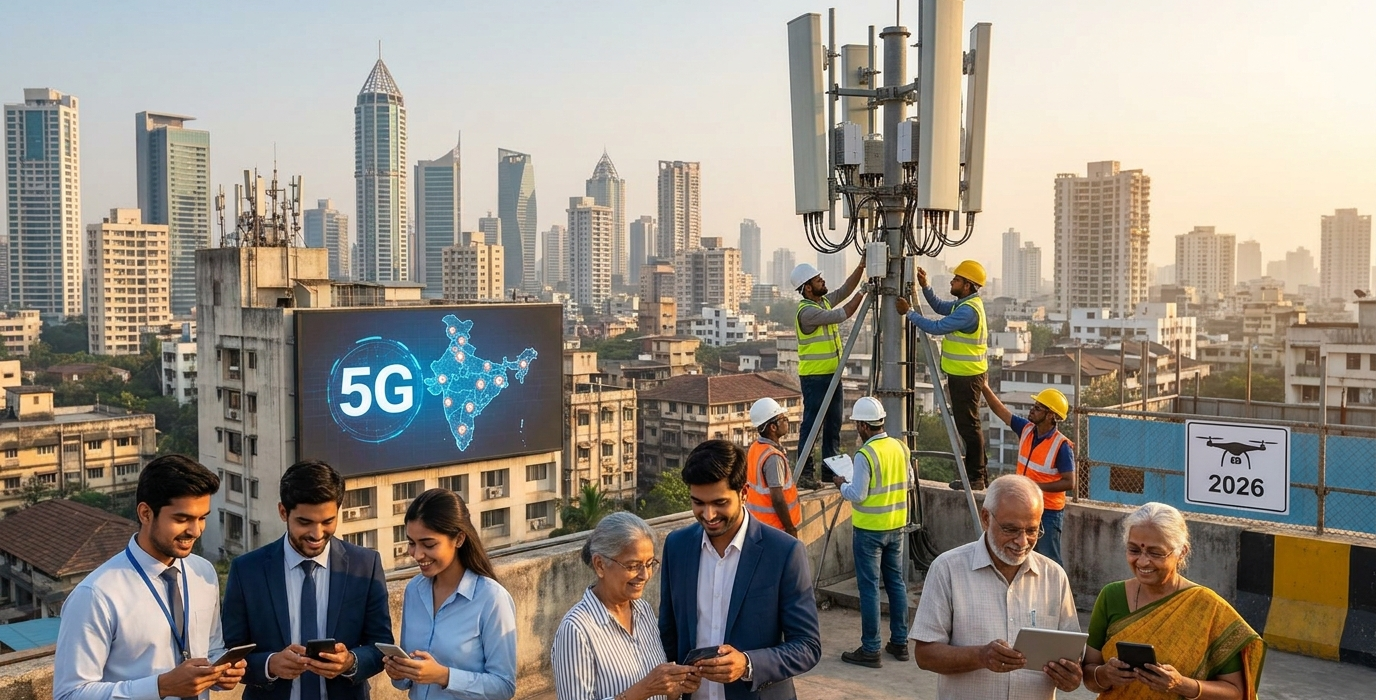
- India’s 5G network is rapidly expanding, with significant coverage expected across Tier 1 and Tier 2 cities by late 2026.
- Expect enhanced speeds, lower latency, and new applications in areas like smart cities, healthcare, and industrial automation.
- While consumer benefits are already tangible, the true transformative potential lies in enterprise and industrial use cases, driving significant economic growth.
- Navigating the evolving landscape requires understanding device compatibility and the emerging ecosystem of 5G-enabled services.
The Unfolding 5G Tapestry: Beyond Speed
The hum of 5G is no longer a distant whisper in India; it’s becoming a palpable reality, weaving itself into the fabric of our digital lives. As we navigate through 2026, the narrative of 5G rollout is shifting from mere availability to the tangible impact it’s having across diverse sectors. We’re witnessing a dynamic evolution, moving beyond the initial excitement of faster downloads to embrace the profound, transformative capabilities that this next-generation network promises. The focus is sharpening on how 5G will reshape everything from our daily commutes in Bengaluru to the agricultural output in Punjab.
This expansion isn’t just about more towers or faster internet for your mobile phone. It’s about creating an ecosystem where real-time data processing and instantaneous communication become the norm. Think of smart traffic management systems that can adapt to changing conditions in Mumbai, or remote surgical assistance enabling specialists to guide procedures from afar, even in remote parts of Himachal Pradesh. The groundwork laid in the past few years is now bearing fruit, with operators aggressively expanding their reach. We’re on the cusp of a period where the true potential of 5G begins to manifest in practical, everyday applications that enhance efficiency and quality of life.
Nationwide Ambitions: Bridging the Digital Divide
The ambition for 5G in India extends far beyond the bustling metropolises. While cities like Delhi and Hyderabad were early adopters, the current phase of rollout prioritises extending this advanced connectivity to Tier 2 and Tier 3 cities, and even to rural hinterlands. This democratisation of high-speed internet is crucial for equitable development, ensuring that opportunities are not confined to a select few. Operators are investing heavily in infrastructure, often leveraging existing fibre networks to expedite deployment.
We are seeing innovative strategies being employed to reach underserved areas. This includes partnerships with local governments and businesses to create localised 5G hubs. The aim is to ensure that students in a village near Shirdi have access to online educational resources comparable to those in Pune, and that small businesses in small towns can leverage e-commerce and digital tools to compete on a larger scale. The progress in 2026 signifies a concerted effort to bridge the digital divide, making 5G a tool for national progress rather than a luxury for the few. This inclusive approach is vital for realising the full economic and social benefits of this technological leap.
Surprising Fact: The Rural Reach Race
A lesser-known but significant trend in 2026 is the intense competition among telecom providers to establish 5G presence in remote panchayats. While media focus remains on urban centres, significant capital is being channelled into connecting areas where fibre optic deployment is challenging, often relying on advanced wireless backhaul solutions. This push is driven by government mandates and the recognition of untapped economic potential in these regions.
Transforming Industries: The Enterprise Edge
While consumers are enjoying faster streaming and smoother video calls, the real game-changer for 5G in India lies in its impact on industries. The low latency and high bandwidth of 5G are unlocking transformative possibilities for sectors such as manufacturing, logistics, healthcare, and agriculture. Imagine factories in Gujarat operating with an unprecedented level of automation, where robots communicate seamlessly and production lines are optimised in real-time. This is no longer science fiction; it’s the emerging reality powered by 5G.
In healthcare, 5G is enabling remote patient monitoring, telemedicine consultations with enhanced diagnostic capabilities, and even robotic-assisted surgeries performed by specialists located miles away. This is particularly critical for improving healthcare access in remote areas of Odisha or Chhattisgarh. Logistics companies can leverage 5G for real-time tracking of goods, predictive maintenance of fleets, and the optimisation of supply chains, reducing costs and increasing efficiency across the country. The ability to connect vast numbers of sensors and devices also paves the way for true Internet of Things (IoT) deployment at an industrial scale.
The Smart City Symphony: Orchestrating Urban Life
The concept of a ‘smart city’ is being fundamentally redefined by the widespread adoption of 5G. Cities like Navi Mumbai and Indore are becoming living laboratories for 5G-enabled urban solutions. We’re moving beyond basic connectivity to integrated systems that enhance public safety, optimise resource management, and improve the overall quality of urban living. Think of intelligent traffic management systems that not only reduce congestion but also prioritise emergency vehicle response times.
Public transportation is set to become more efficient, with real-time tracking and predictive scheduling becoming standard. Waste management can be optimised through sensor networks that monitor bin fill levels, dispatching collection vehicles only when and where needed. In terms of public safety, enhanced surveillance capabilities with real-time video analytics and faster communication for first responders are crucial. Furthermore, smart grids powered by 5G can improve energy distribution efficiency and reduce waste, a critical step towards sustainable urban development across India’s rapidly growing urban centres.
Surprising Fact: Agri-Tech’s 5G Leap
While often overlooked, the agricultural sector is poised for a significant 5G-driven revolution. In 2026, we’re seeing pilot projects in states like Haryana and Maharashtra using 5G for precision farming. This includes drone-based crop monitoring with high-resolution imaging for early disease detection, automated irrigation systems that respond to real-time soil moisture data, and even robotic harvesting in controlled environments. This level of granular control and data-driven decision-making promises to boost yields and reduce resource wastage.
The Ecosystem Evolves: Devices and Applications
As the 5G network expands, so too does the ecosystem of devices and applications designed to leverage its capabilities. For consumers, this means a wider array of 5G-enabled smartphones, tablets, and wearables becoming increasingly affordable and accessible. We are moving past the early adopter phase, with manufacturers actively catering to the Indian market with devices that offer robust 5G connectivity without exorbitant price tags. This accessibility is key to widespread adoption.
Beyond personal devices, the growth of 5G is fuelling innovation in areas like augmented reality (AR) and virtual reality (VR) experiences, cloud gaming, and high-definition streaming services. For businesses, the focus is on industrial IoT solutions, private 5G networks for enterprises, and specialised applications for remote work and collaboration. The convergence of 5G with AI and edge computing is opening up entirely new avenues for service delivery, from personalised retail experiences to sophisticated industrial automation. The true value of 5G will be unlocked as this ecosystem matures, providing users with seamless and intelligent services.
The true power of 5G in India won’t be measured solely by gigabits per second, but by the real-world problems it solves and the new opportunities it creates for every citizen and every industry.
Future Gazing: What Lies Ahead in 2027 and Beyond
Looking beyond 2026, the trajectory of 5G in India is set for even greater acceleration. We can anticipate a significant increase in the deployment of standalone (SA) 5G networks, which offer even lower latency and greater flexibility compared to the non-standalone (NSA) networks currently prevalent. This shift will be crucial for enabling more advanced applications like autonomous vehicles and truly immersive XR (extended reality) experiences. The government’s continued focus on spectrum availability and policy support will be a critical enabler.
Furthermore, the integration of 5G with other emerging technologies, such as AI, blockchain, and advanced analytics, will create a powerful synergy. This will lead to the development of intelligent infrastructure, hyper-personalised services, and a more connected and responsive society. The next few years will see the consolidation of 5G’s presence, moving from a nascent technology to an indispensable utility that underpins India’s digital future. We are witnessing the dawn of a new era, driven by connectivity that is faster, more reliable, and more intelligent than ever before.
Frequently Asked Questions
Will my current phone work on 5G networks in India?
Many newer smartphones sold in 2025 and 2026 are 5G-compatible. You should check your device’s specifications for 5G band support. If your phone is older than 2023, it is less likely to be 5G-ready.
How much will 5G cost in India?
While initial 5G plans may have a slight premium, competition among telecom operators is driving prices down. Many operators are offering 5G access as part of existing 4G plans or with minimal additional cost to encourage adoption.
What are the biggest benefits of 5G for the average Indian consumer?
You’ll experience significantly faster download and upload speeds, enabling seamless streaming of high-definition content, quicker app downloads, and enhanced gaming experiences. Lower latency will also improve the responsiveness of online interactions.
When will 5G be available in my town or village?
Coverage is expanding rapidly. By late 2026, most Tier 1 and Tier 2 cities should have robust 5G coverage. Rollout to Tier 3 cities and rural areas is ongoing and will continue through 2027 and beyond, with specific timelines varying by operator and region.