Key Takeaways
- Goa’s coastal towns offer a compelling blend of affordability, connectivity, and vibrant community for digital nomads in 2026.
- Anjuna and Vagator remain popular, but emerging hubs like Mandrem and Arambol provide a more serene yet equally functional experience.
- Reliable internet, co-working spaces, and a strong social scene are crucial factors to consider when choosing your Goan base.
- Beyond beach shacks, explore local markets for fresh produce and authentic dining experiences to truly immerse yourself.
Anjuna & Vagator: The Established Powerhouses
Anjuna and Vagator have long been the darlings of Goa’s digital nomad scene, and 2026 sees them continuing their reign. These twin locales, separated by a picturesque cliffside, offer a vibrant ecosystem tailored for remote workers. You’ll find a plethora of cafes boasting decent Wi-Fi, co-working spaces emerging from charming villas, and a constant buzz of international and Indian professionals.
Anjuna is perhaps best known for its vibrant flea market, a Saturday night spectacle that’s been a draw for decades. Beyond the shopping, it’s a place where you can find affordable accommodation, from shared rooms to private studios. Vagator, with its iconic Chapora Fort offering panoramic sunset views, leans slightly more towards chic cafes and boutique stays. Both areas have seen a significant upgrade in internet infrastructure, with many establishments now offering speeds that can handle video calls and large uploads reliably.
What truly sets these places apart is the established community. You’re almost guaranteed to bump into fellow remote workers at a cafe or during a yoga class. This ease of connection is invaluable for those seeking camaraderie and professional networking opportunities. While they can get busy, especially during peak season, the infrastructure is built to handle it. It’s the perfect entry point for anyone new to the digital nomad lifestyle in India.
Mandrem & Arambol: The Serene Contemporaries
If Anjuna and Vagator feel a little too bustling for your taste, Mandrem and Arambol offer a compelling alternative in 2026, striking a perfect balance between tranquility and functionality. Nestled further north, these beaches are known for their laid-back vibe, beautiful sunsets, and a growing contingent of digital nomads seeking a more peaceful existence.
Mandrem, in particular, has seen a quiet revolution. What was once a sleepy fishing village now hosts several well-equipped co-working spaces that have sprung up amidst the palm trees. You’ll find dedicated desks, high-speed internet, and even soundproof booths for important calls. The accommodation here ranges from charming beachfront huts to tastefully designed apartments, often at more accessible price points than their southern neighbours. The community here is tight-knit, fostering a supportive environment for remote workers.
Arambol, known for its bohemian spirit and the famous ‘Sweet Water Lake’, continues to attract a diverse crowd. While it retains its laid-back charm, the infrastructure has kept pace. Expect to find numerous cafes with reliable Wi-Fi, yoga retreats, and a vibrant evening scene that’s more mellow than Anjuna’s. The sheer natural beauty of these places, combined with their developing infrastructure, makes them ideal for those who want to combine productivity with peace. A surprising fact: Arambol’s Sweet Water Lake is believed by locals to have healing properties, a notion many visitors find themselves embracing.
Morjim & Ashwem: The Upscale Oasis
For the digital nomad who prioritizes a touch of luxury and a more refined experience, Morjim and Ashwem present themselves as the premier destinations in Goa for 2026. These neighbouring beaches, located just south of Arambol, offer a sophisticated atmosphere, impeccable service, and a strong emphasis on quality infrastructure.
Morjim, often dubbed ‘Little Russia’ due to its significant Russian expat population, boasts some of the most stylish beach resorts and boutique hotels in Goa. You’ll find dedicated work-friendly zones within these establishments, complete with high-speed internet and comfortable seating. The dining scene is equally impressive, with a range of international and fusion cuisines available. Ashwem, adjacent to Morjim, mirrors this upscale trend, offering pristine beaches and a more tranquil setting.
While these areas might come with a slightly higher price tag, the investment is in the unparalleled quality of life and work. The Wi-Fi is generally more stable and faster here, and the overall environment is cleaner and more manicured. These are the spots where you can enjoy a productive workday followed by a gourmet dinner or a relaxing spa treatment. It’s a sanctuary for those who want to work remotely without compromising on comfort or style. You might also be surprised to find that Morjim is a vital nesting ground for Olive Ridley turtles, with conservation efforts in place during certain seasons.
Beyond the Beaches: Co-working Spaces & Connectivity
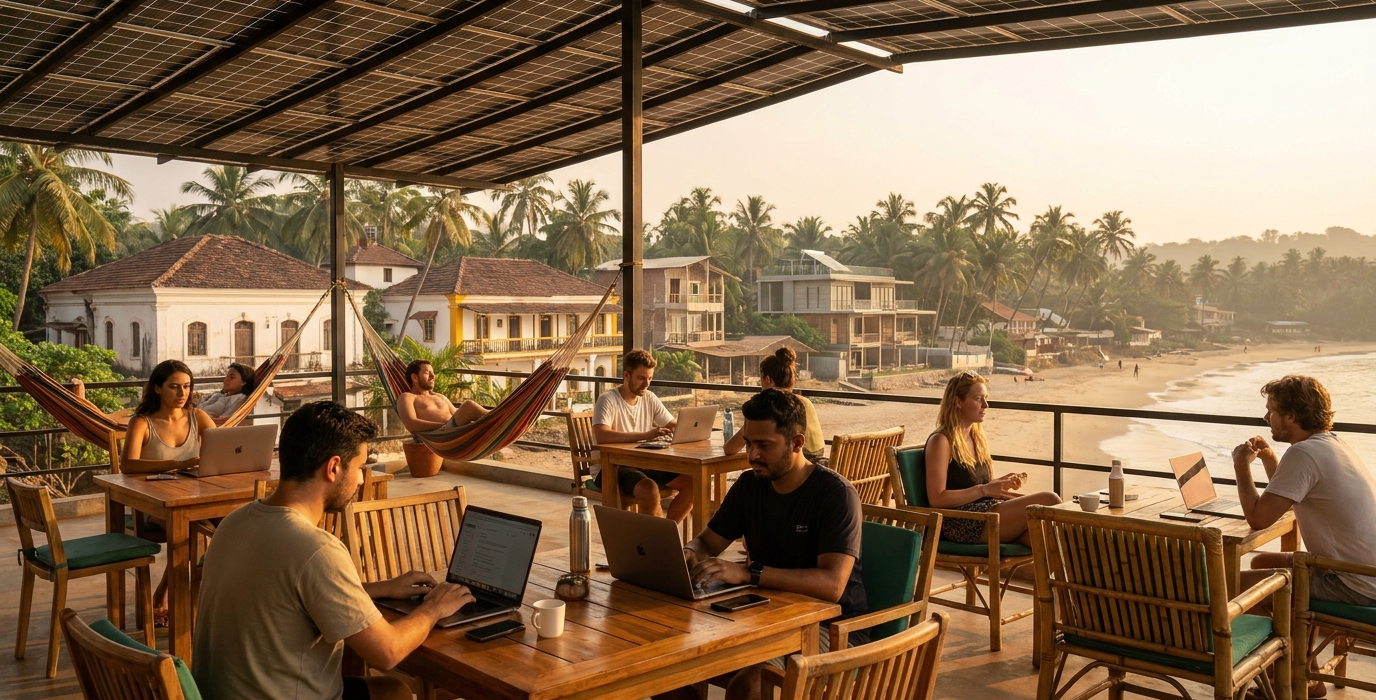
While the allure of working from a beach shack with your laptop is undeniable, the reality for most digital nomads in 2026 requires more robust infrastructure. Fortunately, Goa has seen a significant rise in dedicated co-working spaces across its popular northern stretch. These spaces are no longer just about a desk and Wi-Fi; they are becoming vibrant hubs for collaboration and community building.
From the well-established ‘Hives Goa’ in Anjuna to newer, more niche offerings in Arambol and Mandrem, you’ll find options catering to different needs. Many provide high-speed internet that’s significantly more reliable than public Wi-Fi, ergonomic seating, meeting rooms, and even printing facilities. The membership models are often flexible, allowing for daily, weekly, or monthly passes, making them accessible for short-term visitors and long-term residents alike.
Beyond these dedicated spaces, many cafes have also upped their game. Look for establishments that explicitly advertise their Wi-Fi speeds or have a reputation for catering to remote workers. It’s always a good idea to have a backup plan, however. Purchasing a local SIM card with a generous data plan from providers like Jio or Airtel is highly recommended. These offer excellent coverage and competitive rates, ensuring you can stay connected even when you’re away from your primary workspace. We’ve found that a combination of a reliable co-working space membership and a strong mobile data plan offers the best of both worlds.
Navigating Local Life: Culture & Community
To truly thrive as a digital nomad in Goa in 2026, you need to move beyond just finding a good Wi-Fi signal. Engaging with the local culture and becoming part of the community is what transforms a work trip into a rich experience. The Goan way of life, with its unique blend of Indian and Portuguese influences, is incredibly welcoming.
Make an effort to visit the local markets, such as the Anjuna Flea Market (on Saturdays) or the Mapusa Market (on Fridays). These aren’t just for souvenirs; they are a fantastic place to sample local produce, grab a delicious and affordable meal, and interact with vendors. Learning a few basic Konkani phrases, like “Dem,” (hello) or “Dhanyawad,” (thank you), goes a long way in fostering positive interactions. You’ll find that Goans are generally warm and helpful, eager to share their culture.
Community events, workshops, and yoga retreats are abundant, especially in the northern beach areas. These are excellent avenues for meeting like-minded individuals, both locals and fellow nomads. Don’t be shy about striking up conversations in cafes or attending meetups. The digital nomad community in Goa is known for its inclusivity. A surprising, yet incredibly useful, tip: many local restaurants outside the main tourist strips offer incredibly authentic and budget-friendly thalis (a platter of various dishes), providing a true taste of Goan cuisine.
Planning Your 2026 Goan Digital Nomad Adventure
As you plan your transition to Goa in 2026, a little foresight can make all the difference. The best time to visit for optimal weather and a lively, yet not overwhelming, atmosphere is typically between November and March. During this period, the monsoon rains have subsided, and the humidity is manageable.
When it comes to accommodation, booking your first few nights in advance is wise, especially if you’re arriving during peak season. You can then explore options on the ground. Websites like Airbnb, Booking.com, and local Facebook groups dedicated to Goa rentals are invaluable resources. For longer stays, negotiating directly with property owners can often yield better rates. Consider your proximity to co-working spaces, cafes with good Wi-Fi, and essential amenities like grocery stores and pharmacies.
Budgeting is also key. While Goa can be very affordable, costs can escalate if you’re not mindful. A typical budget might include accommodation (ranging from ₹15,000-₹40,000 per month for a decent studio), food (₹10,000-₹20,000 per month), co-working space membership (₹7,000-₹15,000 per month), and miscellaneous expenses. Remember to factor in visa requirements if you are an international visitor and the cost of travel to and from Goa. Researching local transportation options, like scooter rentals or readily available taxis, will also help in planning your daily commute.
| Location | Vibe | Connectivity Focus | Accommodation Style | Average Monthly Cost (Nomad Base) |
|---|---|---|---|---|
| Anjuna & Vagator | Vibrant, established, social | Good cafes, emerging co-working | Guesthouses, budget-friendly villas | ₹25,000 – ₹45,000 |
| Mandrem & Arambol | Serene, bohemian, developing | Growing co-working, reliable cafes | Beach huts, apartments, yoga retreats | ₹20,000 – ₹35,000 |
| Morjim & Ashwem | Upscale, tranquil, luxurious | High-quality hotel/resort Wi-Fi, dedicated spaces | Boutique hotels, luxury villas | ₹35,000 – ₹60,000+ |
“Goa in 2026 isn’t just about finding a place to plug in your laptop; it’s about plugging into a lifestyle where productivity and paradise coexist seamlessly.”
Frequently Asked Questions
What is the best time of year for digital nomads to visit Goa?
The optimal period is generally from November to March. This offers pleasant weather with low humidity and clear skies, perfect for both work and exploration. The monsoon season, from June to September, can be challenging due to heavy rains and potential disruptions to services.
How reliable is the internet in Goa’s popular digital nomad spots?
Internet connectivity has improved significantly. While major cafes and co-working spaces in areas like Anjuna, Vagator, Mandrem, and Morjim offer reliable high-speed Wi-Fi, it’s always advisable to have a local SIM card with a data plan as a backup.
What are the typical accommodation costs for a digital nomad in Goa?
Costs vary by location and comfort level. You can expect to pay anywhere from ₹15,000 to ₹60,000+ per month for a decent studio or apartment. Areas like Mandrem and Arambol tend to be more budget-friendly than the more upscale Morjim and Ashwem.
Are there co-working spaces available, and what do they offer?
Yes, Goa has a growing number of co-working spaces, especially in North Goa. These facilities typically offer high-speed internet, dedicated desks, meeting rooms, and networking opportunities. Membership plans are usually flexible.
What are some good local experiences for digital nomads in Goa?
Beyond the beaches, explore local markets like Mapusa or Anjuna for authentic produce and crafts. Engage with the community events, yoga retreats, and workshops. Trying a traditional Goan thali at a local eatery is a must for a taste of authentic culture and cuisine.