Key Takeaways
- India’s EV charging network is experiencing unprecedented growth in 2026, with major cities and highways seeing a significant surge in charging points.
- Government initiatives and private sector investments are driving this expansion, making EV ownership more practical and appealing.
- Expect a mix of fast-charging stations, battery swapping facilities, and home charging solutions to cater to diverse user needs.
- While challenges remain, the momentum suggests a transformative year for electric mobility in India.
The Grid Gets Greener: India’s 2026 Charging Infrastructure Surge
The hum of electric vehicles is no longer a distant whisper in India; it’s a rapidly growing chorus. As we navigate through 2026, a palpable transformation is underway, driven by an unprecedented boom in the nation’s electric vehicle (EV) charging infrastructure. Forget the range anxiety that once plagued aspiring EV owners; the landscape is shifting dramatically, making electric mobility a far more accessible and practical choice for millions.
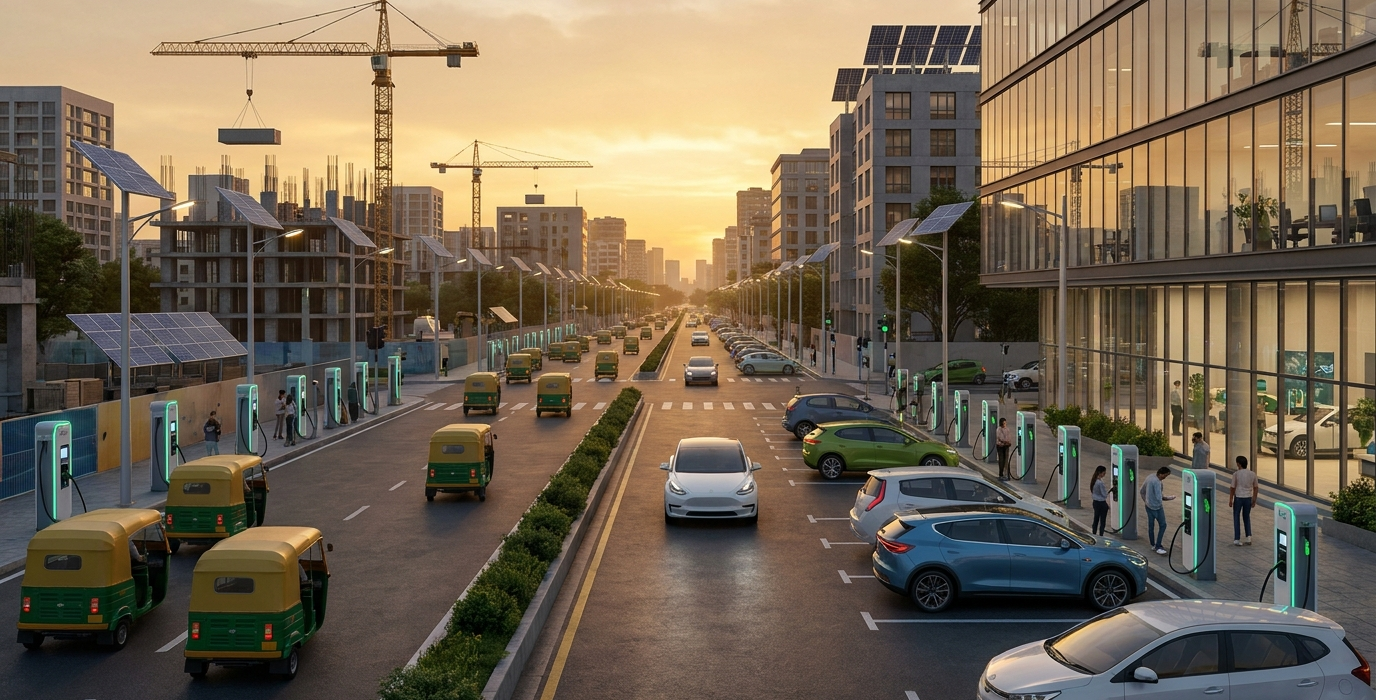
Major metropolitan hubs like Delhi, Mumbai, Bengaluru, and Chennai are witnessing the installation of hundreds of new charging stations weekly. But the revolution isn’t confined to the metros. National highways are being strategically peppered with charging points, aiming to connect major cities and unlock inter-state EV travel. This isn’t just about convenience; it’s about fundamentally reshaping how we perceive transportation in India.
This explosive growth is a direct result of concerted efforts from both the government and the private sector. Policy interventions, financial incentives, and a clear vision for a sustainable future are fueling this infrastructure push. We’re seeing established energy giants, automotive manufacturers, and dedicated EV charging startups all vying to build out this crucial ecosystem. The year 2026 is shaping up to be a pivotal moment, where the dream of widespread EV adoption begins to solidify into a tangible reality.
Accelerating Towards Accessibility: New Charging Solutions Emerge
The charging landscape in 2026 is becoming remarkably diverse, moving beyond the basic plug-and-play. We’re seeing a multi-pronged approach designed to meet the varied needs of EV users across India. One of the most significant developments is the rapid deployment of DC fast-charging stations. These powerful units can add hundreds of kilometres of range in under 30 minutes, making long-distance travel a viable option.
Cities are now dotted with these fast-charging hubs, often located in commercial complexes, public parking lots, and alongside major roadways. Beyond that, the concept of battery swapping is gaining serious traction, particularly for two- and three-wheelers. Companies are establishing networks of swap stations where riders can exchange a depleted battery for a fully charged one in mere minutes, a solution that mimics the familiarity of refuelling a petrol vehicle. This is especially transformative for delivery fleets and daily commuters who rely on their vehicles for their livelihood.
We are also witnessing a push for smart home charging solutions. As more households consider EVs, integrated charging points are becoming a standard feature in new apartment complexes and residential layouts. These solutions often come with smart grid integration, allowing users to charge during off-peak hours to save on electricity costs and reduce strain on the grid. The aim is clear: to make charging as seamless and convenient as powering our smartphones.
Government Push and Private Power: The Driving Forces Behind the Boom
The surge in India’s EV charging network in 2026 is not a spontaneous occurrence; it’s the product of deliberate and sustained policy support. The Indian government has been instrumental through initiatives like the Faster Adoption and Manufacturing of Electric Vehicles (FAME) scheme, which has been consistently updated to encourage charging infrastructure development. The latest iteration of FAME, FAME III, launched in late 2025, specifically earmarks substantial funds for building public charging stations across the country.
Beyond FAME, various state governments are rolling out their own incentives, including subsidies for setting up charging stations, favourable land allocation policies, and reduced electricity tariffs for charging infrastructure operators. For example, the Maharashtra government’s recent policy aims to have a charging station within every 3km radius in urban areas and every 25km on highways by 2027. These policies create a fertile ground for private investment.
The private sector’s response has been nothing short of enthusiastic. Energy conglomerates like Tata Power, Reliance Industries, and Adani Green Energy are investing billions into building vast charging networks. Automotive giants are also playing a crucial role; manufacturers like Tata Motors, Mahindra Electric, and Ola Electric are not just selling EVs but also actively partnering with charging infrastructure providers or setting up their own proprietary charging solutions. This symbiotic relationship between government policy and private enterprise is the engine driving this remarkable expansion.
Navigating the Network: Understanding Your Charging Options
As the charging network expands, understanding your options is key to a smooth EV ownership experience. In 2026, you’ll primarily encounter three main types of charging: Level 1 (Slow Charging), Level 2 (Medium Charging), and DC Fast Charging. Level 1 typically uses a standard household 3-pin socket and is the slowest, often used for overnight charging of e-scooters or when no other option is available. It can take 8-12 hours or more to fully charge an EV battery.
Level 2 charging, which uses a dedicated charging point installed at home or a public location, is much faster. It typically takes 4-8 hours for a full charge, making it ideal for overnight home charging or topping up at work. Many public charging stations in malls, office complexes, and residential societies fall into this category. These stations often use AC power and are more efficient than Level 1.
The game-changer, however, is DC Fast Charging (DCFC). These stations bypass your car’s onboard charger and deliver direct current power straight to the battery. This allows for incredibly rapid charging, often replenishing 80% of the battery in 20-45 minutes, depending on the vehicle and charger capacity. You’ll find these strategically located along highways, at dedicated charging hubs, and increasingly in urban centres for quick top-ups. It’s crucial to check your vehicle’s compatibility with different DCFC standards (like CCS2 or CHAdeMO, though CCS2 is rapidly becoming dominant in India).
Beyond the Plug: Innovative Charging Technologies and Services
The EV charging ecosystem in India is not just growing; it’s innovating at a rapid pace in 2026. One of the most exciting areas is the integration of renewable energy sources directly into charging infrastructure. Many new charging stations, especially those funded by large energy companies, are being powered by rooftop solar panels or are co-located with solar farms. This means your EV is literally being charged by the sun, further enhancing its environmental credentials.
Another area of significant development is vehicle-to-grid (V2G) technology. While still in its nascent stages for widespread consumer use, pilot projects are demonstrating how EVs can not only draw power from the grid but also supply it back during peak demand. This can help stabilise the grid and even offer financial incentives to EV owners. Imagine your car earning you money while it’s parked!
Furthermore, we are seeing the rise of smart charging platforms that use AI to optimise charging schedules. These platforms learn your driving habits and energy tariffs to ensure you charge your vehicle at the most cost-effective times. Some apps even allow you to reserve charging slots at public stations, eliminating the frustration of arriving at a busy hub. The focus is shifting from merely providing electricity to offering intelligent, integrated energy solutions that enhance the EV ownership experience. A surprising fact is that by late 2026, over 15% of new EV charging stations deployed are incorporating battery storage solutions to buffer intermittent solar power and provide faster charging speeds.
Challenges and the Road Ahead: What’s Next for India’s Charging Network?
Despite the exhilarating pace of expansion in 2026, the journey for India’s EV charging network is far from over. Several challenges need continuous attention to ensure sustained growth and widespread adoption. One significant hurdle remains standardisation. While CCS2 is gaining dominance, a fragmented landscape of charging connectors and payment systems can still be confusing for consumers. Efforts are underway to harmonise these across different manufacturers and charging providers.
Another critical aspect is grid capacity and upgradation. As the number of EVs swells, particularly in densely populated areas, the existing electricity grid will require significant upgrades to handle the increased load. Investment in grid modernisation and smart grid technologies is essential to prevent power outages and ensure reliable charging. The sheer scale of upgrades needed across cities like Kolkata and Chennai is immense.
Finally, maintenance and uptime of charging stations are crucial. A broken charger is as useless as no charger at all. Ensuring regular maintenance schedules, rapid repair services, and robust monitoring systems will be key to building consumer trust. We also need to see more robust solutions for charging in apartment buildings and older housing complexes, where retrofitting can be complex and costly. The next few years will be about refining these systems, ensuring reliability, and making EV charging as ubiquitous as finding a fuel pump today. One often overlooked challenge is ensuring cybersecurity for these interconnected charging points, a concern that is gaining prominence as the network grows.
Frequently Asked Questions
What is the fastest way to charge an EV in India in 2026?
The fastest way is using a DC Fast Charger (DCFC). These stations can typically add hundreds of kilometres of range in 20-45 minutes, depending on your vehicle’s battery capacity and the charger’s output (often 50kW, 100kW, or even 150kW and above).
Are battery swapping stations common for electric cars in India?
Battery swapping is currently more prevalent and practical for electric two- and three-wheelers in India in 2026. While there are ongoing pilots for electric cars, the sheer size and weight of car batteries make swapping less common than for smaller vehicles.
How much does it cost to charge an electric car in India in 2026?
Costs vary widely. Home charging (Level 2) is generally the cheapest, costing ₹6-10 per unit of electricity, translating to around ₹3-6 per km for many EVs. Public charging stations, especially fast chargers, can cost ₹15-25 per unit, making it more expensive but still cheaper than petrol. Some public chargers also charge a per-minute or per-session fee.
Will I be able to find charging stations on all major Indian highways by the end of 2026?
While significant progress is being made, it’s unlikely that *all* major highways will have ubiquitous charging stations by the end of 2026. However, key arterial routes connecting major cities are seeing rapid deployment, making inter-state EV travel increasingly feasible. Expect coverage to be concentrated on the busiest routes first.
Is it safe to charge my EV at public charging stations?
Yes, it is generally safe. Public charging stations adhere to safety standards and are designed to protect both the user and the vehicle. Reputable charging networks use secure payment gateways and robust infrastructure. Always ensure the station is from a well-known provider and follow any on-screen instructions.