Key Takeaways
- India’s EV market is projected for exponential growth, driven by government incentives, falling battery costs, and rising consumer awareness, with sales expected to surge by over 50% annually through 2026.
- Two-wheeler and three-wheeler segments will continue to dominate, offering accessible and affordable electric mobility solutions for a vast population.
- The charging infrastructure is rapidly expanding, with a focus on public charging stations, home charging solutions, and battery swapping technology, particularly in Tier-1 and Tier-2 cities.
- New battery technologies and local manufacturing initiatives are crucial for reducing costs and ensuring supply chain resilience, making EVs more competitive with internal combustion engine vehicles.
The Unstoppable Rise of Electric Mobility in India
The hum of electric motors is rapidly replacing the roar of engines across India, signalling a profound shift in the nation’s transportation landscape. By 2026, India’s electric vehicle (EV) market is poised for an unprecedented surge, projected to witness annual sales growth exceeding 50%. This isn’t just a trend; it’s a revolution fuelled by a potent mix of supportive government policies, declining battery prices, and a burgeoning environmental consciousness among consumers.
We are witnessing a fundamental reimagining of personal and commercial mobility. From the bustling streets of Delhi to the serene backwaters of Kerala, electric two-wheelers and three-wheelers are becoming the preferred choice for daily commutes and last-mile deliveries. This accessibility is key to India’s EV dream, making sustainable transport a tangible reality for millions.
The government’s commitment is unwavering, with ambitious targets for EV adoption and significant subsidies under schemes like FAME (Faster Adoption and Manufacturing of Electric Vehicles). These initiatives are not only lowering the upfront cost of EVs but also encouraging domestic manufacturing and innovation. As battery technology matures and economies of scale kick in, the total cost of ownership for EVs is becoming increasingly attractive, often surpassing that of their petrol and diesel counterparts.
Dominance of Two and Three-Wheelers: The Backbone of India’s EV Fleet
When you think of India’s EV revolution, the first vehicles that come to mind are likely to be the ubiquitous scooters and autorickshaws. These segments are not just leading the charge; they are the very foundation upon which India’s electric mobility future is being built. By 2026, we expect two-wheelers and three-wheelers to continue their overwhelming dominance, accounting for over 80% of all EV sales in the country.
Their popularity stems from a perfect storm of factors. Firstly, they offer an affordable entry point into electric mobility, making them accessible to a much broader demographic than four-wheelers. Secondly, their operational costs are significantly lower, a critical consideration for daily commuters and small businesses reliant on these vehicles. Imagine saving thousands of rupees each month on fuel and maintenance – this is the reality for many early EV adopters.
The sheer volume of two and three-wheelers on Indian roads means that even a small percentage shift to electric translates into massive numbers. Companies are investing heavily in R&D for these segments, leading to improved battery range, faster charging times, and more robust designs suited to India’s diverse terrains and traffic conditions. We are also seeing a rise in specialized electric three-wheelers for logistics and ride-hailing, further expanding their utility.
The Expanding Charging Ecosystem: Powering the Nation’s Electric Journey
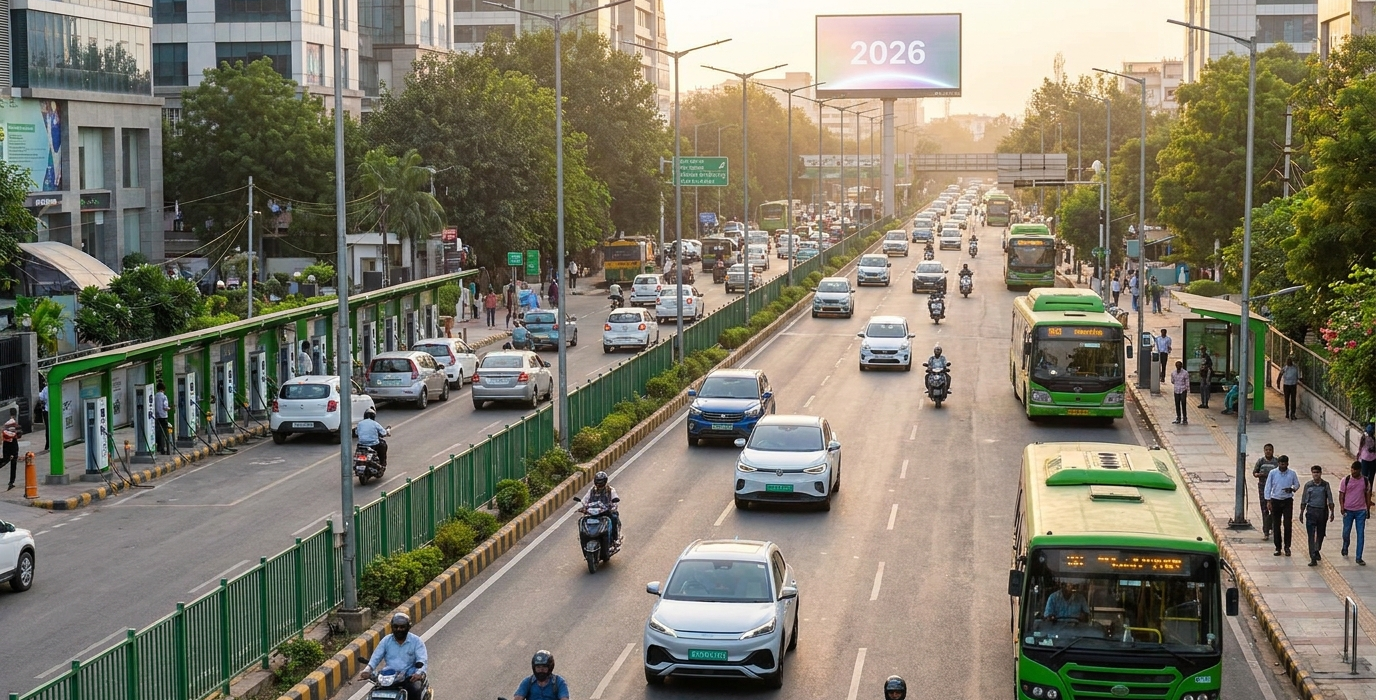
A robust charging infrastructure is paramount to the widespread adoption of electric vehicles, and India is making significant strides in this critical area. By 2026, you will notice a dramatic increase in the availability of charging points, transforming range anxiety into a distant memory for many EV owners. The focus is on a multi-pronged approach, addressing diverse user needs.
Public charging stations are rapidly proliferating in urban centres and along major highways. These are strategically located at malls, parking lots, petrol stations, and even residential complexes, ensuring that drivers can easily find a charging spot. Furthermore, the push for home charging solutions is empowering EV owners to refuel their vehicles overnight, much like they do their smartphones. This convenience is a game-changer for daily commuting.
Battery swapping technology is also gaining traction, particularly for commercial fleets and two-wheeler riders. Imagine quickly swapping out a depleted battery for a fully charged one in under a minute, just like refuelling a petrol vehicle. Companies like Sun Mobility are pioneering this model, offering a flexible and efficient solution. The government is actively promoting standards and interoperability to ensure a seamless experience across different swapping networks.
Innovation in Battery Technology and Local Manufacturing: Driving Down Costs
The cost of batteries has historically been a significant barrier to EV adoption. However, by 2026, we anticipate a substantial reduction in battery prices, largely driven by advancements in technology and a strong push for localized manufacturing. This is the bedrock for making EVs truly competitive with their internal combustion engine (ICE) counterparts.
Researchers and manufacturers are exploring new battery chemistries, such as solid-state batteries, which promise higher energy density, faster charging, and improved safety. While widespread commercialization might take a little longer, incremental improvements in current lithium-ion technology are already yielding significant cost benefits. Local assembly and manufacturing of battery packs are also crucial. Companies are setting up gigafactories across India, reducing reliance on imports and creating valuable jobs.
A surprising fact is that India is rich in certain minerals essential for battery production, such as mica, which is used in battery separators. Tapping into these domestic resources, coupled with advanced manufacturing techniques, will further drive down costs and enhance supply chain security. This strategic focus on indigenous production is not just about economics; it’s about national self-reliance and fostering a robust domestic EV ecosystem. The government’s Production Linked Incentive (PLI) scheme for advanced chemistry cell batteries is a major catalyst in this endeavour.
The Shifting Landscape of Consumer Perception and Demand
Consumer attitudes towards electric vehicles are undergoing a dramatic transformation. By 2026, the perception of EVs as niche or experimental products will have largely faded, replaced by a recognition of their practicality, performance, and environmental benefits. We are witnessing a growing segment of early adopters inspiring a wider acceptance.
As more EVs hit the road and charging infrastructure becomes more visible, consumer confidence is soaring. Test drives are revealing the quiet, smooth, and responsive driving experience that EVs offer, often outperforming ICE vehicles in acceleration. The rising cost of petrol and diesel, coupled with increasing awareness of air pollution and climate change, further strengthens the case for electric mobility. Families are beginning to see EVs not just as a responsible choice, but as a smart financial and lifestyle decision.
The influence of social media and word-of-mouth is also playing a significant role. Positive experiences shared by friends, family, and online influencers are building trust and demystifying EV ownership. We are also seeing a rise in demand for electric versions of popular car models, indicating a mainstreaming of the technology. This growing consumer pull is an indispensable force driving the EV revolution forward.
The Road Ahead: Challenges and Opportunities in 2026 and Beyond
While the trajectory for India’s EV market is undeniably upward, the journey to 2026 and beyond will not be without its challenges. Addressing these hurdles effectively will be key to unlocking the full potential of electric mobility. One significant challenge remains the upfront cost of electric cars, although this is rapidly diminishing.
Grid stability and the integration of renewable energy sources to power EVs are also critical considerations. As the number of EVs grows, ensuring that our electricity grids can handle the increased demand without relying heavily on fossil fuels will be paramount. The development of a skilled workforce for EV manufacturing, maintenance, and repair is another area requiring focused attention. Training programs and educational initiatives are essential to equip individuals with the necessary skills.
However, these challenges are also fertile ground for innovation and investment. The opportunities are immense, from developing advanced battery recycling technologies to creating smart charging solutions that optimize energy consumption. The Make in India initiative, coupled with global partnerships, will foster a vibrant ecosystem for EV component manufacturing. The future is electric, and India is rapidly positioning itself as a global leader in this transformative era of transportation.
“By 2026, India’s commitment to electric mobility will not just be about reducing emissions; it will be a testament to our nation’s ingenuity, economic growth, and a cleaner, healthier future for all citizens.”
Frequently Asked Questions
What is the projected growth rate for India’s EV market in 2026?
India’s EV market is projected to grow at an impressive rate, with annual sales expected to surge by over 50% through 2026, driven by strong government support and increasing consumer adoption.
Which EV segments are expected to dominate the Indian market by 2026?
The two-wheeler and three-wheeler segments are anticipated to continue their dominance, making up the vast majority of EV sales due to their affordability and practicality for the Indian consumer.
What are the key initiatives supporting EV adoption in India?
Key initiatives include government subsidies under schemes like FAME, incentives for domestic manufacturing, and policies aimed at expanding charging infrastructure and promoting battery swapping technology.
How is the charging infrastructure evolving in India?
The charging infrastructure is rapidly expanding with a focus on public charging stations, home charging solutions, and the growing adoption of battery swapping technology, particularly in urban and semi-urban areas.
Are battery costs expected to decrease significantly by 2026?
Yes, battery costs are projected to decrease significantly due to technological advancements, increased local manufacturing, and economies of scale, making EVs more competitive.