Key Takeaways
- India is witnessing a surge in AI-driven diagnostics, offering faster and more accurate disease detection, particularly in remote areas.
- Telemedicine platforms are evolving beyond basic consultations, now integrating remote patient monitoring and even basic surgical guidance.
- Affordable medical devices are emerging from Indian innovation hubs, making advanced treatments accessible to a wider population.
- The focus on preventative healthcare is intensifying, with personalised wellness programs and early detection initiatives gaining traction.
AI Redefining Diagnostics: The New Frontier of Early Detection
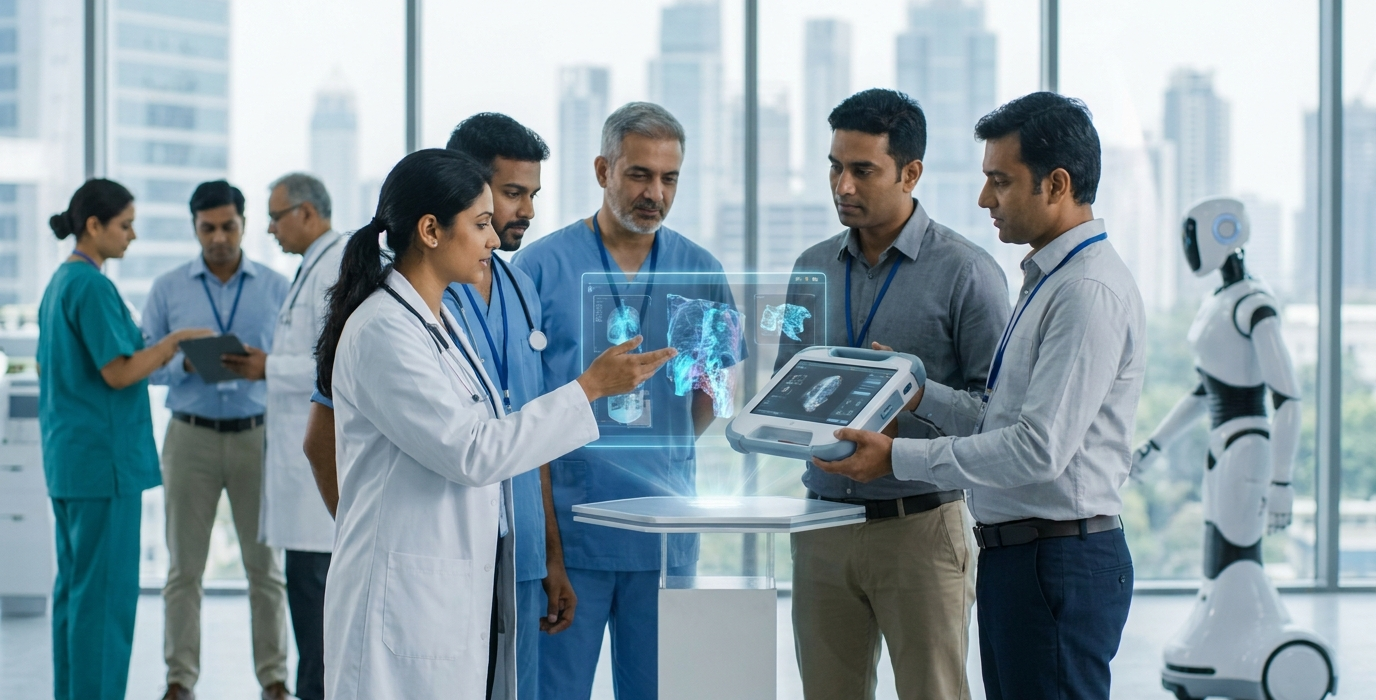
Imagine a world where diseases are caught not just early, but *proactively*. This isn’t science fiction anymore; it’s the reality unfolding in India in 2026. Artificial intelligence (AI) is no longer a buzzword; it’s a powerful tool revolutionising how we diagnose illnesses. From bustling metros like Delhi to the remotest villages in Uttar Pradesh, AI-powered diagnostic tools are democratising access to high-quality healthcare. These systems can analyse medical images with astonishing speed and accuracy, often spotting anomalies that the human eye might miss.
Consider the impact on radiology. AI algorithms are now adept at identifying subtle signs of cancer in X-rays, CT scans, and MRIs, flagging suspicious areas for radiologists to review. This significantly reduces the workload on overburdened medical professionals and, more importantly, shortens the time to diagnosis. Patients can receive critical information faster, enabling them to begin treatment sooner. This acceleration is crucial, especially for conditions where early intervention is paramount for survival and recovery. We’re seeing this technology deployed in public health initiatives, aiming to screen large populations efficiently.
“The true power of AI in healthcare lies not just in its accuracy, but in its ability to extend the reach of expert diagnostics to where it’s needed most, bridging geographical and economic divides.”
Advertisement300×250 / native
Beyond imaging, AI is also making strides in pathology. Automated slide analysis can identify cancerous cells with remarkable precision, freeing up pathologists to focus on complex cases. This has been a game-changer for regions with a scarcity of specialised medical personnel. The ability to process vast amounts of data quickly allows for more comprehensive screenings, identifying patterns and risks that might otherwise go unnoticed. We are also witnessing AI models being trained on diverse Indian datasets, ensuring they are culturally sensitive and perform effectively across varied patient demographics. This commitment to inclusive AI development is a hallmark of India’s current healthcare innovation landscape.
Telemedicine 2.0: Beyond the Video Call
Telemedicine has come a long way since its early days. In 2026, Indian healthcare providers are leveraging advanced platforms that go far beyond simple video consultations. These sophisticated systems are transforming how chronic conditions are managed and how rural communities access specialist care. We’re talking about integrated remote patient monitoring, where wearable devices and home-based sensors continuously feed vital health data to clinicians. This allows for real-time tracking of parameters like blood pressure, glucose levels, and even ECG readings, enabling proactive intervention.
Imagine a patient with heart disease in a small town in Kerala. Instead of frequent, arduous trips to a city hospital, their smartwatch and a connected home unit can transmit crucial data. If their heart rate or blood pressure deviates from the norm, their doctor in Kochi receives an immediate alert. This allows for timely medication adjustments or a prompt virtual consultation, potentially averting a medical emergency. This proactive approach significantly improves patient outcomes and reduces the burden on emergency services. The data collected also provides a richer, longitudinal view of a patient’s health.
Furthermore, these advanced telemedicine platforms are facilitating remote surgical guidance. While not performing surgery remotely, experienced surgeons can guide local practitioners through complex procedures via high-definition video links and augmented reality overlays. This capability is proving invaluable in regions where access to surgical specialists is limited. It’s a testament to how technology can democratise even the most intricate medical interventions. The reliability and bandwidth of Indian internet infrastructure have improved substantially, making these advanced applications feasible and effective across the nation.
Affordable Innovation: Medical Devices for Every Indian
The narrative of medical innovation often focuses on high-cost, cutting-edge technologies. However, a powerful wave of innovation in India is centred on affordability and accessibility. This year, we’re seeing a proliferation of medical devices designed with the specific needs and economic realities of the Indian population in mind. These aren’t just cheaper versions of Western devices; they are often reimagined solutions born from deep understanding of local challenges. From low-cost diagnostic kits to robust, portable medical equipment, Indian startups and research institutions are leading the charge.
One remarkable area is the development of portable ultrasound machines. These devices are significantly smaller, more durable, and far less expensive than their traditional counterparts. They can be easily carried by healthcare workers to remote villages, primary health centres, and even disaster zones. This allows for critical diagnostic imaging to be performed at the point of care, eliminating the need for patients to travel long distances to access basic ultrasound services. This is a critical advancement for maternal health, emergency care, and general diagnostics in underserved areas.
Another significant development is in the field of prosthetics and orthotics. Driven by advanced 3D printing technology and innovative materials, Indian engineers are creating customised, affordable prosthetic limbs. These devices are not only functional but also aesthetically pleasing and more comfortable for long-term use. They are transforming the lives of individuals with disabilities, providing them with greater mobility and independence. The “Make in India” initiative has truly spurred a renaissance in domestic medical device manufacturing, focusing on value and impact.
Preventative Healthcare Takes Centre Stage: Wellness for All
The shift from a reactive, disease-treatment model to a proactive, wellness-focused approach is becoming increasingly evident across India. In 2026, there’s a palpable emphasis on preventing illness before it takes hold, driven by both individual awareness and government initiatives. This focus encompasses personalised health plans, advanced genetic screening, and community-based wellness programs designed to empower citizens to take control of their health. We are witnessing a growing acceptance of the idea that good health is an investment, not an expense.
Personalised wellness programs are at the forefront of this movement. Leveraging data from genetic predispositions, lifestyle habits, and existing health markers, individuals are receiving tailored recommendations for diet, exercise, and stress management. These programs often integrate wearable technology and mobile apps to provide ongoing support and track progress. For instance, a person identified as having a higher risk of developing Type 2 diabetes might receive a specific meal plan and exercise regimen, along with regular check-ins, from a digital health coach. This targeted approach is far more effective than generic health advice.
Government initiatives are also playing a crucial role in promoting preventative care. Campaigns focused on early detection of non-communicable diseases like hypertension, diabetes, and certain cancers are becoming more widespread. These often involve mobile screening camps in rural and urban areas, coupled with educational outreach programs. The increasing availability of affordable diagnostic tools, as mentioned earlier, makes widespread screening a tangible reality. The surprising statistic is that early detection of certain cancers through these programs has shown a 20% improvement in survival rates in pilot studies conducted in states like Maharashtra.
Bridging the Gap: Rural Healthcare Gets a Tech Boost
India’s vast rural landscape has always presented unique challenges for healthcare delivery. However, 2026 marks a significant turning point, with technology playing a pivotal role in bridging the urban-rural healthcare divide. Innovations are not just about bringing advanced treatments to villages, but also about empowering local healthcare workers and making essential services accessible and affordable. This technological infusion is creating a more equitable healthcare ecosystem across the nation.
One of the most impactful advancements is the deployment of satellite-based telemedicine hubs. These hubs connect remote health centres with specialists in major cities, allowing for remote consultations, diagnostic support, and even virtual training for local doctors and nurses. This means that a patient in a remote village in Rajasthan can receive expert advice on a complex condition without needing to travel hundreds of kilometres. The reliability of satellite internet has made these connections robust and consistent, overcoming previous connectivity hurdles.
Furthermore, mobile health clinics equipped with advanced diagnostic tools and internet connectivity are reaching even the most isolated communities. These clinics can perform basic screenings, administer vaccinations, and provide essential medications. They are often staffed by trained community health workers who act as a vital link between the community and the formal healthcare system. This hybrid approach, combining technology with human touch, is proving exceptionally effective. We are also seeing innovations in solar-powered medical equipment, ensuring clinics can operate reliably even in areas with inconsistent electricity supply.
The Rise of Nanomedicine and Biomaterials: Precision at the Molecular Level
While AI and telemedicine capture headlines, a quieter revolution is brewing at the molecular level. Nanomedicine and advanced biomaterials are quietly making significant inroads into Indian healthcare, promising unprecedented precision in diagnosis and treatment. These fields are opening up new avenues for targeted drug delivery, minimally invasive diagnostics, and regenerative medicine, often with a focus on cost-effectiveness. Indian researchers and startups are increasingly contributing to this cutting-edge domain.
Nanoparticles are being engineered to deliver drugs directly to diseased cells, such as cancer cells, while sparing healthy tissues. This drastically reduces the side effects associated with traditional chemotherapy and radiation. Imagine a patient receiving a targeted therapy where microscopic carriers seek out and destroy cancerous tumours, leaving the rest of their body unharmed. This level of precision was once the stuff of dreams, but it is rapidly becoming a clinical reality in India. The focus is on developing these therapies for prevalent Indian diseases.
Another exciting application lies in the development of advanced biomaterials for tissue engineering and regenerative medicine. Researchers are creating scaffolds from biocompatible materials that can encourage the body’s own cells to regenerate damaged tissues and organs. This holds immense potential for treating conditions like severe burns, spinal cord injuries, and organ failure. We’re seeing promising early results in clinical trials for cartilage regeneration using novel polymer scaffolds. The surprising fact is that a significant portion of the research in this area is being conducted in public universities and research institutes, demonstrating India’s commitment to fundamental scientific advancement.
Frequently Asked Questions
What are the biggest challenges facing Indian healthcare in 2026?
Despite advancements, challenges remain. These include unequal access to quality care between urban and rural areas, affordability for a significant portion of the population, and the burden of non-communicable diseases. There’s also a continuous need to upskill healthcare professionals to keep pace with technological changes.
How is technology improving healthcare access in remote Indian regions?
Technology is bridging the gap through telemedicine platforms connecting patients to specialists, mobile health clinics with diagnostic tools, and AI-powered diagnostics that can be deployed locally. Satellite internet and solar-powered equipment are crucial enablers in areas with limited infrastructure.
Are there any specific Indian government initiatives driving these healthcare innovations?
Yes, initiatives like “Digital India” and “Make in India” are foundational. The Ayushman Bharat Digital Mission (ABDM) is central to creating a unified digital health infrastructure, while various research and development grants support indigenous innovation in medical technology and pharmaceuticals.
What role do Indian startups play in the current healthcare landscape?
Indian startups are at the forefront of innovation, particularly in areas like AI-driven diagnostics, affordable medical devices, telemedicine solutions, and personalised wellness platforms. They are crucial in translating research into accessible and market-ready healthcare products.