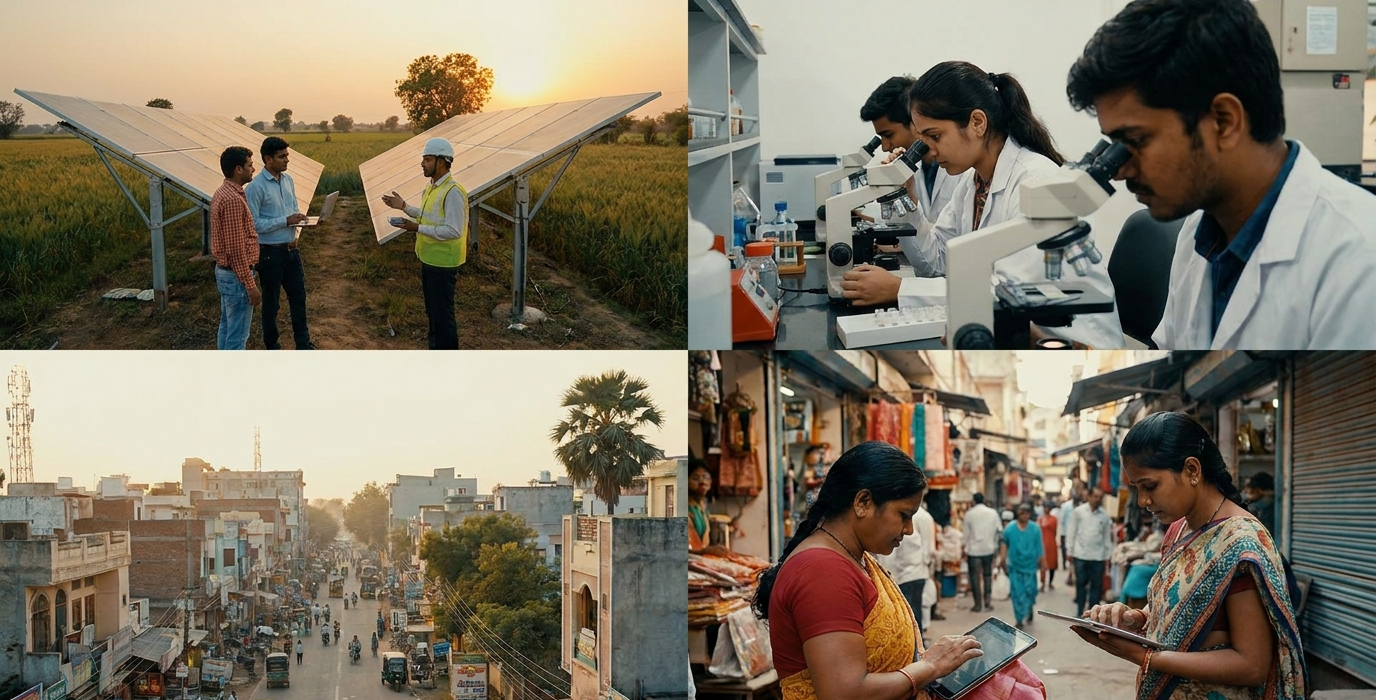
India’s startup ecosystem is buzzing, a vibrant kaleidoscope of innovation that has captured global attention. We’ve all heard the tales of “unicorns” – those coveted startups valued at over a billion dollars. From fintech giants revolutionizing payments to e-commerce platforms delivering everything imaginable, these success stories are inspiring. But beneath the dazzling surface of these high-profile companies lies a vast, untapped landscape of niche sectors brimming with potential. This is where the real next wave of Indian innovation is quietly brewing, offering unique solutions and opportunities for entrepreneurs and investors alike.
The narrative of Indian startups has often been dominated by the pursuit of rapid, hyper-growth models that lead to unicorn status. While this ambition is commendable, it can sometimes overshadow the incredible work being done in specialized fields. These niche players might not be chasing billion-dollar valuations overnight, but they are addressing critical needs, building sustainable businesses, and creating significant impact within their specific domains. Understanding these areas is key to appreciating the full breadth and depth of India’s entrepreneurial spirit.
For aspiring founders, the allure of a unicorn can be blinding. However, focusing on a well-defined problem within a niche market can often lead to a more resilient and profitable business. The competition might be less intense, customer loyalty stronger, and the path to profitability clearer. This is not to say that scale isn’t important, but rather that a strong foundation built on solving a specific problem can be the bedrock of long-term success.
As a seasoned observer of the Indian business landscape, I’ve seen firsthand how these focused ventures can transform industries and lives. They are the backbone of a diversified economy, ensuring that no segment is left behind. Let’s delve into some of these exciting niche areas that are poised for significant growth, offering a different, yet equally compelling, vision of India’s startup future.
The Rise of Agri-Tech Innovations for the Heartland
India’s agricultural sector, the backbone of its economy, has long been ripe for technological disruption. While large-scale ventures have made inroads, a significant opportunity lies in developing solutions tailored for the vast number of small and marginal farmers who form the core of Indian agriculture. Think about the farmer in rural Haryana, dealing with unpredictable monsoons and fluctuating market prices. These are the individuals whose lives can be profoundly impacted by accessible, affordable, and relevant agri-tech.
Startups are increasingly focusing on providing precision farming tools, such as soil testing kits that offer real-time data on nutrient levels and water requirements. These kits, often surprisingly affordable, empower farmers to optimize fertilizer and water usage, leading to higher yields and reduced costs. Furthermore, platforms connecting farmers directly to consumers or bulk buyers are cutting out intermediaries, ensuring fairer prices and a more stable income. This disintermediation is crucial in a country where farmers often receive a pittance for their hard work.
Another exciting area is the development of affordable, IoT-enabled sensors that monitor crop health and environmental conditions. These sensors can alert farmers to early signs of disease or pest infestation, allowing for timely interventions and preventing significant crop loss. Imagine a farmer near Madurai receiving an alert on their smartphone about a potential blight in their chili crop, enabling them to act before it spreads. This proactive approach is a game-changer.
We’re also seeing innovation in supply chain management for perishables. Startups are developing cold chain solutions that are accessible even at the village level, reducing post-harvest losses which, in India, can be as high as 30-40% for certain fruits and vegetables. This is not just about technology; it’s about building trust and providing training to farmers on how to adopt these new methods. The impact extends beyond economics, contributing to food security and empowering rural communities.
Healthcare Accessibility: Bridging the Rural-Urban Divide
Access to quality healthcare remains a significant challenge in many parts of India, particularly in rural and semi-urban areas. While metros boast state-of-the-art hospitals, a substantial portion of the population struggles to reach them or afford their services. This is where niche healthcare startups are stepping in, leveraging technology to democratize access and improve health outcomes.
Telemedicine platforms are perhaps the most prominent example. These platforms connect patients in remote locations with doctors in cities, offering consultations, diagnosis, and even prescription management remotely. Consider a patient in a remote village in Uttarakhand, who can now consult with a specialist in Delhi without the arduous journey. This not only saves time and money but also ensures that timely medical advice is available when it’s needed most.
Beyond consultations, startups are innovating in diagnostics. Portable diagnostic devices that can be used at the primary health center level or even by community health workers are becoming increasingly sophisticated. These devices, often powered by AI for initial analysis, can detect a range of conditions from diabetic retinopathy to certain types of cancers, allowing for early detection and intervention. A screening camp in a village in Bihar could now identify potential eye issues much faster and more efficiently.
The focus is also on preventative care and health education. Gamified apps that educate people about hygiene, nutrition, and common ailments, delivered in vernacular languages, are gaining traction. These initiatives aim to shift the paradigm from a reactive treatment model to a proactive wellness approach. One surprising fact is that some startups are developing low-cost, AI-powered tools to analyze cervical swabs, making early detection of cervical cancer more accessible in areas with limited pathology infrastructure. This could dramatically reduce mortality rates from a disease that disproportionately affects women in India.
Ed-Tech for the Masses: Beyond Urban Classrooms
The dream of quality education for every Indian child is slowly but surely being realized, thanks to the burgeoning ed-tech sector. While many associate ed-tech with online courses for competitive exams or upskilling professionals, the real frontier lies in making foundational learning accessible and engaging for students across all socio-economic strata, especially in underserved regions.
Startups are developing affordable learning platforms that cater to the curriculum prescribed by state education boards, often delivering content in multiple regional languages. This is crucial because a significant percentage of students in India study in their mother tongue, and English-centric platforms often fall short. Imagine a child in a small town in Maharashtra learning mathematics through interactive modules in Marathi, making complex concepts easier to grasp.
Another vital area is the development of low-bandwidth solutions. Not all parts of India have consistent high-speed internet. Therefore, ed-tech platforms that can function effectively on 2G or even offline modes are essential. This ensures that students in remote areas are not left behind due to technological limitations. Some of these platforms even utilize pre-loaded content on basic smartphones or tablets distributed through government initiatives.
The focus is also shifting towards teacher training and enablement. Startups are creating tools and resources for teachers in government schools to enhance their pedagogical skills and classroom management. This includes digital lesson plans, assessment tools, and platforms for peer-to-peer learning among educators. A surprising development is the use of AI-powered virtual assistants that can help teachers personalize learning paths for students struggling with specific subjects, providing immediate feedback and support. This democratizes personalized attention, something often limited by large class sizes.
Sustainable Solutions: Greening India’s Growth Story
As India charts its course towards economic growth, the imperative for sustainable development has never been greater. Numerous startups are emerging as pioneers in eco-friendly solutions, addressing environmental challenges and creating green economies. These ventures are not just about altruism; they represent a significant business opportunity as both consumers and regulators increasingly demand sustainable practices.
Waste management and recycling are critical areas. Startups are developing innovative technologies to convert various forms of waste – from plastic to agricultural residue – into valuable resources or energy. For instance, some companies are turning plastic waste into construction materials or fuel, while others are creating biogas from organic waste for rural households. This tackles two major problems simultaneously: waste accumulation and reliance on traditional energy sources.
The renewable energy sector, beyond large solar parks, is seeing a surge in niche applications. Startups are designing and deploying micro-grid solutions for off-grid communities, providing reliable and clean electricity. Think about a remote village in Ladakh that can now power its essential services through a localized solar and battery system, eliminating the need for expensive and polluting diesel generators. This fosters economic activity and improves quality of life.
We are also witnessing the rise of sustainable fashion and eco-friendly consumer goods. Companies are using organic cotton, recycled materials, and natural dyes to create apparel, and developing biodegradable packaging solutions. The focus is on reducing the environmental footprint of everyday products. A surprising fact is that some startups are even developing biodegradable alternatives to single-use plastics derived from agricultural waste like banana stems, offering a truly circular economy solution.
Fintech for the Unbanked and Underbanked
While India has made tremendous strides in digital payments, a significant portion of its population remains unbanked or underbanked. These are individuals who lack access to formal banking services, rely on cash, and often fall prey to predatory lending practices. Niche fintech startups are stepping in to bridge this gap, offering financial inclusion and empowering these communities.
One key area is micro-lending and credit scoring for individuals with no formal credit history. Startups are using alternative data sources, such as mobile phone usage patterns, utility bill payments, and even social media interactions (with consent), to assess creditworthiness. This allows them to offer small loans to farmers, small business owners, and gig economy workers who would otherwise be denied credit by traditional banks.
Digital wallets and payment solutions tailored for low-income users are also gaining traction. These often come with simplified interfaces, voice-based assistance in vernacular languages, and features that encourage savings and small investments. Imagine a street vendor in Kolkata being able to accept digital payments, track their daily sales, and even set aside a small amount for future needs, all through a user-friendly app.
Another exciting development is in the realm of financial literacy and advisory services. Startups are creating educational content and personalized guidance to help people understand basic financial concepts, manage their money, and plan for the future. They are demystifying complex financial products and making them accessible. A surprising innovation we’ve seen is the use of AI chatbots that can answer financial queries in local dialects, providing on-demand advice to individuals who may not have access to human financial advisors.
The Future is Now: Embracing Niche Innovation
The narrative of India’s startup boom is far richer and more diverse than just the pursuit of unicorns. The real magic lies in the ingenuity and dedication of entrepreneurs who are identifying specific problems within niche sectors and crafting innovative, often low-cost, solutions. These ventures are not only building sustainable businesses but are also driving meaningful social and economic impact across the length and breadth of the country.
From empowering farmers with precision agriculture tools to making healthcare accessible in remote villages, from revolutionizing education for underserved students to pioneering green technologies, and from bringing financial services to the unbanked to creating new paradigms in supply chain efficiency for perishable goods, these niche players are the unsung heroes. They are addressing the real needs of India, one specific problem at a time.
For aspiring entrepreneurs, this presents a golden opportunity. Instead of chasing the crowded unicorn path, consider identifying a specific pain point in a niche market. Understand your customer deeply, leverage technology thoughtfully, and focus on building a sustainable business model. The potential for growth, impact, and profitability in these specialized domains is immense.
As investors, it’s time to look beyond the headline-grabbing valuations and explore the deep value being created in these focused sectors. These are the companies that are building the foundations of India’s future economy, ensuring that progress is inclusive and sustainable. The next big success story might not be a unicorn, but a company that quietly but effectively solves a critical problem for millions. We are witnessing a quiet revolution, and it’s incredibly exciting to be a part of it.