Key Takeaways
- The Mumbai Coastal Road has dramatically reduced travel times, especially for commuters in the western suburbs.
- Initial environmental impact assessments show mixed results, with ongoing monitoring crucial for long-term sustainability.
- Economic benefits are emerging, including boosted property values in adjacent areas and new commercial opportunities.
- Future phases promise to extend the road’s reach and integrate it with public transport, aiming for a holistic urban development.
The First Two Years: Navigating Change on Mumbai’s Shores
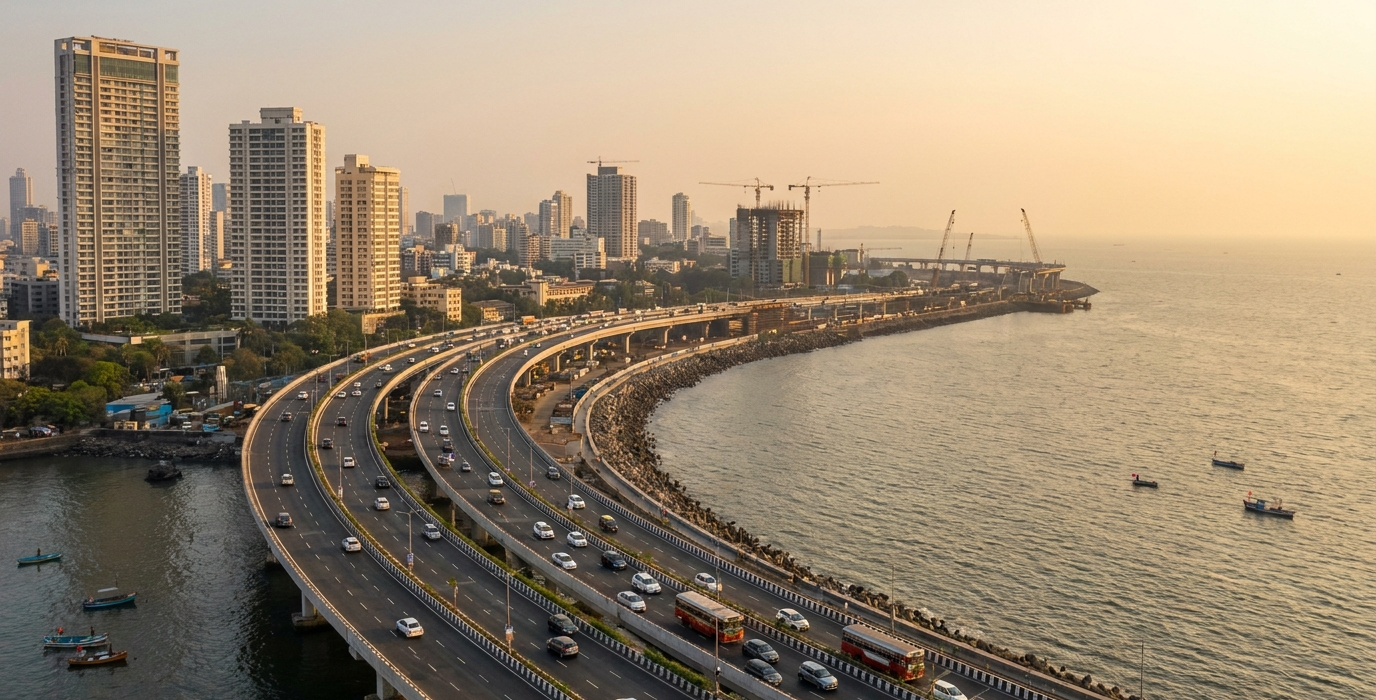
The hum of traffic on Mumbai’s newly inaugurated Coastal Road has become a familiar soundtrack for millions. As we mark nearly two years since its partial opening on March 11, 2026, it’s time to assess the real-world impact of this ambitious infrastructure project. Designed to ease congestion and enhance connectivity, the road has undeniably reshaped daily commutes for residents of the western suburbs. What was once a grueling hour-long journey across congested arterial roads can now be completed in a fraction of that time, especially during peak hours. This transformation is more than just faster travel; it’s about reclaiming hours of life previously lost to traffic jams.
The initial phase, stretching from Worli to Bandra-Worli Sea Link, has proven to be a game-changer for those living in areas like Bandra, Khar, and Santacruz. Commuters are reporting significant reductions in travel time to South Mumbai, boosting productivity and reducing stress levels. For businesses operating in these corridors, the improved accessibility has meant more efficient logistics and happier employees. The engineering marvel itself, a testament to India’s growing prowess in large-scale infrastructure development, has also become a symbol of Mumbai’s forward-looking vision.
However, the narrative isn’t solely about speed. The Coastal Road is an intricate tapestry woven with threads of environmental considerations, economic shifts, and urban planning challenges. As we delve deeper, we’ll explore these multifaceted impacts, looking beyond the immediate benefits to understand the long-term implications for Mumbai and its citizens. The journey of the Coastal Road is far from over; it’s an ongoing evolution that demands our attention and analysis.
Environmental Ripples: Balancing Progress with the Arabian Sea
One of the most significant discussions surrounding the Coastal Road project has centered on its environmental footprint. Critics raised concerns from the outset about the potential impact of reclamation on marine ecosystems, mangrove cover, and coastal erosion. The project involved reclaiming a substantial portion of land from the Arabian Sea, a process that invariably alters natural habitats. Initial environmental impact assessments (EIAs) highlighted the need for rigorous monitoring and mitigation strategies.
Since its opening, several studies have been underway to gauge the actual environmental changes. While specific, publicly released data is still being consolidated for a comprehensive two-year review, preliminary reports from organizations like the Maharashtra Maritime Board and independent environmental agencies suggest a complex picture. There have been observed localized impacts on intertidal zones and some disruption to existing fish breeding grounds. However, the authorities have implemented significant compensatory afforestation drives, particularly focusing on mangrove plantation in designated buffer zones.
A surprising fact that emerged from early ecological surveys is the unexpected resilience of certain marine species in the vicinity of the artificial structures, possibly finding new shelter. Conversely, increased marine traffic and altered water flow patterns require continuous observation. The project’s developers have also installed advanced waste management systems along the road to prevent pollution from entering the sea. The long-term success of these environmental measures will hinge on sustained commitment to monitoring and adaptive management practices, ensuring that Mumbai’s growth doesn’t come at an irreversible cost to its natural heritage.
Economic Currents: Boosting Property and Business Along the Coast
The economic ramifications of the Mumbai Coastal Road are becoming increasingly apparent, extending beyond mere traffic decongestion. Areas that were previously considered less accessible or prone to traffic bottlenecks are now experiencing a surge in interest from both residents and businesses. Property values in prime locations along the western coastline, particularly in areas like Bandra, Versova, and Juhu, have seen a noticeable uptick. Developers are actively marketing properties with “coastal road connectivity” as a key selling point, attracting a premium.
This rise in property values is not uniform and is more pronounced in areas directly benefiting from the improved access. For instance, commercial real estate in locales like Andheri West and near the Bandra-Worli Sea Link has become more attractive due to the enhanced connectivity to business districts in South Mumbai and the Bandra Kurla Complex (BKC). This has led to increased rental yields and a greater demand for office spaces. The improved logistical efficiency also translates into cost savings for businesses relying on transportation of goods.
A fascinating economic byproduct is the emergence of new informal and formal businesses catering to the increased flow of people. Small eateries, convenience stores, and service providers are cropping up along the access points and service roads. More significantly, the road has spurred interest in tourism and leisure activities. The promenade sections and scenic viewpoints are becoming popular destinations, hinting at potential growth in the hospitality sector. While the full economic impact will unfold over several years, the initial indicators point towards a positive boost for the region’s economy, driven by enhanced connectivity and accessibility.
Connecting the Dots: Integration with Public Transport and Future Phases
The vision for the Mumbai Coastal Road extends far beyond its initial operational stretch. The project is conceived as a comprehensive urban mobility solution, and its future phases are crucial for realizing this broader objective. The current operational segment is just the beginning, with plans underway to extend the road further north, connecting it to Kandivali and beyond. These future extensions are designed to bring the benefits of reduced travel times to a much wider segment of the city’s population.
Crucially, the focus is not just on extending the road but also on integrating it seamlessly with Mumbai’s existing and planned public transportation network. This includes better feeder bus services to the entry and exit points, and potentially, improved access to the Mumbai Metro lines that are also undergoing significant expansion. The goal is to create a multi-modal transport ecosystem where the Coastal Road acts as a high-speed arterial link, complemented by efficient last-mile connectivity.
One of the most exciting future developments is the planned integration with the upcoming Mumbai Trans Harbour Sea Link (MTHL) and the proposed Navi Mumbai coastal road. This will create a formidable network of high-speed corridors, significantly altering travel patterns between the island city, the western suburbs, and the mainland. The long-term plan envisions a city where commuting across vast distances becomes a matter of minutes, not hours. The project is also being studied as a potential model for other coastal cities in India grappling with similar urban congestion issues.
Beyond the Commute: Social and Lifestyle Transformations
The impact of the Coastal Road transcends mere traffic statistics; it’s subtly yet profoundly reshaping the lifestyles of Mumbaikars. For residents of the western suburbs, the reclaimed hours from their daily commute translate into more time for family, hobbies, or simply relaxation. This shift can have a significant positive effect on overall well-being and work-life balance, something Mumbaikars have long struggled to achieve. The reduction in commute stress is a palpable benefit, contributing to a more relaxed pace of life for many.
Furthermore, the road has opened up new avenues for recreation and leisure. The beautifully landscaped promenades and open spaces integrated into the project have become popular spots for evening strolls, jogging, and family outings. These public spaces, offering stunning views of the Arabian Sea, are fostering a sense of community and providing much-needed green lungs in a densely populated city. The accessibility to these areas has increased exponentially, drawing crowds from across the city.
A surprising social observation is the growing trend of weekend getaways and day trips along the coast, facilitated by the easier access. Families are exploring beaches and attractions further up the coast that were previously out of reach for a casual day trip. This has also spurred local economies in these newly accessible areas. The Coastal Road is, in essence, stitching the city together, fostering greater interaction and creating a more cohesive urban fabric. It’s a reminder that infrastructure projects can, when designed thoughtfully, contribute to a richer and more fulfilling urban experience.
Challenges and Opportunities Ahead: Sustaining the Momentum
While the initial impact of the Mumbai Coastal Road has been largely positive, the journey ahead is not without its challenges. Sustaining the momentum of development requires careful planning and continuous adaptation. One of the key challenges is ensuring the long-term maintenance of the infrastructure, which is constantly exposed to the harsh marine environment. Regular upkeep and timely repairs will be crucial to prevent deterioration and ensure the road’s longevity.
Another significant challenge lies in managing the increased vehicular load that the road attracts. While designed to decongest other roads, its own popularity can lead to congestion, especially during peak hours or if not managed effectively. The integration with public transport needs to be robust and continually improved to encourage a modal shift away from private vehicles. Without this, the road could simply become another high-speed bottleneck.
However, these challenges also present opportunities. The success of the Coastal Road can serve as a blueprint for future urban development projects across India. It highlights the importance of a holistic approach that considers environmental sustainability, economic upliftment, and social well-being alongside engineering marvels. The project has also spurred innovation in construction techniques and material science, particularly in the context of coastal infrastructure. By learning from the experiences of the past two years and proactively addressing future challenges, Mumbai can ensure that its Coastal Road continues to be a beacon of progress and a vital artery for its millions of inhabitants for decades to come.
Frequently Asked Questions
When was the Mumbai Coastal Road fully opened?
While a significant portion of the Mumbai Coastal Road opened on March 11, 2026, the full completion and opening of all planned phases are expected by late 2027. Commuters are currently benefiting from the operational sections.
What is the environmental impact of the Coastal Road?
Initial environmental monitoring shows localized impacts on marine life and intertidal zones. However, extensive mangrove plantation drives and advanced waste management systems are in place to mitigate these effects. Continuous ecological assessment is ongoing.
How has the Coastal Road affected property prices?
Property values in areas along the western coastline, particularly those with direct access to the road, have seen a significant appreciation. This is driven by enhanced connectivity and the desirability of coastal living.
Are there plans to extend the Coastal Road?
Yes, future phases are planned to extend the Coastal Road further north, connecting it to areas like Kandivali. The project also aims for integration with other major transport networks like the MTHL and the Mumbai Metro.