Key Takeaways
- Jaipur’s street food scene is a vibrant tapestry, best explored with a focus on specific, iconic dishes.
- From the sweet indulgence of Ghewar to the savoury crunch of Mirchi Bada, discover the must-try flavours of the Pink City.
- Navigating Jaipur’s bustling bazaars like Johari Bazaar and Bapu Bazaar offers a sensory feast and culinary adventure.
- Hygiene is paramount; look for bustling stalls with high turnover and fresh preparation to ensure a safe and delicious experience.
- Beyond the popular, explore lesser-known regional specialties that truly showcase Rajasthan’s diverse culinary heritage.
The Golden Triangle of Jaipur Street Eats
Jaipur, the Pink City, pulses with a lifeblood of flavour, and nowhere is this more evident than in its electrifying street food scene. As we gear up for culinary explorations in 2027, the timeless allure of Jaipur’s street food remains undiminished. Forget the Michelin stars for a moment; the real magic often happens on a roadside cart, under a humble canopy. You’ll find yourself drawn to the sizzle of the pan, the fragrant clouds of spice, and the cheerful banter of vendors who have perfected their craft over generations. This is where you connect with the soul of Rajasthan, one delicious bite at a time. We’re not just talking about a quick snack; we’re talking about an immersive experience that engages all your senses, promising memories as rich and colourful as the city itself.
Our journey begins with three absolute titans of Jaipur street food, a trinity of taste that no visitor should miss. First, the Ghewar. This honeycomb-like sweet, often found in vibrant discs, is a Rajasthani speciality, especially during festivals like Teej and Raksha Bandhan. Made from flour, ghee, and milk, it’s deep-fried and then soaked in sugar syrup, sometimes adorned with malai (clotted cream) or nuts. Its delicate, crisp texture with a molten sweet centre is utterly addictive. Next, we have the Mirchi Bada. These aren’t your average chillies; large green chillies are stuffed with a spiced potato mixture, dipped in gram flour batter, and deep-fried to a perfect crisp. The initial fiery kick is balanced by the creamy, flavourful potato filling, creating a sensational contrast. Finally, no street food pilgrimage to Jaipur is complete without tasting Pyaaz Kachori. Imagine a flaky, deep-fried pastry filled with a spicy, sautéed onion and spice mixture. It’s a flavour explosion that’s both comforting and invigorating, best enjoyed piping hot with a side of tamarind or mint chutney.
Beyond the Big Three: Expanding Your Palate
While Ghewar, Mirchi Bada, and Pyaaz Kachori are undoubtedly star attractions, Jaipur’s street food universe extends far beyond these iconic dishes. To truly appreciate the depth of Rajasthani cuisine, we encourage you to venture further. Consider the Dal Baati Churma, a staple dish that, while often served in restaurants, also finds its way onto street carts in simpler, more rustic forms. The baked, hard wheat bread (baati) is broken and mixed with ghee and a sweet crumble (churma), served alongside a flavourful lentil curry (dal). It’s a hearty, wholesome meal that speaks volumes about the region’s agricultural roots.
Then there’s the surprisingly diverse world of chaat. While you might be familiar with pani puri or sev puri, Jaipur offers its own unique spins. Keep an eye out for Dahi Vada, soft lentil fritters soaked in cool yogurt and drizzled with sweet and tangy chutneys. It’s a refreshing counterpoint to spicier fare. Another local favourite is Aloo Tikki Chaat, pan-fried potato patties served with chutneys, yogurt, and sev. The crisp exterior of the tikki gives way to a soft, spiced potato interior, creating a delightful textural experience. These dishes are testament to the ingenuity of street vendors, adapting traditional flavours to suit the quick, accessible format of street food. Exploring these lesser-known gems will offer you a more nuanced understanding of Jaipur’s culinary landscape.
Navigating the Culinary Labyrinths: Bazaars and Beyond
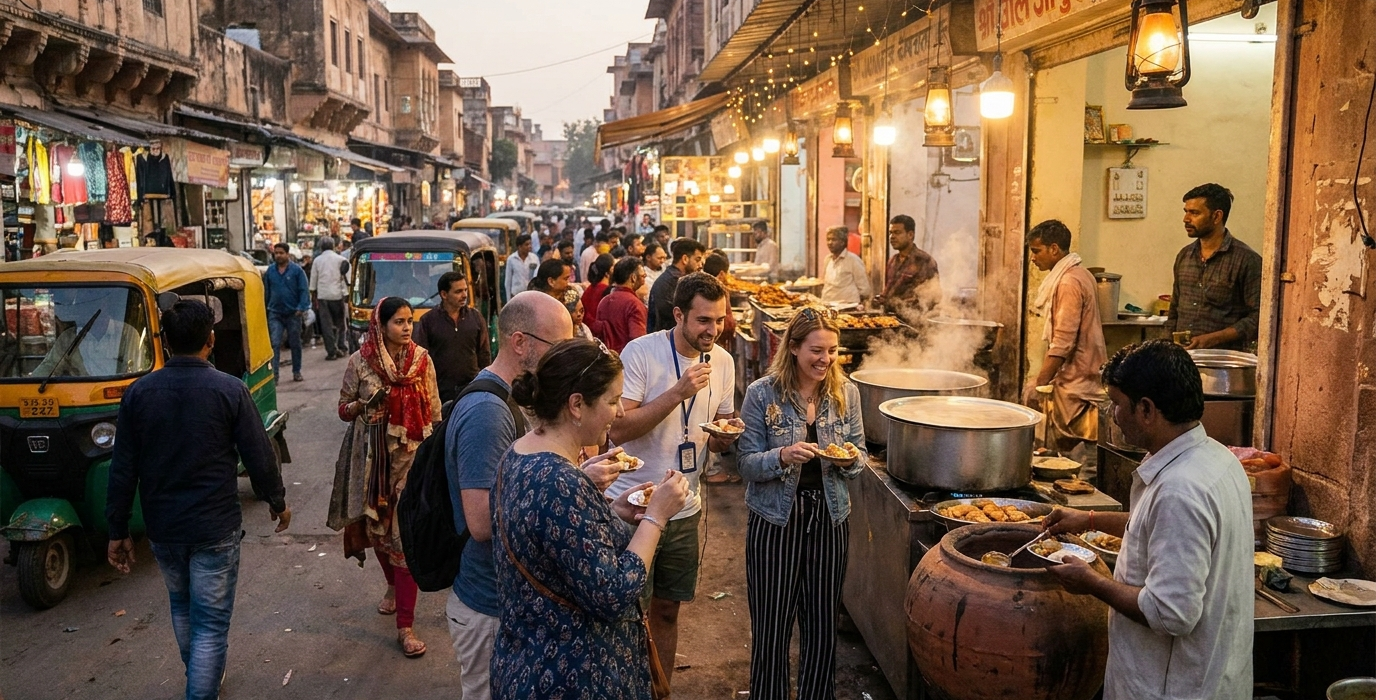
To truly immerse yourself in Jaipur’s street food culture, you must venture into its vibrant bazaars. These aren’t just shopping destinations; they are bustling epicentres of culinary activity, where centuries of tradition meet the modern demand for delicious, affordable food. The Johari Bazaar, renowned for its jewellery, also hides countless nooks and crannies where you can find vendors selling everything from spicy snacks to sweet treats. The aroma of fried snacks mingles with the scent of spices, creating an intoxicating olfactory symphony that guides you through its narrow lanes.
Equally significant is Bapu Bazaar, a paradise for textiles and handicrafts, but also a treasure trove for food lovers. Here, you’ll discover vendors specializing in local snacks, fresh juices, and cooling drinks. The energy is palpable, with shoppers and vendors engaging in lively commerce, and the constant flow of people ensures a high turnover of food, meaning freshness is often guaranteed. Don’t be afraid to explore the smaller lanes branching off the main thoroughfares; often, the most authentic and delicious finds are tucked away from the main crowds.
We recommend arriving at these bazaars in the late afternoon or early evening when the heat subsides and the street food vendors truly come alive. The atmosphere transforms as the sun sets, with the glow of streetlights illuminating colourful carts and eager patrons. It’s during this time that you’ll witness the full spectacle of Jaipur’s street food ecosystem in action, a vibrant dance of commerce and culinary artistry. Remember, the experience is as much about the environment as it is about the food itself.
A Surprising Fact: The Secret of the Sizzling Tawa
Did you know that many of Jaipur’s most iconic street snacks owe their unique flavour to the tawa, a cast-iron griddle? While deep-frying is common, street vendors often use a well-seasoned tawa to prepare gravies, masalas, and even to crisp up certain items. For instance, the onions and spices for Pyaaz Kachori are often sautéed on a tawa, imparting a smoky depth that’s hard to replicate. Similarly, many chaat items involve a final flourish on a hot tawa to ensure the perfect crispness and flavour infusion. This traditional cooking method, passed down through generations, is a key element in achieving that authentic Rajasthani taste that keeps locals and tourists coming back for more. It’s a simple technique, but its impact on the final dish is profound.
Hygiene and Culinary Adventures: Eating Smart in Jaipur
When exploring the vibrant world of Jaipur’s street food, a crucial aspect to consider is hygiene. While the allure of authentic flavours is undeniable, your well-being should always be a priority. The golden rule: look for busy stalls with a high customer turnover. This ensures that the food is prepared fresh and is not sitting out for long periods. Observe the vendors; are they handling money and food with separate hands? Are the ingredients visibly fresh? Are the cooking surfaces clean? These simple observations can make a significant difference in ensuring a safe and enjoyable culinary experience.
Don’t shy away from asking your vendor about the ingredients or preparation methods, especially if you have any dietary restrictions or concerns. Many vendors are proud of their craft and are happy to share details. Another tip is to stick to freshly prepared items. Avoid anything that looks like it has been sitting out for a while, especially pre-made chutneys or salads. Opt for hot, freshly cooked dishes. For beverages, choose bottled water or freshly squeezed juices prepared in front of you. A simple glass of lassi (a yogurt-based drink) or fresh sugarcane juice can be incredibly refreshing and safe if prepared hygienically.
A Surprising Fact: The Power of the Paan
While not strictly a meal, the humble paan, a betel leaf wrap filled with various sweet or savoury ingredients, is an integral part of Jaipur’s street food culture and a fascinating ritual. You’ll find paan shops, often brightly lit and adorned with colourful ingredients, scattered across the city. A surprising fact is that traditional Ayurvedic recipes often include ingredients like fennel seeds, cardamom, and rose petals in paan for their digestive and cooling properties. While some paans can be quite potent, many are designed as a palate cleanser or a sweet post-meal treat. It’s a cultural habit that adds another layer to the sensory experience of exploring Jaipur’s streets.
The Sweet Symphony: Desserts Beyond Ghewar
While Ghewar might steal the spotlight, Jaipur’s street food scene offers a delightful array of other sweet temptations that are perfect for satisfying your sweet tooth. You might be surprised by the sheer variety available on street corners and in small sweet shops. One such indulgence is Malpua. These are small, deep-fried pancakes made from flour, milk, and sugar, often resembling a small, thick pancake or a fritter. They are typically soaked in sugar syrup and served hot, offering a wonderfully soft, melt-in-your-mouth texture with a rich, sweet flavour.
Another classic worth seeking out is Gajak. While more commonly associated with winter, you can often find variations or older stocks being sold throughout the year. Gajak is a brittle sweet made from sesame seeds and jaggery (unrefined cane sugar), often with added ghee and nuts. Its crunchy texture and nutty, caramelized flavour are incredibly satisfying. It’s a testament to how simple ingredients can be transformed into something truly special.
A Surprising Fact: The Ancient Origins of Rajasthani Sweets
Many of the sweets you encounter in Jaipur, and indeed across Rajasthan, have ancient roots, often linked to royal kitchens and religious offerings. For instance, the intricate preparation of Ghewar is believed to have originated centuries ago, possibly as a ceremonial sweet. Similarly, the use of jaggery and sesame seeds in sweets like Gajak reflects traditional agricultural practices and the availability of local ingredients. These sweets are not just desserts; they are edible pieces of history, carrying forward culinary traditions that have been refined over generations. Exploring them is like tasting a piece of Rajasthan’s rich past.
A Deeper Dive: Regional Specialties and Modern Twists
As you become more familiar with Jaipur’s street food, we encourage you to explore regional specialties that might not be as widely advertised but are deeply cherished by locals. One such dish is Litti Chokha, though more prominently found in Bihar, it has gained a significant following in Jaipur due to migration and its hearty nature. Litti is a baked wheat ball stuffed with sattu (roasted gram flour) and spices, while Chokha is a mashed vegetable dish, often made with roasted eggplant, tomatoes, and potatoes. It’s a rustic, flavourful, and incredibly filling meal.
You’ll also find vendors offering various types of Parathas, not just the plain ones you might know. Think stuffed parathas with fillings like paneer (Indian cottage cheese), mixed vegetables, or even spiced potatoes, all cooked to a golden crisp on a tawa. These are often served with a dollop of curd or a spicy pickle, making for a satisfying and complete meal on the go. Modern twists are also emerging, with some vendors experimenting with fusion flavours or healthier preparation methods, reflecting the evolving palate of the city.
The Evolution of Street Food Stalls
It’s fascinating to observe the evolution of street food stalls in Jaipur. While traditional carts remain prevalent, you’ll also see newer, more organised setups, sometimes with better seating and more sophisticated hygiene practices. This blend of old and new is a hallmark of a dynamic culinary scene. Some vendors are even embracing technology, using QR codes for payments or having a social media presence to attract customers. This adaptation ensures that Jaipur’s street food remains relevant and accessible to a new generation of food enthusiasts while staying true to its roots.
Frequently Asked Questions
What are the absolute must-try street food dishes in Jaipur for a first-timer?
For a first-time visitor, prioritize Ghewar for its unique texture and sweetness, Mirchi Bada for its spicy-savory kick, and Pyaaz Kachori for its flaky, onion-filled goodness. These three offer a fantastic introduction to Jaipur’s iconic flavours.
Where are the best areas in Jaipur to find authentic street food?
The most vibrant street food hubs are Johari Bazaar and Bapu Bazaar. Explore their narrow lanes in the late afternoon or evening for the widest variety and most authentic experience. Don’t overlook smaller, less crowded areas for hidden gems.
Is it safe to eat street food in Jaipur? What precautions should I take?
Eating street food in Jaipur can be safe if you are cautious. Prioritize busy stalls with high turnover and visible freshness. Opt for freshly cooked items, drink bottled water, and observe the vendor’s hygiene practices. If you have a sensitive stomach, start with less spicy options.
Are there any vegetarian-specific street food recommendations in Jaipur?
Absolutely! Many of Jaipur’s street food stars are vegetarian. Besides the dishes mentioned, try Dahi Vada for a refreshing snack, Aloo Tikki Chaat for a flavourful potato patty, and various stuffed Parathas. Look for stalls specializing in chaat and sweets.
What is a surprising regional specialty I might find in Jaipur?
While not exclusively from Jaipur, look out for Litti Chokha, a hearty dish of baked wheat balls stuffed with sattu and served with mashed vegetables. It’s a deeply flavourful and satisfying meal that showcases a different facet of North Indian street food.