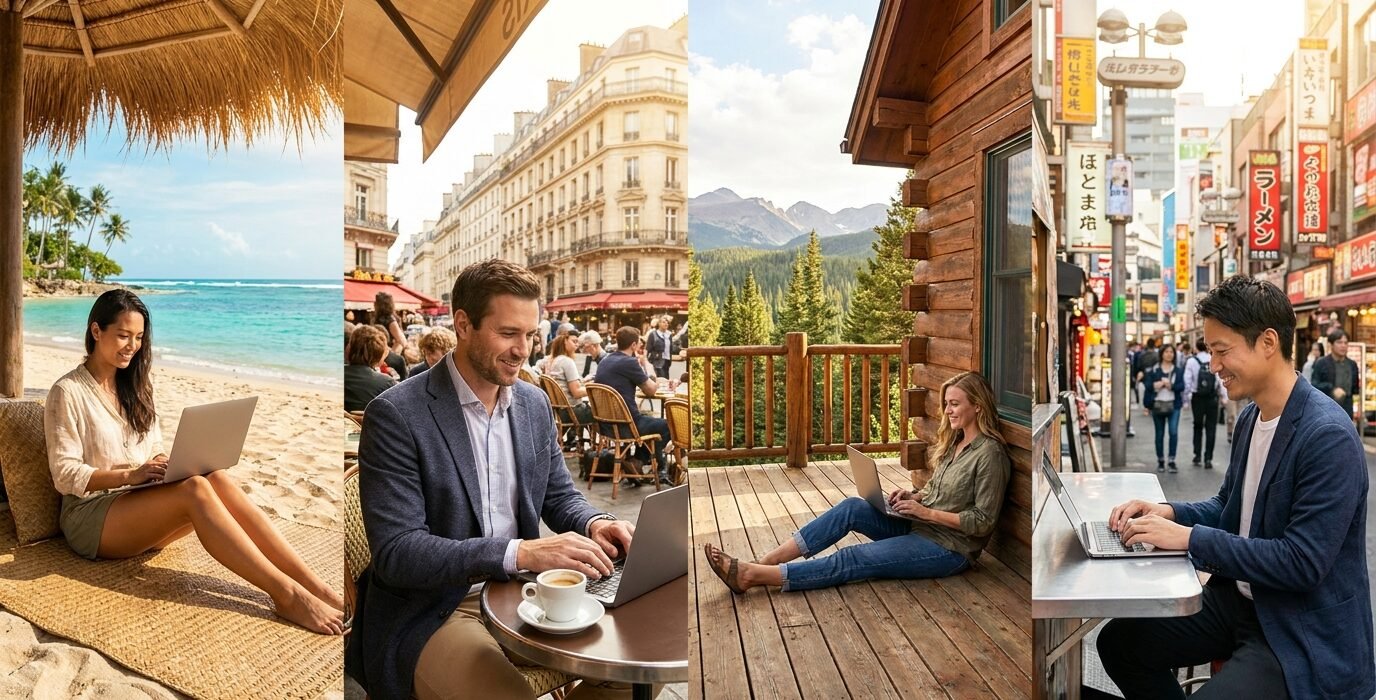
The quiet hum of a coffee shop in Bentonville, Arkansas, might seem an unlikely epicenter for a revolution. Yet, here, amidst the aroma of freshly brewed lattes and the gentle clatter of laptops, a new chapter in American work life is unfolding. For years, the allure of remote work was a whisper, a perk for a select few. Now, it’s a roar. A seismic shift is reshaping our cities, towns, and the very definition of a local community. We’re talking about the burgeoning movement of digital nomads. Crucially, states across the US are not just embracing them, but actively wooing them with innovative visa programs.
This isn’t just about people with laptops escaping the traditional office. It’s about revitalizing forgotten corners. It’s about breathing new life into Main Streets. It’s about fostering a dynamic exchange of ideas and economies. We’re seeing individuals trade bustling metropolises for the charm of smaller cities. They are drawn by a lower cost of living, a stronger sense of community, and, increasingly, by states rolling out the red carpet. This phenomenon is more than a fleeting trend. It’s a fundamental re-evaluation of where and how we contribute to society. The implications are profound. They touch everything from local business revenue to the cultural fabric of towns that have long felt overlooked.
Key Takeaways:
Advertisement300×250 / native
- States are actively creating “digital nomad” visas to attract remote workers.
- These programs aim to boost local economies by increasing consumer spending and tax revenue.
- Digital nomads bring diverse skills and perspectives, enriching local culture.
- Challenges include ensuring adequate infrastructure and community integration.
- The trend signals a shift towards place-based economic development and a more flexible workforce.
The Siren Song of the Open Road (and Wi-Fi)
The story of Sarah Chen, a 32-year-old software developer, perfectly encapsulates the magnetic pull of this evolving landscape. For years, Sarah lived the quintessential San Francisco dream. A cramped apartment. A grueling commute. The relentless pressure of a high-cost-of-living city. “I loved my job, but I felt like I was just surviving, not living,” she told me. Her voice was warm and reflective over a video call from her current base in Tulsa, Oklahoma. “The city felt like a treadmill. I was earning good money, but it all went to rent and bills. I craved space, peace, and a connection to my surroundings.”
Sarah discovered Tulsa’s “Tulsa Remote” program. It was a bold initiative offering $10,000 to individuals willing to relocate and work remotely in the city for at least a year. “It sounded too good to be true,” she admitted. “But I researched it, saw the testimonials, and realized it was a genuine opportunity to change my life.” She packed her bags. She left behind the fog and the traffic for the sunnier skies and burgeoning arts scene of Oklahoma. The impact on her life was immediate. Her rent, which had been over $2,500 a month in San Francisco, dropped to $1,200.
“Suddenly, I had disposable income. I could afford to eat out more, explore local shops, and even save money,” Sarah explained. “More than that, I felt like I belonged. People were friendly, curious. I joined a local hiking group, volunteered at a community garden. It felt like I was part of something real, something tangible, not just another face in the urban crowd.” Tulsa isn’t unique in its ambition. It’s a leading example of a growing wave of American cities recognizing the economic and social capital that remote workers can bring. States like Vermont, West Virginia, and Maine have launched similar programs. Each has its own unique incentives. Think cash grants or co-working space stipends. The underlying logic is simple: attract talented individuals, and they will spend, invest, and contribute. The data backs this up. A study by the Economic Innovation Group found that remote work adoption increased significantly between 2019 and 2021. There was a notable shift towards smaller, more affordable cities.
Beyond the Bean Counter: Real People, Real Impact
The economic ripple effect of a digital nomad isn’t confined to their personal bank account. It spreads outwards. It touches the very heart of a community. Take the story of Maria Rodriguez. She runs “The Cozy Corner Bookstore” in Asheville, North Carolina. Asheville, a vibrant mountain town known for its craft breweries and artistic spirit, has become a magnet for remote workers. Maria’s bookstore, a beloved local institution, has seen a significant uptick in business since the influx of new residents. “It’s been wonderful,” Maria beamed, adjusting a stack of well-worn novels. “These new folks, they’re not just coming for the mountains. They’re coming to stay, to engage. They’re discovering places like mine, places that have been here for decades but might have been overlooked by a transient population.”
Maria estimates that nearly 40% of her new, regular customers are digital nomads. They’re not just buying books. They’re attending author readings, participating in book clubs, and generally bringing a fresh energy to the town. “They seem to appreciate the independent spirit of Asheville,” she added. “They’re actively seeking out local businesses, supporting the artisans, and really becoming part of the fabric of the town.” This isn’t just anecdotal. A report from the North Carolina Department of Commerce highlighted that counties with a higher concentration of remote workers saw a disproportionate increase in retail sales and service sector growth.
This phenomenon isn’t limited to small businesses. Local governments are also seeing the benefits. In West Virginia, Governor Jim Justice launched a program offering up to $12,000 to remote workers willing to relocate to the state. The goal was clear: to reverse population decline and inject new life into communities struggling with economic stagnation. The program has not only attracted individuals but also families. They then enroll their children in local schools, further bolstering community resources. The key takeaway is that these individuals aren’t just temporary visitors. They are actively integrating, becoming neighbors, patrons, and contributors to the local economy and social life. They are, in essence, investing in their new homes, both financially and culturally.
The Legal Labyrinth: Navigating the New Frontier of Visas
The surge in digital nomads has necessitated a creative response from state governments. This has led to the creation of specific visa programs designed to attract this mobile workforce. These aren’t federal immigration visas in the traditional sense. They are state-level initiatives that often involve tax incentives or grants for individuals who establish residency and work remotely within that state. Vermont, for instance, pioneered one of the earliest and most well-known programs. It offers up to $10,000 to remote workers who move to the state. The program, launched in 2019, has been a resounding success. It has attracted hundreds of individuals and families.
The eligibility criteria for these programs are typically straightforward. Proof of remote employment. A commitment to reside in the state for a specified period (usually one to two years). Sometimes, a minimum income requirement. What’s surprising is how many states are now jumping on board. From the snowy peaks of Vermont to the sunny shores of Hawaii (which offers a “Malama Hawaii” program encouraging longer stays and community engagement), the landscape is rapidly evolving. The appeal is multifaceted. States with aging populations and declining birth rates see this as a way to infuse younger energy and a skilled workforce.
However, the legal and administrative aspects can be complex. These programs are distinct from traditional work visas. Those are tied to specific employers and industries. Digital nomad visas, in contrast, are about residency and economic contribution. They often require applicants to demonstrate that they are not displacing local workers. This is a crucial element to avoid backlash. The success of these programs hinges on clear communication and streamlined application processes. For example, West Virginia’s “Ascend West Virginia” program has been praised for its user-friendly application and supportive network for new residents. The state’s approach emphasizes not just financial incentives. It also focuses on community integration and access to outdoor recreational opportunities. This recognizes that a fulfilling lifestyle is as important as a stable income. This proactive approach to legislation is a testament to how quickly this trend is being recognized as a significant economic development tool.
The Unexpected Boost: More Than Just Rent Money
One of the most compelling, and perhaps counter-intuitive, aspects of the digital nomad trend is the profound impact on local economies. This goes beyond the obvious increase in consumer spending. Consider the story of a small town in Maine, let’s call it Havenwood. Historically, Havenwood relied heavily on seasonal tourism and a dwindling fishing industry. When the state launched its digital nomad initiative, a handful of remote workers, drawn by the picturesque coastline and lower cost of living, began to settle there. What they brought, beyond their salaries, was a demand for new services. They also brought a willingness to invest in the community.
A retired graphic designer, who preferred to remain anonymous, moved to Havenwood. She noticed a lack of modern web design services for local businesses. She started offering her expertise. She helped the local bakery revamp its online presence. She helped the general store create an e-commerce platform. This, in turn, boosted their sales. Another nomad, a former urban planner, began volunteering with the town council. They offered insights on sustainable development and infrastructure improvements. These contributions, while not directly monetary, significantly enhanced the town’s long-term viability and attractiveness. A survey conducted in several Maine towns participating in the program revealed that 75% of digital nomads reported actively volunteering or participating in local civic activities within their first year.
This speaks to a deeper truth. Digital nomads are often highly skilled individuals seeking community and purpose, not just a cheap place to live. They bring diverse experiences and a fresh perspective. This can revitalize local initiatives and foster innovation. They are often more inclined to support local entrepreneurs and participate in community projects. This is because they are actively choosing to build a life, not just occupy a space. The economic injection is therefore not just about dollars spent at the grocery store. It’s about the creation of new businesses, the improvement of local services, and the strengthening of the social fabric. This is a powerful lesson for communities that may have previously felt left behind by economic shifts.
Building Bridges: Cultural Integration and Community Spirit
The success of any digital nomad program hinges not just on economic incentives. It also depends on fostering genuine cultural integration. It’s about ensuring that these newcomers become part of the community, not just temporary residents. This is where the human element truly shines. In Bend, Oregon, a town already popular with outdoor enthusiasts, the influx of remote workers has created a vibrant blend of established residents and new arrivals. Emily Carter, a local community organizer, has been instrumental in creating programs that bridge this gap.
“When people first started moving here for remote work, there was a little apprehension,” Emily admitted. “We worried about housing prices, about the town’s character changing too quickly. But we realized that if we actively welcomed them and created opportunities for connection, it could be a net positive.” Emily’s organization, “Bend Connects,” hosts regular meet-and-greets, skill-sharing workshops, and volunteer days. These events bring together long-time residents and digital nomads. “We’ve seen incredible results,” she said. “Nomads have brought new ideas to our farmers’ market, helped launch a community garden initiative, and even started a local chapter of a national environmental group.”
This proactive approach is crucial. A report by the Aspen Institute found that communities that actively facilitate integration between new residents and established populations experience higher levels of social cohesion and economic stability. The data from Bend supports this. Within two years of implementing “Bend Connects,” the town saw a 15% increase in participation in local volunteer organizations. Digital nomads made up a significant portion of the new volunteers. It’s not just about filling jobs or spending money. It’s about enriching the cultural landscape, bringing new perspectives, and fostering a shared sense of belonging. This human-centered approach is what truly transforms a town. It creates a dynamic and inclusive environment for everyone.
The Road Ahead: Challenges and Opportunities
While the digital nomad trend presents immense opportunities for economic revitalization and community growth across the United States, it’s not without its challenges. One of the most pressing concerns is infrastructure. As more remote workers flock to smaller towns, the demand on existing internet speeds, housing, and public services can become strained. In some areas, the rapid influx has already led to increased housing costs. This makes it more difficult for long-term residents to afford to stay. This is a delicate balancing act. It requires careful planning and investment.
Consider the experience of a small town in Colorado, which saw a significant increase in remote workers after launching its own incentive program. While local businesses thrived, the town’s aging wastewater treatment plant struggled to cope with the increased population. This led to temporary water restrictions and a heightened awareness of the need for infrastructure upgrades. “We were thrilled to see the economic boost,” said Mayor Thompson, “but we quickly realized we needed to invest heavily in our utilities to support this growth sustainably.” Approximately 60% of towns that have seen a significant influx of remote workers reported needing to upgrade their broadband infrastructure.
Addressing these challenges requires a multi-pronged approach. State and local governments must prioritize investment in robust internet connectivity, affordable housing solutions, and upgrades to public infrastructure. Furthermore, fostering open communication and collaboration between long-term residents and new arrivals is paramount. Programs that encourage skill-sharing, volunteerism, and civic engagement can help build bridges. They ensure that the benefits of this trend are shared equitably. The future of work is undeniably flexible. For many American communities, embracing the digital nomad movement with thoughtful planning and a commitment to inclusivity offers a powerful path towards a more vibrant and prosperous future. It’s about leveraging talent, fostering connection, and building communities that are resilient and ready for whatever comes next.