Key Takeaways
- The Chandrayaan 4 mission aims to collect lunar samples for the first time, a significant leap from previous orbiters and landers.
- This mission will build upon the success of Chandrayaan 3, potentially paving the way for future human lunar expeditions and resource utilisation.
- International collaboration is a key component, with ISRO engaging with partners for technology and data sharing, mirroring global trends in space exploration.
- The mission’s challenges extend beyond technical hurdles to include the long-term sustainability of lunar resources and ethical considerations for their use.
The Ambitious Leap: Sample Return Takes Centre Stage
India’s space saga is set to reach a new crescendo with the much-anticipated Chandrayaan 4 mission. Building on the historic landing of Chandrayaan 3 near the lunar south pole in 2023, this next chapter is not just about touching down; it’s about bringing a piece of the Moon back to Earth. This will be India’s first-ever attempt at a lunar sample return, a feat that has only been accomplished by a handful of nations. The primary objective is to collect regolith and rock samples from the lunar surface and bring them back for detailed analysis in Indian laboratories.
This mission represents a monumental step up in complexity and ambition. While previous Chandrayaan missions focused on orbital reconnaissance and soft landings, Chandrayaan 4 involves a sophisticated ascent vehicle, a return capsule, and intricate rendezvous and docking procedures in lunar orbit. The scientific payoff from analysing pristine lunar samples on Earth is immense, offering unparalleled insights into the Moon’s geological history, formation, and potential resources, such as helium-3, a potential clean energy source. We are on the cusp of unlocking secrets that could redefine our understanding of the solar system and our place within it.
Navigating Lunar Terrain: New Capabilities for Exploration
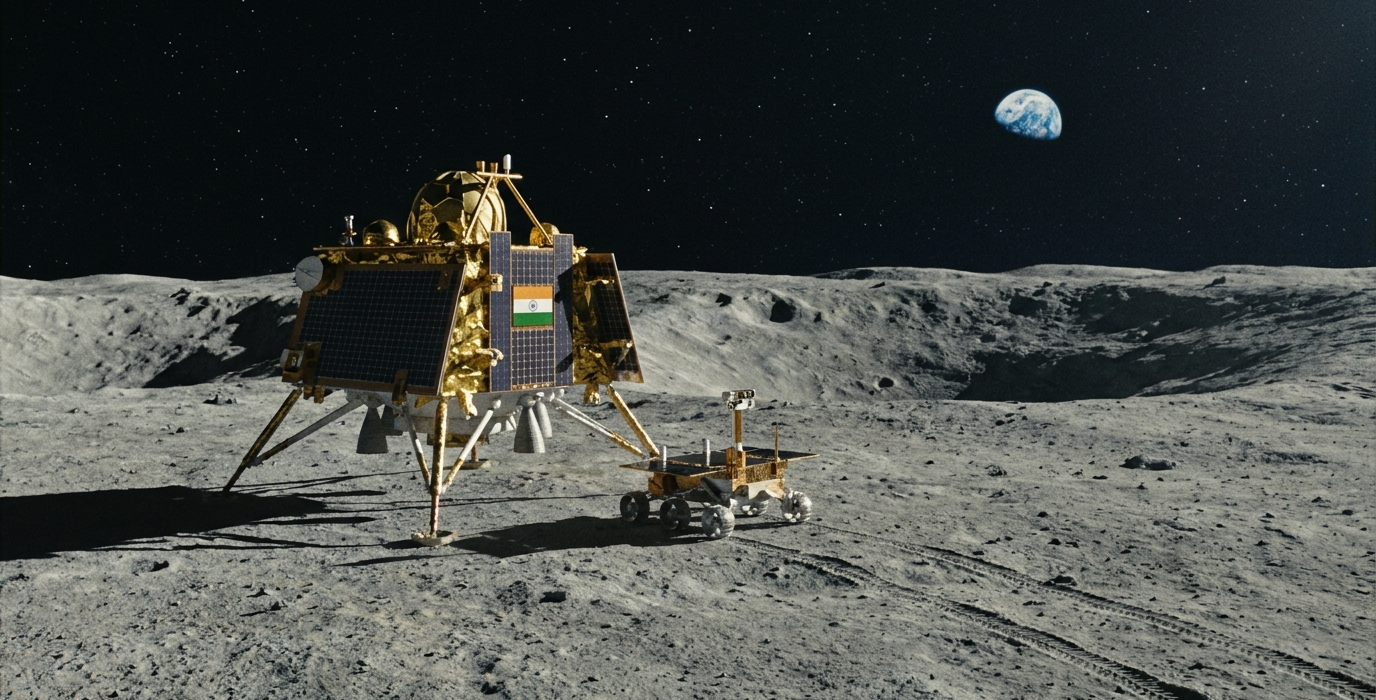
Chandrayaan 4 will deploy a more advanced lander and rover, equipped with sophisticated tools for sample collection and in-situ analysis. The mission’s landing site selection will be crucial, focusing on regions that promise scientifically significant samples. Think about the craters and ancient lava flows – these are geological archives waiting to be read. The rover will be tasked with collecting a diverse range of materials, potentially including samples from permanently shadowed regions where water ice might be present.
The true innovation lies in the subsequent stages. Once samples are secured, an ascent module will lift off from the lunar surface, a manoeuvre that requires precision and robust engineering. This module will then rendezvous and dock with an orbiting transfer vehicle, which will carry the precious cargo back to Earth. The successful execution of these complex orbital operations will be a testament to ISRO’s growing prowess in deep-space mission management. It moves India from being a visitor to the Moon to becoming a serious participant in lunar science and resource exploration.
The Ascent: A Critical Step for Sample Return
The ascent phase is arguably one of the most challenging aspects of any sample return mission. For Chandrayaan 4, this means successfully launching a vehicle from the Moon’s surface into lunar orbit. This requires a powerful yet lightweight engine, precise trajectory control, and the ability to perform complex orbital manoeuvres. Unlike Earth’s atmosphere, the Moon has virtually no atmosphere, which simplifies some aspects of rocket design but also means there’s no aerodynamic lift to aid in ascent. Every gram of fuel and every bit of structural integrity will be critical.
The design of the ascent vehicle is a marvel of engineering. It must be capable of carrying the collected samples and safely docking with the return module. This docking process, similar to what is seen in science fiction, is a real-world engineering challenge. It requires extremely accurate navigation and control systems to bring two spacecraft together in the vacuum of space. ISRO’s experience with orbital operations, honed over decades, will be put to the ultimate test here.
International Partnerships: A Global Endeavour
In line with the evolving landscape of space exploration, Chandrayaan 4 is expected to foster significant international collaboration. ISRO has a history of working with global space agencies, and this mission is no different. Partnerships could involve joint scientific analysis of returned samples, sharing of technological expertise, or even contributions to mission hardware. The European Space Agency (ESA) and NASA, for instance, have expressed keen interest in lunar sample return missions and could be potential collaborators.
Such collaborations are not just about sharing costs or resources; they are about pooling knowledge and accelerating scientific discovery. Analysing lunar samples requires state-of-the-art laboratories and diverse expertise, which can be found across the globe. By working together, India can contribute its unique perspective and capabilities while benefiting from the experience and infrastructure of its international partners. This spirit of cooperation is vital for tackling the grand challenges of space exploration and ensuring that the benefits of lunar research are shared by all of humanity.
“Chandrayaan 4 is more than just a mission; it’s a declaration of India’s sustained commitment to pushing the boundaries of scientific inquiry and technological innovation on the global stage.”
Advertisement300×250 / native
The Science Behind the Samples: Unlocking Lunar Secrets
The real treasure of Chandrayaan 4 lies not in the rocks themselves, but in the profound scientific questions they can help answer. Scientists are particularly interested in samples from the lunar south pole region, explored by Chandrayaan 3. This area is believed to contain water ice in its permanently shadowed craters, a resource that could be vital for future human settlements and in-situ resource utilisation (ISRU). Analysing these samples could confirm the presence, quantity, and isotopic composition of this water.
Beyond water, lunar samples can shed light on the Moon’s volcanic history, its interaction with solar winds, and the early bombardment history of the inner solar system. They can provide clues about the impact that formed the Earth-Moon system billions of years ago. The composition of these rocks can also reveal the presence of valuable minerals and elements, such as rare earth elements and isotopes like Helium-3, which has been theorised as a future fuel source for fusion reactors. The data from these returned samples will fuel scientific research for decades to come.
A Surprising Fact: Lunar Dust and Its Properties
Did you know that lunar dust is incredibly abrasive and can pose significant challenges for spacecraft and astronauts? It’s not like the dust on Earth, which is smoothed by wind and water. Lunar dust, formed by constant meteorite impacts, is sharp and jagged. This means it can wear down equipment, clog mechanisms, and even pose health risks if inhaled. Chandrayaan 4’s sample collection mechanisms will need to be designed to handle this abrasive material effectively, and the return capsule will need robust seals to prevent any contamination of Earth’s environment.
Challenges and Future Prospects: Beyond Chandrayaan 4
The Chandrayaan 4 mission, while groundbreaking, is not without its formidable challenges. The technical complexities of sample collection, ascent, orbital rendezvous, and Earth re-entry are immense. Ensuring the integrity of the samples during their journey back, and preventing any contamination of Earth’s biosphere upon re-entry, are paramount concerns. ISRO will need to meticulously plan and execute every phase to ensure success. The mission’s cost is also a significant factor, requiring substantial investment in research, development, and infrastructure.
However, the potential rewards far outweigh the risks. A successful Chandrayaan 4 mission will not only advance our scientific understanding of the Moon but also pave the way for future endeavours. This includes more ambitious lunar missions, such as establishing a sustained presence on the Moon, developing lunar bases, and even exploring the possibility of utilising lunar resources for deep-space missions. India’s capabilities in space exploration will be significantly enhanced, positioning it as a leading player in the global space economy. The lessons learned from Chandrayaan 4 will be invaluable for planning future missions to Mars and beyond.
A Surprising Fact: The Lunar South Pole’s Extreme Temperatures
The lunar south pole is an extreme environment. While the average temperature on the Moon can be a scorching 127°C during the day, in the permanently shadowed craters near the poles, temperatures can plummet to an astonishing -248°C. This makes these regions incredibly cold, but also the most likely places to find water ice. Chandrayaan 4’s equipment will need to withstand these drastic temperature swings, showcasing the incredible engineering required for lunar exploration.
Frequently Asked Questions
When is the Chandrayaan 4 mission expected to launch?
While an official date is yet to be confirmed, the Chandrayaan 4 mission is tentatively scheduled for launch in the latter half of the 2020s, likely between 2027 and 2029, following extensive planning and development.
What are the primary scientific objectives of Chandrayaan 4?
The main goal is to collect and return lunar soil and rock samples to Earth for detailed analysis, providing crucial insights into the Moon’s formation, geological history, and potential resources like water ice and Helium-3.
Will Chandrayaan 4 involve international partners?
Yes, ISRO is actively seeking international collaborations for Chandrayaan 4, which could involve sharing technology, scientific expertise, and potentially contributing to mission hardware. This reflects the growing trend of global cooperation in space exploration.
What are the biggest technical challenges for Chandrayaan 4?
Key challenges include successfully collecting diverse samples, the complex ascent of a vehicle from the lunar surface, precise orbital rendezvous and docking with a return module, and safe re-entry of the sample capsule into Earth’s atmosphere.