Key Takeaways
- Precision Farming Revolution: AI-driven tools are transforming Indian agriculture by enabling hyper-localised crop management, from optimal irrigation schedules to targeted pest control.
- Yield Augmentation & Cost Reduction: Farmers using AI can anticipate challenges, reduce input wastage (water, fertilisers, pesticides), and ultimately increase their produce quantity and quality.
- Data-Driven Decisions: Advanced analytics and predictive modelling empower farmers with actionable insights, moving away from traditional guesswork to science-based cultivation.
- Accessibility & Scalability: Emerging AI solutions are increasingly designed for the Indian context, becoming more affordable and user-friendly for smallholder farmers across diverse agro-climatic zones.
The Dawn of Smart Farming: AI Takes Root in Indian Fields
Indian agriculture, the backbone of our nation, is undergoing a profound transformation, and at its heart lies Artificial Intelligence (AI). For generations, farmers have relied on intuition, weather patterns, and traditional knowledge passed down through families. While invaluable, these methods often faced limitations in the face of unpredictable climates, resource scarcity, and evolving pest resistances. Today, a new era is dawning, one where AI is not just a buzzword but a vital tool in the farmer’s arsenal, promising enhanced yields, reduced costs, and greater sustainability. We’re witnessing a shift from broad-stroke farming to hyper-precision, where every plant, every drop of water, and every nutrient is managed with unprecedented accuracy. This isn’t science fiction; this is the reality unfolding in fields from Punjab’s fertile plains to the rain-fed lands of Maharashtra.
The integration of AI into farming practices is moving at an accelerated pace in 2026. This isn’t about replacing the farmer’s expertise but augmenting it with powerful digital insights. Think of AI as a highly sophisticated, tireless assistant, constantly analysing vast datasets – soil conditions, weather forecasts, satellite imagery, and historical yield data – to provide actionable recommendations. This technology allows for a level of foresight previously unimaginable, enabling farmers to proactively address potential issues rather than react to them. The goal is simple yet profound: to help every farmer, regardless of their landholding size, achieve better harvests and a more secure livelihood.
Unlocking Precision Agriculture: Beyond the Guesswork
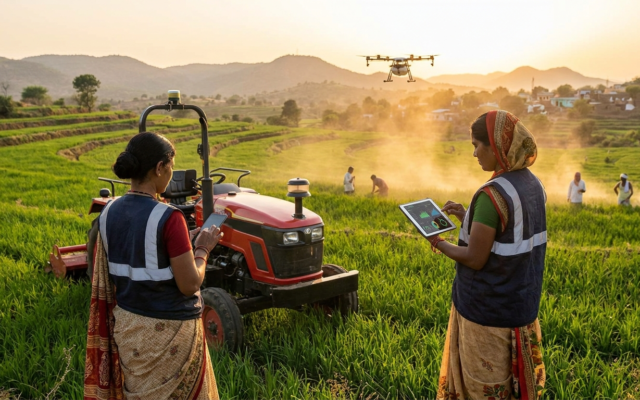
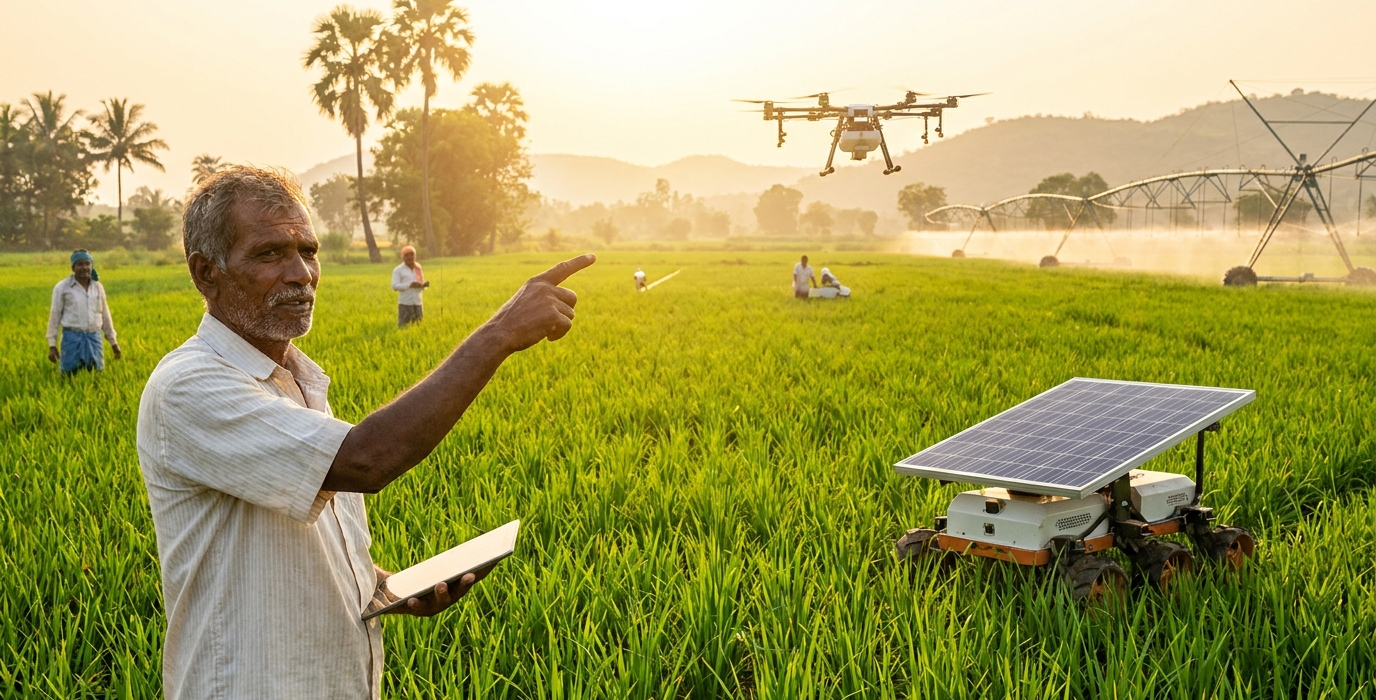
Precision agriculture, powered by AI, is fundamentally changing how crops are nurtured. Gone are the days of uniform application of water and fertilisers across an entire field. AI algorithms analyse data from sensors placed in the soil, drones equipped with multispectral cameras, and even local weather stations to create intricate maps of a farm. These maps highlight variations in soil moisture, nutrient levels, and crop health down to the individual plant level. Based on this granular data, AI systems can then recommend precise irrigation schedules for specific zones, ensuring each part of the field receives only the water it needs, precisely when it needs it.
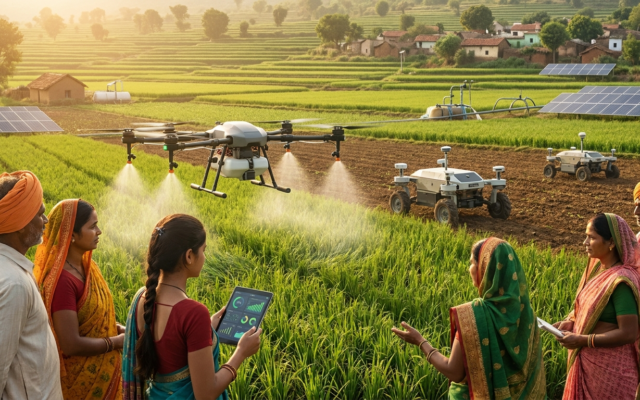
This targeted approach drastically reduces water wastage, a critical concern in many Indian states facing water stress. Similarly, AI can guide the application of fertilisers and pesticides. Instead of broadcasting chemicals across the entire field, AI can identify specific areas or even individual plants showing signs of nutrient deficiency or pest infestation. This not only saves costs on inputs but also minimises the environmental impact of chemical usage. For instance, a farmer in Gujarat might receive an alert recommending a specific micronutrient supplement for a small patch of their brinjal crop, rather than applying it uniformly across the entire farm. This level of precision minimises exposure to beneficial insects and reduces the risk of developing pesticide resistance.
AI for Pest and Disease Management
One of the most impactful applications of AI in agriculture is in early pest and disease detection. Traditionally, farmers would often identify infestations only when they became widespread and visibly damaging. AI-powered image recognition systems, fed with thousands of images of healthy and diseased plants, can now detect early signs of trouble, sometimes even before they are visible to the human eye. Drones equipped with high-resolution cameras can fly over fields, capturing images that are then analysed by AI algorithms. These systems can identify specific types of pests or diseases and pinpoint their location within the field.
This early warning system allows farmers to intervene swiftly and precisely. Instead of broad-spectrum spraying, they can opt for targeted treatments, such as applying a specific bio-pesticide only to the affected plants or areas. This minimises chemical use and its associated costs and environmental impact. Furthermore, AI can predict the likelihood of disease outbreaks based on weather patterns and historical data, allowing farmers to take preventative measures. Imagine an AI system predicting a high risk of blight in your potato crop in Himachal Pradesh due to impending rainfall and specific temperature ranges, prompting you to apply a protective spray only where and when it’s most effective. This proactive stance is a game-changer.
Optimising Yields: The Data-Driven Harvest
The ultimate goal of any farmer is to maximise their yield while ensuring the quality of their produce. AI is proving to be an indispensable tool in achieving this objective. By analysing a multitude of factors – including historical yield data for specific crops in a region, soil nutrient profiles, weather forecasts, and even market demand trends – AI can provide farmers with data-driven recommendations for planting, crop selection, and harvesting. This moves farming from an art form heavily reliant on tradition to a science informed by robust data analytics.
For example, an AI platform might suggest the optimal planting density for wheat in a specific plot in Haryana based on soil type and predicted rainfall for the upcoming season. It could also advise on the ideal time to sow to avoid peak pest seasons or to align with favourable market prices. AI can even help in predicting the exact time to harvest to ensure peak ripeness and quality, thus fetching better prices in the market. This predictive power is invaluable for perishable goods like fruits and vegetables, where timing is everything.
One surprising fact we’ve uncovered is the growing use of AI to predict the optimal soil carbon sequestration potential for different farming practices. This isn’t just about yield; it’s about sustainability and future soil health. AI models can analyse soil composition, microbial activity, and past land use to recommend practices that enhance carbon capture, a vital component for climate resilience and potentially opening new revenue streams for farmers through carbon credits.
The Role of AI in Crop Health Monitoring
Continuous monitoring of crop health is crucial for early intervention. AI systems can analyse satellite imagery and drone footage to detect subtle changes in leaf colour, plant growth patterns, and canopy density that might indicate stress, nutrient deficiencies, or the onset of diseases. These changes are often invisible to the naked eye but are readily identified by AI algorithms trained on vast datasets. This allows for timely adjustments in irrigation, fertilisation, or pest control strategies.
Consider a farmer in Tamil Nadu growing rice. An AI-powered system might flag a specific section of their paddy field as showing signs of iron deficiency due to waterlogged conditions. The system would then recommend aerating that specific zone or applying a foliar spray of iron chelate, preventing yield loss and ensuring a healthier crop. This proactive approach minimises damage and optimises resource allocation, leading to healthier plants and ultimately, a more bountiful harvest.
Democratising Technology: AI for the Smallholder Farmer
Historically, advanced agricultural technologies have often been perceived as being out of reach for smallholder farmers, who constitute the majority in India. However, in 2026, this perception is rapidly changing. Startups and established agri-tech companies are increasingly focusing on developing AI-powered solutions that are not only affordable but also user-friendly, often accessible via simple mobile applications. These platforms are designed to work with the existing infrastructure and knowledge base of farmers, making the transition smooth and beneficial.
Many of these solutions are cloud-based, meaning farmers don’t need expensive, high-powered hardware. They can access sophisticated analytics and recommendations by simply uploading data from their phones or low-cost sensors. For instance, a farmer in Odisha can take a picture of a wilting plant, upload it to an app, and receive an AI-generated diagnosis and treatment recommendation within minutes. This democratisation of technology ensures that the benefits of AI are not confined to large agricultural corporations but are accessible to the grassroots level, empowering millions of individual farmers.
We’ve also noted a significant trend in AI-powered localised weather forecasting models, often down to a few square kilometres, tailored for specific micro-climates within India. This is a huge leap from generalised regional forecasts, allowing farmers in areas like the Western Ghats to plan irrigation and harvesting with incredible accuracy, avoiding crop damage from unexpected showers or unseasonal heatwaves. This level of detail was once the preserve of large research institutions.
Navigating the Challenges and Embracing the Future
While the potential of AI in Indian agriculture is immense, we must also acknowledge and address the challenges. Digital literacy and access to reliable internet connectivity remain significant hurdles in many rural areas. Training farmers to effectively use these new technologies and ensuring equitable access to digital infrastructure are paramount for the widespread adoption of AI. Furthermore, data privacy and security are crucial considerations as more sensitive farm data is collected and analysed. Building trust and ensuring farmers have control over their data are essential.
The initial investment in some AI solutions, though decreasing, can still be a barrier for some. However, the long-term benefits – increased yields, reduced input costs, and improved crop quality – generally lead to a rapid return on investment. Government initiatives, subsidies, and partnerships between private companies and agricultural universities are playing a vital role in overcoming these challenges. The future of Indian agriculture is undeniably intertwined with AI. By embracing these innovations responsibly and inclusively, we can pave the way for a more productive, sustainable, and prosperous agricultural sector for generations to come.
Here’s a glimpse at how some key AI applications are being adopted:
| AI Application | Key Benefit for Farmers | Typical Technology Used | Estimated Adoption Growth (2026-2028) |
|---|---|---|---|
| Precision Irrigation | Reduces water usage by up to 30%, improves soil health | Soil moisture sensors, weather stations, AI analytics | 15-20% annually |
| Pest & Disease Detection | Early intervention, reduces pesticide use by 25% | Drones, image recognition, mobile apps | 20-25% annually |
| Yield Prediction & Optimisation | Maximises harvest quantity and quality, better market planning | Satellite imagery, historical data, predictive modelling | 18-22% annually |
| Automated Fertilisation Recommendations | Optimises nutrient application, reduces fertiliser costs | Soil sensors, plant tissue analysis, AI algorithms | 16-19% annually |
“AI isn’t just about making farms smarter; it’s about making farmers more empowered. It’s about giving them the tools to not just grow food, but to thrive.”
Frequently Asked Questions
What is AI in agriculture?
AI in agriculture refers to the use of artificial intelligence technologies, such as machine learning, image recognition, and predictive analytics, to improve farming practices. This includes everything from monitoring crop health and optimising irrigation to predicting yields and managing pests.
How can smallholder farmers access AI technology?
Many AI solutions are now available through user-friendly mobile apps. These platforms often use cloud computing, so farmers don’t need expensive hardware. Government schemes, subsidies, and cooperative initiatives are also making these technologies more accessible and affordable.
Will AI replace farmers?
No, AI is designed to augment, not replace, farmers. It provides them with advanced insights and tools to make better decisions, but the farmer’s knowledge, experience, and hands-on management remain crucial. AI acts as a powerful assistant.
What are the main benefits of using AI in farming?
The primary benefits include increased crop yields, reduced costs through efficient use of resources like water and fertilisers, improved crop quality, early detection and management of pests and diseases, and enhanced sustainability by minimising environmental impact.
How is AI helping with climate change in Indian agriculture?
AI helps farmers adapt to climate change by providing more accurate weather forecasts, optimising water usage during droughts, and identifying climate-resilient crop varieties. It also aids in practices that improve soil health and carbon sequestration, contributing to mitigation efforts.